









|
| Germany, March 02, 2010
|  Today the European Commission approved Amflora, BASF's genetically optimized starch
potato, for commercial application in Europe. The potato can now be used for the
production of industrial starch. "After waiting for more than 13 years, we are delighted that the European Commission
has approved Amflora," said Stefan Marcinowski, member of the Board of Executive
Directors of BASF SE. “We hope, that this decision is a milestone for further innovative
products that will promote a competitive and sustainable agriculture in Europe.” "The way is now clear for commercial cultivation of Amflora this year," said Peter
Eckes, President of BASF Plant Science. "Amflora will strengthen the international
position of the European potato starch industry." The European Food Safety Authority (EFSA)
confirmed on several occasions during the approval process that Amflora is safe
for humans, animals and the environment. Now that the European Commission has given its approval to Amflora's commercial
cultivation, Sweden as the so-called “rapporteur” country will formally issue its
legal approval. The application for approval of Amflora was filed in Sweden in 1996. Amflora produces pure amylopectin starch used in certain technical applications.
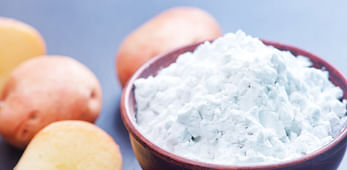
Food use is not foreseen. It was developed in collaboration with experts from the
European starch industry to respond to the demand for pure amylopectin starch. Conventional
potatoes produce a mixture of amylopectin and amylose starch. For many technical
applications, such as in the paper, textile and adhesives industries, pure amylopectin
is advantageous, but separating the two starch components is uneconomical. The industry
will benefit from high-quality Amflora starch that optimizes industrial processes:
it gives paper a higher gloss, and concrete and adhesives can be processed for a
longer period of time. This reduces the consumption of energy, additives and raw
materials such as water. The Amflora approval process to date:
- The Amflora approval process was initiated more than 13
years ago with the request for authorization submitted in August
1996. The scope of the application included cultivation, industrial
use and the use of pulp as feed.
- During the so-called moratorium on genetically modified
products between 1998 and 2004, no approvals for genetically modified
plants were granted in the EU.
- BASF Plant Science resubmitted a dossier for cultivation
and a dossier for food and feed use in 2003 and 2005, respectively,
due to modified EU regulations.
- In 2006, the EU Commission published two EFSA assessments
that for both dossiers concluded that Amflora is as safe as conventional
potatoes for humans, animals and the environment.
- In November 2006, the then responsible EU-Commissioner
Stavros Dimas forwarded his proposal for authorization of cultivation
of Amflora to the Regulatory Committee consisting of representatives
from all EU Member States.
- After two inconclusive votes in the Regulatory Committee
in December 2006 and the Council of Agricultural Ministers in July
2007, Commissioner Dimas failed to adhere to the approval procedure
defined by EU legislation and did not adopt the proposal for cultivation.
- On September 21, 2007,
EU-Commissioner Dimas answered questions by
Green MEP Hiltrud Breyer (WRITTEN QUESTION P-4070/07 by Hiltrud
Breyer (Verts/ALE) to the EU Commission that Amflora is safe.
- The dossier for food and feed use was voted upon in the
Standing Committee – consisting of members from all EU Member States
– in October 2007 and Council of Agricultural Ministers in February
2008. After a qualified majority was not reached in either votes,
the decision on Amflora was passed on to the EU Commission.
- BASF expressed its dissatisfaction with EU-Commissioner
Dimas’ handling of the approval process in anopen
letter to EU-Commissioner Dimas on April 17, 2008.
- In its “orientation debate“ on genetically modified organisms
on May 7, 2008, the EU Commission decided to request EFSA to prepare
a new consolidated scientific opinion on the use of antibiotic resistance
marker genes in genetically modified plants by September 30, 2008.
Such a marker gene is also used in Amflora.
- In a press release following the debate,
EU-Commission President José Manuel Barroso stated that the
EU Commission will adopt the pending decision “if and when“ EFSA
confirms the safety of Amflora.
- On May 19, 2008, BASF Plant Science requested access to
any documents in the possession of the EU Commission in connection
with the authorization procedure for Amflora. These documents did
not reveal any new scientific evidence regarding the safety of Amflora.
- On July 24, 2008, one year after the vote in the Council
of Agricultural Ministers (the last formal step prior to adoption
of a decision), BASF Plant Science filed an action with the European
Court of First Instance against the EU Commission for failure to
act.
- EFSA in autumn 2008 informed that its opinion on antibiotic
resistance marker genes would not be finalized until December 15,
2008.
- However, on December 10, 2008, the EU Commission granted
EFSA a second extension for its opinion to March 31, 2009.
- On June 11, 2009, EFSA published its final, positive opinion
on the use of antibiotic resistance marker genes in genetically
modified plants.
- Today, March 2, 2010, the European Commission gave its
approval to commercial cultivation of Amflora in Europe.
| | | 3488 | |
| |
|
|