

december 15, 2024
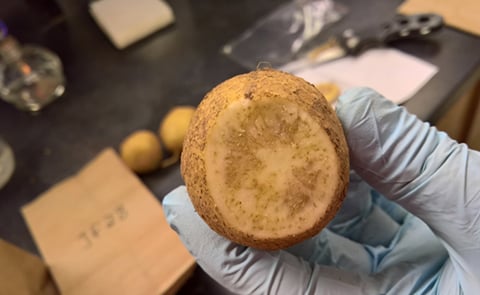
AgriLife Research leads collaboration to address zebra chip disease
Texas A&M AgriLife Research scientists are working on a new research project to fight plant diseases transmitted by psyllid insects — particularly the zebra chip disease, which has impacted potato production for decades.
januari 11, 2024
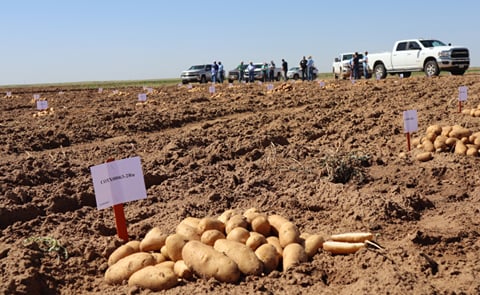
Texas A&M Potato Breeding Program highlights market, varietal expansions
Advances, including Texas french fry variety and nutrition qualities, to be discussed at National Potato Expo in Austin.
september 04, 2022
Texas A&M Potato Breeding Program targets french fry, chipping, fresh markets
New potato varieties bred by the Texas A&M Potato Breeding Program could enter the french fry market before long, said Isabel Vales, Ph.D., Texas A&M AgriLife potato breeder in the Department of Horticultural Sciences
mei 28, 2022
Texas A&M AgriLife researchers use CRISPR technology to modify starches in potatoes
Humble potatoes are a rich source not only of dietary carbohydrates for humans, but also of starches for numerous industrial applications. Texas A&M AgriLife scientists are learning how to alter the ratio of potatoes’
november 10, 2021
United States Government invests USD 2.6 Million in Potato Variety Research
The USDA's National Institute of Food & Agriculture (NIFA) recently awarded four Potato Research grants totaling USD 2.6 million as part of their Special Research Grants program.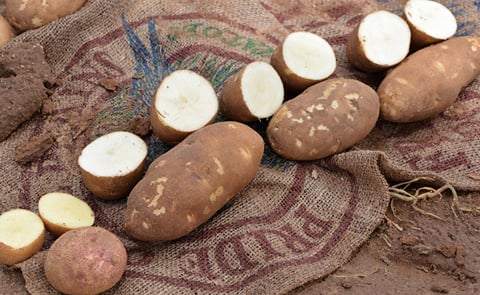
juli 29, 2018
Texas A&M potato breeding trials offer Reds, Russets, Babies and Bakers
Earlier this month Texas A&M held its annual Potato Field Day where it presented a range of new potato varieties.From the archive
Sponsored Content
Sponsored Content
Sponsored Content
![Dirk Hays,Texas A&M AgriLife Research plant geneticist: “With Ground Penetrating Radar (GPR), we can image the size of the tubers and get a correlation to the actual physical size of the potato without harvesting them. [...] We can get an almost one-to-](https://media.potatopro.com/texas-a-and-m-gound-penetrating-radar-early-potato-1200.jpg?width=480&height=295&crop=smart&mode=crop&format=auto "Dirk Hays,Texas A&M AgriLife Research plant geneticist: “With Ground Penetrating Radar (GPR), we can image the size of the tubers and get a correlation to the actual physical size of the potato without harvesting them. [...] We can get an almost one-to-")
augustus 17, 2017
Early maturing potato cultivars can be identified using ground-penetrating radar, finds Texas A&M Agrilife
Dirk Hays,Texas A&M AgriLife Research plant geneticist: “With Ground Penetrating Radar (GPR), we can image the size of the tubers and get a correlation to the actual physical size of the potato without harvesting them. Potatoes are a dream for Ground Penetrating Radar.”From the archive

april 23, 2017
Variety screening reveals potatoes with resistance to zebrachip disease
The Texas A&M AgriLife Research plant pathology team intentionally infected potato plants with psyllids positive with the bacterium that causes zebra chip disease, in order to identify promising germplasm in the battle against the disease plaguing the US potato industry for the past 15 years.From the archive
april 02, 2017
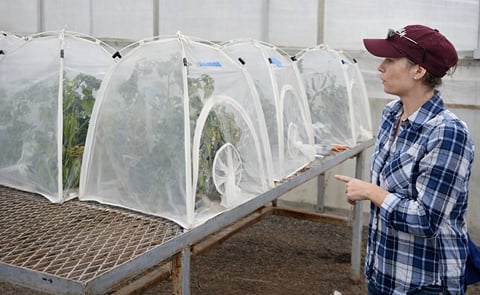
Neonicotinoid insecticides losing efficiency in potato psyllid control
The potato industry may be losing a mainstay in the battle against psyllids, according to a recent Texas A&M AgriLife Research study.From the archive