

Apical Rooted Cuttings (ARC): Revolutionizing Potato Seed Production
Apical Rooted Cuttings (ARC) represent an advanced technique in potato seed production systems involving the rooting of apical shoots or single-node cuttings derived from tissue cultured plantlets to generate vigorous, disease-free planting material. This method bridges the gap between in-vitro micropropagation and field multiplication, producing rooted cuttings that can develop into high quality mini tubers or directly into seed tubers. Originating from research efforts by the International Potato Center (CIP) and partner institutions in the 1980s/1990s, ARC has evolved into a viable and scalable solution, especially in smallholder and resource limited regions.
ARC enables significantly higher multiplication rates compared with traditional tuber-based methods literature reports show up to 20–30× and in some optimized systems beyond that thus accelerating seed certification chains and reducing disease carry over. By facilitating rapid scaling of elite varieties (including drought tolerant or pest resistant lines), ARC limits dependency on imported seed, fosters seed sovereignty and supports climate resilient seed systems.
With global potato production exceeding ~380 million t annually, improvements in early generation seed supply through ARC could contribute to yield enhancements and cost reductions, particularly in regions constrained by poor seed quality.
Recent advancements include integration of ARC with rapid multiplication technologies (such as aeroponics or fogponics), genomic selection tools and decentralized seed systems making ARC increasingly adaptable across diverse agro-climatic zones.

Apical Rooted Cutting (ARC) Seedling – Healthy and Disease-Free
What is Apical Rooted Cutting (ARC) in Potatoes?
Apical Rooted Cuttings (ARC) are single node or apical stem cuttings (typically 2–5 cm long) excised from virus free, tissue cultured potato plantlets, then rooted under controlled nursery or greenhouse conditions to form complete propagules with both shoots and roots. Unlike conventional cuttings, ARC utilizes the apical portion containing the meristem, ensuring genetic fidelity, vigor and uniformity.
These rooted cuttings act as mini plants that can be directly transplanted into soil, substrate or aeroponic systems for mini tuber formation or field establishment. Under optimal conditions, each ARC plant can yield 1–2 mini tubers within 60–90 days.
ARC materials are typically classified as G0 or G1 seed generation in certification systems and are derived from virus indexed tissue culture, maintaining >98–99% genetic purity. The method effectively bridges micropropagation and field multiplication, allowing rapid, disease free and scalable early generation seed production.
Key Characteristics of Apical Rooted Cuttings (ARC)
Structure: Each ARC consists of 1–3 leaves an intact apical bud and adventitious roots (3–5 cm) formed under controlled nursery conditions. The apical segment ensures uniform growth and vigorous establishment after transplanting.
Health: ARCs are derived from meristem cultured, virus indexed micro plants, maintaining >98–99% pathogen free status. This minimizes risks from major potato viruses such as PVY, PLRV and PVX, ensuring clean planting material.
Multiplication Rate: The ARC method enables 20–50× multiplication per production cycle, significantly higher than conventional tuber cutting (2–4×). Under optimized hybrid systems (e.g., ARC + aeroponics), rates of up to 100× have been recorded in Kenya and India.
Dormancy: ARCs exhibit minimal or no dormancy, allowing immediate planting within 2–4 weeks of rooting eliminating the need for chemical or temperature induced dormancy breaking typical of tubers.
Adaptability: The technique is compatible with most commercial potato cultivars (≈90%), including both tetraploid and diploid types though rooting efficiency and early vigor can vary by genotype and hormone treatment.
ARC functions as G0 or G1 material within the seed certification chain, effectively reducing seed generations from 4–5 to 2–3 and has been successfully adopted in decentralized seed systems across Africa, India and Southeast Asia to empower smallholder farmers.
History and Development of ARC
The use of Apical Rooted Cuttings (ARC) in potato seed production emerged from the need to address rapid seed degeneration and disease accumulation in seed systems, particularly in developing countries. Early work in the late 1970s and 1980s investigated the potential of single node and apical cuttings from tissue cultured plantlets as a means to accelerate multiplication and maintain disease-free planting material.
In Southeast Asia, especially Vietnam, ARC like propagation techniques were adopted during the 1980s and 1990s as tissue culture propagated potato plants became increasingly accessible. By the 1990s, the International Potato Center (CIP) and regional partners refined rooting protocols using auxins such as Indole-3-butyric acid (IBA) and Naphthaleneacetic acid (NAA), optimized rooting media and improved environmental conditions. These refinements increased rooting success rates from the earlier 30–40% to above 90%.
In the 2000s and beyond, ARC technology became mainstream across various countries. For instance:
Kenya: ARC was integrated into national seed potato programs through collaboration between CIP, the Kenya Agricultural & Livestock Research Organisation (KALRO) and the Kenya Plant Health Inspectorate Service (KEPHIS), alongside private sector partners such as Stokman Rozen Kenya Ltd.
Philippines: ARC techniques were introduced in highland seed systems through partnerships with the Northern Philippines Root Crops Research & Training Center (NPRCRTC) and state universities to produce quality basic seed material.
India: Since the 2010s, ARC trials and scaling initiatives have been implemented in states such as Karnataka, Odisha and West Bengal, focusing on improving early generation seed availability.
Key Milestones in ARC Development
- Standardization of protocols for rooting apical cuttings from tissue culture mother plants.
- Demonstration of higher multiplication rates (often exceeding 20×) compared to traditional tuber cut propagation methods.
- Integration of ARC with rapid multiplication systems such as aeroponics and fogponics as well as decentralized seed production models for smallholder farmers.
- Adoption by national seed certification systems in Africa and Asia to enhance certified seed access, reduce import dependency and improve seed health.
Despite these advances, ARC adoption rates vary by region and variety. Challenges such as genotype specific rooting efficiency, infrastructure limitations for tissue culture and nurseries and the need for harmonization with national certification frameworks continue to influence large scale implementation.
Today, ARC continues to evolve with innovations emphasizing automation, improved rooting substrates, enhanced mini-tuber production from cuttings and integration with genomic selection tools. These developments are making ARC more scalable, efficient and adaptable to diverse agro-climatic conditions and production systems.
Production Techniques for Apical Rooted Cuttings (ARC) in Potatoes
Source Material: The foundation of ARC production is the use of virus free micro plants derived from meristem culture maintained on Murashige and Skoog (MS) medium (pH 5.7–5.8). Pathogen elimination is achieved through thermotherapy (35–38°C for 4–6 weeks) or chemotherapy using antiviral agents such as ribavirin. Healthy mother plants are regularly indexed for PVY, PLRV and PVX using ELISA or PCR diagnostics to ensure absolute phytosanitary integrity.
Cutting Preparation: Under sterile conditions in a laminar airflow cabinet, apical or single node cuttings (1–2 cm) are excised from vigorously growing micro plants. The basal ends are dipped in Indole-3-butyric acid (IBA) at 500–1000 ppm for 5–10 seconds to induce root initiation. Cuttings should retain at least one healthy leaf and one axillary bud to ensure balanced shoot root development.
Rooting Phase: Cuttings are planted in sterile rooting substrates, typically a vermiculite: perlite mixture (1:1), cocopeat perlite blends or aeroponic systems that deliver a nutrient mist directly to the root zone. Environmental conditions are maintained at 18–22°C, 80–90% relative humidity and a 16-hour photoperiod using LED lighting (100–120 µmol m⁻² s⁻¹) for energy efficiency and uniform growth. Rooting is usually completed in 10–14 days, achieving 90–95% success in optimized conditions.

Rooting Phase of Apical Rooted Cuttings (ARC) Seedlings
Hardening (Acclimatization): Rooted cuttings are transferred to a shaded mist house (50–70% shade net) for 7–10 days. During this stage, humidity is gradually reduced (from 90% to ambient levels) and plants are exposed to filtered sunlight to develop cuticle layers and photosynthetic capacity. This process minimizes transplant shock and prepares the plants for greenhouse or field conditions.
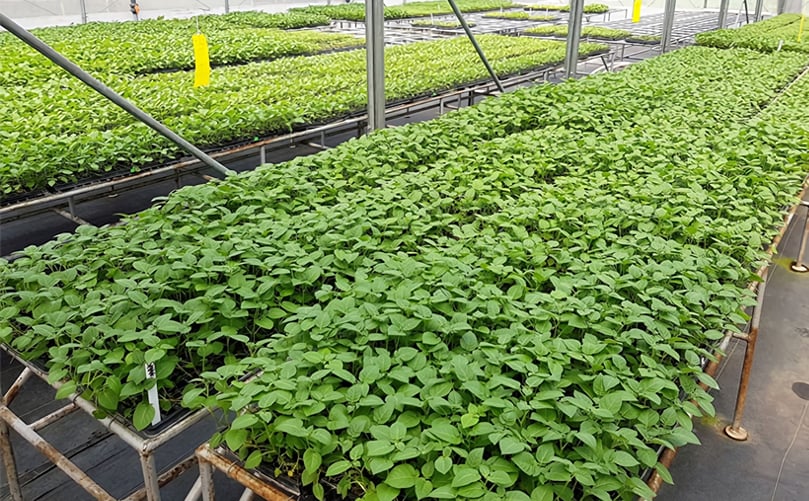
Commercial Pproduction of Apical Cuttings
Transplanting: Hardened ARCs are transplanted into greenhouse beds, soilless substrates (e.g., cocopeat) or hydroponic/aeroponic units. Optimal conditions include 20–25°C, 70–80% relative humidity and precise irrigation using drip or nutrient film techniques. Within 60–90 days, each ARC develops into a compact plant capable of producing 1–3 high quality mini tubers, depending on cultivar and nutrient management. Balanced nutrition (N:P:K = 1:1:1) and controlled vegetative growth enhance tuber initiation and uniformity.
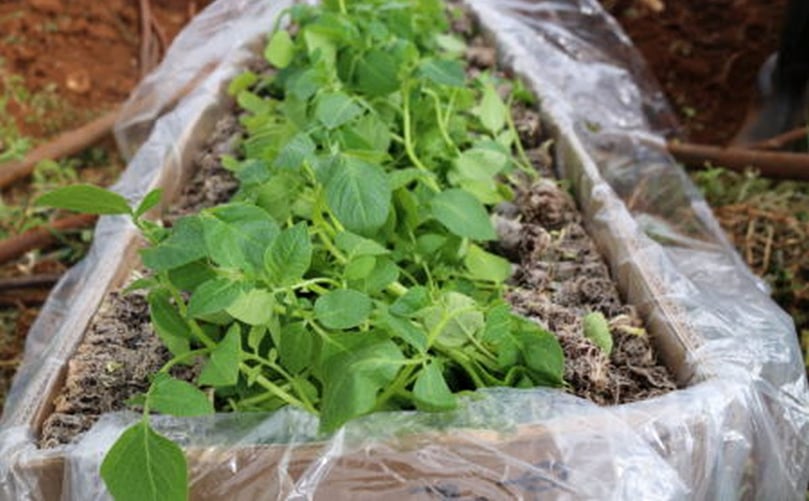
ARC Seedling ready for Transplanting
Harvesting and Storage: Once the haulm matures (yellowing leaves and senescing canopy), mini tubers are gently harvested and graded based on size and uniformity. Healthy plants should exhibit >80% survival and uniform vigor. Harvested mini tubers are surface dried, dusted with antifungal agents (e.g., carbendazim 0.2%) and stored at 10°C and 90% RH for up to 6–8 weeks before field planting or further multiplication. ARC plants themselves may also serve as source stock for subsequent propagation cycles.
Media and Hormones for ARC Production in Potatoes
Rooting Media
The choice of rooting medium is critical for achieving high rooting success and vigorous ARC development. Commonly used substrates include:
- Rockwool cubes: Provide excellent aeration and moisture retention, ideal for controlled environment systems.
- Coconut coir and cocopeat mixtures: Widely used in tropical and subtropical regions for their cost effectiveness, sustainability and buffering capacity.
- A typical blend is cocopeat: perlite (2: 1) to balance water holding and porosity.
- Fogponics or aeroponics: Deliver fine nutrient mist or fog directly to the root zone, enhancing oxygen availability and root biomass.
These media support rapid root emergence and uniform plant establishment under sterile, high humidity conditions.
Hormones
Root induction relies on auxins, primarily Indole-3-butyric acid (IBA) and Naphthaleneacetic acid (NAA):
- IBA (750 ppm) is considered optimal for stimulating uniform, fibrous root systems without excessive callus formation.
- NAA can serve as an alternative or supplement to IBA, particularly in cultivars with slower rooting response.
- In some advanced ARC programs, a low dose of Gibberellic acid (GA₃, 0.5–1.0 mg/L) is incorporated post-rooting to promote elongation and enhance mini tuber initiation under greenhouse conditions.
Nutrients
Once roots develop, cuttings are nourished using half strength Hoagland solution or a balanced N:P: K = 1:1:1 nutrient mix enriched with micronutrients (especially zinc and boron) to promote robust root architecture and early shoot development. Electrical conductivity (EC) is maintained between 1.0–1.2 mS/cm and pH between 5.8–6.0 for optimal nutrient uptake.
Integration with Other Systems
Integration with Aeroponics: ARC technology integrates efficiently with aeroponic systems, where rooted cuttings are placed in mist chambers that deliver a fine nutrient fog around the roots. This setup ensures excellent oxygenation and uniform nutrient uptake, resulting in faster growth and higher multiplication rates up to 100 times greater than traditional methods. Trials conducted in Kenya and India have demonstrated that aeroponic ARC systems significantly reduce water use by nearly 90% while producing disease-free and uniform mini tubers. The integration of ARC with aeroponics is especially advantageous for large scale seed production, providing consistent quality and scalability throughout the year.
Integration with Hydroponics: In hydroponic systems, ARC plants are transplanted into nutrient film technique (NFT) channels or deep flow systems that maintain a steady supply of nutrients and moisture. This method supports balanced plant growth, minimizes nutrient stress and allows continuous monitoring of nutrient levels. The integration of ARC with hydroponics facilitates uniform tuber formation, high multiplication efficiency and year-round production under controlled environments. It also improves fertilizer use efficiency and supports automation for large scale commercial operations.
Integration with Soil-Based Systems: ARC can also be successfully established in soil-based systems after proper hardening. Once the rooted cuttings are acclimatized, they are transplanted into sterilized or well-prepared soil where they quickly establish due to their active root systems. The use of mulching materials helps conserve soil moisture, regulate temperature and reduce transplant shock. This integration bridges the gap between laboratory propagation and field multiplication, maintaining high plant vigor, genetic purity and disease-free seed quality.
Hybrid ARC aeroponic systems achieve 50–70 mini tubers/m², ideal for commercial seed farms and have been successfully implemented in Uganda and the Philippines for scalable seed supply.
Benefits of Apical Rooted Cuttings (ARC) in Potato Production
Rapid Multiplication and Efficiency: Apical Rooted Cuttings (ARC) greatly enhance the efficiency of seed potato production by shortening the entire seed multiplication cycle to just 18–24 months, compared to 3–4 years in conventional systems. This technique achieves 20–50 times higher multiplication rates than traditional tuber-based propagation, allowing farmers to generate large quantities of clean planting material in a shorter time. The approach reduces labor requirements by nearly 50%, especially in weeding and harvesting operations and provides a strong return on investment (ROI) within one to two years for small scale enterprises. Its rapid propagation capacity supports the fast dissemination of improved varieties, strengthening national seed systems.
Disease Management: ARC ensures superior plant health and disease control because the cuttings originate from meristem derived, virus indexed tissue culture plants. This eliminates common potato viruses such as PVY (Potato virus Y) and PLRV (Potato leaf roll virus), producing over 99% pathogen free planting material. As a result, the need for fungicide and pesticide applications is significantly reduced by as much as 70% contributing to environmentally sustainable seed production. The use of clean propagules also minimizes the risk of disease buildup in subsequent generations, ensuring longer seed viability and healthier crops in the field.
Economic and Sustainability Gains: The ARC system offers multiple economic and environmental benefits. Production costs are reduced by 30–40% compared to traditional seed methods with each ARC unit costing around USD 0.05–0.10, making it highly affordable for smallholder farmers. The method also optimizes resource use requiring 60% less water and land while supporting organic and low input production systems through minimal chemical dependency. Moreover, ARC-derived plants exhibit strong vigor and uniformity leading to 15–25% higher yields in Generation 1 (G1) seed production. Field trials in Kenya reported yield increases of up to 3.19 quintals per hectare, underscoring its agronomic and economic potential. Beyond productivity, ARC empowers smallholders with the ability to conduct on-farm seed multiplication, as shown in India and Africa, where farmer incomes have increased by approximately 40% through localized seed production and reduced dependence on imported or commercial seed stocks.

Transplanting Apical Rooted Cutting (ARC) Seedlings into the Field
Comparison of Apical Rooted Cuttings (ARC) with Traditional Tuber-Based Methods
Traditional Tuber Cutting Method: Traditional potato propagation relies on tuber cutting, where each piece serves as a seed source for new plants. This method typically achieves a multiplication rate of only 2–4 times per cycle and requires 120–150 days for completion. However, it carries a high disease risk due to systemic pathogen carryover, particularly viruses and bacterial infections that accumulate with successive generations. The resulting plants often show variable growth and yield performance with uniformity levels remaining inconsistent. Moreover, traditional propagation is labor intensive, demanding substantial time for cutting, planting and harvesting. The cost per propagule is relatively high, averaging USD 0.20–0.50 and field dependency limits scalability. Water and land use efficiency remain moderate making the system less sustainable in resource limited regions.
ARC (Apical Rooted Cutting) Method: In contrast, the Apical Rooted Cutting (ARC) method represents a modern, science-based approach that drastically improves efficiency and plant health. Derived from virus free meristem culture, ARC achieves a multiplication rate of 20–50 times per cycle and in hybrid aeroponic systems, it can reach up to 100 times. The cycle duration is shortened to just 60–90 days, enabling faster seed production and more planting cycles per year. Disease risk is almost eliminated, with over 99% clean plantlets produced under sterile conditions. ARC propagation ensures greater uniformity, often exceeding 90% and uses 60% less water and land compared to traditional systems. Economically, the cost per propagule drops to just USD 0.05–0.10 and labor requirements are reduced by nearly half due to simplified handling and compact setup. Furthermore, ARC is adaptable from laboratory initiation to greenhouse or field level production making it versatile for both smallholders and large-scale commercial seed operations.
Overall, the ARC method significantly outperforms the traditional tuber cutting system across nearly all key parameters speed, uniformity, cost efficiency, disease management and sustainability. While the traditional method remains simple and familiar to farmers, it is slow, disease prone and resource heavy. In contrast, ARC combines scientific precision with practical scalability, producing healthier and more uniform planting materials in less time and with fewer inputs. Studies in India and Kenya have demonstrated that ARC can reduce overall production costs by approximately 30% while increasing profitability and seed availability. Its integration into national seed systems marks a major step forward in sustainable potato production.
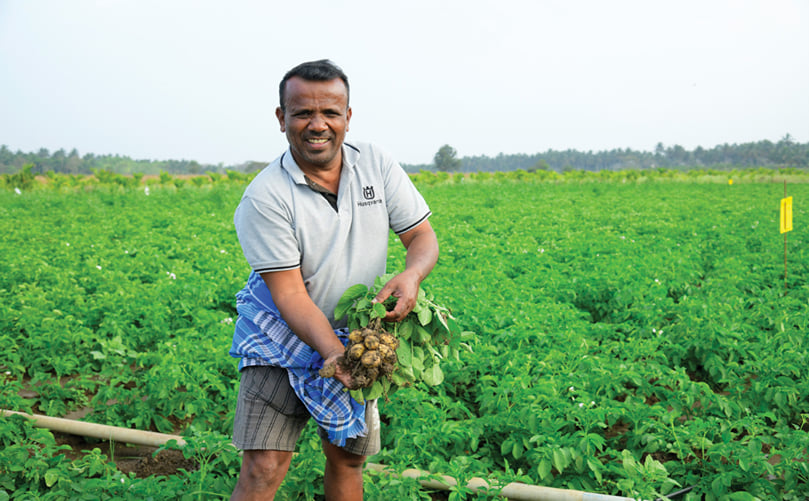
Sustainable harvesting of Apical Rooted (ARC) potatoes
Challenges in Apical Rooted Cutting (ARC) Production
Technical and Infrastructure Barriers: Apical Rooted Cutting (ARC) technology demands a high level of technical precision and reliable infrastructure. Rooting success rates typically range between 70–95%, depending on cultivar responsiveness, environmental control and technician skill. Sterile laboratory conditions are essential to prevent microbial contamination, requiring laminar flow hoods, autoclaves and controlled rooting chambers. In tropical and subtropical regions maintaining ideal temperature (18–22°C) and humidity (80–90%) often depends on continuous power supply, which adds to operational costs. Energy intensive cooling and lighting systems, especially in rural or off-grid areas can raise production expenses and occasionally disrupt rooting consistency.
Variability and Quality Control: Physiological factors such as apical dominance and hormone sensitivity contribute to variation in rooting and shoot emergence. Some cultivars particularly diploid and heat sensitive genotypes exhibit weaker hormonal responses to auxins like IBA or NAA, leading to uneven root initiation. During the hardening phase, exposure to fluctuating temperature and humidity can reduce survival rates by 10–20%, especially in hot, dry zones. Inadequate acclimatization protocols or poor mist house ventilation can also result in desiccation or fungal infections. Consistent monitoring and fine tuning of media composition, hormone balance and environmental controls are therefore critical to maintain uniform quality across batches.
Adoption Hurdles: Despite its agronomic advantages, ARC adoption among smallholders remains limited. Many farmers and local nurseries lack hands on training in tissue culture, cutting preparation and hardening practices. Furthermore, in several regions, national seed certification frameworks have yet to fully recognize ARC derived planting materials as equivalent to conventional G0 or G1 seed, slowing formal market entry. Climatic challenges particularly excessive humidity in subtropical environments can cause stem rot or fungal infection in 15–25% of cuttings, highlighting the need for improved integrated pest and disease management (IPDM) strategies and climate resilient propagation protocols.
Economic Constraints: While ARC offers rapid returns once established, the initial investment is a major barrier for small scale producers. Setting up a basic ARC facility including tissue culture lab, rooting chamber and mist house typically costs between USD 20,000 and 50,000. Although return on investment (ROI) can be achieved within one to two years under efficient management, the upfront financial burden discourages many smallholders without institutional or cooperative support. Moreover, in several regions, the market channels for ARC derived seed potatoes are still developing and limited consumer awareness can constrain sales despite high seed quality. Strengthening public private partnerships, offering technical training and introducing subsidized starter units could help overcome these financial and logistical challenges.
Innovations and Future Prospects in Apical Rooted Cutting (ARC) Technology
Automation and Smart Systems: Recent advances in automation are revolutionizing Apical Rooted Cutting (ARC) propagation. Robotic cutting machines and automated trimming tools now ensure precise excision of apical nodes, significantly improving consistency and throughput. IoT-integrated rooting chambers equipped with real-time sensors for temperature, humidity and nutrient flow have achieved up to 95% rooting uniformity in pilot programs across India and East Africa. These smart systems minimize human error and optimize microclimatic parameters through AI-based feedback loops making large scale, continuous production more feasible and cost effective.
Bio-Stimulants and Nano-Fertilizers: Biological enhancers and nano technologies are also enhancing ARC performance. Seaweed extract-based bio-stimulants have been shown to improve root initiation by 10–15%, while formulations containing amino acids and humic substances enhance root biomass and nutrient absorption. Additionally, nano-fertilizers especially nano-iron and nano-zinc allow precise nutrient delivery to the rooting zone, reducing overall input use and environmental impact. These approaches align with global sustainability goals by improving efficiency while minimizing chemical dependence.
Genetic Innovations and CRISPR Integration: ARC technology is increasingly being combined with modern breeding tools to accelerate genetic improvement. CRISPR-Cas9 and related gene editing systems are being explored to develop ARC compatible lines with improved rooting ability, stress tolerance and disease resistance. For example, CRISPR-based modifications targeting genes associated with late blight resistance and heat tolerance can be rapidly propagated through ARC systems, dramatically reducing the time required for variety release. This integration of biotechnology with vegetative propagation positions ARC as a platform for next generation seed production.
Decentralized and Portable ARC Systems: To enhance accessibility, researchers are developing low cost, solar powered ARC kits designed for smallholder and community level seed production. These portable modules, containing rooting trays, misting systems and temperature control units, enable on-farm ARC propagation even in resource limited settings. Extension projects in Kenya, India and Vietnam are demonstrating the potential of such systems to democratize clean seed access and strengthen local seed supply chains.
Future Prospects: Looking ahead, ARC is expected to play a transformative role in global potato seed systems. Projections suggest that it could supply up to 40% of certified seed requirements globally within the next decade, significantly reducing dependence on imported tuber seed. Integration with vertical farming and urban seed hubs offers opportunities for year-round seed production close to markets, while AI-driven climate models are expected to optimize propagation protocols under variable environmental conditions. Collectively, these innovations position ARC as a cornerstone of future ready, climate smart potato agriculture.
Global Impact and Role in Food Security
Apical Rooted Cutting (ARC) technology has emerged as a transformative innovation in global potato seed systems, empowering more than 300,000 farmers across Asia and Africa through affordable, high quality seed access. By drastically reducing seed costs often by up to 40% compared with conventional tuber-based systems ARC has expanded certified seed coverage from 10% to nearly 35% in several developing regions, strengthening national food security and rural livelihoods.
In India, ARC-based seed programs now support over 500,000 hectares of potato cultivation contributing to significant yield improvements and reduced dependency on imported seed. Similarly, in Ethiopia, ARC has helped cut seed imports by more than 50%, building a self-reliant and disease-free domestic seed supply chain.
These impacts extend beyond production efficiency: ARC’s integration with biofortified, high zinc potato varieties directly contribute to addressing micronutrient deficiencies among an estimated 800 million global potato consumers helping combat “hidden hunger” in vulnerable populations.
ARC also strengthens resilience against climate variability by shortening seed cycles and diversifying multiplication sites, ensuring a continuous flow of planting material even during droughts or disease outbreaks. Modeling studies suggest that widespread ARC adoption could add up to 20 million tons to global potato output annually, supporting both food availability and farmer income stability.
Success stories on the ground underscore ARC’s transformative potential. In Kenya, smallholders like James Nderui have expanded from subsistence to commercial seed production, supplying certified cuttings to local cooperatives and markets. In the Philippines, ARC integration within highland farming systems particularly through partnerships with the Northern Philippines Root Crops Research and Training Center (NPRCRTC) has revitalized local potato cultivation, created sustainable employment and reduced post-harvest losses.
Overall, ARC is not just a propagation method it represents a scalable, climate smart and inclusive solution that links innovation with impact. By bridging laboratory precision with field level adaptability, ARC contributes meaningfully to the global goals of food security, nutrition and sustainable agricultural development.