

Introduction
Liquid fertilizers have become integral to modern potato (Solanum tuberosum) production, providing growers with flexible solutions to meet the crop’s high nutrient demands while addressing challenges such as shallow rooting, variable soil textures, and fluctuating climatic conditions. These water-soluble formulations ensure rapid bioavailability and enable precise delivery through fertigation, foliar sprays or in-furrow applications, effectively correcting macronutrient (N, P, K) and micronutrient deficiencies during key stages like tuber initiation and bulking.
Compared to conventional granular fertilizers, liquid formulations minimize fixation losses in sandy or calcareous soils common in major potato-growing regions while improving water and nutrient use efficiency by up to 30% under irrigated systems. Global studies, including long-term trials in regions such as Minnesota and Prince Edward Island, have demonstrated yield increases of 15–30%, enhanced tuber quality (e.g., starch content exceeding 18%, reduced incidence of common scab) and extended storage life by up to 20%.
Given that potatoes remove approximately 4–6 kg of NPK per tonne of tubers, liquid fertilizers integrate well into Integrated Nutrient Management (INM) strategies by combining synthetic and organic inputs to sustain soil health and reduce environmental risks like nitrate leaching (often 50–100 kg/ha in sandy soils). In the context of sustainable and precision agriculture, liquid formulations align with advanced monitoring tools such as electrical conductivity (EC) sensors and petiole analysis to support data-driven nutrient management. Furthermore, recent studies highlight their synergistic effects with biofertilizers, enhancing microbial activity, nutrient cycling and overall crop resilience.
What Are Liquid Fertilizers?
Liquid fertilizers consist of highly soluble formulations engineered for easy dilution and uniform delivery through irrigation or foliar spraying systems. In potato (Solanum tuberosum) cultivation, they include water-soluble salts such as urea ammonium nitrate (UAN) for nitrogen supply, chelated micronutrient blends, and organic-based liquids like fish emulsions or fulvic acid–enriched solutions that release nutrients gradually.
Unlike granular fertilizers, liquids achieve solubility rates of up to 99%, enabling rapid uptake through roots or foliage—crucial for potatoes’ short growth cycle and high nutrient demand. Formulations are available in balanced NPK ratios (e.g., 20-20-20) or as specialized products such as potassium thiosulfate (KTS) to enhance stress tolerance. Bio-enhanced variants containing beneficial microbes (e.g., Bacillus amyloliquefaciens) further improve nutrient mobilization and soil biological activity.
Their adaptability suits both smallholder and large-scale irrigated systems, with research showing 20–50% greater nutrient-use efficiency compared to granular fertilizers due to reduced fixation and leaching losses. In-furrow applications at planting also promote early root vigor and minimize early-season nutrient stress, supporting uniform crop establishment and higher productivity.
Types of Liquid Fertilizers for Potatoes
Water-soluble fertilizers (WSFs) are the most widely used in potato cultivation, providing complete NPK formulations such as 13-0-44 (potassium nitrate) for tuber bulking and 20-20-20 for balanced vegetative growth. These products dissolve completely in water, ensuring compatibility with fertigation systems and preventing emitter clogging.
Foliar-applied liquids, such as potassium thiosulfate (KTS, 0-0-25 + 17S), deliver rapid potassium correction through leaf absorption, particularly effective during mid-season deficiency or high-demand stages.
Organic-based liquids, including fish hydrolysates (5-1-1) and seaweed or humic–fulvic acid extracts, release nutrients gradually while promoting microbial activity, improving stress tolerance, and enhancing soil health.
Chelated micronutrient solutions (e.g., EDTA-Zn, Fe or Mn) maintain nutrient availability in alkaline soils by preventing precipitation or fixation, ensuring consistent uptake.
Fulvic acid-enriched WSFs enhance root penetration and nutrient translocation, often increasing yield by 10–20%.
Thiosulfate-based fertilizers such as ammonium thiosulfate provide a dual source of nitrogen and sulfur, buffering soil pH and improving nutrient efficiency under acidic or sandy conditions.
Biofertilizer liquids containing plant growth promoting rhizobacteria (PGPR) like Bacillus spp. or Azospirillum spp. integrate biological nitrogen fixation and nutrient solubilization, reducing chemical fertilizer dependency by up to 25% while supporting sustainable production.
Benefits of Liquid Fertilizers in Potato Production
Liquid fertilizers provide rapid nutrient uptake, with foliar sprays achieving 80–90% absorption within hours, effectively correcting deficiencies during critical stages like tuber initiation and bulking. Compared to solid fertilizers, they enhance nutrient-use efficiency by up to 30% through precise fertigation, reducing runoff losses in sandy or irrigated soils common to potato cultivation.
In-furrow liquid applications stimulate root growth and speed emergence by 7–10 days, resulting in larger tubers and increased dry matter content (18–22%). Sulfur-enriched products such as potassium thiosulfate (KTS) lower common scab incidence and improve skin quality, extending post-harvest storability by up to 20%.
Bio-enhanced formulations support rhizosphere microbial diversity, strengthening nutrient cycling, disease resistance and long-term soil fertility. Economic returns rise by 10–20% due to higher yields and reduced labor, while environmental benefits include minimized nutrient leaching, lower greenhouse gas emissions and improved sustainability in intensive production systems.
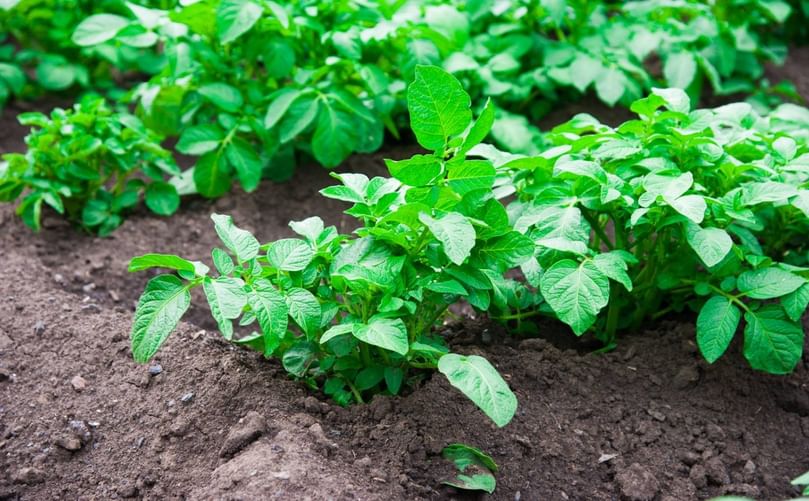
Vigorous Potato Plants Thriving with Precision Liquid Nutrition
Application Methods: Foliar Spraying
Foliar spraying is an efficient method of delivering liquid fertilizers directly to potato foliage, allowing for rapid correction of nutrient deficiencies during active growth. Typically, 2–4% fertilizer solutions are applied using boom or knapsack sprayers at 20–30 gallons per acre, contributing up to 30–40% of the total nutrient supply between the vegetative and bulking stages.
High-volume applications (100–200 gallons per acre) ensure thorough canopy coverage without leaf burn, while surfactants or spreader-stickers improve adhesion and penetration through the potatoes waxy leaf surface. Studies show that foliar potassium thiosulfate (KTS, 0–0–25) enhances potassium mobility under stress, increasing yields by 50–60% and improving tuber size uniformity. Nitrogen-rich formulations such as 24–0–12 stimulate canopy vigor during early growth but should not exceed 20% of total N input to prevent excessive vegetative growth or delayed maturity.
Micronutrient foliar applications especially zinc (Zn), boron (B) and manganese (Mn) at 0.5–1 lb/acre are critical during flowering and tuber initiation to prevent hidden deficiencies. Evening or early-morning sprays under low temperatures and humidity below 80% minimize volatilization and phytotoxicity risks. Compatibility with most pesticides and fungicides allows tank-mixing, optimizing labor and field efficiency.
Field research from regions such as the U.S. Northwest and Europe demonstrates 10–20% yield improvements with weekly foliar programs, particularly in calcareous or sandy soils where nutrient fixation limits availability. When integrated into fertigation schedules, foliar spraying serves as a complementary tool for sustaining nutrient balance, boosting photosynthetic efficiency and enhancing tuber quality in intensive potato systems.
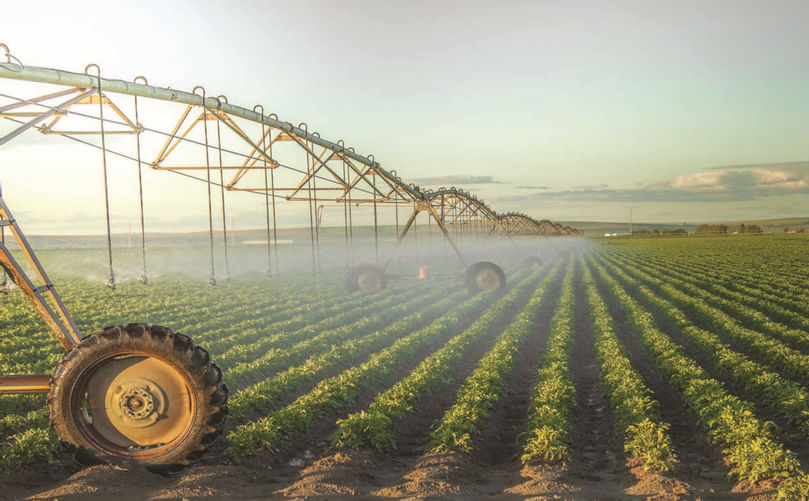
Foliar Application of Liquid Fertilizer
Application Methods: Fertigation
Fertigation is one of the most efficient nutrient delivery systems in modern potato (Solanum tuberosum) cultivation, allowing precise application of liquid fertilizers through irrigation systems such as drip, sprinkler or center-pivot setups. This technique synchronizes nutrient supply with plant demand, improving uptake efficiency and minimizing losses from leaching or volatilization.
Typically, 50–70% of the total nitrogen requirement is applied via weekly fertigation pulses of 5–10 kg N/ha starting soon after emergence and continuing through tuber bulking. Subsurface drip irrigation at depths of 30–40 cm optimizes nutrient distribution in the active root zone, enhancing potassium use efficiency and increasing tuber yields by up to 20%, while also saving 25–35% irrigation water compared to surface systems.
Fertigation generally begins 14–21 days after hilling with low initial concentrations (20–30% of total N) to prevent root burn. Balanced multi-nutrient blends such as 19-19-19 or 12-6-24 are used during early vegetative stages to support canopy development, followed by potassium dominant formulations like 0-0-50 or potassium thiosulfate (KTS) during bulking to promote tuber filling and quality. Acidifiers such as phosphoric acid or nitric acid help maintain irrigation water pH between 5.5 and 6.5, ensuring nutrient solubility and minimizing emitter clogging.
Monitoring electrical conductivity (EC) below 1.5 dS/m prevents salt stress, while automation using venturi or piston injectors allows real-time control of nutrient concentrations. Integration with sensors and soil-moisture probes further refines nutrient scheduling for maximum efficiency.
Research from major potato-producing regions including India, Israel, and Prince Edward Island demonstrates that fertigation can improve nutrient use efficiency by up to 90%, reduce fertilizer inputs by 20–30%, and increase yields and tuber quality by 15–25%. The addition of biofertilizers such as Bacillus subtilis or Azotobacter through fertigation enhances microbial activity and root growth, further improving nutrient cycling and soil structure. Studies in Prince Edward Island, for instance, found that integrating BiOWiSH-treated liquid fertilizers boosted profitability through higher marketable yields and reduced input costs.
Overall, fertigation represents a cornerstone of precision nutrient management in potatoes, combining efficiency, sustainability and economic gains while supporting the crop’s high nutrient and water demands.
Timing and Rates for Liquid Applications
Proper timing and rate management of liquid fertilizers are critical in potato (Solanum tuberosum) production to align nutrient availability with physiological demand and maximize uptake efficiency. Liquid applications can be flexibly tailored across growth stages through in-furrow, foliar and fertigation methods, ensuring a continuous and balanced nutrient supply.
At Planting (In-Furrow or Starter Stage): Applying 10–20 gallons per acre of starter solutions such as 10-34-0 or 8-24-0 at planting stimulates early root and sprout development. Placement 2–3 inches below and beside the seed piece prevents salt injury while ensuring close contact with emerging roots. This stage supports rapid emergence and uniform stands, especially in cool soils where phosphorus mobility is limited.
Vegetative Stage (2–4 Weeks After Sprouting): During canopy establishment, foliar sprays of 2–5 gallons per acre of balanced NPK solutions (e.g., 20-20-20 or 24-8-16) enhance shoot growth and chlorophyll formation. Nitrogen-rich liquids (urea ammonium nitrate or urea phosphate) are particularly effective at this phase but should not exceed 20% of total N to prevent excessive vegetative growth or leaf burn.
Tuber Initiation to Bulking (Flowering to 80 Days): This is the most nutrient-intensive period. Weekly fertigation using 15–20 gallons per acre of potassium-rich solutions such as potassium thiosulfate (KTS, 0-0-25) or potassium nitrate (13-0-44) supports tuber enlargement, starch synthesis and specific gravity. Phosphorus and calcium-based liquids (e.g., 0-52-34 or CaNO₃) can be alternated to maintain balance and reduce physiological disorders like hollow heart.
Maturity and Skin Set: Nutrient applications should taper off 10–15 days before haulm killing to improve tuber skin strength and storability. Micronutrient sprays containing boron, zinc and magnesium at 0.5–1 kg/ha rates ensure proper skin development and reduce bruising risks during harvest.
Recommended Rates and Adjustments:
- Nitrogen: 100–150 kg/ha total via liquids, split 50% early and 50% during bulking.
- Phosphorus: 40–60 kg/ha, preferably banded or fertigated for better root accessibility.
- Potassium: 120–180 kg/ha, primarily through fertigation in KTS or nitrate form.
- Micronutrients: Zn (1–2 kg/ha), B (0.5–1 kg/ha), Fe/Mn (as chelates), adjusted based on soil analysis.
Soil and Water Considerations: Sandy soils require frequent low-dose fertigation (5–10 kg N/ha/week) to minimize leaching, while heavier clays can handle higher concentrations per event. Soil moisture and irrigation scheduling strongly influence nutrient response foliar phosphorus absorption can increase by up to 20% under mild drought conditions due to higher leaf permeability.
A fertigation cycle delivering around 20 mm of irrigation water is optimal for uniform nutrient distribution, with electrical conductivity (EC) maintained below 1.5 dS/m to prevent salinity buildup. Solution pH between 5.5 and 6.5 ensures maximum nutrient solubility and compatibility, while over-application or high concentration mixes should be avoided to prevent foliar or root burn.
Challenges and Best Practices
The adoption of liquid fertilizers in potato (Solanum tuberosum) cultivation offers significant advantages, but success depends on proper management to address potential operational and agronomic challenges.
Key Challenges
- System Clogging: Fertigation lines can clog due to undissolved particles, microbial growth or precipitation reactions between incompatible nutrients (e.g., calcium with sulfates or phosphates). This can be mitigated through fine filtration (100–200 mesh), regular flushing, and EC/pH monitoring to ensure solution stability.
- Foliar Burn: High salt concentrations (>2% solutions) or application during hot, dry conditions can cause leaf scorch. Always apply early morning or late evening using diluted sprays (<2%) and add surfactants to enhance adhesion while reducing surface tension.
- Chemical Incompatibility: pH mismatches or improper tank mixes can cause precipitation, reducing nutrient availability. Conduct jar tests before large-scale mixing, particularly when combining KTS, phosphates or micronutrient chelates with pesticides or calcium products.
- Cost Considerations: Liquid fertilizers can carry a 10–20% cost premium over granular types, but this is offset by 15–25% higher yield potential, labor savings and improved nutrient efficiency when correctly managed.
- Nutrient Imbalances: Over-reliance on liquids without soil testing risks nutrient imbalances and long-term soil degradation. Integrating liquids with granular base fertilizers and organic sources helps maintain equilibrium.
Best Practices for Effective Use
- Calibration and Uniform Delivery: Calibrate injectors or sprayers regularly to ensure even nutrient distribution and avoid localized overconcentration.
- Optimal Timing: Schedule fertigation or foliar feeding in cooler periods (evenings) to minimize volatilization and maximize leaf absorption.
- Tank-Mixing Compatibility: Combine products with compatible chemistries (e.g., KTS with fungicides or micronutrients) while avoiding antagonistic mixes like calcium with sulfur-based products.
- Monitoring and Adjustment: Conduct weekly scouting and petiole analysis to assess nutrient status, adjusting concentrations dynamically to match plant demand.
- Sustainability Measures: Alternate chemical liquids with organic or biofertilizer formulations to maintain soil microbial diversity and structure. Incorporate compost teas or fermented potato peels as supplementary nitrogen sources for low-input systems.
- Water Efficiency: Pair liquid fertilizers with deficit or precision irrigation strategies to enhance water and nutrient use efficiency while reducing runoff and leaching losses.
- Farmer Field Insights: Farmers using biostimulant-enriched liquids at planting report improved early vigor and uniform stands. In smallholder setups, integrating homemade liquid compost or fish emulsions alongside commercial blends improves soil carbon levels and reduces dependency on synthetic inputs over time.