

Introduction: Role of Organic Nutrition in Potato Systems
Organic fertilizers play a pivotal role in sustainable potato farming by meeting the crop high nutrient requirements typically 100-200 kg/ha of NPK for yields of 30-50 t/ha while promoting soil health, reducing environmental impact and enhancing resilience against climate variability. Derived from natural sources, these fertilizers release nutrients slowly through microbial activity, minimizing leaching by 20-40% in sandy soils and supporting beneficial soil microbes that combat pathogens such as Rhizoctonia solani and Verticillium dahliae. In key potato-growing areas like the U.S. Midwest, Europe and parts of Asia, where soil depletion is common due to shallow rooting depths (20-40 cm), organic amendments like compost and manure can boost cation exchange capacity (CEC) by 15-25%, improve water retention and elevate tuber quality including higher dry matter content (18-22%) and reduced bruising susceptibility.
Studies indicate yield increases of 10-30% when organics substitute 50-70% of synthetic fertilizers with added benefits like 20-50% reduced eutrophication and enhanced carbon sequestration. Integration with practices such as cover cropping, crop rotation and precision soil testing aligns with global organic standards (e.g., USDA NOP, EU Organic Regulation), fostering biofortified tubers richer in micronutrients like iron and zinc. However, challenges like inconsistent nutrient release necessitate strategies like proper composting. Overall, organics support adaptive, eco-friendly potato systems that maintain productivity amid soil degradation and changing climates.
Lush green potato field landscape view representing sustainable organic agriculture
What Are Organic Fertilizers?
Organic fertilizers are carbon-rich materials sourced from living organisms, including animal manures, composts, bone meal, fish emulsions, plant extracts and green manures. They provide essential nutrients through gradual decomposition with 30-70% availability in the first growing season, perfectly suiting potatoes' 90–120-day growth cycle. Beyond macronutrients (N, P, K), they supply micronutrients and organic matter, targeting 3-5% soil organic matter (SOM) levels to enhance microbial diversity, such as mycorrhizal fungi that improve phosphorus uptake by up to 30%. For potatoes, which require 120-150 kg/ha of nitrogen, organics reduce volatilization losses compared to synthetics and mitigate disease pressure through microbial competition and induced systemic resistance.
They also improve soil structure in heavy clays or compacted soils, cutting erosion by 20-30% and increasing aggregate stability. Certification under standards like USDA NOP prohibits synthetic additives and optimal efficacy relies on a C:N ratio of 20-30:1 to ensure steady mineralization without immobilizing soil nitrogen. Research demonstrates that organics boost soil biodiversity with earthworm populations increasing by 50-100%, aiding aeration in hilled potato rows. Additional benefits include enhanced root development and stress tolerance as organics release humic acids that chelate micronutrients like Zn and Fe preventing deficiencies common in alkaline soils.
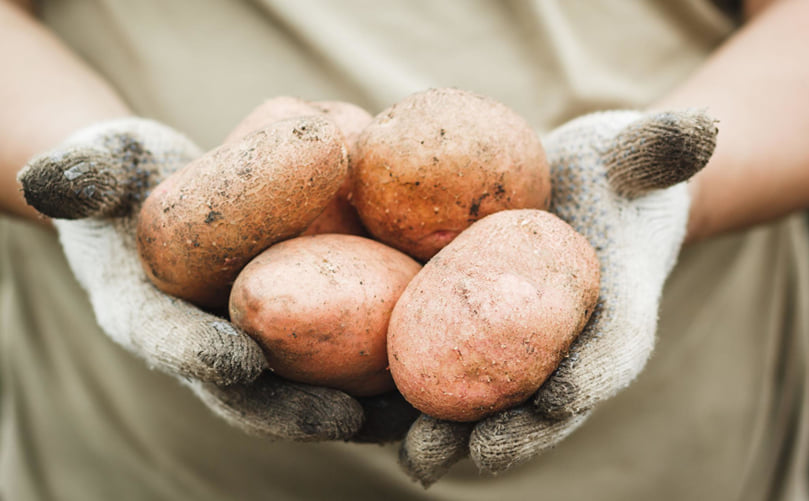
Showcasing Healthy Potato Harvest from Sustainable Farming
Major Organic Fertilizers for Sustainable Potato Production
Farmyard Manure (FYM): Farmyard manure (FYM) is a decomposed mixture of cattle dung, urine, leftover feed and bedding materials such as straw. It is one of the most traditional and widely used organic fertilizers, known for improving both soil fertility and structure. On average, FYM contains about 0.5% nitrogen (N), 0.2% phosphorus (P₂O₅) and 0.5% potassium (K₂O). The nutrients are released slowly during decomposition, ensuring a continuous supply to crops throughout their growth period. FYM enhances the soil’s cation exchange capacity (CEC), increases water-holding ability and reduces compaction, thereby improving root growth and aeration. It also promotes beneficial microbial activity, humus formation and nutrient recycling, which collectively enhance soil health. When applied in combination with inorganic fertilizers, FYM improves nutrient use efficiency and minimizes nutrient losses. To achieve optimum results, it should be thoroughly decomposed for three to four months before application to avoid nitrogen immobilization and the germination of weed seeds.
Compost and Vermicompost: Compost is produced by the aerobic decomposition of organic materials such as crop residues, vegetable waste and animal manure. It serves as a nutrient-rich soil conditioner that enhances the physical, chemical and biological properties of soil. Typically, compost contains about 0.5–1.5% nitrogen, 0.4–1.0% phosphorus and 0.5–1.5% potassium along with various micronutrients. The application of compost improves soil aeration, water retention and microbial diversity while reducing bulk density. It also increases soil organic carbon and helps in stabilizing soil aggregates.
Vermicompost, on the other hand, is produced through the biological activity of earthworms, which decompose organic matter into a finely textured, nutrient enriched material. Vermicompost is richer in readily available nutrients, plant hormones and beneficial microorganisms compared to traditional compost. It enhances root growth, improves nutrient uptake and boosts plant resistance against stress conditions. Regular use of compost and vermicompost not only enhances crop yield and quality but also contributes to waste recycling and reduction of greenhouse gas emissions.
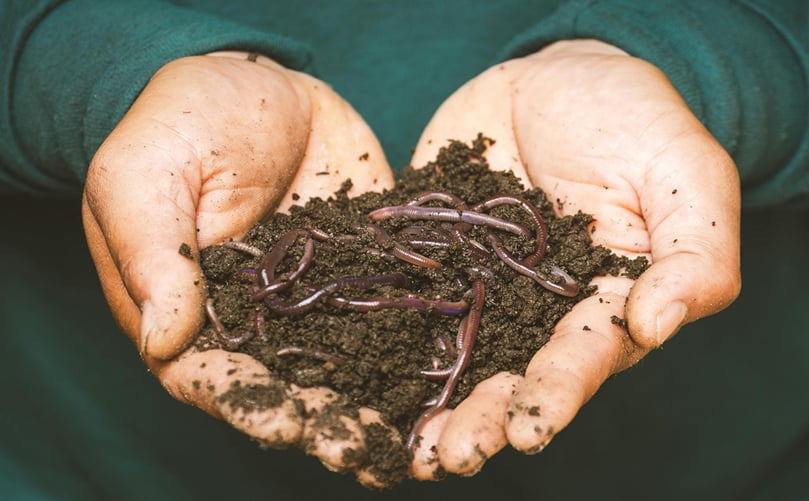
Soil Life in Hand: Earthworm-Rich Organic Manure
Green Manure: Green manure refers to the practice of growing specific crops typically legumes such as sun hemp, dhaincha or clover and incorporating them into the soil while still green and succulent. These crops enrich the soil with organic matter and nitrogen through biological nitrogen fixation. Green manuring improves soil structure, increases water infiltration, enhances microbial activity and suppresses weed growth. It also prevents soil erosion and reduces dependency on synthetic fertilizers. The decomposition of green manure releases nutrients gradually, which are readily available for subsequent crops. This practice not only sustains soil fertility but also enhances long-term soil health and productivity.
Bone Meal and Fish Meal: Bone meal is an organic fertilizer prepared from finely ground animal bones. It is particularly rich in phosphorus and calcium, typically containing about 3–4% nitrogen, 15–25% phosphorus (as P₂O₅) and around 20–25% calcium. Bone meal is especially beneficial for promoting root development, flowering and fruiting in crops. Fish meal, derived from fish processing waste or fish bones is a highly nutritious organic fertilizer containing about 5–8% nitrogen, 4–6% phosphorus and trace amounts of potassium, calcium and magnesium. It serves as a source of both macro and micronutrients and supports soil microbial growth. Both bone meal and fish meal release nutrients slowly, ensuring long-term soil fertility and are widely valued in sustainable and organic farming systems.
Poultry Litter: Poultry litter is a mixture of poultry manure, feathers and bedding materials such as sawdust or rice husk. It is an excellent organic fertilizer rich in nitrogen, phosphorus, potassium, calcium, magnesium and sulfur. Typically, it contains about 1.5–2% nitrogen, 1.4–1.8% phosphorus and 0.8–1% potassium. Poultry litter improves soil fertility, enhances microbial activity and increases the organic matter content of the soil. When applied properly, it provides a quick nutrient boost to crops, particularly during the early growth stages. However, care must be taken to apply it at appropriate rates and times to avoid nutrient runoff, ammonia volatilization and environmental pollution. Composting poultry litter before application is often recommended to reduce pathogen load and odor.
Seaweed Extracts: Seaweed extracts, obtained from marine algae such as Ascophyllum nodosum and Sargassum species are used as both fertilizers and plant biostimulants. They contain essential nutrients, trace elements, natural plant growth regulators such as auxins, cytokinins and gibberellins, as well as amino acids and polysaccharides. Seaweed extracts promote seed germination, root initiation and shoot elongation while improving crop resistance to abiotic stresses such as drought, salinity and temperature extremes. They also enhance nutrient uptake efficiency and improve crop yield and quality. Seaweed products can be applied as foliar sprays or soil amendments and are rapidly absorbed by plants making them highly effective at various growth stages.
Biofertilizers: Biofertilizers are preparations containing living microorganisms such as nitrogen fixing bacteria (Azotobacter, Azospirillum, Rhizobium), phosphate solubilizing bacteria (PSB), potassium mobilizing bacteria (KMB) and beneficial fungi such as mycorrhiza. These microorganisms colonize the rhizosphere or plant roots and enhance nutrient availability through biological nitrogen fixation, phosphorus solubilization and mobilization of other essential elements. The application of biofertilizers improves soil fertility, enhances root development and stimulates plant growth while reducing the need for synthetic fertilizers. Regular use contributes to sustainable soil management, improved nutrient use efficiency and environmental protection.
Biochar and Bio-organic Blends: Practical Uses
Biochar, a stable carbon rich material produced through the pyrolysis of biomass such as crop residues, wood chips or even potato peels at temperatures ranging from 350°C to 650°C has gained significant attention as a sustainable soil amendment in potato cultivation. Its highly porous structure increases the soil surface area and cation exchange capacity, enabling improved water retention by 20–30% in coarse textured soils and reducing nutrient leaching losses of nitrogen and phosphorus by 25–40%. This physical and chemical enhancement creates a favorable environment for beneficial microbial colonization, supporting diverse bacterial and fungal communities that enhance potato resilience to drought, pathogens and abiotic stress.
In practical field use, biochar is typically incorporated at rates of 5 to 20 tonnes per hectare before planting. Long-term studies have demonstrated yield increases of 10–25% in potatoes when biochar is co-applied with organic manures or compost, particularly in acidic or nutrient depleted soils, such as those found in the U.S. Midwest or the Andean highlands. Biochars derived from feedstocks like cull potatoes or pine bark can function as liming agents, increasing soil pH by 0.5 to 1.0 units while simultaneously enhancing potassium availability an essential nutrient for tuber bulking and quality. Moreover, biochar’s porous matrix serves as an effective microbial carrier. When enriched with plant growth promoting rhizobacteria (PGPR) through fermentation or inoculation, biochar can suppress soil borne diseases such as Verticillium wilt by 15–30% through mechanisms of competitive exclusion and enhanced microbial antagonism.
Bio-organic blends represent a complementary approach that integrates organic matter such as compost, manure or crop residues with biofertilizers containing beneficial microorganisms like Rhizobium, Bacillus, Pseudomonas or mycorrhizal fungi. These formulations provide a balanced, slow-release nutrient profile, typically around 2–2–2 (N–P–K), while simultaneously facilitating phosphorus solubilization and biological nitrogen fixation. Such blends can supply 50–70% of the potato crop’s nutrient requirements reducing dependency on synthetic inputs.
In field practice, bio-organic blends are applied at rates of 10 to 30 tonnes per hectare, either through broadcasting before planting or as seed tuber coatings to promote uniform emergence and early root establishment. Their use has been shown to improve tuber quality by increasing starch accumulation, reducing physiological disorders such as hollow heart and enhancing soil enzyme activity that accelerates organic matter decomposition. Advanced formulations such as fermentation enriched bio-organic blends that combine biochar with compost tea or microbial extracts further amplify these benefits. These enhanced blends deliver amino acids, phytohormones and organic acids that stimulate root elongation and lateral root branching leading to better nutrient uptake and improved plant vigor in hilled potato systems.
Collectively, the integration of biochar and bio-organic blends represents a promising strategy for sustainable nutrient management in potato production. Their combined effects on soil fertility, microbial health and crop performance make them vital components of climate resilient and regenerative agricultural systems.
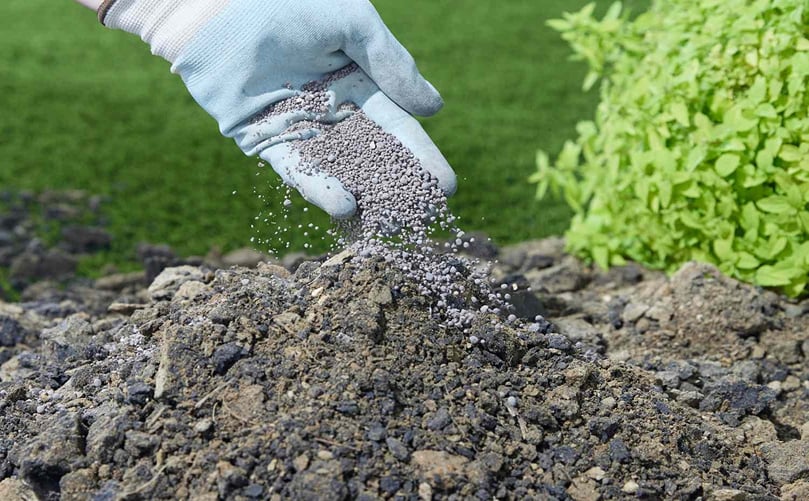
Biochar-Enriched Compost for Carbon Sequestration and Soil Health
Integration of Organic and Mineral Fertilizers in Potato Cultivation
Integrating biochar and bio-organic blends with mineral forms a hybrid nutrient management system that enhances both productivity and environmental sustainability. In potato cultivation, a balanced strategy typically involves supplying 50–70% of the crop’s NPK requirements through mineral fertilizers such as urea, superphosphate or muriate of potash and the remaining 30–50% through organic amendments. This integrated approach has consistently produced 15–30% higher yields and improved soil fertility compared to the exclusive use of mineral fertilizers. The synergistic effects arise from the complementary release patterns of organic and inorganic nutrients minerals provide immediate availability, while biochar and organics sustain a gradual nutrient supply and improve soil microbial activity.
In acidic soils, biochar inherent liming capacity enhances the efficiency of mineral potassium fertilizers by increasing soil pH and cation exchange capacity, allowing fertilizer rates to be reduced by up to 20% without compromising yield. Similarly, bio-organic blends containing nitrogen fixing and phosphate solubilizing microorganisms can replace up to 70% of the chemical nitrogen input. These microbial inoculants accelerate the mineralization of organic nitrogen and synchronize nutrient availability with the potato’s peak demand period, particularly during tuber initiation and bulking.
Field experiments have shown that combined applications of organics, biochar and mineral fertilizers significantly enhance soil bacterial diversity and nutrient use efficiency. Nitrogen use efficiency (NUE) can increase to 50–70%, while nitrous oxide (N₂O) emissions one of the major greenhouse gases associated with fertilizer use can be reduced by 20–40% through improved microbial regulation of nitrogen cycling. Over time, the incorporation of organic materials builds soil organic matter (SOM), enhancing nutrient retention and buffering capacity. When applied within rotational systems, this integrated nutrient management approach supports sustainable intensification by gradually reducing dependence on synthetic inputs while maintaining or even increasing yield potential.
Benefits of Organic Fertilizers in Potato Production
Organic fertilizers offer multifaceted advantages, delivering yield increases of 10-25% through consistent nutrient supply with poultry manure combined with reduced synthetics boosting outputs by 30-60 cwt/acre in trials. They enhance soil physical properties, increasing water holding capacity by 20-30% in sandy soils and improving nutrient use efficiency (NUE) to 40-60% versus 20-30% for synthetics. Tuber quality benefits include elevated starch content (18-22%), higher specific gravity for better storage and reduced disease incidence (e.g., common scab by 20-30% via antagonistic microbes).
Environmentally, they lower greenhouse gas emissions by 20-40%, promote carbon sequestration (up to 1-2 t/ha/year with biochar blends) and minimize runoff pollution. Economically, return on investment can reach 5-10:1 due to lower long-term input costs and premium prices for organic produce. Biofortification enhances tuber micronutrient levels, such as 20-50% higher Fe and Zn, supporting human nutrition in deficient regions. Long-term studies show improved soil microbial diversity with bacterial communities increasing potato resilience to drought and pests. Combined with biofertilizers, organics can elevate potassium uptake, further boosting yields in potassium demanding varieties.
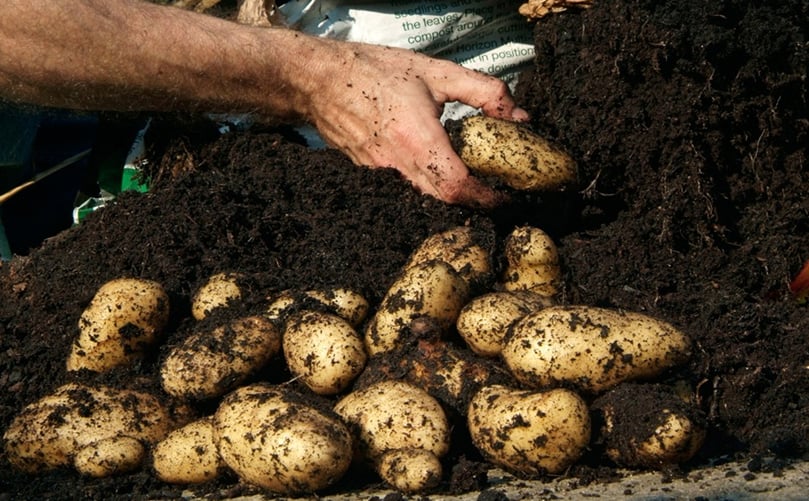
Healthy Potato Tubers from Organic Nutrient Management
Application Methods: Broadcasting and Incorporation
Broadcasting and incorporation are among the most effective methods for applying organic fertilizers such as compost, farmyard manure and poultry litter in field crops. In the broadcasting method, organic fertilizers are evenly spread over the soil surface typically at rates of 20 to 40 tonnes per hectare prior to planting. This is followed by incorporation into the soil using tillage implements to a depth of about 15 to 20 centimeters. Incorporation ensures uniform nutrient distribution within the root zone, prevents surface crusting, reduces volatilization losses and enhances the contact between organic materials and soil microbes, thereby improving nutrient mineralization.
This approach is particularly suitable for enriching base phosphorus and potassium levels in nutrient depleted soils as well as for improving soil organic matter content. In addition to pre-plant broadcasting, side dressing applications of 10 to 20 tonnes per hectare of well-decomposed manure at the hilling or early vegetative stage can effectively supply nitrogen to meet crop demands during rapid growth phases. Deep incorporation of organic fertilizers also minimizes the risk of salt injury or “burn” that can occur with high salinity manures and supports the establishment of cover crops for erosion control, potentially reducing soil loss by up to 30 percent.
Modern mechanized equipment such as manure spreaders or compost broadcasters ensures uniform field application, while integration with precision agriculture technologies such as GPS guided tractors or variable rate applicators allows for site specific nutrient management based on soil variability. This combination of traditional organic inputs with precision technology enhances fertilizer use efficiency, improves soil health and promotes sustainable nutrient cycling within the production system.
Application Methods: Liquid and Foliar
Liquid organic fertilizers, such as fish emulsion, compost tea or seaweed extract are increasingly used for rapid nutrient delivery and mid-season correction of deficiencies. These formulations are typically diluted to concentrations of 2–4% (v/v) before application and can be administered through fertigation systems or as foliar sprays. When applied through foliar feeding, nutrient absorption efficiency can reach 70–80%, providing a quick response to deficiencies in nitrogen, potassium or micronutrients such as iron, zinc and manganese.
Recommended application rates generally range from 5 to 10 liters per hectare on a biweekly schedule, depending on crop type and growth stage. The addition of natural surfactants or wetting agents enhances leaf surface adhesion and nutrient uptake. Foliar application is particularly advantageous for supplying trace elements that are often rendered unavailable in high pH soils due to nutrient fixation. Furthermore, regular foliar feeding with organic liquid formulations has been shown to improve photosynthetic activity, stimulate enzyme functions and enhance plant resilience under stress conditions such as heat, drought or salinity.
Integration of liquid organic fertilizers into fertigation systems allows uniform nutrient delivery through irrigation water, ensuring efficient use of inputs and minimizing losses. This method supports both conventional and protected cultivation systems by maintaining steady nutrient availability, promoting balanced growth and improving overall crop quality.
Timing and Rates for Organic Applications
Proper timing and rate of organic fertilizer application are critical to synchronizing nutrient release with crop demand and ensuring optimal yield and soil health. Pre-plant applications typically involve incorporating 20 to 50 tonnes per hectare of well-decomposed compost or farmyard manure into the soil two to four weeks before planting. This allows sufficient time for the initial mineralization of nitrogen, phosphorus and potassium, creating a balanced nutrient foundation for early root and shoot development. The incorporation process also enhances soil organic matter and microbial activity, establishing favorable conditions for seedling establishment.
During the vegetative growth stage, usually two to four weeks after crop emergence, a side dressing of 10 to 20 tonnes per hectare of manure or enriched compost can be applied to provide additional nitrogen and sustain vigorous vegetative growth. As the crop transitions into the bulking or reproductive phase typically from flowering to around 80 days after planting foliar applications of organic liquid fertilizers such as fish emulsion, compost tea or seaweed extract at rates of 5 to 10 liters per hectare per week are recommended. These applications supply readily available nutrients to support tuber or fruit expansion and enhance stress tolerance.
Overall nutrient management in organic systems generally targets a total nitrogen input of 100 to 150 kilograms per hectare, split approximately 60% as pre-plant basal application and 40% during in-season topdressing or foliar feeding. Adjustments should be based on periodic soil testing with the goal of maintaining soil organic matter levels between 3% and 5%. In sandy soils, frequent low dose applications are preferred to minimize nutrient leaching, whereas heavier soils such as clays benefit from higher initial incorporation due to their greater nutrient retention capacity.
Crop nutrient uptake curves typically indicate that the highest nutrient demand occurs during the bulking phase, particularly for potassium, which may reach up to 300 kilograms per hectare of requirement. Therefore, ensuring adequate potassium availability through composts rich in K-bearing materials or supplementary organic amendments is crucial for maximizing tuber size, quality and storage potential.
Considerations and Challenges in Organic Fertilizer Management
While organic fertilizers offer numerous agronomic and environmental benefits, their effective use requires careful management to address certain limitations and ensure consistent nutrient availability. One of the primary challenges is the variability in nutrient mineralization, which can range from 30% to 70% during the first year, depending on temperature, moisture and microbial activity. This gradual and unpredictable release pattern can lead to temporary nutrient deficiencies if not properly monitored. To achieve a balanced decomposition rate and nutrient release, organic materials should be composted to maintain an optimal carbon-to-nitrogen (C: N) ratio of 20:1 to 30:1 before field application.
Raw manures, if applied directly, can pose risks of pathogen contamination particularly from Escherichia coli or Salmonella which can affect both crop safety and human health. These risks can be effectively mitigated through proper composting practices that maintain temperatures of around 60°C for a minimum of three consecutive days, ensuring pathogen inactivation and stabilization of organic matter.
Economic considerations also play a role, as the initial cost of organic fertilizer application is often 20% to 50% higher than that of synthetic fertilizers due to transportation, bulk handling and lower nutrient concentration. However, these costs are typically offset over time by improved soil structure, enhanced water retention, higher microbial activity and potential yield premiums in organic or sustainably certified markets.
Nutrient imbalances, especially excess phosphorus from repeated manure or compost applications can result in runoff and eutrophication of nearby water bodies. Regular soil testing and balanced nutrient planning are therefore essential to prevent accumulation and ensure long-term soil fertility. Environmental conditions also influence nutrient dynamics; for example, drought or limited soil moisture can significantly slow nutrient mineralization making supplemental irrigation critical to maintain microbial activity.
Additionally, the absence of synthetic pesticides or fungicides in organic systems can increase the risk of pest and disease incidence, necessitating integrated pest management (IPM) approaches that combine cultural, biological and mechanical control methods. Over application of organic amendments, even though natural can contribute to nutrient leaching, salinity buildup or groundwater contamination, emphasizing the importance of precision in both timing and dosage.
Best management practices such as crop rotation, cover cropping and the use of microbial inoculants enhance nutrient cycling, improve resilience to stress and maintain long-term soil productivity. By integrating these practices, the challenges associated with organic fertilizer use can be mitigated, ensuring both agronomic efficiency and environmental sustainability.