

Introduction
Potato production from True Potato Seed (TPS) represents a transformative alternative to conventional seed tuber propagation, particularly advantageous in developing regions where access to high-quality tubers is limited. This method utilizes the botanical seeds produced through sexual reproduction in potato plants, offering substantial benefits in cost efficiency, disease management and logistical convenience.
TPS seeds are lightweight, easily stored and require only 25–100 grams per hectare, compared to 2–3 tons of seed tubers, thereby simplifying transportation and minimizing post-harvest losses. Moreover, the use of TPS enhances genetic diversity, facilitating the development of varieties with improved pest resistance and environmental adaptability.
On a global scale, TPS contributes to sustainable agriculture by reducing input demands, supporting biodiversity and strengthening food security in regions vulnerable to climate variability. Research further indicates that TPS-based cultivation can reduce production costs by up to 50% while maintaining or even improving yields under favorable growing conditions, making it a highly viable option for smallholder farmers.
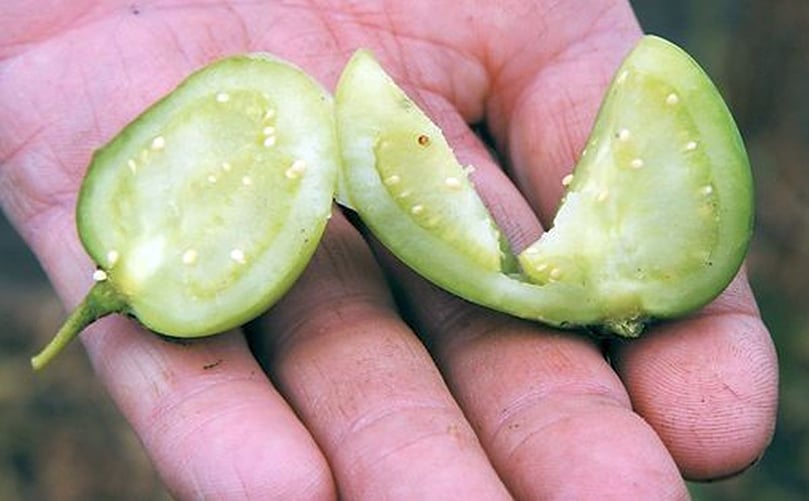
Potato fruits containing true seeds
What Is True Potato Seed (TPS)?
Definition
True Potato Seed (TPS) refers to the botanical seeds produced by the potato plant (Solanum tuberosum L.) through sexual reproduction, as opposed to the vegetative propagation method using seed tubers. These seeds develop inside small, green, berry-like fruits that form after successful pollination and fertilization of potato flowers. Each berry typically contains 200–300 tiny seeds, measuring approximately 1–2 mm in diameter.
Unlike clonal seed tubers which are genetically identical to the mother plant TPS represents a genetically variable population, derived from either open pollination or controlled hybridization. This genetic variability enables the expression of novel traits such as improved disease resistance, yield potential or adaptability to stress environments. However, it also introduces phenotypic variation in plant and tuber characteristics, which must be managed through hybrid breeding or selection programs to ensure uniformity and desired performance.
TPS is naturally free from tuber-borne diseases such as bacterial wilt (Ralstonia solanacearum), viruses (e.g., PVY, PVX, PLRV) and late blight pathogens (Phytophthora infestans), as these are not transmitted through true seeds. The seeds are lightweight, easy to handle and highly storable, maintaining viability for 5–10 years under cool (≤10°C), dry conditions making them ideal for long-term seed systems and international distribution.
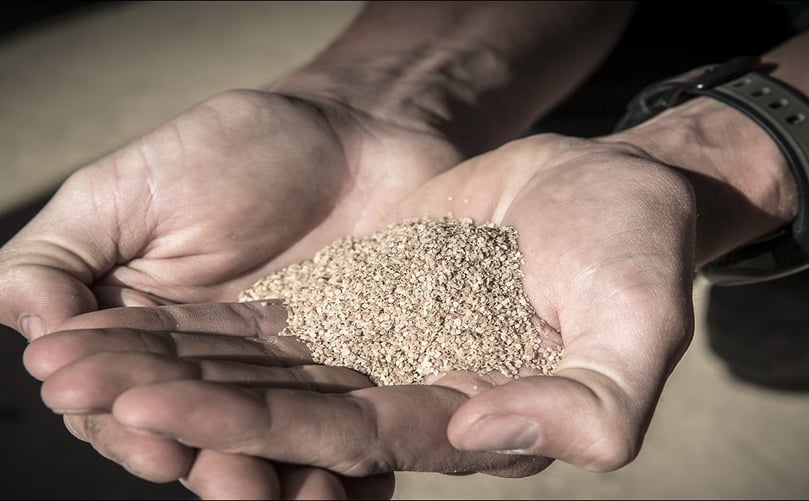
Close-up of raw true potato seeds
Purpose and Importance
The primary purpose of True Potato Seed (TPS) is to provide an economical, disease-free and easily distributable planting material that addresses the challenges faced by farmers in regions where quality seed tubers are either unavailable or unaffordable. By drastically reducing the seed input requirement from 2–3 tons of tubers per hectare to just 25–100 grams of TPS, this approach significantly cuts production costs while simplifying transport and storage logistics.
Moreover, TPS plays a crucial role in disease management, as it eliminates the transmission of tuber-borne pathogens such as bacterial wilt, viruses and late blight, which commonly reduce yield and quality in conventional tuber-based propagation systems. Its use also promotes genetic improvement, enabling breeders to develop varieties with enhanced resistance to viruses, tolerance to heat and drought and improved nutritional traits such as higher dry matter or carotenoid content.
Beyond its technical advantages, TPS supports farmer empowerment by allowing local seed production and reducing dependency on centralized and costly seed systems. This decentralization strengthens community-level resilience and promotes self-sufficiency. Furthermore, TPS contributes to climate resilience, as the genetic diversity it introduces helps in the development of varieties capable of thriving under variable and changing environmental conditions. Collectively, these attributes make TPS a cornerstone innovation for sustainable potato production and long-term food security in developing regions.
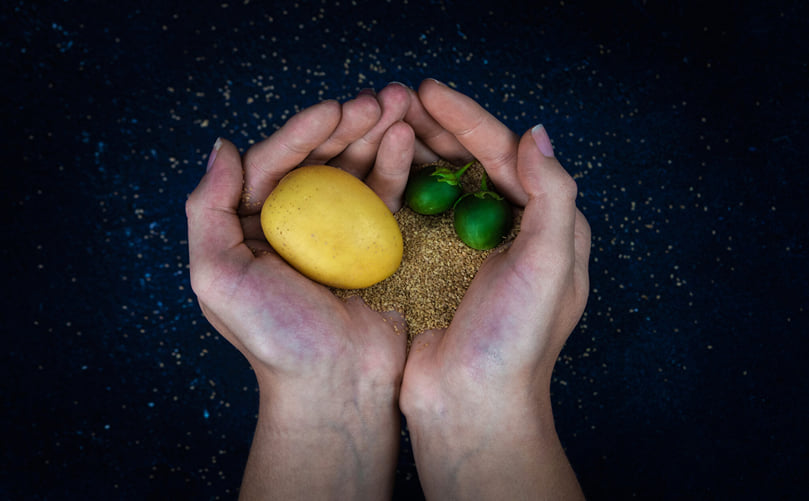
Seeds, berries and potato.(Source: Solynta)
History and Origins of TPS
The origins of TPS trace back to the Andean region of South America, where indigenous communities domesticated potatoes approximately 7,000-10,000 years ago, utilizing seeds from wild relatives to cultivate resilient varieties suited to high-altitude environments. These early practices integrated cultural significance, with potatoes central to Andean diets and rituals. Modern TPS research emerged in the mid-20th century, particularly in India during the 1950s, where scientists at institutions like the Central Potato Research Institute addressed tuber-borne diseases and storage issues in tropical climates.
By the 1970s, international efforts, including those by the International Potato Center (CIP) in Peru, expanded TPS applications for developing nations. Trials in the 1980s and 1990s across Asia and Africa demonstrated comparable yields to tubers, leading to the development of open-pollinated varieties. Advancements in hybrid TPS have continued, with companies pioneering uniform, resistant strains, blending traditional Andean knowledge with contemporary genetics to enhance global adoption.
Comparison with Traditional Seed Tubers
True Potato Seed (TPS) and traditional seed tubers differ fundamentally in their methods of propagation, disease risk, storage efficiency and contribution to sustainable production. Traditional seed tubers are bulky clonal propagules, requiring about 2–3 tons per hectare for planting. While they ensure genetic uniformity and predictable tuber characteristics, they also tend to accumulate diseases such as viruses and bacterial wilt over successive generations, leading to reduced vigor and yield decline. In contrast, TPS relies on botanical seeds produced through sexual reproduction, requiring only 25–100 grams per hectare, which drastically reduces transportation and storage costs by nearly 99%.
From a phytosanitary perspective, TPS is virtually free of tuber-borne pathogens, providing a clean starting material for propagation. Its high genetic diversity promotes the development of lines with enhanced resistance to diseases, pests and environmental stresses though this variability can occasionally result in non-uniform tuber shapes and sizes if not managed through hybrid breeding. Storage requirements also differ markedly: while seed tubers demand cold, ventilated facilities and have a limited shelf life, TPS can be stored for several years in cool, dry conditions without loss of viability.
Economically, TPS offers significant advantages by lowering input and transport costs, while traditional seed tubers are more expensive due to their bulk and perishability. In terms of productivity, conventional tuber-based systems provide consistent yields initially but tend to degenerate over time, whereas well-bred TPS lines have shown 20–30% yield increases under favorable conditions due to improved vigor and resistance. Moreover, TPS accelerates breeding progress, enabling the integration of desirable traits in fewer generations compared to the 8 or more years typically required to develop and multiply new tuber-based varieties.
Finally, from an environmental standpoint, TPS contributes to sustainable agriculture by reducing the need for frequent replanting, minimizing water and pesticide use and lowering the overall carbon footprint associated with seed transport and storage. In summary, while traditional seed tubers remain valuable for maintaining varietal uniformity, TPS offers a modern, cost-effective and eco-efficient alternative well-suited to smallholder and climate-resilient farming systems.
Production Technique of TPS
Production Technique of True Potato Seed (TPS) The production of True Potato Seed (TPS) involves carefully controlled hybridization between selected diploid or tetraploid parental lines of Solanum tuberosum, chosen for complementary traits such as yield potential, disease resistance and adaptability. Typically, one line is designated as the female parent, which is emasculated before anthesis to prevent self-pollination, while the male parent serves as the pollen donor. This cross-pollination approach is designed to exploit heterosis (hybrid vigor) and generate genetically superior progenies.
To maintain genetic purity, field isolation is essential usually a minimum of 500 meters from other potato plots to avoid unwanted pollen contamination. The male parent is planted approximately 7–10 days earlier to ensure synchronized flowering with the female line. Recommended spacing is 60 × 20 cm for male plants and 50 × 15 cm for female plants, optimizing both flower production and pollination efficiency.
Flowering is influenced by day length, with long-day conditions (14–16 hours) favoring floral initiation and berry development. In regions with shorter photoperiods, supplemental artificial lighting is employed to extend day length. Pollination may be carried out manually, often 2–3 times per flower over consecutive days, or facilitated by bees (especially Apis mellifera) introduced into the field to enhance natural pollen transfer.
The berries mature within 45–50 days after pollination, turning greenish-yellow or slightly soft when fully ripe. Harvested berries are then crushed and macerated, followed by fermentation or chemical treatment (commonly with 10% hydrochloric acid) to remove the mucilaginous pulp. The extracted seeds are thoroughly washed, shade-dried to 5–7% moisture content, and subsequently stored at 6–10°C under low humidity conditions to preserve viability and vigor for long-term use.
Fresh TPS often exhibits physiological dormancy, lasting up to 180 days, which can be effectively broken by treating seeds with gibberellic acid (GA₃) at 200–300 ppm for 24 hours prior to sowing. In advanced systems, aeroponic and tissue culture techniques are used to produce virus-free minitubers and to maintain clean parental stocks for consistent hybrid seed production.
Quality assurance is integral to TPS production and includes field inspections for trueness-to-type, disease indexing, seed purity testing and germination evaluation, with viable seed lots expected to maintain germination rates above 80%. These rigorous standards ensure that TPS serves as a reliable and high-performing planting material capable of supporting large-scale, sustainable potato production.
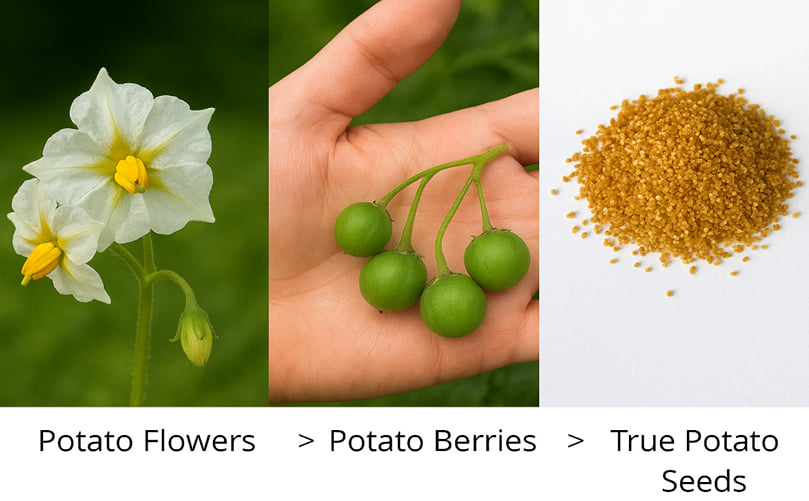
Stages of True Potato Seed Development
Cultivation Practices from TPS
Cultivation of potatoes from True Potato Seed (TPS) involves three main stages: nursery preparation, seedling raising and field transplanting. Seeds are sown in seedbeds or trays filled with well-drained, nutrient-rich soil and are often pelleted for uniform handling. Sowing depth should be 0.5–1 cm, with germination maintained under controlled temperatures of 18–22°C for 20–30 days. Germination rates can be enhanced through seed soaking and alternating temperature regimes.
Seedlings are hardened before transplanting at the 4–6 leaf stage and transplanted in the field at a spacing of 60 × 20 cm. The field should be well-prepared and enriched with organic matter. Although direct seeding is possible, it is less common due to high weed competition. Proper irrigation, balanced NPK fertilization and regular pest and disease monitoring are essential for healthy crop establishment. Mulching helps conserve soil moisture and suppress weeds.
Harvesting is done 90–120 days after transplanting, depending on the variety and growing conditions. The produce can be used directly for consumption or as seed tubers (minitubers) for subsequent planting cycles.
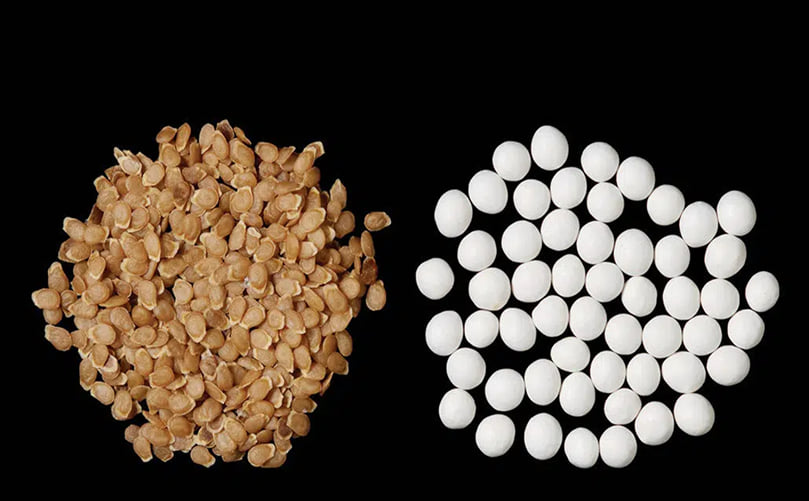
Pelleted TPS for improved sowing
Importance and Benefits of TPS
Yield Impact: True Potato Seed (TPS) has demonstrated significant potential to enhance productivity through the use of vigorous hybrid progenies. Field trials have shown yield increases of 20–30% compared to conventional tuber-based systems, with some hybrids producing up to 40 tubers per plant under optimal management. This improvement is largely attributed to hybrid vigor (heterosis), improved root system development and the absence of seed-borne pathogens that typically reduce tuber performance over generations. Additionally, modern propagation systems using apical cuttings derived from TPS seedlings have greatly enhanced multiplication rates, allowing for high-density planting and rapid scaling of disease-free seed stocks achieved with lower chemical inputs than traditional methods..
Disease Management: One of the most prominent advantages of TPS lies in its role in disease exclusion and integrated pest management. Since true seeds are not carriers of tuber-transmitted pathogens, they eliminate the risk of major diseases such as late blight (Phytophthora infestans), bacterial wilt (Ralstonia solanacearum) and viral infections (PVX, PVY, PLRV). As a result, pesticide use can be reduced by up to 50%, promoting cleaner production systems and healthier agroecosystems. Moreover, the genetic variability within TPS populations allows for the selection and breeding of resistant lines capable of withstanding both biotic and abiotic stresses. The incorporation of biostimulants and beneficial microbes during nursery and field stages further enhances seedling vigor and disease resilience, contributing to long-term crop stability.
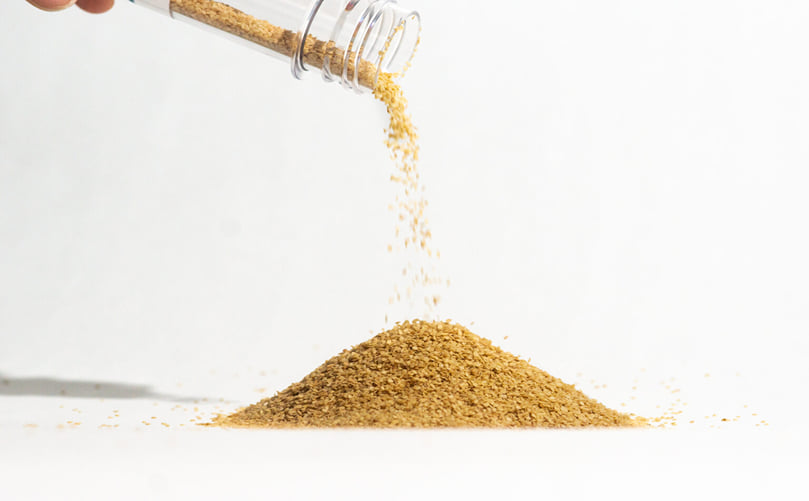
Disease free Solynta true potato seeds. Photo: Solynta
Economic and Sustainability Benefits: Economically, TPS offers a transformative advantage through its compactness, storability, and low input requirement. Whereas seed tubers are bulky and perishable, TPS occupies minimal space, drastically reducing transportation and storage costs by nearly 99%. Its ability to remain viable for several years enables year-round planting and decentralization of seed production, empowering smallholder farmers and reducing dependency on centralized seed systems. From a sustainability standpoint, TPS supports biodiversity conservation and facilitates the breeding of nutrient-rich and stress-tolerant varieties, aligning with the goals of low-input, climate-smart agriculture. Furthermore, TPS shortens breeding cycles, enabling rapid incorporation of desirable traits and proves especially beneficial for marginal lands where traditional tuber propagation is less feasible.
Environmental Considerations: TPS contributes substantially to environmental sustainability by lowering the carbon footprint of potato production. The drastic reduction in transport weight and frequency of seed renewal leads to lower greenhouse gas emissions. Its use also reduces chemical dependence, minimizing soil and water contamination. In TPS-based systems, diverse crop rotations improve soil structure and nutrient balance, mitigating degradation over time. Practices such as straw mulching and zero-tillage enhance soil moisture retention, reduce evaporation losses and help regulate salinity particularly valuable in semi-arid or drought-prone areas. Collectively, these eco-friendly practices reinforce resource conservation, reduce production costs and enhance the resilience of potato farming systems against climatic variability and environmental stresses.
Challenges in TPS Adoption
Genetic Variability: A primary challenge in TPS adoption arises from its sexual mode of reproduction, which introduces significant genetic heterogeneity among progenies. Unlike clonal tuber propagation, which ensures uniformity in tuber size, shape and skin color, TPS-derived plants often produce non-uniform tubers. This variability can affect market acceptability and consumer preference, particularly in commercial potato markets that demand consistent tuber quality for processing and retail. While hybrid TPS lines help mitigate this issue, achieving uniformity still requires rigorous selection and breeding programs, which can be time-consuming and resource-intensive.
Production and Agronomic Issues: From a cultivation perspective, TPS-based systems present agronomic challenges not typically encountered in conventional tuber propagation. Seedlings exhibit slower initial growth, making early-stage management critical for uniform stand establishment. The crop cycle is often extended by 15–20 days, particularly under suboptimal conditions. Moreover, TPS seedlings are more sensitive to heat, drought and poor soil fertility, requiring precise irrigation, balanced nutrient supply and protective shading in some regions. Without adequate care during hardening and transplanting, survival rates may drop to 60–65%, reducing the potential yield advantage. In areas lacking greenhouse or nursery infrastructure, producing healthy seedlings at scale can be particularly difficult, limiting the practical application of TPS.
Access and Skepticism: Adoption of TPS is further constrained by limited access to quality hybrid seed, high initial setup costs and insufficient technical training among farmers. The production of hybrid TPS requires specialized breeding facilities and controlled pollination, making availability sporadic in many regions. Additionally, awareness and trust gaps persist many farmers remain skeptical about the performance of TPS compared to traditional seed tubers. Surveys conducted in regions such as South Asia and the United States indicate that growers often express concerns about yield stability, pest susceptibility, and tuber quality, leading to low adoption rates outside research and pilot-scale programs.
Overall, the successful mainstreaming of TPS depends on overcoming these biological, technical, and perceptual barriers through breeding innovation, farmer education, and supportive policy frameworks. The development of uniform hybrid TPS varieties, coupled with extension training and local seed enterprises, will be key to ensuring broader acceptance and sustainability of this technology.
Economic Analysis
Economic evaluations consistently demonstrate that the adoption of True Potato Seed (TPS) can deliver significant financial advantages compared to conventional seed tuber systems. The most notable saving arises from the drastic reduction in seed input requirements only 25–100 grams of TPS per hectare are needed in contrast to the 2–3 tons of seed tubers traditionally required. This reduction translates to a decrease of nearly 99% in transportation and handling costs, as TPS is lightweight, non-perishable and easy to distribute over long distances.
Beyond savings in logistics, studies have shown that TPS-based cultivation achieves yield parity or even superiority compared to tuber-based planting, particularly in disease-resistant hybrid lines. These hybrids, by virtue of their vigor and pathogen-free status, maintain stable or enhanced yields while substantially reducing pesticide expenditure often by 40–50%. As a result, the overall cost of production per hectare can decline markedly, improving the profit margins for small and medium-scale farmers.
Economic analyses from field trials in Asia and Africa have further underscored TPS’s potential for smallholder profitability. Although the initial investment in nursery infrastructure for trays, media and shade nets can increase setup costs, these expenses are quickly offset by lower seed and chemical inputs over subsequent planting cycles. Once established, local nurseries can operate at minimal recurring costs, enabling farmers to produce their own seedlings or sell them within community-based seed systems, thereby generating additional income streams.
Data from comparative studies also reveal that size-based tuber yields (categorized as large, medium and small grades) from TPS-grown crops are economically viable, meeting market standards for table and processing potatoes. The benefit cost ratios (B:C) in optimized TPS systems have been reported to range between 2.0 and 2.8, compared to 1.3–1.6 in conventional systems, underscoring its financial competitiveness.
Global Impact and Role in Food Security
The global adoption of True Potato Seed (TPS) is transforming potato production systems, particularly in developing regions. By replacing bulky and expensive seed tubers with lightweight, low-cost botanical seeds, TPS provides affordable access to quality planting material for smallholder farmers in countries such as India, Uganda, Kenya, Bangladesh and Peru. This shift not only reduces production costs but also strengthens seed sovereignty, allowing farmers to produce and store their own seed without dependence on centralized supply chains.
TPS also contributes directly to nutrition security through the development of biofortified varieties enriched with essential micronutrients like iron, zinc and provitamin A carotenoids. These nutritionally enhanced cultivars address widespread deficiencies in rural diets while supporting public health and food diversification goals. In regions where tuber degeneration and disease losses are common, TPS’s freedom from tuber-borne pathogens ensures consistent yields and stable food supplies, even under limited-input conditions.
Economically, the TPS model is reshaping traditional market dynamics by reducing chemical dependency and promoting climate-resilient production systems. Its compatibility with low-input and organic farming practices encourages sustainable intensification, lowering greenhouse gas emissions and minimizing soil degradation. Moreover, the ability to develop heat- and drought-tolerant hybrids enhances crop reliability under the pressures of climate change.
Globally, production maps highlight concentrated TPS research and adoption in Asia and Europe, where hybrid breeding and seed systems are well-established. However, Africa represents the next frontier, with ongoing initiatives aiming to scale TPS-based production for local food security and export potential. As adoption accelerates, TPS stands to play a pivotal role in achieving global food and nutrition security, empowering smallholders, and reducing agricultural inequality through accessible, sustainable innovation.
Innovations and Future Outlook
Recent innovations in True Potato Seed (TPS) technology are redefining the future of potato cultivation. The development of hybrid TPS varieties has overcome earlier limitations of variability, offering greater genetic uniformity, disease resistance and yield stability all without the use of genetic modification. These hybrids require only a few grams of seed to cultivate extensive areas, dramatically enhancing cost and resource efficiency.
Advances in gene editing technologies, particularly CRISPR-Cas systems are accelerating precision breeding by targeting key traits such as drought and heat tolerance, reduced acrylamide formation and enhanced nutritional content. Such innovations promise to align potato breeding with modern sustainability and health goals, ensuring resilience against both biotic and abiotic stresses.
In propagation, aeroponic and tissue culture systems are being employed to produce disease-free minitubers from TPS-derived plants, ensuring clean and scalable seed production chains. Meanwhile, public–private partnerships and international collaborations are expanding farmer access to improved germplasm, training programs and market linkages, particularly in developing regions.
Looking ahead, the integration of TPS into climate-smart agriculture frameworks will be crucial. Its adaptability, low-input requirement and potential for biofortified cultivars make it an ideal component of future food systems. As innovation and infrastructure advance, TPS is poised to transform global potato production, enhancing sustainability, nutrition and resilience in the face of changing climates and growing food demands.
"True Potato Seeds spark a new era in agriculture, blending ancient heritage with modern innovation to grow resilient crops and nourish a hungry world sustainably."

