

Introduction / Importance of Fertilization
Balanced fertilization plays a pivotal role in potato cultivation, directly influencing yield, quality and sustainability. Potatoes require a precise nutrient supply to support their intensive growth and optimized strategies can elevate yields while preserving soil health. Integrating organic and inorganic nutrient sources ensures high productivity without depleting resources.
In regions with high demand, such as Egypt, enhanced fertilization addresses overpopulation pressures by boosting output and improving tuber caliber. Nutrient balance is essential, as it promotes robust plant growth and maximizes tuber size. Fertilization also impacts storability proper regimes extend shelf life by improving physical, chemical and biological characteristics, reducing post-harvest decay.
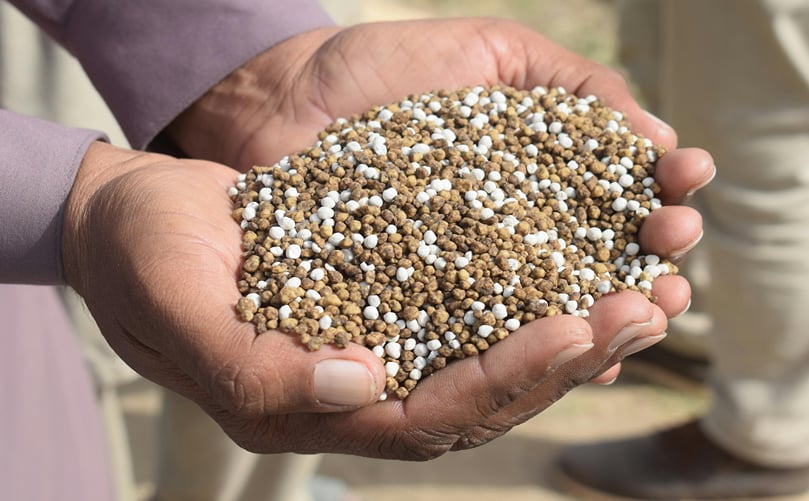
Importance of fertilizer
Phosphorus plays a key role in energy transfer and root formation, contributing to early vigor and better harvests. Overall nutrient harmony strengthens stress resistance, enhances photosynthesis and supports desirable quality traits such as starch content. Selecting appropriate fertilizers and adopting balanced fertilization practices significantly improve cultivation efficiency, tuber quality and market value.
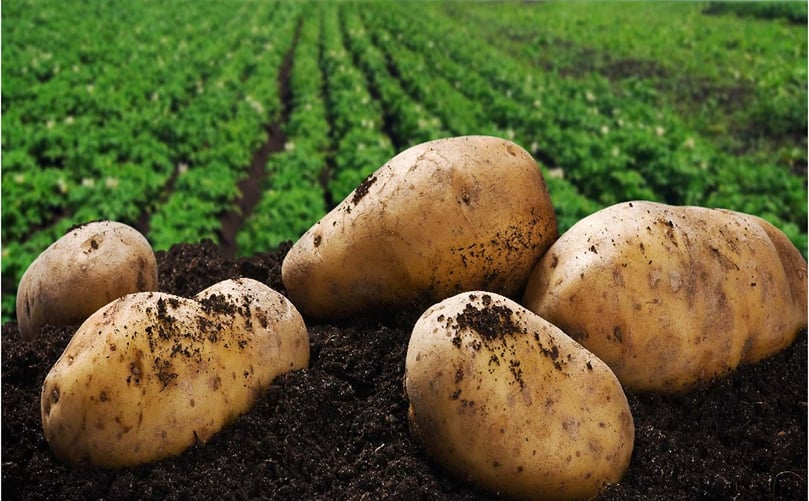
A potato crop is relatively productive, but in order to achieve its potential yield, it should be supplied with sufficient nutrients. This entails provision of both macro and micronutrients.
Nutrient Requirement of Potato Crop
Potato nutrient uptake follows a distinct pattern, with nitrogen being the most absorbed element, followed by potassium and phosphorus. Approximately 40–50% of the total seasonal nitrogen and potassium and 30–40% of phosphorus and sulfur are taken up before tuber initiation. As a general guideline, half of the total nitrogen should be applied before or at planting, with the remainder supplied during tuber development to meet crop demands.
Potatoes have high nutrient requirements and are sensitive to the rate, timing and placement of fertilizers. Uptake of phosphorus and potassium continues steadily until harvest, necessitating a consistent nutrient supply. Although micronutrient needs are relatively small, they are crucial for optimal growth and tuber quality.
The ideal nutrient ratio for the entire plant is approximately 1:0.2:0.9 (N:P:K), and for tubers, about 1:0.2:0.8. Roughly 70–72% of total nitrogen, phosphorus and potassium is partitioned to the tubers, while in well-fertilized crops the vines retain around 20–30% of total nitrogen.
To sustain yields of 300–400 hundredweight (cwt) per acre, potato plants require about 115–144 lb/acre of available nitrogen. Variety-specific nutrient management tools help fine-tune these requirements fresh market cultivars often benefit from higher potassium levels, while processing varieties may need moderated nitrogen rates.
Per tonne of tubers, nutrient uptake typically includes:
- Nitrogen (N): 4–5 kg (≈120–150 kg/ha for 30 t/ha; +20% under irrigation, −10% for early varieties)
- Phosphorus (P₂O₅): 0.7–0.8 kg (≈21–24 kg/ha; higher in acidic soils)
- Potassium (K₂O): 5–6 kg (≈150–180 kg/ha; +15% for processing types)
- Calcium (Ca): 0.1–0.2 kg (≈3–6 kg/ha; often supplemented via irrigation)
- Magnesium (Mg): 0.3–0.4 kg (≈9–12 kg/ha; similar to calcium needs)
Balanced nutrient management, tailored to crop stage and variety, is therefore critical for maximizing yield, maintaining quality, and ensuring nutrient-use efficiency in potato cultivation.
Soil Testing and Fertility Evaluation
Soil testing is the most reliable and efficient method to assess soil fertility and determine the specific nutrient requirements of potato crops. Potatoes thrive best in deep sandy to loamy soils with a pH range of 6.5–7.5 for early varieties, while heavier soils are more suitable for main-season crops. Fertilizer recommendations are generally based on comprehensive field trials and grower experience.
A complete soil analysis should include parameters such as pH, organic matter, phosphorus, potassium, calcium, magnesium, zinc, sulfur and textural class. Compost-amended soils are effective in specialized systems, as they improve soil structure, nutrient availability and microbial activity.
Studies from regions such as Kenya highlight significant variability in soil fertility, emphasizing the importance of detailed nutrient mapping particularly for phosphorus and potassium on smallholder farms. Micronutrient monitoring every two years helps prevent deficiencies or toxicities, especially where fungicides are routinely used.
Organic matter content, measured through combustion and soil pH, determined using a 1:1 soil water ratio, provide essential information for necessary amendments. Overall, maintaining optimal soil fertility is crucial for vigorous plant growth, nutrient efficiency, and sustainable potato production.
Major Nutrients (N, P, K) and Their Roles
Nitrogen, phosphorus and potassium are the primary macronutrients governing potato growth, yield and quality.
Nitrogen (N): Nitrogen drives vegetative growth, photosynthesis and carbohydrate production, playing a vital role in tuber initiation. However, excessive nitrogen application (>200 kg/ha) can lead to disorders such as hollow heart, delayed maturity and reduced tuber quality. Symptoms of nitrogen deficiency include pale yellowing of leaves and up to 30% yield reduction. Research indicates that applying 115–144 lb/acre of nitrogen supports yields of 300–400 cwt/acre in regions like Florida.
Phosphorus (P): Phosphorus promotes root development, energy transfer (ATP formation) and early crop maturity. Deficiency symptoms include purplish leaf margins and delayed tuber bulking by 10–15 days. While adequate phosphorus enhances early vigor and tuber uniformity, excessive application can induce micronutrient imbalances, particularly with zinc and iron.
Potassium (K): Potassium enhances tuber size, starch content (often exceeding 15%) and resistance to diseases such as late blight. It also regulates water balance, enzyme activity and carbohydrate translocation. Deficiency symptoms include scorched leaf edges and tuber cracking, while excessive potassium can antagonize calcium and magnesium uptake, leading to internal necrosis.
Balanced nutrient formulations, such as 15-15-15 (N:P:K) are widely used but should always be adjusted based on soil test results and crop growth stage. Maintaining the right N:P:K ratio ensures optimum vegetative growth, efficient tuber development and high-quality yields.
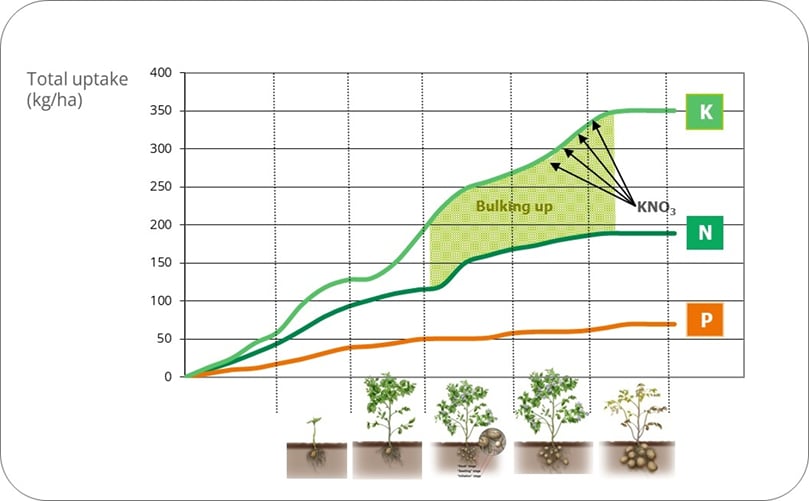
Uptake of macronutrient uptake by a potato crop
Secondary and Micronutrients
Secondary and micronutrients, though required in smaller quantities than macronutrients are vital for maintaining potato crop health, tuber quality and resistance to stress.
Calcium (Ca): Calcium enhances cell wall strength, improving tuber firmness and skin finish while reducing physiological disorders such as hollow heart and internal browning. It also aids in membrane stability and nutrient transport within the plant. Gypsum application at about 1 t/ha is a common soil source of calcium, while supplemental applications through irrigation water can maintain consistent availability.
Magnesium (Mg): Magnesium is the central atom in the chlorophyll molecule and is essential for photosynthesis and carbohydrate transport. Adequate magnesium promotes healthy foliage, while deficiency results in interveinal chlorosis on older leaves. In potatoes, Mg also plays a role in starch synthesis and supports potassium utilization efficiency.
Sulfur (S): Sulfur supports protein synthesis, enzymatic activity and starch accumulation. Optimal sulfur concentration in petiole tissue ranges from 0.2–0.35%. Sulfur deficiencies lead to pale young leaves and reduced starch content. Sulfate-containing fertilizers or elemental sulfur can effectively meet crop demands.
Micronutrients (Zn, B, Fe, Mn):
Micronutrients like zinc, boron, iron and manganese are critical enzyme activators involved in growth regulation and physiological balance.
- Zinc (Zn):Vital for auxin production and enzyme activation; deficiency in alkaline soils can reduce yield by up to 50%,
- Boron (B):Supports cell wall formation, carbohydrate movement, and reproductive growth; deficiency may lead to internal browning and misshapen tubers.
- Iron (Fe) and Manganese (Mn): Essential for chlorophyll formation and photosynthetic efficiency.
Application Practices: Nutrient supplementation can be achieved through soil and foliar routes: gypsum (1 t/ha) for calcium, foliar sprays of 0.5% ZnSO₄, and fertigation with chelated Fe and Mn at 1–2 kg/ha are effective practices. Regular soil and tissue testing every two years helps monitor nutrient status and prevent toxic accumulation, particularly where irrigation water contributes additional calcium and sulfur.
Balanced management of secondary and micronutrients strengthens plant metabolism, enhances stress resilience and ensures high-quality, marketable tubers.
Recommended Fertilizer Doses (General Ranges)
Fertilizer recommendations for potato cultivation depend on soil fertility, yield targets, variety, and environmental conditions. However, general guidelines emphasize balanced NPK applications to maximize tuber yield and quality while minimizing nutrient losses.
For medium-fertility soils targeting yields of 30–40 t/ha, standard recommendations are 120–150 kg/ha N, 80–100 kg/ha P₂O₅, and 100–150 kg/ha K₂O. These rates are typically adjusted downward by about 20% for high-fertility soils or increased by 15–20% in irrigated systems to account for greater nutrient uptake.
In irrigated sandy soils such as those in Minnesota rates may reach 171 lb/acre N (≈192 kg/ha), 23 lb/acre P (≈26 kg/ha P₂O₅), and 192 lb/acre K (≈215 kg/ha K₂O) for yields of 400 cwt/acre. Phosphorus application may be omitted if soil test results exceed 65 ppm. Under rainfed conditions, nitrogen doses are reduced by about 20% to minimize leaching losses.
Processing varieties, such as Russet Burbank, generally require around 15% more potassium to enhance starch content and tuber quality. Research in Pakistan suggests using 100–130 kg/ha N, 80–100 kg/ha P₂O₅ and 150–200 kg/ha K₂O, along with 15–20 kg/ha sulfur to improve protein synthesis. For high-yielding cultivars like Khumal Seto, higher rates such as 150:150:90 kg/ha NPK have produced 10–20% increases in tuber size and marketability.
For small-scale or home gardens, organic blends such as 10-10-10 or slow-release 6-3-8 fertilizers are preferred, as they provide a balanced supply of macro and micronutrients. In Florida, phosphorus applications are capped at 120 lb/acre (≈135 kg/ha) regardless of soil test values to mitigate environmental risks.
Nutrient adjustments should always be guided by soil testing. For low-phosphorus soils (<20 ppm), increase the P₂O₅ rate by 20–30%. Precision tools, such as variable-rate technology, can be integrated for site-specific management, improving nutrient efficiency and reducing input use by 10–15%.
Basal and Top Dressing Schedule
Basal and top dressing schedules for potato fertilization are strategically designed to align nutrient availability with crop growth stages, ensuring efficient uptake and minimizing losses. Typically, the full dose of phosphorus (P) and potassium (K) along with 40–50% of nitrogen (N) is applied as a basal dose at planting. The remaining nitrogen is split into two equal applications: 25% at earthing-up (20–30 days after planting) and 25% during the tuber bulking stage (40–60 days). This approach reduces nutrient leaching by 20–30% in sandy soils and ensures a continuous supply throughout critical growth phases.
The basal application generally includes 80–100 kg/ha P₂O₅ and 150–200 kg/ha K₂O mixed with farmyard manure (FYM), while nitrogen is applied in three splits 50% at planting, 25% at germination (25–30 days), and 25% at tuber initiation. For irrigated systems, 25–50% of nitrogen can be banded at emergence, with the remainder supplied through fertigation during the bulking stage to meet peak nutrient demands of 4–6 kg/ha/day for both N and K.
Recommendations suggest 120 kg N, 240 kg P, and 120 kg K/ha, applied in two splits half as basal and the remaining as top dressing at 30 days after planting. In high-yielding systems, top dressing every two weeks after germination (for three rounds) has shown to boost yields by up to 10–15%, maintaining a steady nutrient supply for developing tubers.
Incorporating organic amendments such as HUMIPOWER in basal mixes helps stabilize soil pH and improve nutrient uptake efficiency. Foliar phosphorus applications can supplement basal nutrition in low-P soils, enhancing early vigor and root establishment. This phased nutrient management strategy supports strong vegetative growth initially and robust tuber bulking later, leading to consistent yield and quality improvements.
Fertilizer Application Methods
Fertilizer application methods in potato cultivation are designed to optimize nutrient use efficiency (NUE), synchronize nutrient release with plant demand and minimize environmental losses. The choice of method depends on soil type, irrigation system and fertilizer formulation.
Broadcast Application: Broadcasting before planting helps incorporate phosphorus (P) and potassium (K) uniformly into the soil. However, in high-pH soils, phosphorus can become fixed and less available. While convenient, this method may not be ideal for nutrient efficiency, especially in coarse-textured soils.
Band Placement: Banding fertilizers 5–10 cm below and beside seed pieces delivers nutrients directly to the root zone, improving early nutrient uptake by nearly 20% in sandy soils. This method is especially effective for phosphorus and potassium, which are less mobile in soil. Studies indicate that band placement can triple phosphorus efficiency compared to broadcasting.
Side-Dressing: Nitrogen side-dressing during hilling (20–30 days after planting) supports vegetative growth and prevents excessive early nitrogen losses. It ensures that the crop receives nitrogen when demand peaks, improving tuber initiation and size uniformity.
In-Furrow and Liquid Application: In-furrow application of liquid fertilizers at planting accelerates root development and promotes uniform emergence. These formulations often include a starter mix of NPK along with micronutrients to strengthen early plant establishment.
Fertigation: Fertigation through drip or pivot systems enables precise and frequent application of nitrogen and potassium, achieving up to 90% NUE. Homogeneous NPK blends such as 15-15-15 or water-soluble formulations are ideal for this system. Controlled-release fertilizers like ESN (Environmentally Smart Nitrogen) further improve nitrogen efficiency by releasing nutrients gradually, minimizing leaching losses.
Foliar Application and Additives: Foliar sprays are effective for correcting micronutrient deficiencies (e.g., zinc, iron, manganese) but are less efficient for macronutrients due to limited absorption. In acidic sandy soils, acidified phosphorus combined with humic substances enhances availability and uptake. Seaweed-based organic fertilizers can also be incorporated into the soil to provide slow, sustained nutrient release and improved soil health.
Precision and Integrated Management: Modern variable-rate technology (VRT) uses soil and yield mapping to tailor fertilizer applications across variable fields, reducing fertilizer use by 10–15% while maintaining yield.
Overall, integrating multiple application methods particularly banding for phosphorus and fertigation for nitrogen and potassium ensures higher nutrient efficiency, better crop performance, and lower environmental impact in potato production systems.
Fertigation and Foliar Feeding Practices
Fertigation and foliar feeding optimize nutrient delivery in potatoes, particularly in irrigated systems, achieving 20–30% higher nutrient use efficiency (NUE) by matching supply to crop demand.
Fertigation Overview
Fertigation involves water-soluble fertilizers such as 20-20-20 or potassium thiosulfate (KTS) injected via drip or pivot irrigation systems. Standard schedules include:
- Vegetative stage (0–40 days): 5–10 kg/ha N weekly
- Bulking stage (40–80 days): 15–20 kg/ha K and 5 kg/ha Ca weekly
- Maturity phase: Reduced micronutrient supply, focusing on boron (B) and zinc (Zn)
This approach supports consistent nutrient availability and minimizes leaching losses. Foliar Feeding Strategy
In-season foliar applications, guided by petiole tests, deliver 25–50% N as nitrate, supplemented with micronutrients like Zn, Fe and B every 2–3 weeks. These treatments enhance yield by 10–15% without relying on soil availability. Amino acid-based foliars also raise tuber amino content such as glycine improving nutritional quality.
Integration and Cautions
Unlike fertigation, which is soil-centered, foliar feeding provides rapid correction for deficiencies but absorbs only 10–20% of macronutrients. A combined approach offers the best results. Avoid exceeding 50 lb/acre per foliar application to prevent leaf burn, and focus on critical phases like tuber initiation.
Supporting Research and Organic Options
Studies show that foliar KTS increases yields by enhancing stress resistance. For organic systems, seaweed extract sprays improve micronutrient uptake and physiological resilience. Regular tissue testing from 40 days after planting helps maintain nutrient balance and detect early deficiencies.
Integration of Organic Manures and Biofertilizers
Integrating organic manures and biofertilizers through an Integrated Nutrient Management (INM) approach enhances soil health, yield and sustainability in potato cultivation. This system combines 50–70% inorganic fertilizers with organic sources such as farmyard manure (FYM) at 10–20 t/ha and bioinoculants like Azotobacter and phosphate-solubilizing bacteria (PSB) at 5–10 kg/ha. Such integration reduces chemical fertilizer use by 30% while improving yields by 10–38%.
Role of Organic Manures
Applying FYM or compost before planting improves soil organic matter, nutrient mobilization and microbial activity. These benefits enhance soil structure, water retention and long-term fertility. Organic amendments also buffer soil pH and reduce nutrient losses through leaching or volatilization.
Role of Biofertilizers
Biofertilizers play key roles in nutrient cycling:
- Azotobacter fixes 20–30 kg/ha of nitrogen.
- PSB solubilizes phosphorus, improving its plant availability.
Studies indicate that replacing 70% of chemical fertilizers with bio-organics increases tuber yield by 10–155% and tuber protein content by 10–20%, while enhancing overall soil fertility.
Application and Management Practices
For best results:
- Apply FYM at 10 t/ha as a basal dose before planting.
- Seed-treat with Azotobacter or PSB prior to sowing.
- Top-dress compost or vermicompost mid-season for sustained nutrition.
Benefits and Long-Term Impacts
Integrating organics with biofertilizers improves nutrient uptake, enhances microbial diversity, reduces greenhouse gas emissions and ensures sustainable productivity in continuous potato cropping systems. Trials, including those in Prince Edward Island (P.E.I.), confirm that combined organic mineral–bio strategies yield the highest productivity and nutrient efficiency.
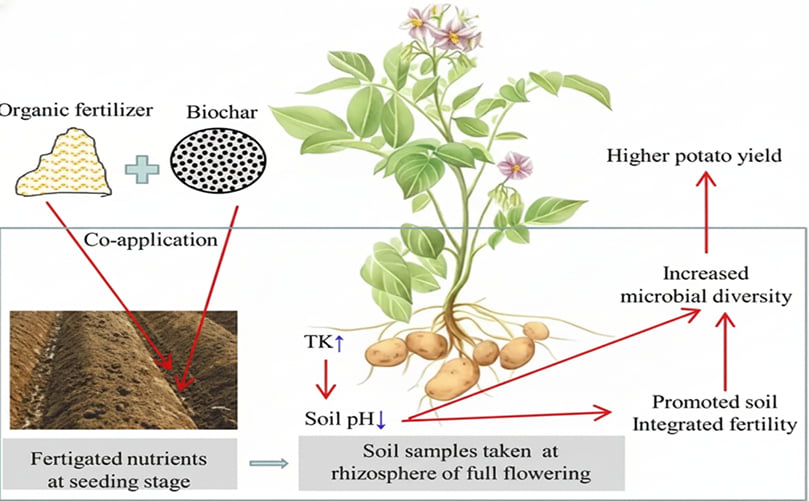
Increase in potato yield by the combined application of biochar and organic fertilizer
Deficiency Symptoms and Diagnostic Indicators
Early detection of nutrient deficiencies in potatoes is essential for preventing 15–30% yield losses, as many symptoms resemble diseases or stress responses. Diagnosis relies on visual scouting, tissue testing (typically petioles from the fourth leaf, sampled biweekly during bulking) and soil analysis to ensure accurate identification.
Major Nutrient Deficiencies
- Nitrogen (N): Uniform pale green to yellowing of older leaves, stunted growth and smaller tubers. Symptoms appear first on older foliage and respond rapidly to nitrogen application. Common in sandy or leached soils.
- Phosphorus (P): Purplish-red leaf margins and undersides, delayed maturity and poor root development. Often occurs in cold, wet or high-pH soils where phosphorus fixation limits availability.
- Potassium (K): Scorched or curled leaf edges starting on older leaves, progressing to necrosis; tubers may crack or show low starch content. Sensitive varieties exhibit interveinal chlorosis and poor turgidity.
Secondary Nutrient Deficiencies
- Calcium (Ca): Internal browning or hollow heart in tubers, tip burn on leaves, often linked to irregular moisture supply.
- Magnesium (Mg): Interveinal yellowing on lower leaves resembling potassium deficiency but without marginal scorch.
- Sulfur (S): Pale young leaves and reduced growth, mimicking nitrogen deficiency but appearing on newer foliage.
Micronutrient Deficiencies
- Boron (B): Cracked stems, distorted leaves, and hollow tubers due to impaired cell wall formation.
- Zinc (Zn): Small, deformed tubers and chlorotic young leaves, particularly in alkaline soils; deficiency can halve yields.
- Iron (Fe): Interveinal chlorosis of upper leaves, common in calcareous soils.
- Manganese (Mn) and Copper (Cu): Rare symptoms include mottled chlorosis (Mn) or dark green, twisted foliage (Cu).
Diagnostic Indicators and Management
Petiole sufficiency ranges during mid-season are N: 800–1200 ppm, K: 3–5%, and P: 0.2–0.4%. Because similar chlorotic symptoms may result from multiple causes, confirmation through laboratory analysis is vital. Early corrective measures such as foliar micronutrient sprays or fertigated applications enable rapid recovery and minimize yield and quality losses.
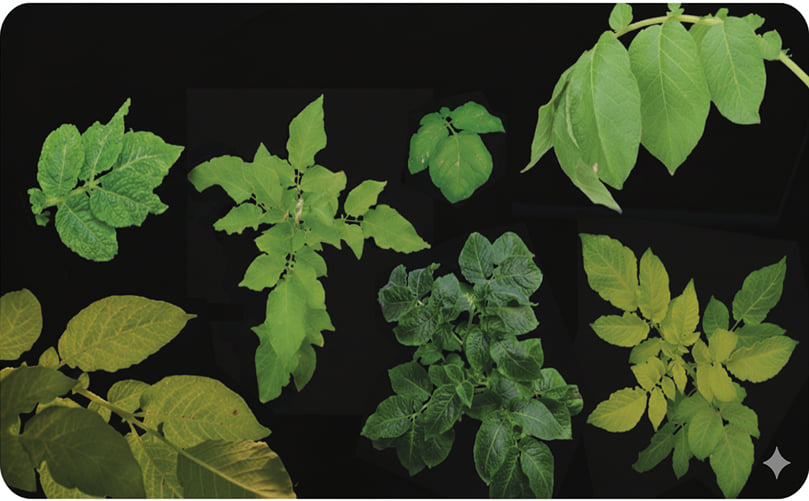
Potato Different nutrient Deficiency Collection
Nutrient Management Based on Growth Stages
Potato nutrient management follows the crop five growth stages sprout development (0–30 days), vegetative (30–50 days), tuber initiation (50–60 days), bulking (60–90 days) and maturation (90–120 days) to synchronize nutrient supply with uptake demands and achieve optimal yield and quality.
Sprout Development (0–30 Days): During early establishment, roots and sprouts form, requiring a strong nutrient foundation. Apply the basal dose with full phosphorus (80–100 kg/ha P₂O₅), potassium (100–150 kg/ha K₂O) and 40% of nitrogen (N) to encourage root and sprout vigor. Soil amendments such as lime maintain pH between 5.5 and 6.5 for better nutrient availability. Adequate moisture supports uniform emergence.
Vegetative Stage (30–50 Days): This phase emphasizes canopy expansion and photosynthetic capacity. Apply 50–70 kg/ha N in splits, guided by petiole N levels (1200–1600 ppm). Avoid excess nitrogen, as it can extend vegetative growth and delay tuberization. Balanced K ensures strong stems and disease tolerance.
Tuber Initiation (50–60 Days): Tuber set begins, demanding a balanced N ratio to support stolon swelling and early tuber growth. Excess nitrogen reduces tuber number, while optimal balance encourages 20–30 tubers per plant. Around 40–50% of total nutrient uptake occurs in this stage, making precise management critical.
Bulking Stage (60–90 Days): The period of maximum nutrient and water demand, with uptake rates reaching 4.5 kg/ha/day N and 6 kg/ha/day K. Fertigation enhances delivery efficiency, with 70–80% of total nutrient absorption occurring now. Focus on potassium to promote tuber enlargement and starch accumulation. Monitor petiole N (400–700 ppm) to guide in-season adjustments.
Maturation Stage (90–120 Days): Nutrient uptake declines as tubers mature and skins set. Nitrogen should be minimized to prevent regrowth and ensure high dry matter (>20%). Balanced irrigation and nutrient tapering enhance storage life and processing quality.

Percentage (%) of nutrient uptake at different growth stages of potato plant. (Cultivar: Kexin No.1; Site: Wuchuan)
Stage-Based Efficiency: Integrating nutrient supply with irrigation especially deficit irrigation during bulking boosts nutrient use efficiency by 10–20%. Early-maturing varieties require proportionally lower total nutrient inputs, while late-maturing ones benefit from extended K and Ca feeding for yield stability and storability.
Influence of Fertilization on Yield and Quality
Fertilization plays a crucial role in determining both the yield and quality of potato crops. Proper nutrient management can increase yields by 20–50% while improving quality traits such as starch content (>15%), dry matter (18–22%), and maintaining low reducing sugars (<0.25%) essential for processing industries. However, excessive fertilizer application reduces efficiency and causes environmental harm.
Key Nutrient Effects
- Balanced NPK (150:150:90 kg/ha): Enhances tuber number and size by 10–20%, improving overall marketability.
- Boron (100 ppm): Boosts starch accumulation and reduces enzymatic discoloration in processed products.
- Nitrogen Management: Coupling irrigation with N application increases water use efficiency and tuber quality; excessive N, however, decreases yield and dry matter.
- Potassium: Improves osmotic regulation and enhances both yield and processing quality.
- Magnesium: Influences lipid and phenolic synthesis, contributing to tuber nutritional quality.
Integrated and Organic Approaches
Bio-organic nutrient sources can replace up to 70% of chemical fertilizers, resulting in only 11.8% lower yield but improving protein content by 10–20%. The use of organic manures enhances soil structure and fertility, ensuring sustained productivity. When combined with inorganic sources, these inputs improve both yield stability and product quality.
Overall Impact
Optimized fertilization regimes enhance the processing suitability of potatoes for chips and fries by maintaining an ideal starch-to-sugar balance, supporting both economic and environmental sustainability in potato production.
Integrated Nutrient Management (INM) Approach in Potato Cultivation
The Integrated Nutrient Management (INM) approach in potato cultivation combines inorganic fertilizers, organic manures and biofertilizers to optimize nutrient supply, enhance soil health, and ensure sustainable productivity. By integrating these sources, INM not only addresses nutrient deficiencies but also minimizes environmental impacts—reducing fertilizer use by 20–30% and lowering greenhouse gas emissions.
Key Practices
- Organic Manures: Apply farmyard manure (FYM) or compost at 10–20 t/ha before planting to improve soil organic matter and structure.
- Biofertilizers: Use Azotobacter for nitrogen fixation (contributing approximately 20–30 kg N/ha) and phosphate-solubilizing bacteria (PSB) for enhancing phosphorus availability.
- Inorganic Fertilizers: Supplement with 50–70% of the recommended NPK to balance nutrient supply.
- Complementary Additions: Incorporate vermicompost to improve micronutrient availability and soil biological activity.
Benefits
- Higher Yields: INM can increase yields by 12–38%, especially when combined with leguminous cover crops that improve soil nitrogen levels.
- Improved Soil Health: Enhances soil structure, reduces erosion, and increases microbial activity for efficient nutrient cycling and long-term fertility.
- Disease Suppression: Biofertilizers like Trichoderma help suppress soil-borne pathogens.
- Water Efficiency: Organic amendments improve water retention, particularly in sandy or light-textured soils.
Economic and Environmental Advantages
- Profitability: The Nutrient Expert (NE) tool supports INM by tailoring nutrient recommendations, leading to higher yields and reduced input costs.
- Sustainability: INM sustains soil fertility in continuous cropping systems, counteracting nutrient depletion common in intensive potato farming.
- Eco-Friendly Impact: Promotes reduced chemical dependency and enhances the resilience of potato production systems.
Effect of Fertilization on Tuber Storability and Skin Finish
Fertilization has a profound impact on the storability and skin finish of potato tubers. Balanced nutrient management enhances resistance to bruising, disease and decay, improving both appearance and shelf life.
Key Nutrient Roles
- Potassium (K): Essential for maintaining tuber integrity and appearance. Fertilization with polyhalite improves skin quality by upregulating skin-related genes, reducing surface defects such as cracking and common scab. Optimal K levels also prevent blackspot bruising and help maintain specific gravity, contributing to better storage quality.
- Calcium (Ca): Strengthens cell walls, reducing physiological disorders like hollow heart and internal browning.
- Boron (B), Magnesium (Mg), and Manganese (Mn): Decrease scab incidence, enhance skin firmness and improve tuber marketability.
- Nitrogen (N): While essential early in growth, excessive late season N promotes sprouting and lowers dry matter, reducing storability and increasing post-harvest losses by 15–25%.
Organic and Mineral Influences
Combined use of organic and mineral fertilizers modifies the biochemical composition of tubers. Higher K enhances antioxidant activity, extending shelf life, while balanced organic inputs improve skin smoothness and overall quality.
Overall Impact
Balanced nutrient regimes particularly with adequate Ca, K and B reduce storage losses from 10–20% to less than 5%. Studies indicate that polyhalite application significantly improves skin finish, and varietal responses to different fertilization types strongly influence physical traits like firmness and color uniformity.