

Introduction: The Jumping Menace of Potato Flea Beetles
Potato flea beetles, comprising key species within the genus E pitrix notably E. cucumeris (potato flea beetle), E. tuberis (tuber flea beetle), E. subcrinita (western potato flea beetle) and the recently described E. papa pose a significant and agile pest complex to Solanum tuberosum cultivation worldwide. These minute Chrysomelidae beetles, measuring approximately 1.5–2.0 mm is dark brown to metallic black with enlarged hind femora that enable rapid, jumping movements when disturbed, facilitating field dispersal.
Adults feed on foliage by rasping tissues with serrated mandibles, creating the characteristic “shot-hole” perforations (0.5–2 mm). While many species primarily attack leaves, larvae of species such as E. tuberis burrow into roots and tubers, forming shallow, brown, serpentine galleries (about 0.06–0.25 inch deep) that scar tuber surfaces and predispose them to secondary infections, including soft rot caused by Dickeya dadantii. Severe infestations can kill or stunt seedlings through heavy defoliation, while in mature crops, larval tunneling reduces tuber quality and marketability.
Native to the Neotropical and Nearctic regions, Epitrix species have expanded into Europe since 2004 with outbreaks in Portugal and Spain leading to their inclusion on the EPPO A2 quarantine list. Their life cycle varies from one to three generations per year depending on temperature and host availability with warmer climates potentially increasing population turnover. Given the global economic importance of potatoes as a multi billio dollar staple crop, the escalating spread and climate-linked resurgence of E pitrix spp. highlight the urgent need for integrated pest management (IPM) strategies targeting these elusive “jumping” adversaries.
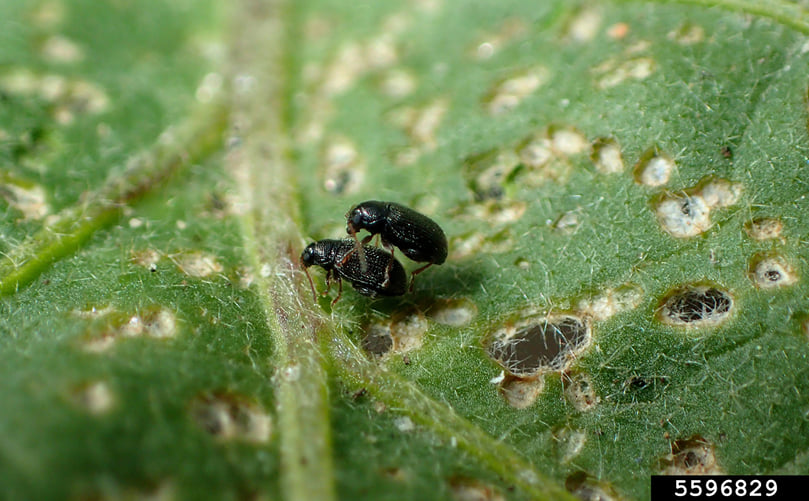
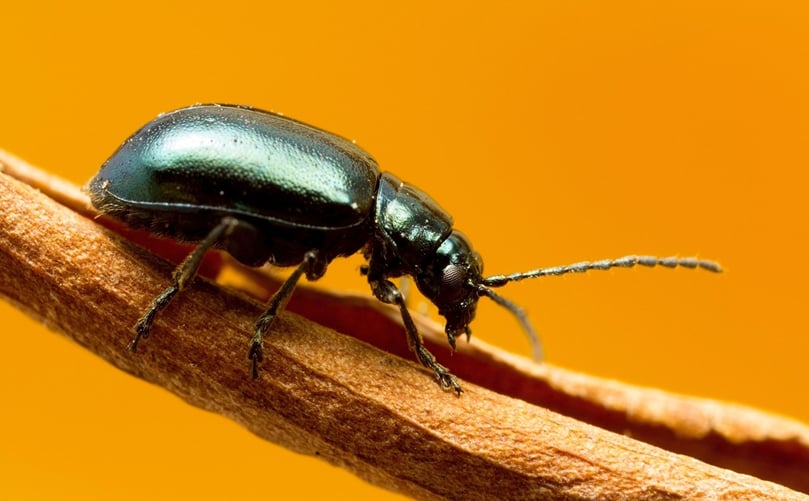
potato flea beetle (Epitrix cucumeris)
History: From Native North American Pest to Global Invader
The chronicle of E pitrix potato flea beetles as agricultural pests traces back to the mid-19th century within North America’s solanaceous ecosystems, long before their globalization through trade and plant material movement. E. cucumeris (potato flea beetle) was first described by Thaddeus William Harris in 1851 from Massachusetts potato fields, coinciding with the post-famine expansion of potato cultivation across the United States. By the 1880s, E. tuberis (tuber flea beetle) had become notorious in the western states particularly Colorado and Idaho where early USDA bulletins (circa 1890) documented severe tuber scarring and significant yield losses linked to infested soils transported by rail. In the 1920s, E. subcrinita (western potato flea beetle) was reported in Washington Yakima Valley, thriving under irrigated monoculture systems. Mid-20th century studies in Nebraska confirmed its overwintering capacity and univoltine life cycle with individual females laying several hundred eggs under favorable conditions.
Following World War II, widespread DDT applications temporarily suppressed E pitrix populations but resistance and environmental restrictions by the 1970s renewed pest outbreaks and prompted integrated pest management (IPM) initiatives including trap crops and crop rotation. An early example of overseas establishment occurred in Hawaii, where E. hirtipennis was introduced in the late 1800s marking the first Pacific incursion of the genus.
Europes infestation history began in 2004, when E. papa was detected near Porto in northern Portugal initially misidentified as E. cucumeris. Molecular analyses later confirmed the species through COI barcoding. The beetle spread to Spain by 2008 via contaminated ware potatoes and reached France by 2010, prompting European Union Decision 2011/787/EU (replacing earlier emergency measures) to restrict imports of soil attached potatoes and plants. By 2015, E. cucumeris and E. papa were established in parts of the Iberian Peninsula and the Azores leading to their inclusion on the EPPO A2 quarantine list.
Recent genomic phylogenies (2020–2025) have clarified the Holarctic Epitrix complex, confirming multiple introductions from North America into Europe and the Mediterranean. Isolated detections in East Africa during the late 2010s and early 2020s potentially linked to trade during El Nino-associated droughts mirror early U.S. spread patterns. Emerging interceptions in Asia, including reports from China’s seed potato supply chains in 2025, further emphasize the continuing biosecurity risk posed by these globally mobile “jumping beetles”
Global Distribution and International Spread of Epitrix Potato Flea Beetles
E. pitrix potato flea beetles exhibit a predominantly Holarctic distribution with approximately 162 species worldwide, most (approximately 130) native to the Neotropics. Pestiferous species such as E. cucumeris, E. tuberis, E. subcrinita and E. papa are largely confined to temperate and subtropical zones where Solanaceae crops are cultivated.
In North America, the epicenter of these pests, E. cucumeris dominates eastern Canada and the eastern U.S. (Nova Scotia to Florida), E. tuberis occurs primarily in the central and western states (Saskatchewan to Texas) and E. subcrinita inhabits the Pacific Northwest (British Columbia to California) with infestations frequently affecting 20–60% of fields during dry springs. Hawaii has hosted the introduced E. hirtipennis since 1900.
Europe’s presence began in 2004 with E. papa detected in northern Portugal likely introduced via infested ware potatoes. The species subsequently spread across Iberia (Portugal and Spain), France (notably Brittany), the UK (isolated occurrences) and the Azores, prompting EPPO A2 quarantine measures that restrict soil-attached imports.
In Asia, sporadic occurrences of E. cucumeris have been reported in China’s Yangtze Basin and India’s Deccan Plateau, often linked to ornamental or seed potato trade. Africa’s highland regions including Ethiopia and Kenya have recorded infestations likely introduced via seed tubers.
Dispersal combines active and passive mechanisms: adults can fly 1–2 km and may be transported by wind, while long distance spread occurs via infested soil, tubers, farm machinery and irrigation with pupae remaining viable for extended periods. Clonal propagation in invaded regions, such as E. papa in Iberia, limits genetic diversity but facilitates rapid local expansion. Climate models project continued northward and eastward spread in suitable temperate zones, while regulatory measures, such as EU Decision 2011/487, reduce but cannot entirely prevent clandestine movements.
Host Range and Cross-Infection Dynamics
E. pitrix flea beetles exhibit a specialized yet opportunistic host range, predominantly within Solanaceae (nightshade family), with over 20 documented species but strong fidelity to potatoes (S. tuberosum), tomatoes (S. lycopersicum), eggplants (S. melongena), peppers (Capsicum spp.) and tobacco (N. tabacum). Non-preferred hosts include petunias and daturas. Potatoes are paramount with E. tuberis and E. subcrinita larvae mining tubers 80–90% preferentially, while adults of E. cucumeris feed on foliage across solanaceous weeds like horsenettle (S. carolinense) and black nightshade (S. nigrum), which can sustain 10–20× populations as ecological bridges. Rare forays into non-Solanaceae (e.g., Chenopodiaceae under starvation) occur in <5% of lab trials, highlighting their oligophagous nature.
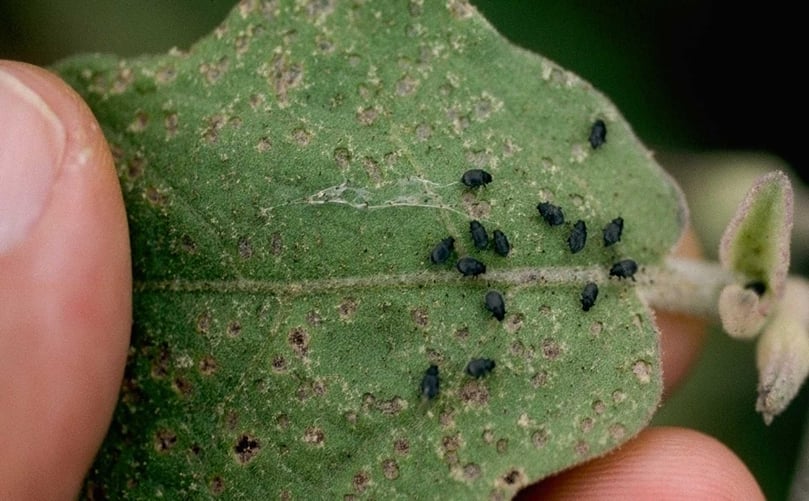
Flea beetle feeding on host plant Brinjal
Cross-infection dynamics are pronounced in polycultures. Adults orient via host volatiles (e.g., solanine analogs), migrating from weeds to potatoes with 70–90% efficiency in crop rotations a process amplified by aphid co-vectors that alter plant signaling. Larvae show host specificity, E. tuberis tunnels into potatoes 2–3× deeper than into tomatoes but biotypes can adapt via epigenetic shifts with potato reared lines boosting fecundity 15–30% on peppers. Vectoring exacerbates disease: non-persistent PSTVd transmission (10–20% via adults) from infected nightshades to potatoes increases spindliness, while Dickeya bacteria exploit feeding wounds to elevate tuber rot by 20–40%. In mixed fields, proximity to tobacco increases risk 40–60%, with recombination events potentially producing more virulent hybrids. Portuguese studies confirm E. papa weed bridges sustaining invasions.
Specific Flea Beetle Species Affecting Potatoes
The genus Epitrix comprises over 160 species, but only a few are significant pests of potato, each exhibiting distinct morphological traits, behaviors and damage profiles.
Epitrix cucumeris (Potato Flea Beetle), described by Harris in 1851 is the most widespread species in eastern North America. Adults measure 1.8–2.2 mm, with shiny black elytra and a subtle bronze sheen and possess markedly enlarged hind femora for jumping. This species primarily feeds on foliage, creating numerous small shotholes (0.5–1 mm) on lower leaves, while larvae mine shallow root grooves rather than deep tuber tunnels, unlike E. tuberis. Fecundity reaches 400–600 eggs per female, with univoltine cycles in cooler climates. Resistance to pyrethroids via kdr mutations affects 60–80% of populations. Damage includes 20–50% defoliation on seedlings and PSTVd transmission at 15% efficiency. Its distribution ranges from eastern U.S. and Canada to Mexico with invasive populations established in Europe since 2010.
Epitrix tuberis (Tuber Flea Beetle), described by Gentner in 1929, is a central-western specialist measuring 2.0–2.5 mm with a robust black body and faint metallic reflections. Its larvae are highly tuber oriented, boring galleries 0.1–0.25 inches deep, causing “pimpling” and 15–40% market rejection. Adults create fewer but larger shotholes (1–2 mm) with 300–500 eggs per female in bivoltine cycles in mild areas. E. tuberis facilitates Dickeya infections, increasing post-harvest rot by 25–35%, and resistance to neonicotinoids has emerged since 2015. Damage is primarily post-harvest, reducing tuber specific gravity by 3–5% and causing 30–70% yield losses in irrigated fields. Its distribution spans the U.S. Midwest and West from Saskatchewan to Texas.
Epitrix subcrinita (Western Potato Flea Beetle), endemic to the Pacific Northwest and described by LeConte in 1858, measures 1.5–2.0 mm with a velvety black appearance and sparse pubescence. It excels in tuber mining, creating shallow tunnels (0.06–0.15 inches), while adults prefer dry, dusty field margins. Univoltine, producing 200–400 eggs per female, it tolerates cold overwintering down to -5°C and effectively vectors soft rot bacteria causing approximately 20% incidence. Carbamate resistance has been noted in the 2020s. Outbreaks result in 40–60% tuber scarring, resembling hail damage and 20–50% seedling stand loss. Its range extends from British Columbia to California with sporadic eastward spread.
Epitrix papa (False Potato Flea Beetle), a Neotropical species described by Crotch in 1873, measures 2.2–2.8 mm with reddish brown tinges and prominent elytral punctures. Highly invasive, it exhibits parthenogenetic tendencies in Europe facilitating rapid population growth. Foliar shotholes (0.8–1.5 mm) predominate, while larvae mine tubers superficially. Fecundity ranges from 500–800 eggs per female with bivoltine cycles. Although PSTVd transmission is low (5–10%), it synergizes strongly with Dickeya pathogens and pyrethroid resistance is widespread. Damage includes 25–50% defoliation and 10–30% tuber downgrades. E. papa has been a quarantine pest since 2004, with established populations in Portugal and Spain and later invasions in France and the UK; it poses a potential threat to Africa and Asia.
Other notable species include Epitrix hirtipennis, a Hawaiian specialist (1.7–2.1 mm, pubescent) causing similar foliar and tuber damage with overlapping tropical generations and Epitrix similaris, a Canadian variant (2.0 mm, bronze) that resembles E. tuberis but with shallower mining and emerging spinosad resistance. Collectively, these species contribute to 31–40% of potato invertebrate losses and interspecific hybridization in overlapping ranges may yield more resilient biotypes.
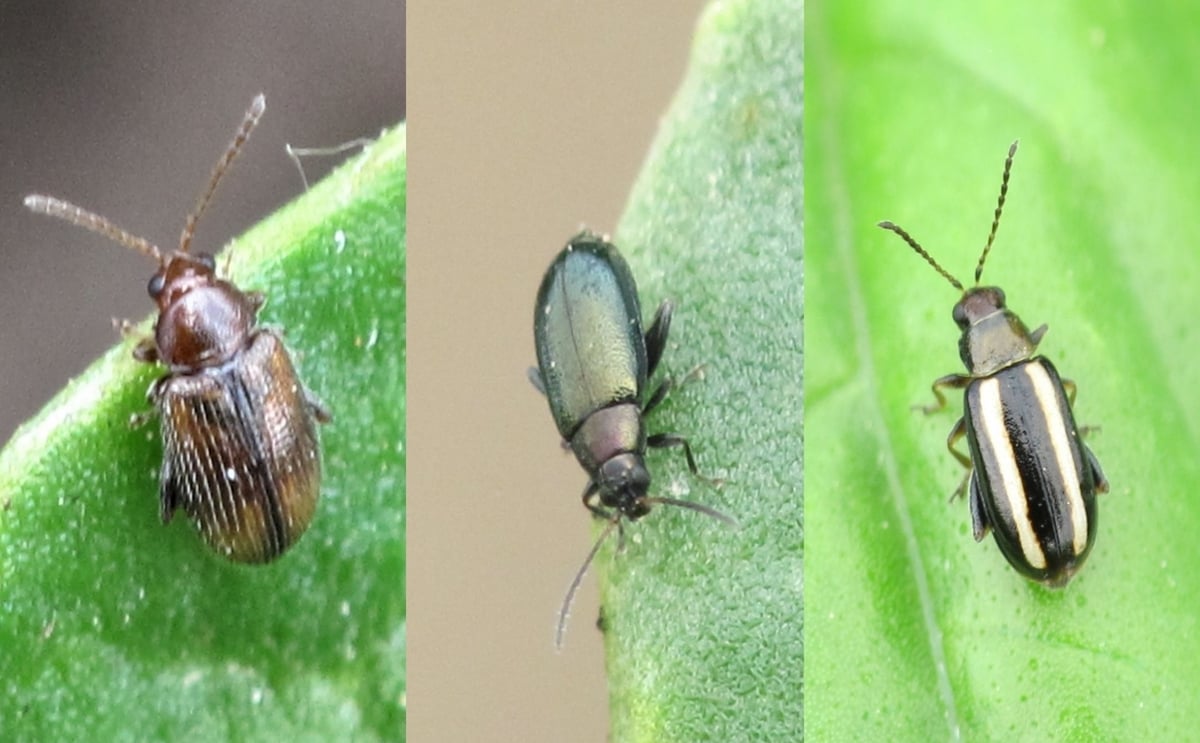
Comparative Images of Potato-Infesting Flea Beetles
Global Economic Burden and Quality Losses
Potato flea beetles (E. pitrix spp.) impose a substantial economic burden on global potato production causing estimated annual losses of USD 50–250 million through direct yield reductions, quality downgrades and control costs. Emerging markets dominated by smallholder farming, experience disproportionate impacts. In North America, where E. tuberis and E. subcrinita are prevalent, outbreaks in the Pacific Northwest and Midwest can result in 20–60% yield losses during severe years, equating to USD 10–30 million annually in the U.S. alone. Tuber scarring leads to rejection of 15–40% of harvest for processing into chips or fries.
European invasions since 2005, particularly by E. cucumeris in Iberia and France have incurred USD 5–22 million in direct costs from quarantines, destroyed crops and emergency treatments. Larval mining renders tubers unmarketable as “ware” potatoes due to cosmetic blemishes, reducing export values by 10–25%. In Tasmania, within Australia’s USD 500 million potato sector, potential Epitrix incursions threaten 20–30% production losses, reflecting broader vulnerabilities across the Asia-Pacific region.
Quality losses further exacerbate the economic impact. Adult shotholes and larval tunnels create superficial “pimples” and grooves (0.06–0.25 inches deep), decreasing specific gravity by 2–5% and predisposing tubers to bacterial rots, such as Dickeya dadantii, which can degrade an additional 10–30% of post-harvest produce. In developing regions, such as Ethiopia’s highlands where potatoes provide 20% of caloric intake, flea beetle outbreaks have caused 30–70% losses among smallholders, amounting to USD 5–15 million annually and perpetuating food insecurity. Input costs including scouting and pesticide applications, can consume 5–15% of smallholder budgets. Trade restrictions under EPPO/A1 quarantine status increase logistics costs by 10–20%, while resistance to common insecticides including pyrethroids, necessitates repeated applications, compounding both environmental and economic pressures in a global crop valued at USD 100 billion.
Biology, Life Cycle and Pathogenicity
E. pitrix cucumeris and related species are holometabolous Coleoptera in the family Chrysomelidae. Adults (1.5–3 mm, metallic black or bronze, elongate-oval) possess enlarged hind femora enabling jumps of up to 30 cm, enhancing evasion and dispersal. Females are slightly larger and have robust mandibles for leaf chewing; adult longevity ranges from 4–8 weeks with fecundity of 200–800 eggs, influenced by host quality. Larvae (3–5 mm, white, C-shaped with brown head and anal plate) are soil-dwellers and pupae (4–5 mm, exarate) develop within earthen cells.
The univoltine to bivoltine life cycle varies by climate. Adults overwinter in soil litter or hedgerows, entering diapause when temperatures drop below 10°C. They emerge in spring (April–May, soil >15°C) to feed on weeds before colonizing potatoes. Eggs (0.4 mm, white to yellow, laid 1–2 mm deep near stems in batches of 10–20 over 2–4 weeks) hatch in 5–10 days at 10–20°C, producing three larval instars. Early instars feed on roots, while later instars tunnel into tubers over 2–4 weeks. Pupation occurs 5–10 cm deep for 7–14 days. Second generation adults peak in July–August and overwinter post-feeding. In tropical regions, overlapping generations may occur year-round.
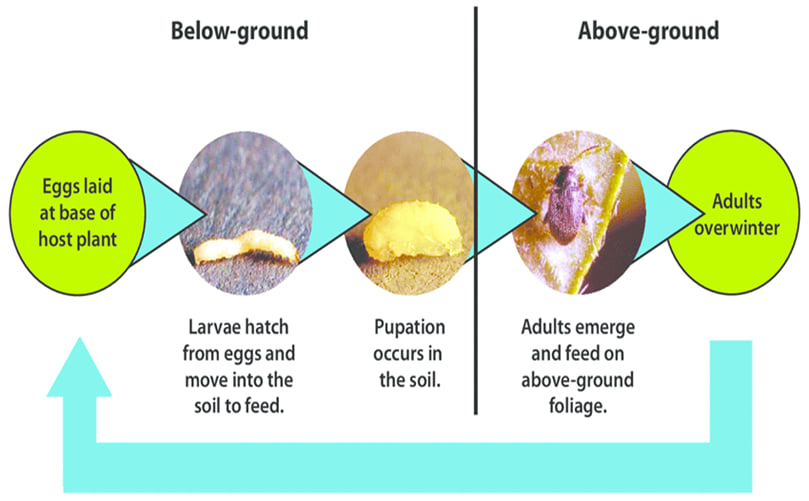
Flea beetle life cycle:
Pathogenicity arises from both mechanical and biochemical damage. Adults create shotholes with rasping mouthparts, injecting saliva that disrupts mesophyll tissue and induces ethylene production, reducing photosynthesis by 20–50% and stunting growth. Larval tunneling (0.06–0.25 inches) scars tubers, lowering turgor and specific gravity and breaches the epidermis, facilitating infection by pathogens such as potato spindle tuber viroid (PSTVd, 10–20% transmission efficiency) and Dickeya soft rot bacteria. High adult densities (>10 per plant) suppress jasmonate mediated defenses, favoring secondary invaders. Epitrix tuberis strains exhibit higher virulence on tubers via specialized effectors.
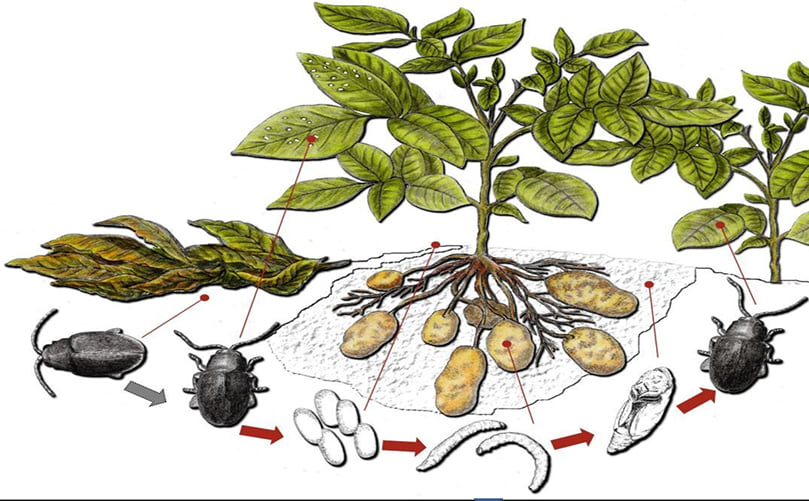
Life cycle of Epitrix potato flea beetles.
Factors Influencing Disease Severity
The severity of E. pitrix damage on potatoes is influenced by abiotic stressors, biotic interactions and farming practices that amplify pest populations and increase host vulnerability.
Abiotic factors are particularly influential: warm, dry springs (20–30°C, <50% soil moisture) accelerate adult emergence and egg hatch by 2–3 times, while low rainfall (<100 mm/month) concentrates feeding on seedlings leading to 50–100% defoliation. High UV exposure further enhances jumping activity, facilitating edge invasions. Nutrient rich soils (high N, 150–200 kg/ha) promote succulent foliage, increasing oviposition rates by 1.5–2 times, whereas compacted or sandy loams impede larval escape, reducing foliar damage but supporting pupal survival.
Biotic interactions also escalate risks: weed reservoirs (e.g., horsenettle) sustain 10–20 times higher adult densities with spillover via flights of 1–2 km, while field margins show 40–60% higher infestation. Co-infestations with aphids (Myzus persicae) modify plant volatiles, increasing Epitrix attraction by 2–3 times. Susceptible varieties with smooth leaves experience 30–50% more shotholes and reductions in natural enemies due to prior pesticide applications can trigger pest flares.
Anthropogenic factors include monocropping, which can elevate inoculum levels by 20–40% and no-till practices, which protect pupae. In Hararghe, Ethiopia, drought combined with poor crop rotations correlates with 50–80% incidence, while in the EU, restrictions on neonicotinoids have shifted management reliance toward cultural practices.
Symptoms and Damage by Epitrix spp.
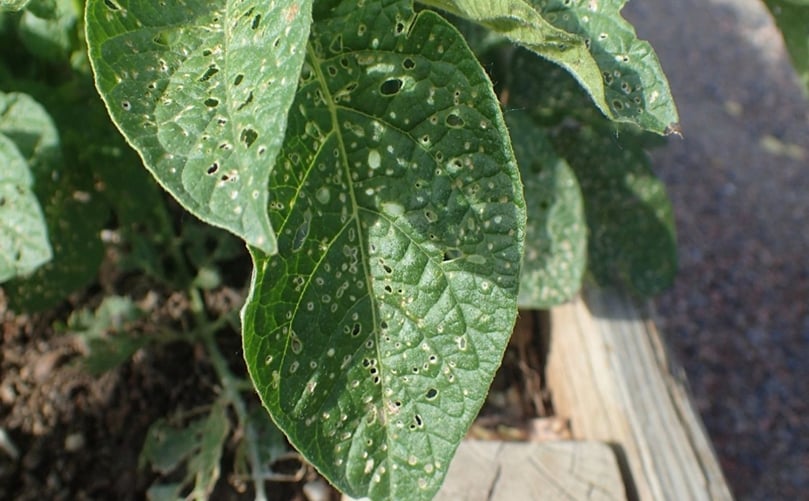
Adult Feeding Symptoms: Adult Epitrix beetles (0.8–2 mm) create numerous small, round “shotholes” primarily on the undersides of leaves and along veins. Feeding generally begins on the lower foliage 7–10 days after crop emergence and progressively spreads upward. Initial damage resembles minor mechanical injury or nutrient deficiency, but can escalate rapidly to skeletonization of leaves within 1–2 weeks, resulting in 20–50% defoliation. Leaf margins often brown, curl and desiccate, giving seedlings a stressed appearance. Young seedlings (<10 cm tall) are particularly vulnerable; densities exceeding 20 adults per plant can cause 50–100% mortality. Surviving plants often display stunted growth, wilting and height reduction of 10–30 cm. Severe defoliation reduces photosynthetic capacity by 20–40%, impacting subsequent tuber bulking and yield.
Larval Feeding Symptoms: Larvae, which are soil dwelling and cryptic, cause damage to roots and tubers that often goes unnoticed until harvest. Early instar larvae create shallow grooves on roots, whereas later instars mine tubers forming serpentine tunnels 1–5 cm long and 0.06–0.25 inches deep. These tunnels are often plugged with brown frass, giving the tuber a “pimpled” or russeted appearance. Larval mining reduces tuber integrity and provides entry points for secondary pathogens, notably Erwinia spp., causing soft rot. Yield losses from larval feeding can range from 5–15% in weight, while severely infested tubers may be unmarketable (15–40%). Affected tubers also show vascular discoloration and reduced specific gravity making them unsuitable for processing into fries.
Systemic and Secondary Effects:
- Reduced photosynthesis due to defoliation limits carbohydrate allocation to tubers, resulting in fewer and smaller tubers (10–30% reduction).
- Adult beetles can vector Potato Spindle Tuber Viroid (PSTVd), leading to stunted, spindly plants and malformed tubers.
- Severe infestations can alter overall plant vigor and delay maturity.
Diagnostic Indicators:
- Shake plants to observe jumping adults.
- Inspect the undersides of leaves and stems for characteristic “shotholes”.
- Dissect tubers to detect C-shaped, white larvae.
- Monitor seedling stands early in the season for mortality or stunting.
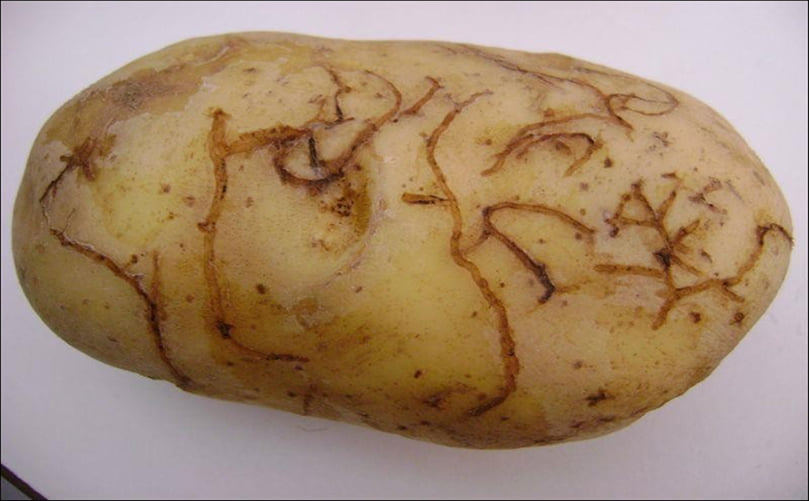
Potato tuber exhibiting damage from eating by potato flea beetle larvae
Key Considerations for Management:
- Damage severity is influenced by temperature, soil moisture and host plant density.
- Adult activity is higher under warm, dry conditions. Crop rotation with non-Solanaceous crops, mulching and early planting can mitigate infestations.
- Integrated pest management (IPM) strategies including biological control, pheromone traps and selective insecticides are recommended to reduce economic losses.
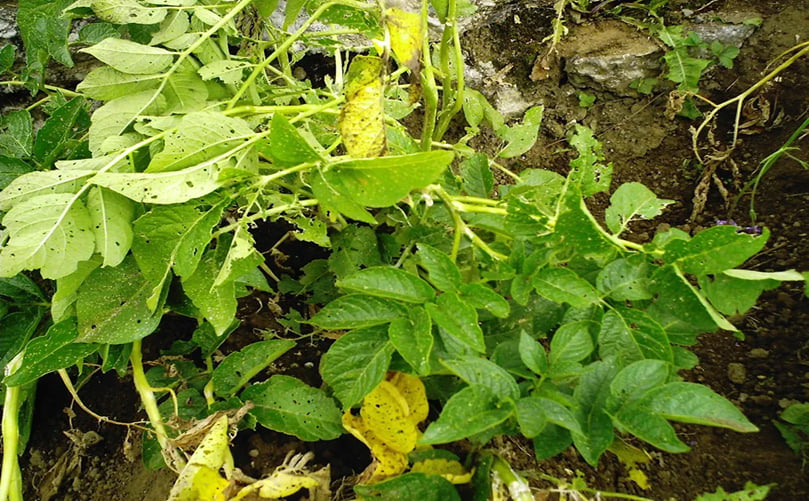
Flea Beetle Infestation on Potato Foliage
Management Strategies
Effective management of potato flea beetles (Epitrix spp.) requires a multifaceted Integrated Pest Management (IPM) approach that combines monitoring, cultural practices, biological agents and judicious chemical interventions. The goal is to maintain populations below economic injury levels (e.g., 5–10 adults per seedling plant) while minimizing resistance development and environmental impact.
How to Control and Eradicate Flea Beetle?
Monitoring and Scouting:
Scouting is the cornerstone of IPM. Conduct weekly visual inspections from emergence (late April–May in temperate zones) using sweep nets or sticky traps (yellow pan traps baited with mustard oil), focusing on field edges where adults aggregate. Thresholds for foliar sprays include 15–20 shotholes per leaflet or 5% defoliation. Digital tools, such as pheromone traps and AI-based scouting apps (e.g., Farmonaut), enable precision mapping and can reduce unnecessary treatments by 30–50%.
Cultural Practices:
- Physical barriers: Floating row covers (0.5–1 mm mesh) over seedlings for 4–6 weeks can reduce adult oviposition by 80–95%; remove covers post-emergence to prevent heat stress.
- Crop rotation: Rotating with non-Solanaceae crops (e.g., cereals or legumes) for 2–3 years disrupts the beetle life cycle. Adults prefer Solanaceae and pupae persist only 1–2 years in soil.
- Trap cropping: Planting mustard or radish 2–4 weeks earlier than potatoes can lure beetles, suppressing damage by 60–70% when flanked by border crops.
- Tillage and mulching: Shallow fall tillage exposes pupae to predators and desiccation. Straw mulches (4–6 inches) deter egg laying by altering microclimate.
- Varietal selection and intercropping: Early maturing varieties (e.g., Yukon Gold) escape peak adult activity. Interplanting repellents like garlic or onions reduces feeding by 40% due to sulfur volatiles.
Biological Control:
- Predators: Encourage ground beetles (Carabidae) and predatory wasps (e.g., Microdon spp.) using beetle banks or floral borders, which consume 20–50% of larvae.
- Nematodes: Soil drench applications of Heterorhabditis bacteriophora at 10^9 infective juveniles per hectare target pupae, achieving 70–85% mortality in moist soils.
- Entomopathogens: Beauveria bassiana sprays (10^8 conidia/ml) infect adults under high humidity (>70% RH), achieving 60–80% control. Bacillus thuringiensis var. tenebrionis targets foliar larvae, though efficacy declines in dry conditions.
- Organic options: Pyrethrins and spinosad (Group 5) provide knockdown effects and should be rotated to prevent resistance.
Chemical Control:
- Seedling protection: At-planting soil treatments with neonicotinoids (e.g., imidacloprid at 0.2–0.4 lb ai/acre) protect seedlings for 4–6 weeks.
- Foliar sprays: Applications of lambda cyhalothrin (Group 3A) or chlorantraniliprole (Group 28) at first signs of shotholes achieve 80–90% adult mortality. Rotate IRAC groups (no more than twice per season per class) to reduce resistance risk. Apply in the evening to protect pollinators and use adjuvants for better coverage.
- Host resistance: Dense pubescent varieties (e.g., Andean clones) reduce oviposition by 30–50%; breeding programs integrate antibiosis genes from wild Solanum.
- Emerging technologies: RNA interference (RNAi)-based sprays targeting chitin synthase genes have demonstrated 70% suppression in trials.
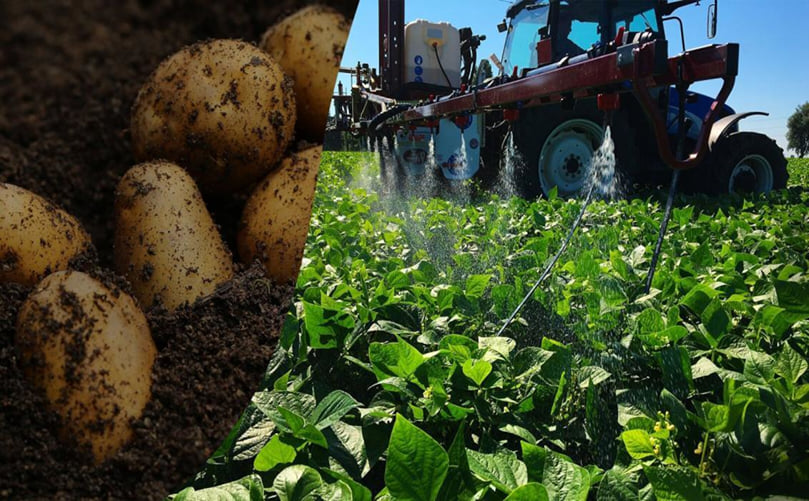
Chemical Management Strategies for Epitrix Potato Flea Beetles
Prevention and Good Agricultural Practices for Managing Epitrix Potato Flea Beetles
Preventing E. pitrix infestations relies on exclusion and habitat disruption as established populations are difficult to eradicate due to soil persisting pupae. Using certified, pest-free seed tubers from accredited sources is essential and these should be subjected to hot water treatments (52°C for 30 minutes) or carefully inspected to remove eggs and larvae. Since 2011, EU regulations prohibit the import of tubers from infested areas such as Portugal without proper phytosanitary certification. Equipment sanitation, including dips in 1% sodium hypochlorite and maintaining 10–20 m buffer zones around fields help prevent mechanical spread from nearby solanaceous crops.
Good practices also aim to maintain ecosystem balance. Planting should be delayed until soil temperatures exceed 15°C to avoid peak adult emergence or seedlings can be protected under row covers for 3–4 weeks, which reduces damage by 85–95%. Weed-free field borders, such as regularly mowing horsenettle, eliminate reservoirs, while cover crops like rye can suppress pupation through allelopathic effects. Post-harvest, deep plowing (6–8 inches) or solarizing fields with black plastic for 4–6 weeks exposes and kills pupae, reducing next-year emergence by 70–80% and flame weeding can target adults before oviposition.
Predator populations can be fostered by establishing beetle banks or companion plants such as dill and yarrow, which attract parasitoids and yellow sticky traps (20–30 per acre) can monitor and reduce adult populations.
Proper storage further minimizes losses: tubers should be cured at 15–20°C with 95% relative humidity for two weeks to heal wounds, then stored at 4–7°C to prevent rot with quarantine protocols including soil sampling to detect pupae. For organic systems, diatomaceous earth applied in 2–3 cm bands can desiccate crawling larvae and silica amendments strengthen plant cuticles against feeding damage.
Future Threats of Epitrix Potato Flea Beetles to Global Potato Production
Climate change is expected to escalate threats to potato production from Epitrix spp., as rising temperatures of 2–4°C by 2050 will lengthen adult activity periods by 2–4 weeks and enable 2–3 generations per year in northern latitudes, potentially increasing outbreak intensity by 25–50%. In Europe, predictive models indicate a northward expansion into Scandinavia and eastward movement toward the Balkans with E. papa expected to invade new potato belts, such as Croatia, by 2030, aided by milder winters that enhance pupal survival by up to 40%. Droughts and erratic rainfall stress host plants, elevating volatile emissions that attract oviposition, while fewer cold snaps reduce natural population die-offs.
Resistance evolution is another pressing concern. Pyrethroid resistance (Group 3A) is already documented in 70% of U.S. populations and gene flow could render 80–90% of currently effective insecticides obsolete by 2040. Recombination with local biotypes may give rise to hypervirulent strains. Intensified global trade including seed shipments from infested regions in the Americas accelerates invasions as illustrated by detections in Germany in 2023. Agricultural practices such as no-till farming can disrupt soil microbiomes and weaken plant induced defenses, compounding projected annual economic losses of USD 100–300 million by mid-century. Emerging hybrid populations may broaden host ranges to include non-solanaceous crops, while declining predator efficacy under variable climates further increases the vulnerability of monoculture systems.
Management Challenges in Controlling Epitrix Potato Flea Beetles
Integrated pest management (IPM) for Epitrix spp. faces numerous challenges. The cryptic larval stages mine tubers and remain largely invisible until harvest, while adults disperse rapidly, covering 1–2 km, which delays detection and can cause 20–50% yield losses before thresholds are reached. Broad spectrum sprays, such as organophosphates, often trigger “induced” population flares by decimating natural predators like ground beetles, resulting in rebounds 5–10 times higher within weeks and accelerating resistance development, particularly to neonicotinoids, which were detected in 50% of European strains by 2025. Regulatory restrictions including the EU ban on imidacloprid since 2018 have reduced available chemical options to two or three viable groups with rotation mandates increasing complexity and costs for smallholders by 10–20%.
Biological control agents also face limitations. In dry soils (<50% moisture), nematodes achieve less than 50% efficacy without irrigation refuges and their establishment can be delayed by 2–3 weeks in large scale fields exceeding 100 hectares. Smallholders in Africa and the Andes often lack scouting equipment, such as sweep nets costing USD 20–50 or access to beneficial organisms (USD 100–200/ha), fostering over reliance on unregulated chemicals and chronic losses of 30–60%. Climate unpredictability further complicates management with droughts facilitating invasions and floods washing away treatments, undermining economic thresholds. Co-infections with pathogens like Dickeya can obscure early symptoms, while porous trade systems including uninspected imports, circumvent quarantine measures and perpetuate infestation cycles. Export restrictions and residue tolerances impose additional constraints on effective intervention strategies.