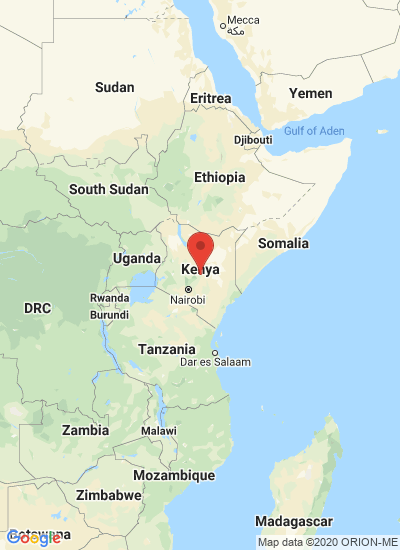

East African farmers, who are mostly small-scale, currently select their seed potatoes from the mass of harvested potatoes. That results in lots of virus diseases and potato brown rot, as well as low yields of an average of 10.5 tons per hectare.
That is why international organizations are advising farmers to buy their seed potatoes from specialized seed potato companies. But that requires a change in farming practices - currently the small-scale farmers use their own potatoes or swap with their neighbours - and will increase costs for the farmers. That is why only 5 percent of the seed potatoes in countries such as Kenya, Uganda and Ethiopia come from such specialized companies.
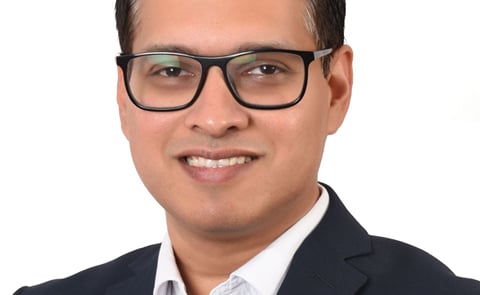
Gildemacher studied the reintroduction of what was thought to be an unnecessary technique: selecting seed potatoes from parent plants that look healthy. He carried out field trials at 18 different locations to investigate the effect of self-selection when compared with the standard practice in which farmers take their seed potatoes from the mass of harvested potatoes.
These field trials showed that self-selection increased yields by 30 percent while the disease pressure from potato viruses fell by between 35 and 40 percent. The big advantage, says Gildemacher, is that selecting the seed potatoes themselves costs the farmers virtually nothing whereas the return on a hectare of potatoes increases by 250 to 300 euros.
After his field trials, Gildemacher, who worked for the International Potato Center (CIP) in Nairobi from 2003 to 2007, developed a cost-effective training module to teach large numbers of small-scale farmers how to select the best seed potatoes themselves.
He does point out that the farmers will still need to replace their stock of seed potatoes regularly with disease-free starting material obtained from the specialized companies. Gildemacher's approach has now been adopted in the farming guidelines in Kenya and is also being introduced in countries such as Ethiopia, Uganda, Rwanda, Malawi, Mozambique and Angola. These countries want to increase the productivity of potato crops so that they can meet the growing demand.
Peter Gildemacher will be awarded his doctorate on 20 June, with Paul Struik, professor of Crop and Weed Ecology, and Cees Leeuwis, professor of Communication and Innovation Studies.
East Africa: better selection of seed potatoes improves yield thirty percent
Like to receive news like this by email? Join and Subscribe!
Get the latest potato industry news straight to your WhatsApp. Join the PotatoPro WhatsApp Community!
精选企业

相关新闻
九月 07, 2026
Calbee Potato Harvest Ceremony 2026 Highlights Stronger Hokkaido Potato Quality and Yield
Calbee Potato expects Hokkaido’s 2026 processing potato crop to reach 240,000–250,000 tons, with better quality and yields than 2025. Favorable temperatures and rainfall have boosted growth, although heavy rain remains a major harvest risk now.

九月 07, 2026
Aardappeldemodag 2026 Draws Over 4,500 Visitors as Dutch Potato Sector Faces Year of Extremes
Aardappeldemodag 2026 brought over 4,500 visitors to Westmaas amid a challenging year for the Dutch potato sector. The event focused on market pressures, extreme growing conditions, knowledge sharing, machinery and innovation.

九月 07, 2026
EUROPLANT与Finpom强调芬兰种薯优势,应对欧洲日益加剧的病毒压力
Finpom强调芬兰北部在高等级种薯生产方面的优势,因为气候变化提高了欧洲的病毒风险,同时通过LARISSA、JUVENTA、Filipa、FAVOLA和INA扩展了其EUROPLANT产品组合。