

Introduction
Potato (Solanum tuberosum L.) is one of the most important food crops worldwide valued for its long storage life that supports year round consumption and processing. After harvest potato tubers enter a natural dormancy period during which sprouting is temporarily prevented. Dormancy helps the crop survive unfavorable conditions and ensures future growth. However, once dormancy ends, tubers begin to sprout, reducing their quality, market value and suitability for processing.
To maintain quality during storage, sprout control is essential. Methods for sprout control include sprout inhibitors, which extend dormancy by altering tuber physiology and sprout suppressants, which temporarily slow sprout growth but often require repeated applications. Several chemical and non chemical products are used in the potato industry to manage sprouting and extend storage life, with new alternatives continuously being developed.
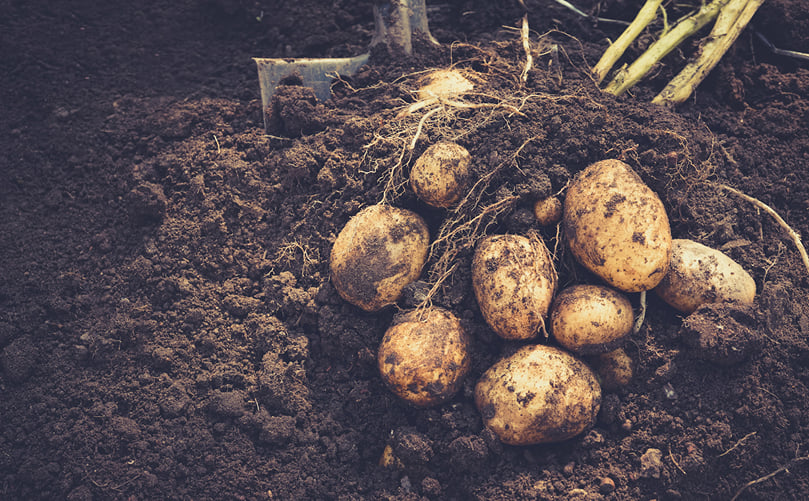
Why Do Potatoes Sprout and How Can You Prevent Sprouting?
Sprout Control Products and Their Efficacy
The efficacy of sprout control products in potatoes depends on their mode of action ranging from mitotic inhibition and hormonal disruption to physical desiccation and is strongly influenced by the application method, storage environment and varietal physiology. Comprehensive reviews indicate that traditional chemicals such as chlorpropham (CIPC) achieve 80–95% sprout suppression for 6–9 months at optimal residue levels (10–20 ppm). In contrast, emerging natural alternatives like essential oils (EOs) show 60–90% efficacy but typically require 2–4 reapplications due to their volatility.
A multi-year study across North American cultivars demonstrated that CIPC fogging at 20–40 mg/m³ post-curing consistently arrests meristem activity through microtubule disruption, reducing sprout biomass by 85% in Solanum tuberosum cv. ‘Russet Burbank’ at 7–10°C. However, efficacy declines to about 50% at temperatures above 15°C due to accelerated degradation. Maleic hydrazide (MH), applied pre-harvest at 4–6 kg/ha, translocates to tubers (12–15 ppm residues) and inhibits cytokinin-driven cell division, delaying sprout initiation by 20–40 days and elongation by 5–7 months. When used sequentially with post-harvest naphthalenes such as 1,4-dimethylnaphthalene (DMN), MH demonstrates synergistic enhancement of up to 40% in overall suppression.
EOs derived from Cinnamomum camphora (95% linalool) and Origanum majorana (40% terpinen-4-ol) effectively suppress visible sprouts (>5 mm) by 85–100% for 3–6 weeks via membrane peroxidation, outperforming clove oil (eugenol-based, 70% efficacy) under humid conditions. However, flavor carryover remains a concern at doses exceeding 20 mL/ton in processing potatoes. Novel agents such as maleic and L-tartaric acids, when applied as 1–2% dips, inhibit sprouting by 70–80% for 4–6 weeks through antioxidant-mediated interference in gibberellin pathways. These acids show strong potential for organic systems due to minimal residues, which decline by over 90% after 60 days.
Combinatory strategies for instance, MH + carvone (from caraway oil) or DMN + ethylene—extend efficacy by 30–50%, mitigating resistance via multi-target regulation (e.g., downregulating StGA20ox and upregulating StKRP1), while allowing reduced doses for compliance with strict regulatory limits (e.g., EU MRL <0.01 ppm for CIPC). Varietal responses differ long-dormancy cultivars like ‘Superior’ respond 20% better to volatiles than short-dormancy types such as ‘Red Norland,’ where physical suppressants like 3-decen-2-one (0.1 mL/kg) achieve around 80% control on larger sprouts (up to 25 mm). Overall, integrated programs that combine chemical baselines with natural top-up treatments provide 90–95% reliability, minimizing losses from uneven coverage (15–25% efficacy reduction) or elevated temperatures.
Storage at Low (Non-Freezing) Temperatures
Low temperature storage is commonly used in potato producing regions to preserve tuber quality, reduce disease incidence and delay sprouting. However, this method does not permanently eliminate sprouting capacity. Once tubers are shifted to warmer conditions, sprouting may resume more vigorously. Therefore, potatoes are usually stored at the lowest safe temperature for the target market, often in combination with sprout control products to enhance efficacy.
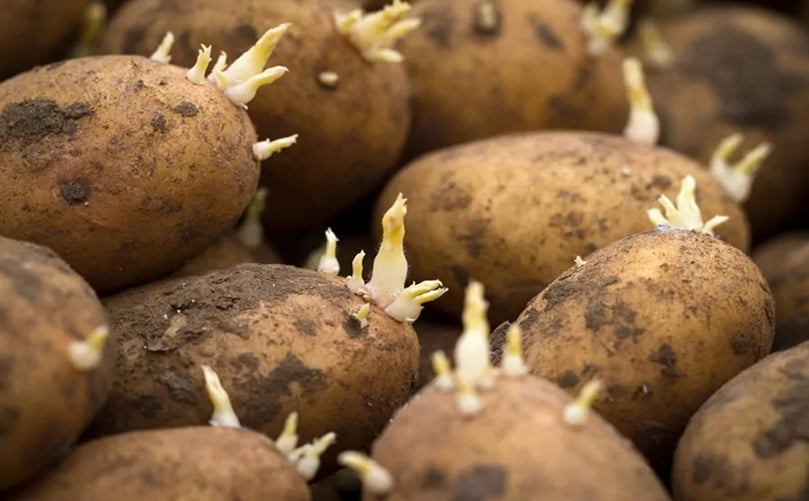
Practical Store Management for Ethylene and Mint Oil Sprout Control
Chlorpropham (CIPC)
Chlorpropham (isopropyl N-3-chlorophenyl carbamate) has been the most widely used potato sprout inhibitor since the 1950s. It is a low-toxicity carbamate herbicide that acts as a mitotic inhibitor, preventing cell division in developing sprouts. CIPC is usually applied post-harvest after wound healing, either as an aerosol fog, spray, dip or dust, with fogging being the most common method.
Residue levels of CIPC strongly influence efficacy is higher residues provide longer suppression of sprouting, often up to 9 months in varieties like Russet Burbank at 7° C. However, uneven application, excessive soil on tubers or stressed cultivars may reduce effectiveness and require repeat treatments. CIPC is not used on seed potatoes, as residues greatly reduce viability and yield.
CIPC application methods include aerosol fogging through ventilation systems, which ensures uniform distribution or aqueous sprays on conveyors during storage or packing. Sprayed sprouts typically dry out within days, although buds may later resprout. Effectiveness varies with cultivar, storage temperature and application rate but in general CIPC remains one of the most reliable and cost-effective sprout inhibitors worldwide.
Maleic Hydrazide (MH)
Maleic hydrazide (1,2-dihydropyridazine-3-6-dione) has been used as a potato sprout inhibitor since the 1950s. It is considered a low toxicity compound as harmful effects in rats occur only at high doses of around 3.8 g per kilogram of body weight. Unlike post-harvest inhibitors such as Chlorpropham, MH is applied pre-harvest by spraying potato foliage near the end of the growing season but before natural senescence or vine-killing. The compound is translocated from the leaves into the developing tubers. Where, it inhibits cell division in the meristematic tissue, thereby delaying sprout initiation and elongation during storage.
Correct timing of MH application is critical. If applied too early, it may reduce yield and tuber size, while late application diminishes its effectiveness. When properly applied, MH can delay sprout initiation by about 30 days and suppress sprout elongation for 6–8 months. In addition to storage benefits it also reduces the growth of unharvested tubers (“volunteers”) in the field, with the level of suppression depending on tuber size and residue concentration. For extended storage beyond 8 months, MH is commonly supplemented with other post-harvest inhibitors such as Chlorpropham.
Residues of MH in tubers are generally stable but compliance with regulatory maximum residue limits (MRLs) is required to ensure consumer safety. Overall, MH is a reliable and cost-effective sprout inhibitor that provides baseline suppression from the field. However, its effectiveness depends heavily on precise application timing, and it is less flexible compared to post-harvest treatments.

Pre-Harvest MH Foliar Application for Sprout Control
Essential Oils
Essential oils are volatile compounds extracted from plants that act as natural potato sprout suppressants. Their mode of action involves damaging sprout tissue, causing it to shrivel and dry. However, new sprouts require repeat applications, making them suppressants rather than true inhibitors. These oils are often used alone or in combination with CIPC for better efficacy and must be applied when sprouts are visible.
Mint oils: Extracted from spearmint (Mentha spicata) and peppermint (Mentha piperata), are also used for sprout suppression. Their major components are carvone (in spearmint) and menthol or menthone (in peppermint). Applied through wicking, cold aerosol or thermal fogging, these oils can suppress sprouts for 2–5 weeks, though their effectiveness varies by potato variety. In some cases they may impart a distinct flavor to the tubers.
Carvone: The principal component of caraway seed (Carum carvi) oil, is another effective sprout suppressant recognized since the 1990s. It not only delays sprouting effectively but also has mild fungicidal activity against certain postharvest pathogens. Unlike some other essential oils, carvone does not affect the color of processed potato products, making it suitable for both fresh market and processing industries. Additionally, carvone can be safely used on seed tubers without affecting viability, ensuring the production of healthy crops.
Overall, clove oil, mint oils and carvone are promising natural sprout suppressants. While they typically require multiple applications and provide relatively short-term control compared to chemical inhibitors, they offer the advantage of maintaining seed tuber viability, making them valuable alternatives in sustainable sprout management.
Naphthalenes
Substituted naphthalenes primarily 1,4-dimethylnaphthalene (DMN) and 2,6-diisopropylnaphthalene (DIPN) serve as reversible sprout inhibitors that mimic endogenous hormonal signals. They antagonize cytokinins to arrest cell division by downregulating CYCD3;2 and upregulating KRP1/2 inhibitors, while simultaneously inducing ethylene-responsive transcription factors (StERF1 increased by 150–200%). Applied as aerosols at 20–40 mg/m³, typically 2–3 times post-curing, these compounds achieve 60–85% sprout suppression for 4–6 months.
DMN performs exceptionally well in long-dormancy cultivars such as ‘Lamoka,’ reducing sprouting by 70–80% without compromising tuber quality. DIPN, a naturally occurring tuber metabolite (0.1–0.5 ppm), enhances CIPC-based programs by lowering chemical residues 25–40% and preserving seed viability above 98%. Their low mammalian toxicity (LD₅₀ >2,700 mg/kg) and vapor-phase distribution ensure uniform coverage, though season-long efficacy requires repeated dosing. Airflow variability within storage (up to 20%) can affect uniformity of inhibition.
Transcriptomic evidence supports their multi-hormonal mode of action involving both ABA and JA pathways, reinforcing dormancy maintenance. DIPN’s endogenous nature minimizes flavor taint, strengthening its position as a CIPC substitute particularly in European markets emphasizing residue-free solutions. However, elevated storage temperatures (>12°C) increase volatility, shortening control duration by approximately 50%, underscoring the need for temperature-regulated storage conditions for optimal performance.
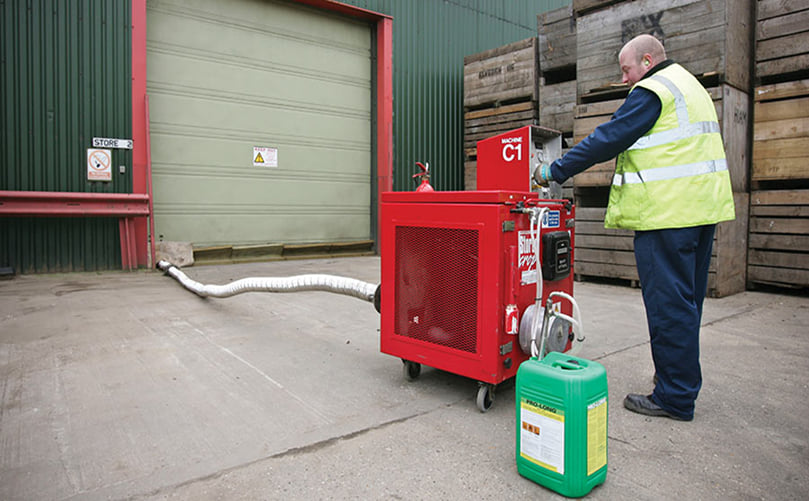
DMN Vapor Application for Reversible Sprout Inhibition
Ethylene
Ethylene (C₂H₄), a gaseous plant hormone applied continuously at 10–100 µL/L through catalytic generators or compressed cylinders in sealed storages, inhibits sprout elongation by 70–90% over 4–6 months. It functions by accelerating abscisic acid (ABA) catabolism via StCYP707A2 upregulation and modulating jasmonic acid (JA) signaling through StCOI1, leading to the formation of short, weakly attached sprouts that detach easily without delaying dormancy initiation. This reversible suppression sprouts resume growth within 1–2 weeks after ethylene removal makes it particularly suitable for seed potatoes, maintaining 95–100% viability as confirmed in cultivars such as ‘Desiree,’ where field trials reported no yield penalty.
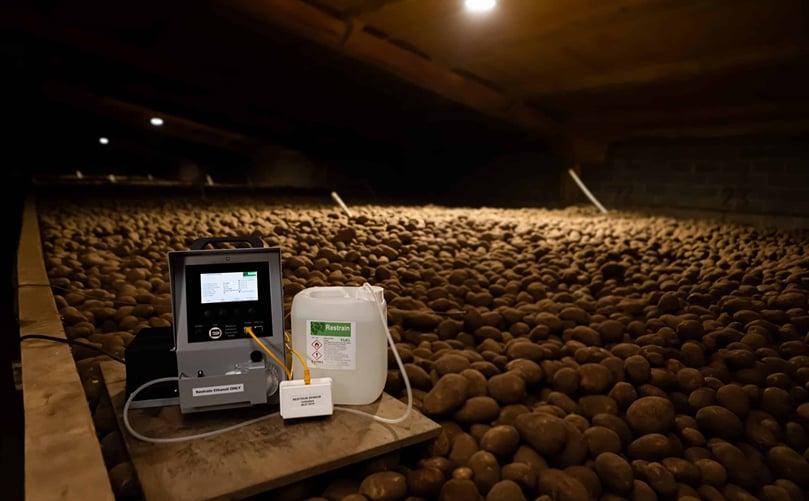
Hand-Held Fresh Potato: Ethylene's Role in Natural Sprout Inhibition
Molecular studies show ethylene-induced transcriptomic reprogramming, including downregulation of cell cycle genes (StCYCD3;1) and upregulation of stress-responsive factors (StERF1), which together reduce sprout biomass by about 80% under storage at 7–10°C. However, efficacy declines by 30–40% at temperatures above 15°C due to the need for increased ventilation (0.5–1 air change per hour). Ethylene leaves no chemical residues and synergizes effectively with maleic hydrazide (extending control by up to two months) or low-dose CIPC (reducing chemical input by roughly 25%). Continuous exposure beyond six months can elevate reducing sugar levels by 10–15%, limiting its use for processing varieties. Ethylene systems are cost-efficient automated generators regulate concentrations via sensors cutting weight loss by 5–10%. In small-scale organic storage, apple co-storage naturally supplies ethylene, achieving 50–60% suppression without synthetic inputs.
Hydrogen Peroxide
Hydrogen peroxide (H₂O₂), applied as a 35% aqueous solution via humidification foggers at 50–100 mL per ton weekly, functions as a strong oxidant that disrupts potato sprout meristems through lipid and protein peroxidation, inducing cellular desiccation and apoptosis-like responses. The treatment achieves 70–90% reduction in sprout length for 2–4 weeks per application, making it suitable for organic storage systems where reapplications every three weeks counter regrowth. Trials on ‘Russet Norkotah’ demonstrated less than 5% sprout coverage over 90 days under this regimen.
In addition to sprout suppression, H₂O₂ provides broad-spectrum antimicrobial protection, reducing soft rot (Erwinia carotovora) incidence by 30–50% through ROS-mediated pathogen inactivation, while enhancing wound healing post-harvest via stimulation of peroxidase activity. Maximum efficacy occurs under neutral pH (6.5–7.5) and 85–95% relative humidity, preventing premature evaporation. Elevated temperatures (>15°C) accelerate catalase decomposition, halving effectiveness duration, thus integration with cooling systems ensures control exceeding six months. Stabilized formulations, such as Hydrogen Peroxide Plus (HPP), extend persistence by 20–30%.
Residues degrade rapidly dropping below 1 ppm within 48 hours complying with organic certification standards. However, excessive use may cause tuber softening, reducing firmness by 5–10%. Importantly, no adverse effects on seed viability have been reported, positioning hydrogen peroxide as a transitional, eco-compatible solution in CIPC-free storage regimes, especially when applied using atomizing systems that ensure over 95% surface coverage in large bins.
Irradiation
Irradiation employs ionizing radiation gamma rays from cobalt-60 or cesium-137 sources, electron beams, or X-rays to inhibit potato sprouting by inducing DNA double-strand breaks and generating reactive oxygen species (ROS) that disrupt meristematic cell division and enzyme activity critical for bud growth. Low doses of 50–150 Gy effectively suppress sprouting by 80–95% for 6–12 months across cultivars such as ‘Russet Burbank’ and ‘Superior,’ enabling storage at higher temperatures (10–15°C) without chemical inhibitors. The treatment penetrates tubers uniformly and leaves no chemical residues.
Gamma irradiation at 75 Gy reduces sprout number by 90% and length by 85% over 180 days, with minimal effects on nutritional quality vitamin C retention remains above 80%. However, higher doses (>200 Gy) increase reducing sugars by up to 20% through starch hydrolysis, leading to darker fries and greater acrylamide formation during processing. Complementary UV-C irradiation (254 nm, 0.5–2 kJ/m²) provides surface sterilization, reducing Fusarium dry rot incidence by 40–60% and suppressing sprout growth by about 70% via localized ROS generation, without the deep penetration risks of gamma exposure.
Applications are typically conducted post-harvest on conveyor systems or in bulk storage, with commercial facilities maintaining <1% dose variability for safety and consistency. Despite endorsements by the International Atomic Energy Agency (IAEA) for phytosanitary and sprout inhibition use, regulatory labeling requirements (e.g., the radura symbol) and consumer hesitancy have limited global adoption to roughly 10–15% of exported potatoes. Transcriptomic analyses indicate downregulation of gibberellin biosynthesis genes (*StGA3ox*) and upregulation of stress-related genes (StHSP), which contribute to dormancy extension. Nevertheless, varietal sensitivity such as a 20% rise in reducing sugars in ‘Yukon Gold’ necessitates dose optimization to balance efficacy and quality preservation.
Next-Generation Approaches to Residue-Free Sprout Suppression
Research pipelines increasingly focus on sustainable, residue-free alternatives to bridge the gap left by chlorpropham (CIPC) phase outs. Emphasis lies on natural volatiles, genetic innovations and physical delivery systems capable of providing 6–12 months of sprout control without compromising fry quality or seed vigor.
Natural Volatiles: 3-Decen-2-one (commercially known as SmartBlock) an unsaturated ketone volatilized at 0.1–0.2 mL/kg, induces meristem desiccation via oxidative damage. Each application provides 4–8 weeks of suppression, achieving full-season efficacy when combined with complementary treatments. Trials report 80–90% sprout reduction in ‘Russet Norkotah’ stored at 10°C, with no sensory alteration and GRAS classification accelerating its commercial uptake. Essential oil blends from Cinnamomum camphora (95% linalool) and Origanum majorana (40% terpinen-4-ol) outperform individual oils by 20–30%, inhibiting 85–100% sprouting at room temperature through membrane disruption. Origanum formulations extend minituber shelf life by 3–6 months and simultaneously reduce Fusarium rot incidence by 40%.
Genetic and Hormonal Strategies: Molecular innovations target regulatory pathways governing dormancy. Silencing stu-miR319c via CRISPR extends dormancy by 20–40 days by suppressing jasmonate signaling and TCP transcription factors, while overexpression of StABA2 elevates abscisic acid synthesis, prolonging dormancy by 2–3 months and enhancing starch content by Approximately 15%. Similarly, brassinosteroid analogs such as 24-epibrassinolide (1 µM) modulate GA/ABA cross-talk, achieving ~70% sprout suppression in controlled trials.
Delivery Technologies and Novel Extracts: Slow-release matrices, such as alginate-encapsulated carvone, sustain volatile emission for 4–6 months, halving reapplication frequency and aligning with organic standards. Black spruce (Picea mariana) bark extracts show dual action reducing sprouting by 60% and microbial pathogens by 30% through polyphenolic antimicrobial activity.
Outlook: Key challenges include scalability, as volatile efficacy declines by ~50% above 15°C, and regulatory clearance for natural bioactives. Nonetheless, pilot projections indicate potential 10–20% adoption within the next few years, with biotechnology-driven dormancy modulation positioned as the most durable, long-term solution for sustainable sprout management.
Challenges in Achieving Optimal Sprout Inhibition
Suboptimal efficacy of sprout inhibitors arises from complex interactions among application inconsistencies, environmental stressors, and physiological variability, collectively contributing to 20–40% failure rates and economic losses exceeding $500 per ton. These losses stem from sprouting-induced shrinkage (5–12%) and processing defects such as darkened fries caused by elevated reducing sugars.
Under-dosing such as applications below 15 g/ton of chlorpropham (CIPC) provides only 3–5 months of suppression due to incomplete meristem coverage. Efficacy further declines in large-scale storages, where high volume utilization (>80%) reduces fog distribution and penetration efficiency by up to 25%. Timing errors also play a critical role: premature (pre-curing) applications result in 30–50% volatilization losses, while delayed post-dormancy treatments fail to inhibit advanced bud growth.
Storage environments exacerbate these challenges. Temperatures above 12°C accelerate inhibitor metabolism, shortening CIPC’s half-life by ~40% and stimulating gibberellin biosynthesis, which enhances sprout vigor. Similarly, excessive humidity (>95% RH) dilutes surface residues, and restricted airflow creates thermal hotspots where sprout density can reach 2–3 times the baseline. Pre-harvest drought stress and mechanical injury reduce systemic uptake of maleic hydrazide (MH) by Approximately 20%, while soil residues adhering to tubers bind active compounds, diminishing efficacy by 15–25%.
Microbial interference further limits performance: Erwinia spp. biofilms can degrade volatile inhibitors such as carvone by up to 30%. Additionally, aging tubers (>9 months storage) often exhibit physiological tolerance through upregulated efflux mechanisms, diminishing chemical effectiveness.
Mitigation strategies include predictive modeling and precision monitoring, such as residue tracking by GC–MS at 60-day intervals. Integrated pest management (IPM) approaches combining low-dose CIPC with ethylene counteract temperature-induced losses, improving suppression by Approximately 35%. Wick-delivered mint oils ensure more uniform inhibitor release compared to conventional sprays. Case studies from Indian traditional storages demonstrate that CIPC efficacy drops to Approximately 50% at ambient 20–25°C due to rapid degradation, whereas refrigerated storage (8–10°C) achieves up to 90% success.
Adopting calibrated automation, including sensor-based dosing and airflow management, can raise sprout inhibition reliability to 85–95%, safeguarding both tuber quality and market value.
Candidates for Consideration by the Potato Panel
Among the available sprout inhibition methods, CIPC and irradiation are considered the most suitable for long term control. MH, either alone or in combination with CIPC can also delay sprout growth and may be useful in an integrated program. Other inhibitors generally provide only short-term or reversible control and are therefore less suitable.
Under natural storage (ambient conditions), the effectiveness of all inhibitors, including CIPC, may be reduced. Since CIPC is slightly volatile and metabolized by tubers over time, its residue decreases gradually, lowering its sprout-inhibiting effect. Poor distribution or low application rates can further reduce its effectiveness, especially as tubers age or are stored in warm conditions.
Other inhibitors like DMN, DIPN or clove oil are less effective when used alone, but in combination or sequence with CIPC, they may provide better control. However, limited research exists on whether such combinations can make tubers fully non viable for extended periods.
Irradiation is also effective, but low doses (to reduce side effects) may not fully prevent sprouting over time. Additionally, in at least two NAPPO countries, foods treated with irradiation must be clearly labeled for consumers.
Limiting the End Uses of Potatoes in Commerce
Achieving complete non-viability in potato tubers remains biologically unattainable due to their inherent resilience as vegetative propagules, evolved to regenerate even after severe stresses such as desiccation or partial freezing, with survival rates of 5–15% observed under controlled conditions. This resilience poses significant phytosanitary risks in international trade, as untreated or inadequately suppressed tubers can inadvertently function as seed stock, facilitating the spread of pests, pathogens (e.g., late blight caused by Phytophthora infestans) or genetic contaminants into new regions.
Regulatory frameworks such as those established by the North American Plant Protection Organization (NAPPO) and the U.S. Animal and Plant Health Inspection Service (APHIS) mandate effective sprout suppression to restrict end uses strictly to consumption and processing, prohibiting propagation. Export protocols often require detectable residues of approved inhibitors like chlorpropham (CIPC) at levels above 5 ppm or irradiation treatments of 50–150 Gy to certify tubers as non-propagative, with non-compliance leading to quarantine, re-export or destruction.
In the European Union, post-CIPC regulatory measures emphasize integrated systems that combine chemical suppression, labeling (“treated for sprout inhibition do not plant”) and blockchain-based traceability to enforce end-use restrictions. These frameworks have reduced unauthorized planting by up to 70% in monitored consignments.
Economic implications are notable: certification of non-viability increases handling costs by 5–10% but preserves market access. Fresh market potatoes (table stock) face stricter scrutiny than processing types due to their higher propagation potential. Varietal differences further complicate management long-dormancy cultivars such as ‘Superior’ require minimal intervention, whereas short-dormancy types like ‘Red Norland’ demand continuous suppression. Environmental rebound also remains a concern, as suppressed tubers can resume sprouting 20–30% faster when re-exposed to warm, humid conditions if not properly monitored.
An integrated approach—incorporating post-harvest sorting (removal of lots with >2% sprouted tubers), sanitation (reducing fungal load by ~40%) and consumer education on proper disposal effectively minimizes propagation risks while sustaining commercial flow. Emerging phytosanitary tools, such as DNA barcoding for origin verification, further deter misuse and help ensure that traded tubers remain confined to edible markets.