


Agosto 21, 2012
NDSU Potato Blightline for August 20
The NDSU Potato Blightline for August 20th sponsored by Syngenta Crop Protection has been issued.From the archive

Julio 05, 2012
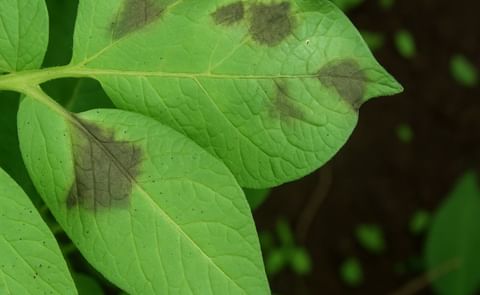
New York State growers warned of late blight
Home gardeners and commercial growers are alerted of the potential introduction of late blight this growing season, as it has been confirmed in Suffolk County.From the archive
Junio 19, 2012
NDSU Potato Blightline - Recommendations for June 18
Late blight has not been reported in North Dakota, Minnesota or Manitoba. With the fair weather, late blight severity values are unchanged since Friday.From the archive
Junio 19, 2012
Pennsylvania potato, tomato growers hit by late blight, should remain vigilant
Late blight, the same disease that caused Ireland's potato famine in the 19th century, was confirmed in three Pennsylvania counties last week.From the archive
Abril 17, 2012
Maine looks to fungicides to save potatoes
Much of Maine's seed potato supply for this year is infected with blight, and the state has asked the federal government for an emergency exemption to make an effective but expensive toxic seed treatment available to growers.From the archive
Noviembre 10, 2011
Idaho growers eye BASF's new GM potato
More than a decade has passed since Jim Tiede was among the growers caught up in a debacle over the first U.S. genetically modified potato variety. Even today, the American Falls, Idaho, farmer copes with the fallout of planting Monsanto's GM potato N...From the archive
Contenido Patrocinado
Contenido Patrocinado
Contenido Patrocinado

Octubre 04, 2011
Scientists look for source of Alaska potato blight
Potato late blight, that same disease that caused the Irish Potato Famine, resurfaced in Alaska this fall. This wasn’t the first time the disease, widespread in the Lower 48 and worldwide, came to Alaska. Plant pathologist Jenifer McBeath suspects it...From the archive

Septiembre 01, 2011
Late blight hits potatoes in Alaska
Late blight has shown up in the fields of two potato producers, in Palmer and Delta Junction. Alaska. The University of Alaska Fairbanks Cooperative Extension Service is working with major potato producers to help prevent the spread.From the archive
Mayo 10, 2011
New Late Blight Tracking System
A new USDA-funded consortium will provide nationwide tracking of late blight infections of potato and tomato. A web site currently under development will allow users to report where late blight has been found, and to sign up for automatic notifications by email or text message when late blight is found nearby.From the archive

Abril 06, 2011
Major late blight research project funded by the USDA
Given that world potato production is about 320 million tons per year (20 million tons per year in the United States) and world tomato production is about 120 million tons per year (13 million tons per year in the U.S.), late blight is a major problem worldwide even today.From the archive
Octubre 29, 2010
Professor Manuel Ospina-Giraldo Receives USDA Grant to Study Phytophthora
Research by Professor Manuel Ospina-Giraldo on Phytophthora Infestans - the organism that caused the Irish Potato Famine - is being funded as part of a $999,900 “Education in Genomics-Based Microbial Forensics” grant from the United States Department of Agriculture.From the archive
Octubre 29, 2010
Investigador colombiano recibe beca del USDA para estudiar el patógeno causante del tizón tardío
La investigación realizada por el profesor Manuel Ospina Giraldo sobre el organismo que causó la hambruna de la papa en Irlanda, será financiada por el Departamento de Agricultura de los Estados Unidos (USDA), a través de una subvención de US$ 999.900 ...From the archive
Contenido Patrocinado
Julio 07, 2010
Late blight found in Walsh Country, North Dakota
Despite hot dry weather, Late Blight was found in a field in northern Walsh County in northeast North Dakota late last week.This is in addition to finds in Dickey County in southeast North Dakota and in the Carberry and Carman areas of southern Manitob...From the archive
Junio 30, 2010
Late Blight shows up in Washington
Potato late blight has been found and confirmed in the south Columbia Basin and Washington State University plant pathologist Dennis Johnson says more confirmations of the disease are expected this week. He says the disease was found in two locations. ...From the archive

Mayo 20, 2010
Late blight hotlines
Worldwide, late blight is rated the worst of potato diseases. Intermittently since the 1990s, spores have turned up in commercial fields of Idaho, Washington, California and Oregon. When the spore is present it reproduces like a wildfire in cool, mois...From the archive
Mayo 06, 2010
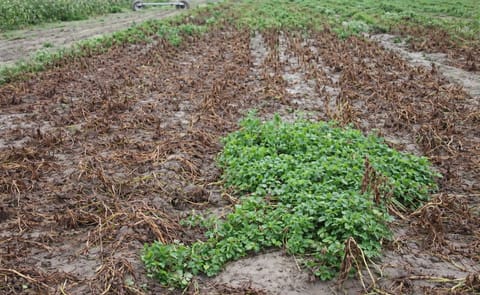
Defender: Late blight-Resistant Potato variety from ARS Research
Potatoes are America’s number one vegetable crop. Per capita, Americans consume about 130 pounds annually.From the archive

Abril 24, 2010
Will there be a sequel to last summer's late blight with tomatoes, potatoes?
Many readers are no doubt aware of last summer's late-blight infestation, in which a fungus, Phytophthora infestans, decimated local tomato and potato plantings. The fungus overwinters in southeastern United States but does not generally overwinter in ...From the archive
Agosto 26, 2009
MSU Plant Pathologist Willie Kirk: monitor potatoes in storage for late blight
The impact of late blight to potato growers in Michigan is clear and we estimate that many growers with crops going in to long-term storage will spend up to $350/A in crop protection products alone (not including application costs). Even such intense c...From the archive