

Introduction
Potatoes (Solanum tuberosum) are both a kitchen and garden favorite, cherished for their versatility, nutritional value and fascinating history. Originating in the Andes Mountains of South America, they were first domesticated between 8,000 and 5,000 BC by indigenous peoples who recognized their reliability as a staple crop. From those ancient highlands, potatoes have journeyed across continents to become one of the world most important food sources, now feeding more than a billion people globally.
Whether baked, boiled, fried or mashed, potatoes adapt beautifully to countless culinary styles and remain a household essential. This comprehensive guide explores everything you need to know about potatoes how to grow them successfully at home, choose the best varieties for different recipes, and understand their nutritional and cultural significance. We’ll also look at their role in sustainable agriculture, innovative industrial uses beyond the kitchen and a few fun facts that reveal why this humble tuber continues to shape diets and cultures worldwide.
History: From Andean Roots to Global Staple
The story of the potato (Solanum tuberosum) began high in the Andes Mountains of South America, where indigenous communities first domesticated wild potato species around Lake Titicaca, on the modern-day border of Peru and Bolivia, between 8,000 and 5,000 BC. Archaeological and genetic evidence reveals that these early cultivators selectively bred and developed over 4,000 native varieties, each adapted to unique environments from frigid highlands to temperate valleys and coastal plains. Belonging to the Solanum brevicaule complex, the cultivated potato is thought to have originated from a single major domestication event, although some researchers propose multiple independent domestications across the Andean region.
The potato’s global journey began when Spanish conquistadors encountered it during their expeditions in the 1530s and carried it back to Europe. Initially, the strange tuber was met with suspicion and superstition Europeans associated it with the nightshade family, considering it potentially poisonous or even linked to leprosy. Over time, however, its high yield and nutritional value won acceptance and by the 18th century, the potato had become a vital food crop across Europe. It proved indispensable during periods of famine and war, offering sustenance when other crops failed.
Yet, the potato’s dependence on a narrow genetic base had tragic consequences. The infamous Irish Potato Famine (1845–1852), caused by the fungal pathogen Phytophthora infestans, led to widespread crop failure, over a million deaths and mass emigration from Ireland an event that reshaped global demographics and agricultural awareness.
Even before European contact, pre-Columbian trade networks had spread potatoes throughout the Andes and wider Americas. After the Spanish conquest, the crop rapidly expanded to Asia, Africa and other continents, becoming a cornerstone of global food security. Today, institutions such as the International Potato Center (CIP) in Lima, Peru, safeguard thousands of traditional and improved varieties, helping to preserve biodiversity, enhance climate resilience and combat emerging pests and diseases.
Interestingly, during its early years in Europe, the potato acquired a colorful reputation sometimes rumored to be an aphrodisiac, a claim that may have aided its popularity despite early skepticism. It also appeared in folklore and traditional medicine, used for treating warts or symbolizing humility and endurance. From its sacred Andean origins to its place on tables worldwide, the potatoes journey reflects humanity enduring relationship with the land, survival and innovation.
Why Potatoes Are a Kitchen and Garden Essential
Why Potatoes Are a Kitchen and Garden Essential Potatoes (Solanum tuberosum) rank as the world’s fourth most important food crop, following rice, wheat and maize and play a crucial role in feeding billions of people across the globe. Their exceptional adaptability and nutrient richness make them indispensable in diets spanning more than 100 countries. From creamy mashed potatoes in the United States and spicy aloo curries in India to cheesy poutine in Canada, the potatoes versatility in global cuisine is unmatched.
Nutritionally, potatoes are a powerhouse of health rich in potassium, vitamin C and dietary fiber, while providing sustained energy through complex carbohydrates. They help support heart health, promote digestion and serve as a naturally gluten-free source of essential nutrients.
In the garden, potatoes are equally rewarding. They thrive in diverse soils and climates, making them ideal for both home gardeners and small-scale farmers. Remarkably efficient, they use up to seven times less water than cereals, yield as much as 100 pounds from just 4 square feet and enhance soil fertility when included in crop rotation systems.
Beyond their culinary value, potatoes also fuel a range of industrial and sustainable applications. Potato starch is widely used in textiles, adhesives, and biodegradable plastics; tubers are fermented into alcoholic beverages like vodka; and researchers are exploring their potential in biofuel production.
Culturally, potatoes embody resilience and tradition, featuring prominently in festivals, folklore, and family recipes worldwide. From humble roots in the Andes to global kitchens today, they remain a symbol of nourishment and endurance. With a low carbon footprint, high productivity, and ability to grow in marginal lands, the potato stands out as a key crop for sustainable food security in the face of climate change.(Potato at Kitchen).
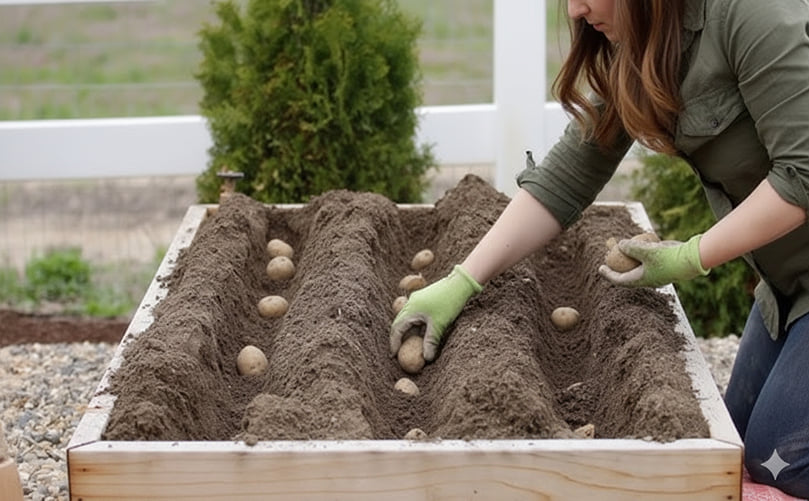
Planting Chitted Seed Potatoes in Raised Bed
Growing Potatoes at Home: Practical and Sustainable
Growing potatoes at home is one of the most rewarding and sustainable ways to produce your own food. With minimal space and simple tools, you can harvest up to 100 pounds of potatoes from just 4 square feet using approaches such as raised beds, containers or no-dig methods. Review articles While advanced growers may benefit from precision agriculture tools which can increase yields by 13–21% traditional methods are perfectly effective for home gardeners.
Start by selecting certified, disease-free seed potatoes rather than grocery store ones, which are often treated with sprout inhibitors. “Chitting” or pre-sprouting, helps jumpstart growth: place the seed potatoes in a cool, bright area (60–70°F) for 4–6 weeks until the sprouts reach ½–1 inch in length.
Plant your potatoes 2–4 weeks before the last frost, in well-drained, slightly acidic soil with a pH between 5.8 and 6.5. Traditional methods include planting in trenches about 6–8 inches deep, spacing seed pieces 10–12 inches apart. Alternatively, use 10-gallon containers filled with compost, or try straw mulch beds for a no-dig, low-maintenance option. Keep 12 inches between plants and 2–3 feet between rows for good airflow and tuber development.
As plants grow, hill soil or mulch around the stems 2–3 times to encourage more tuber formation and prevent sunlight exposure that causes greening. Maintain consistent moisture, supplying about 1–2 inches of water per week, and apply a low-nitrogen fertilizer (such as 5-10-10) to support balanced growth. Rotate potato plots annually to minimize pest and disease buildup.
Harvesting depends on your goal: dig up new potatoes when plants begin flowering (around 8–10 weeks) or wait for maincrops until the foliage naturally dies back (about 14–20 weeks). After harvest, cure the tubers in a dark, well-ventilated space (60–65°F) for about 10 days to toughen skins and improve storage life.
For urban gardeners, innovations like hydroponics and aeroponics are transforming potato cultivation boosting yields while reducing space and soil dependence. Their water-use efficiency, up to seven times higher than cereal crops, makes them ideal for sustainable food production. Enhance your garden ecosystem with companion plants such as beans (for nitrogen fixation) or marigolds (for natural pest control), creating a resilient and eco-friendly growing system.
Caring for Your Potato Plants
Proper Caring throughout the growing season ensures healthy plants and abundant yields. Once your potato plants reach about 6–8 inches tall, begin hilling mound soil, compost or straw around the base of each plant, covering the lower leaves. Repeat this 2–3 times during growth. Hilling encourages the formation of more tubers and prevents sunlight from reaching developing potatoes, which can cause greening and the accumulation of toxic solanine.
Maintain consistent moisture, providing about 1–2 inches of water per week. Keep the soil evenly moist but never waterlogged, as excessive moisture can lead to disorders like hollow heart, cracking or rot. Apply a low-nitrogen fertilizer (such as 5-10-10) to promote tuber development over excessive foliage. Avoid using fresh manure, which can encourage common scab and introduce pathogens.
Vigilance against pests and diseases is key. Watch for Colorado potato beetles, aphids and wireworms common culprits in potato damage. Handpick beetles or use organic pest controls such as spinosad or neem-based sprays. To prevent early or late blight, look out for brown or dark lesions on leaves and stems and promptly remove and destroy infected plants to prevent spread. Practice crop rotation every 3–4 years and choose disease-resistant varieties for long-term soil and plant health.
When plants begin to yellow and die back, it’s time to harvest. Use a garden fork to lift tubers gently, minimizing skin damage. Cure harvested potatoes in a dark, ventilated space at 60–65°F for about 10 days to toughen skins and extend storage life. Store cured potatoes in cool (32–40°F), dark, and humid conditions. Avoid refrigeration for potatoes intended for frying, as cold temperatures convert starches into sugars, resulting in off-flavors and darkened chips.
Each plant can produce up to 10 tubers under good care and integrating trellised companion plants such as beans or peas can save space while enriching soil with nitrogen. With proper watering, hilling and pest management, your homegrown potatoes will be both abundant and high-quality, rewarding your effort from soil to storage.
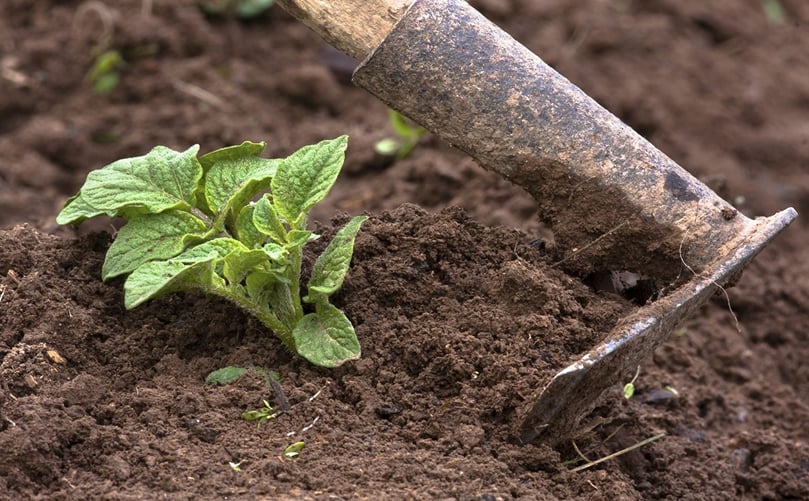
Hilling Soil Around Young Potato Plants
Advanced Potato Growing Techniques
For growers eager to push beyond Growing Techniques, several advanced potato production systems offer higher yields, resource efficiency and adaptability to diverse environments.
Aeroponics and Hydroponics: In aeroponic systems, potato roots are suspended in air and periodically misted with nutrient-rich solutions. This technique can produce up to 30% more tubers, all disease-free and uniform in size, making it ideal for seed potato production and controlled environments such as greenhouses or research facilities. Similarly, hydroponics where plants grow in soilless nutrient solutions enables year-round cultivation with precise control over water and nutrients, making it a practical choice for urban and indoor farming.
Companion Planting for Natural Pest Control: Strategic companion planting enhances pest resistance and soil fertility naturally. Marigolds help repel nematodes, horseradish discourages Colorado potato beetles and beans contribute nitrogen fixation, improving soil fertility without synthetic fertilizers. These pairings create a balanced mini-ecosystem, reducing pesticide dependence and improving sustainability.
Soil Enhancements and Water Management: In soil-based systems, adding biochar can improve moisture and nutrient retention by about 20%, while also boosting microbial activity and long-term soil health. Plastic mulches warm the soil early in the season, extending the growing window in cooler regions. Drip irrigation delivers water directly to the root zone, minimizing evaporation losses and reducing disease risks associated with wet foliage particularly effective in raised-bed systems.
Maximizing Space and Yield Efficiency: Techniques like vertical growing towers or stacked containers allow gardeners to multiply their yield potential in compact spaces. Combining these methods with precise nutrient and water management can double the yield potential, especially for heirloom or specialty varieties. While initial setup costs may be higher, long-term benefits include higher productivity, reduced disease pressure and improved sustainability.
With their exceptional water-use efficiency up to seven times better than cereal crops potatoes are ideally suited for these modern, eco-friendly systems. Advanced cultivation techniques not only increase yields but also help create a climate-smart, sustainable model of food production, perfectly suited for both home innovators and professional growers.
Picking the Right Potato Variety
Choosing the right potato type is key to nailing your dish, as each variety’s texture and starch content affect the outcome. Potatoes fall into three main categories:
- Starchy: Russets, with high starch and a fluffy texture are perfect for baking, frying, mashing or French fries, as they soak up flavors and crisp beautifully.
- Waxy: Red Pontiac, fingerlings or La Ratte, with a smooth, firm texture, hold their shape for boiling, potato salads or roasting.
- All-Purpose: Yukon Golds or Kennebec balance starch and moisture, ideal for gratins, soups, gnocchi or casseroles.
Over 4,000 varieties exist worldwide, including heirlooms like Purple Peruvians, Adirondack Blues or All Blue, which pack antioxidants for extra health benefits. For fluffy mashed potatoes, Russets are the go-to for hash browns or salads, waxy reds or fingerlings keep their form.
Cooking guides highlight seven key types russet, red, white, yellow, blue/purple, fingerling, petite each with tailored uses. Some varieties, like Desiree or King Edward, resist pests like Colorado potato beetles, making them easier for home growers. Home cooks stress matching the potato to the dish, like using starchy types for crispy fries or waxy ones for creamy, intact salads, to ensure the best texture and flavor (Recipes).
Nutritional Benefits and Things to Watch Out For
A medium potato (5.5 oz) delivers 145 calories, 35% of daily vitamin C, 25% potassium and 30% vitamin B6, boosting immunity, heart health and digestion. Colored varieties like purple or red potatoes offer antioxidants like anthocyanins, which fight oxidative stress and inflammation. They’re fat-, cholesterol-, and gluten-free, fitting vegan, gluten-sensitive and other diets.
Studies show their potassium helps regulate blood pressure, while fiber (4g per tuber) aids gut health and keeps you full longer. Resistant starch in cooled, cooked potatoes acts like fiber, supporting gut bacteria and blood sugar control. However, boiled or baked potatoes have a high glycemic index and overeating them may slightly raise type 2 diabetes risk, especially in processed forms like instant mash.
Fried potatoes, like fries or chips, can increase hypertension and weight gain risks due to added fats and high glycemic load. Green potatoes or sprouts contain solanine a toxin causing nausea, headaches or worse—always discard them.
Experts note their low-sodium, energy-dense profile and processes like fermentation reduce antinutrients like phytates, boosting nutrient absorption. Pairing potatoes with protein or healthy fats, like yogurt or olive oil, lowers their glycemic impact for balanced meals.
Storing Potatoes for Long-Lasting Freshness
Proper storage keeps potatoes fresh for up to 6 months. After curing for 10 days in a dark, 60–65°F spot to toughen skins, store them in a cool (32–40°F), dark, humid place, like a cellar or perforated paper bag, to prevent sprouting or greening. Avoid refrigerators for frying types as cold converts starches to sugars, making fries soggy or overly sweet.
Keep potatoes away from onions, which release ethylene gas that triggers sprouting. Check weekly for soft spots or sprouts, removing any to preserve the batch. Some gardeners suggest burlap sacks or wooden crates for breathability, ensuring long-term quality for your home cooked dishes.
Recipes: Endless Ways to Enjoy Potatoes
Potatoes are a culinary playground, transforming into dishes for every occasion due to their versatility. Here’s a lineup of crowd-pleasing recipes to try at home:
- Twice-Baked Potatoes: Russets stuffed with cheddar, bacon, sour cream and chives, baked until golden and bubbly for a comforting side or main.
- Ham and Potato Soup: Yukon Golds for a creamy, hearty soup with ham, carrots, celery and thyme, perfect for chilly days or cozy dinners.
- Ranch Potato Salad: Waxy reds or fingerlings tossed with ranch dressing, dill, green onions and pickles for a tangy, picnic ready side.
- Hasselback Potatoes: Thinly sliced Russets or Yukons, brushed with garlic butter and rosemary, baked for crispy edges and tender insides, great for impressing guests.
- Fondant Potatoes: Cylinder cut Yukons, seared golden, then braised in stock and thyme for a rich, restaurant worthy dish.
- Aloo Tikki: Indian style patties with mashed potatoes, spices, peas and cilantro, pan-fried until crispy, served with tamarind chutney for a spicy kick.
- Potato Gnocchi: All purpose potatoes mashed with flour, rolled into soft dumplings, boiled and tossed with marinara or pesto for a homemade Italian treat.
- Crispy Smashed Roasties: Baby potatoes boiled, smashed and roasted with olive oil and sea salt for a crunchy, golden texture that’s addictive.
- Colcannon:Irish mashed potatoes with kale or cabbage, butter and cream, a cozy traditional dish for St. Patrick Day or any night.
- Potato Latkes: Shredded Russets mixed with onion, egg and flour, fried into crispy pancakes, served with applesauce or sour cream for a festive touch.
- Peruvian Causa: Layered mashed yellow potatoes with avocado, chicken or tuna, spiced with aji amarillo for a vibrant, South American classic.
- Potato Wedges: Russets cut into wedges, tossed with olive oil, smoked paprika and garlic, baked until crispy for a game day snack.
- Dauphinoise Potatoes: Thinly sliced Yukons layered with cream, garlic and Gruyere, baked until bubbly and golden for a decadent side.
For quick snacks, mash boiled potatoes with eggs for 2 ingredient patties or slice thin for homemade oven baked chips seasoned with paprika or rosemary. Home cooks share tips like pairing roast pork with nutmeg rosemary mashed potatoes, adding smoked paprika to wedges for extra flavor or using blue potatoes in salads for a vibrant pop. Always match the potato type to the dish starchy for fluffy textures, waxy for firm bites to get the perfect result every time.
Fun Facts and Sustainability Perks
Potatoes are seven times more water efficient than cereal crops like rice or wheat, producing more food per drop, making them a top pick for sustainable home gardens. Some varieties are bred to produce natural insecticides, reducing pest issues, though home growers often prefer organic methods like neem oil or companion planting with marigolds or beans.
Allergic reactions to potatoes are rare but possible, especially for those sensitive to nightshades like tomatoes or eggplants. Potatoes power everything from crispy chips to vodka, starch for textiles and eco friendly packaging, showing their incredible range.
Growers highlight home cultivation as a food security win, as one potato can yield up to 10 more, and small plots can feed families for months. Crop rotation with potatoes improves soil health, breaking up compacted earth and suppressing weeds when hilled properly. Their long storage life and high yields make them a pantry and garden hero worldwide.
Did You Know?
- Potatoes were once seen as an aphrodisiac in early modern Europe, helping their spread despite early distrust.
- Potatoes are seven times more water-efficient than cereals, making them a sustainable choice for home gardens.
- Over 4,000 potato varieties exist, with unique flavors and colors, from purple to fingerling.