
Introduction
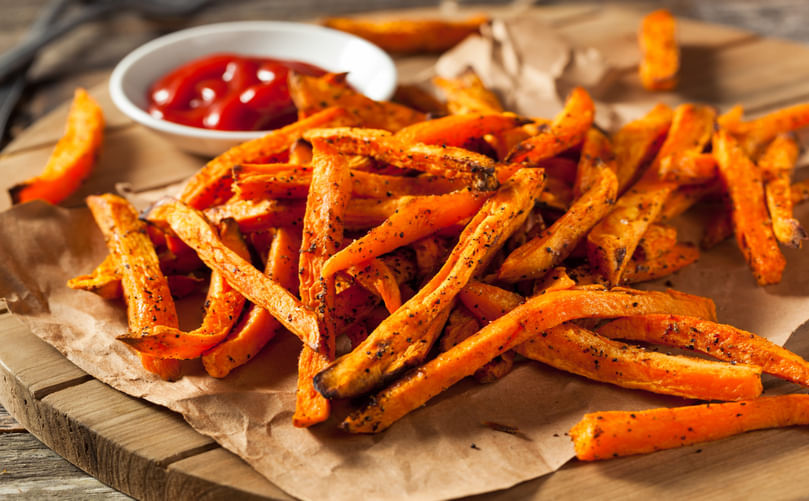
Sweet potato fries, crafted from the vibrant Ipomoea batatas, have captured hearts worldwide with their sweet, earthy flavor and satisfying crunch, making them a standout alternative to traditional potato fries. Originating over 5,000 years ago in Central or South America likely in present-day Ecuador or Peru, with the earliest cultivation records dating to around 750 BCE in Peru these nutrient-rich tubers were a pre-Columbian staple. Christopher Columbus brought them to Europe in 1492 and by the 16th century, explorers spread them to Asia, Africa and beyond, where they blended into local cuisines.
Sweet Potato Fries: A Global Favorite with a Nutritious Twist
Sweet Potato Fries: A Global Favorite with a Nutritious Twist Today, they are a global hit Guinea’s street vendors serve patates with a dash of salt, Korea's goguma twigim dazzles with tempura batter and soy dips, Caribbean markets spice them with jerk seasoning and Taiwan has turned a 17th-century famine crop into trendy snacks. Their ability to thrive in poor soils with minimal resources makes them a sustainable choice. The global market, valued at USD 2.5 billion in 2023, is set to reach USD 5.1 billion by 2032 with a 7.7% CAGR, driven by demand for healthier snack options.
Did You Know?
Polynesians sailed thousands of miles with sweet potatoes as a vital food source before Columbus reached the Americas, showcasing their role in ancient exploration. Genetic evidence supports that sweet potatoes reached Polynesia around 1000 AD, likely through pre-Columbian contact between Polynesians and South Americans.
Sweet Potato Fries vs. Regular Fries: What Sets Them Apart
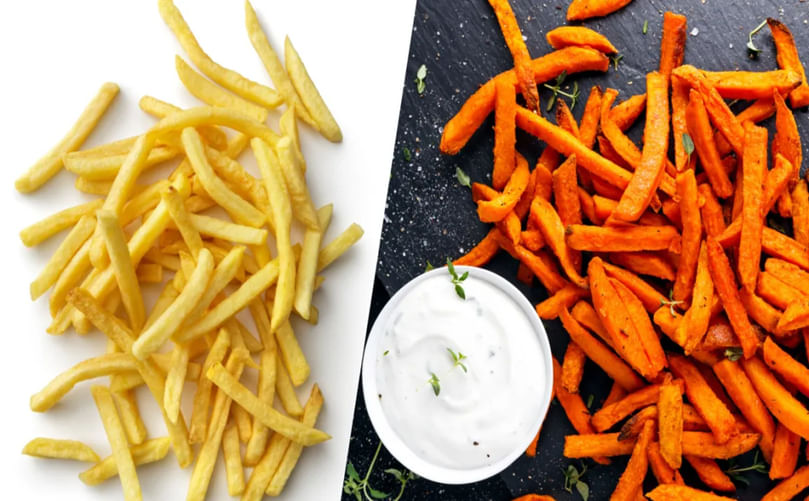
While both are beloved comfort foods, sweet potato fries and regular potato fries differ in flavor, nutrition, versatility and environmental impact, making sweet potato fries a compelling choice.
Sweet Potato Fries vs. Regular Fries
Flavor and Texture: Sweet potato fries offer a naturally sweet, caramelized taste from sugars like sucrose and maltose, which intensify during cooking, providing a richer flavor than the neutral, starchy profile of regular fries. Their texture, especially in orange fleshed varieties, combines a crispy exterior with a creamy interior, while regular fries lean uniformly crisp but lack depth.
Nutritional Superiority: Sweet potato fries pack more nutrients. A medium baked sweet potato (about 100 g, plain) has around 86–90 calories, 20–21 g carbs, 3–4 g fiber, 1.5–2 g protein, over 961 µg Vitamin A (107–152% DV), 20–28 mg Vitamin C (22–31% DV), and 541–717 mg potassium (12–15% DV). When prepared as fries (e.g., baked or air-fried with minimal oil), a 100 g serving might range 140–165 calories with 7–9 g fat, versus 300–400 calories and 15–20 g fat for deep-fried regular fries. Sweet potatoes' beta-carotene and anthocyanins (in purple varieties) offer unique health benefits, and their lower glycemic index (around 44–61 boiled, depending on preparation) supports steadier blood sugar compared to regular potatoes (GI 70+). Regular fries provide more potassium per serving but lack the antioxidants.
Culinary Flexibility: Sweet potato fries shine in global cuisines, from India’s spicy masala coatings to Japan’s sweet soy glazes, thanks to their sweetness pairing with bold flavors. Regular fries, often limited to salt or ketchup are less adaptable. Sweet potatoes also excel in healthier cooking methods like baking or air frying, retaining nutrients without excess oil.
Environmental Edge:Sweet potatoes require less water (around 500mm per season vs. 750mm+ for potatoes) and have higher water use efficiency (up to 58% better in some studies), yielding 2–3x more calories per hectare in suitable conditions. Greenhouse gas emissions vary by system, but sweet potatoes can emit around 0.2 kg CO2/kg vs. 0.4 for potatoes, though per hectare figures show mixed results (e.g., 1165 kg CO2-eq/ha for sweet potatoes vs. lower for some potato systems). Their roots help curb soil erosion, and peels can fuel biogas, reducing waste by up to 30%..
Nutritional Breakdown
A 85g serving of oven-baked sweet potato fries offers 140–160 calories, compared to 300–400 calories in deep fried regular fries, due to lower oil use. They contain 3.5–4.5g fat versus 15–20g (often saturated) in regular fries, 25g carbs with 4–5g fiber versus 40g carbs with 3–4g fiber, and 2–3g protein versus 4g. Sweet potato fries deliver over 10,000 IU Vitamin A (200%+ DV for eye health), 20% DV Vitamin C (immunity) and 400mg potassium (heart health), while regular fries provide 15% DV Vitamin C and 500mg potassium but lack antioxidants.
Sodium is 125–220mg versus 200–500mg, adjustable with herbs. Orange-fleshed varieties retain high beta-carotene post-cooking, boosting their edge. They also offer manganese (15% DV) for metabolism and copper for skin health. Their fiber mix (soluble and insoluble) may lower cholesterol by 5–10%, outperforming regular potatoes' mostly insoluble fiber.
Health Benefits: A Science-Backed Superfood
Sweet potato fries are more than a side dish they are a functional food packed with beta-carotene, anthocyanins and polysaccharides. Their lower glycemic index (50–60 vs. 70+ for regular fries) supports blood sugar control, making them ideal for steady energy release and managing conditions like diabetes or insulin resistance. Here is why they are a health hero.
Antioxidant Boost: Beta-carotene and polyphenols in sweet potato fries combat free radicals, reducing oxidative stress linked to chronic diseases like cancer and premature aging. Even when fried, they retain 70–80% of their antioxidant capacity, potentially lowering inflammation by 20–30%. These compounds protect cells from oxidative damage, which can contribute to conditions like arthritis or neurodegenerative diseases and support long-term health by neutralizing harmful molecules. Regular consumption may enhance the body’s defense against environmental stressors like pollution or UV exposure.
Heart Health: With 400mg potassium and 5g fiber per 1/2-cup (3 oz or 85g) serving, sweet potato fries help regulate blood pressure and cholesterol levels, cutting heart disease risk by up to 15%. Potassium counteracts sodium to reduce strain on blood vessels, while soluble fiber lowers LDL (bad) cholesterol by binding bile acids in the gut. Purple-fleshed varieties, rich in anthocyanins, provide additional anti-hypertensive benefits by improving blood flow, reducing arterial stiffness and enhancing endothelial function, making them a heart-smart choice for cardiovascular health.
Eye, Skin and Immunity: Beta-carotene converts to Vitamin A, essential for maintaining healthy vision, particularly in low-light conditions and preventing age-related macular degeneration. It also promotes collagen production for youthful, elastic skin. Sweet potato fries deliver 2–3 times more Vitamin A than regular fries, providing over 200% of the daily value in a single serving. They also supply 20% of the daily value for Vitamin C, which strengthens immunity by supporting white blood cell function, aiding wound healing and protecting against infections like colds. This combination makes them a powerhouse for eye health, skin repair and immune resilience.
Weight and Gut Health: At 140 calories per 1/2-cup serving, their high fiber and complex carbohydrates promote satiety, helping you stay full longer and supporting 10% better weight control compared to traditional fried snacks. The mix of soluble and insoluble fiber aids digestion, stabilizes blood sugar to reduce cravings and supports regular bowel movements. Polysaccharides act as prebiotics, nourishing beneficial gut bacteria like Bifidobacteria and Lactobacillus, which enhance microbiome diversity. This improves nutrient absorption, reduces bloating, and may lower the risk of gut-related issues like irritable bowel syndrome, contributing to overall digestive health.
Varieties of Sweet Potatoes
Sweet potatoes come in diverse varieties, each offering unique flavors, textures, and nutritional profiles, making them versatile for various culinary applications, including fries.
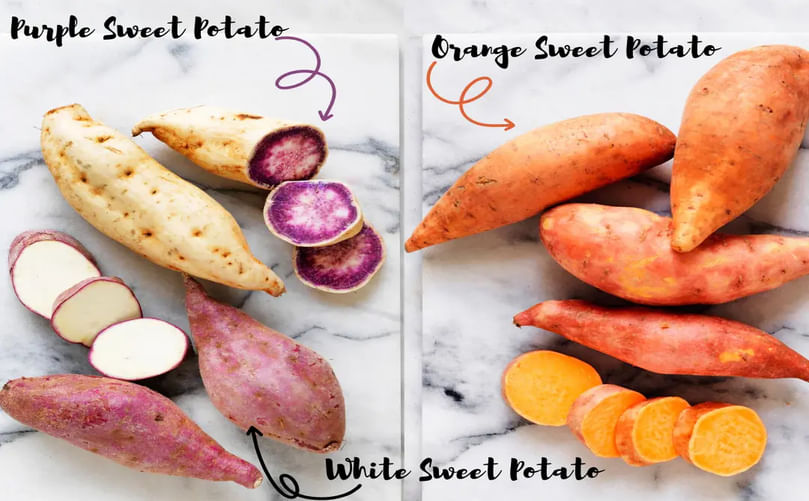
Cut-open sweet potatoes showcasing orange, purple, and white varieties, illustrating their colorful flesh and nutritional diversity.
Orange-Fleshed Sweet Potatoes (e.g., Beauregard, Jewel): These are among the most commonly used varieties for fries. They are rich in beta-carotene, which the body converts into vitamin A, contributing to immune function, vision, and skin health. Their natural sweetness and moist texture make them ideal for baking and frying.
Purple-Fleshed Sweet Potatoes (e.g., Stokes Purple, Okinawan): Purple-fleshed varieties are known for their vibrant color and are rich in anthocyanins, potent antioxidants that may offer anti-inflammatory and anti-cancer benefits. They have a slightly nutty flavor and a drier, starchier texture compared to orange-fleshed varieties, making them suitable for roasting and frying.
White or Yellow-Fleshed Sweet Potatoes (e.g., O'Henry, Hannah): These varieties have a milder, less sweet flavor and a drier, starchier texture, similar to regular potatoes. They are rich in complex carbohydrates and fiber, providing steady energy. While they may not have the high levels of beta-carotene found in orange-fleshed varieties, they still offer nutritional benefits and can be used in various dishes.
Biofortified Varieties (e.g., Bhu-Sona, Bhu-Krishna):Biofortified sweet potatoes have been developed to address vitamin A deficiencies, particularly in regions like sub-Saharan Africa and parts of Asia. These varieties, such as Bhu-Sona and Bhu-Krishna, have enhanced levels of beta-carotene, making them valuable in combating malnutrition. Studies have shown that these biofortified varieties exhibit high antioxidant activity and carotenoid content, contributing to improved nutritional outcomes
Why Sweet Potato Fries Are Booming Worldwide
The sweet potato fries market, valued at USD 2.5 billion in 2023, is projected to reach USD 5.1 billion by 2032 with a 7.7% CAGR, outpacing many snack sectors. Packaged varieties could grow at 7.1% CAGR to 2035.
Health Trends: Sweet potato fries align with demand for nutrient-rich snacks, offering low-glycemic carbs (50–60 GI) for steady energy. At 140 calories, they are ideal for weight control. Diabetic-friendly snack demand has spiked 40% in 2025.
Sustainability: Sweet potatoes need 500mm water (vs. 750mm+ for potatoes), yield 2–3x more calories per hectare, and emit 50% less CO2 (0.2 kg/kg vs. 0.4). Their roots curb erosion and peels fuel biogas, cutting waste by 30%.
Global Appeal, Nutrition, Convenience: With 149 calories per 54g serving, their fiber, vitamins and antioxidants make them a guilt-free hit. Frozen IQF formats preserve 90% freshness, ideal for busy lifestyles 35% of products highlight natural sweetness. They adapt to global cuisines, from India’s masala fries to Japan soy-glazed versions.
Technology Innovations: Vacuum dehydration cuts oil by 20%, extending shelf-life to 12 months. Pulsed electric fields (PEF) and ultrasound reduce oil uptake by 30–40% while preserving nutrients. Automated blanching scales production and emerging methods like microwave-assisted processing and enzyme-assisted extraction enhance value-added products.
Leading Companies
The sweet potato fries market is dominated by a mix of multinational giants and specialized processors, who control over 60% of the global share through innovation in healthier formulations, sustainable sourcing, and expanded distribution. These leaders are investing heavily in R&D to reduce oil content, enhance flavors and meet rising demand for organic and low-acrylamide products, with the sector's top players collectively driving a 7.7% CAGR through 2032.
Lamb Weston (U.S.): As the market leader with approximately 25% global share, Lamb Weston specializes in premium frozen sweet potato fries using advanced low-oil baking technology to appeal to health-conscious consumers. The company exports to over 100 countries, leveraging efficient supply chains and recent expansions in sustainable farming partnerships to maintain its edge in North America and Europe, where it generates over 40% of its revenue from frozen potato products.
McCain Foods (Canada): Holding around 15-20% market share, McCain is renowned for its March 2025 launch of organic sweet potato fries sourced from regenerative farms, emphasizing reduced environmental impact and clean label ingredients. With a global footprint in 160 countries and a focus on foodservice innovation like pre-seasoned varieties for quick-service restaurants the company has seen 12-16% annual growth in frozen snacks, bolstered by acquisitions such as 70% of Brazil's Serya Foods in 2019 to strengthen Latin American production.
J.R. Simplot Company (U.S.): Capturing 8-12% of the market, Simplot excels as a high-volume exporter, utilizing pulsed electric field (PEF) technology to minimize oil absorption by up to 30% while preserving nutrients and texture. The company supplies major chains worldwide and has expanded its sweet potato lines through sustainable sourcing from U.S. and Australian farms, contributing to a 10-14% rise in its frozen potato segment revenue amid growing demand for premium, ready to cook options.
Aviko (Netherlands): With a strong 10% share in Europe, Aviko focuses on low-acrylamide sweet potato fries processed at controlled temperatures to ensure safety and superior taste, aligning with EU regulations. As part of the Royal Cosun group, it emphasizes eco-friendly packaging and has invested in R&D for seasoned variants, driving 15% growth in the European market through partnerships with retailers like Tesco and a push into organic lines.
Conagra Brands and Kraft Heinz (U.S.): Together commanding about 10-15% share, these consumer-packaged goods leaders offer clean-label retail packs under brands like Alexia (Conagra) and Ore-Ida (Kraft Heinz), featuring non-GMO and gluten-free sweet potato fries. Conagraes focus on air-fried options has boosted sales by 20% in health-focused channels, while Kraft Heinz integrates them into family meal kits both companies are expanding via e-commerce and sustainable sourcing to capture millennial and Gen Z demographics.
Other notable players include Ardo (Belgium), which strengthened its North American presence through the 2023 acquisition of VLM Foods for frozen vegetable distribution, and Cavendish Farms (Canada), known for innovative battered varieties targeting foodservice.
Emerging Markets
Emerging regions are fueling over 40% of the sweet potato fries market's global growth, propelled by urbanization, rising middle-class incomes, and a shift toward convenient, nutritious snacks. These areas benefit from local sweet potato abundance, reducing import costs, and are projected to outpace mature markets with CAGRs of 7-10% through 2035, supported by investments in cold-chain infrastructure and Western-style fast-food adoption.
Asia-Pacific: This region leads emerging growth with strong potential, driven by rapid urbanization in China and India, where snack demand has surged 40% amid busy lifestyles and health awareness. In China, the world’s top sweet potato producer, domestic processing hubs are expanding to meet e-commerce and quick-service restaurant needs, with innovations like soy glazed variants boosting sales significantly. India sees masala-seasoned fries gaining traction in street food stalls and supermarkets, fueled by a rise in frozen food penetration Japan adds premium tempura-style options popular in izakayas and convenience stores.
Southeast Asia, including Indonesia and the Philippines, contributes through local adaptations like sweet chili-coated fries, with regional exports growing steadily. Investments in cold storage and logistics, particularly in Vietnam and Thailand, support increased production capacity.
Latin America: Exports from Brazil and Mexico have risen significantly, leveraging abundant local yields and proximity to North American markets for seamless supply chains. Brazil, a key producer, focuses on organic frozen fries for U.S. and EU exports, with government-backed sustainable farming initiatives supporting growth. Mexico’s integration into NAFTA/USMCA has spurred foodservice demand, where sweet potato fries are positioned as a healthier alternative in tacos, burritos and casual dining, driving growth in retail packs amid increased convenience food consumption.
Countries like Peru and Colombia are also emerging as processing hubs, with small-scale exporters adopting vacuum-frying to compete globally, contributing to a rise in regional output.
Middle East & Africa: This region taps local crops for affordable processing, with Egypt’s International Fruit & Vegetable Co. (IFCG) leading frozen exports, targeting Europe and the Gulf with a significant volume increase. In sub-Saharan Africa, Nigeria and Ghana utilize staple sweet potato production for domestic snacks, supported by USAID-funded value chains that enhance yields and reduce post-harvest losses by 30%.

Farmers harvesting biofortified sweet potatoes in a lush field in Malawi, showcasing sustainable smallholder farming in Africa.
The Middle East, particularly the GCC countries like Saudi Arabia and UAE, sees rising imports for hotel chains and fine dining, with spiced variants aligning with halal preferences and contributing to a market uplift through urban expansion. South Africa is also emerging as a processing hub, with increased exports to Europe driven by sustainable farming practices.
Challenges in Production and Potential Downsides
While sweet potato production is generally sustainable, it faces several agronomic challenges. Common pests like vine weevils and sweet potato weevils can significantly reduce yields and fungal diseases such as black rot (Ceratocystis fimbriata) and Fusarium wilt remain major concerns. Sweet potatoes are also sensitive to climate extremes elevated CO₂ may boost growth, but drought, salinity, and heat stress can sharply reduce yields. On the consumer side, some varieties have higher oxalate levels, which may increase the risk of kidney stones in susceptible individuals. Over consumption of biofortified orange fleshed varieties could theoretically lead to hypervitaminosis A, though this is rare. Incorporating sweet potatoes as part of a balanced and varied diet ensures nutritional benefits without risks.
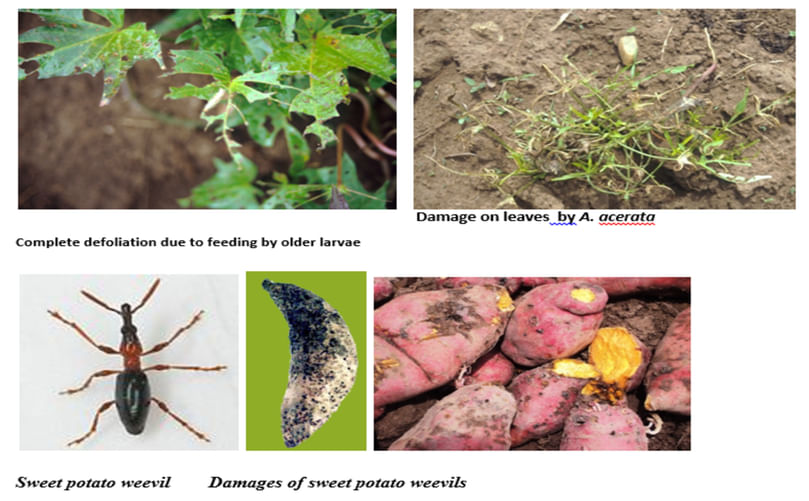
Images depicting common pests and diseases affecting sweet potatoes, such as weevils and root damage.
Future Trends
The future of sweet potato production and utilization is promising, driven by nutrition, technology, and sustainability innovations. Biofortification continues to enhance nutrient content, targeting iron, zinc and carotenoids to combat micronutrient deficiencies. AI-driven supply chains are improving efficiency, reducing post-harvest losses and enabling precision agriculture for yield optimization. Sweet potatoes are increasingly used in plant-based innovations, including meat alternatives, snacks and functional foods with prebiotic properties. Emerging technologies like 3D printing may enable customized sweet potato based products, while climate-resilient varieties ensure productivity under changing environmental conditions. Together, these trends position sweet potatoes as a versatile crop for health focused, sustainable and technologically advanced food systems.
"Sweet potato fries are more than a snack they are symbol of how tradition, nutrition and sustainability can come together in every crispy, golden bite to create a better future for food".