

Dry Intermediate products - in an endless range of forms - produced from an extruded dough. Snack pellets can easily be stored and transported.
They are fried or baked to get the final expanded product and are packed and sold in the supermarket.
Explore 颗粒状零食 产品

Wheat Pellets (Flat Slice 2)
Almounajed food industries offers wheat-based flat sliced pellets. The pellet is 3 cm to 5 cm long.
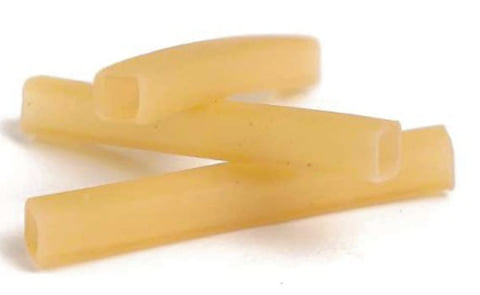
Potato pellets (Squared Tube)
Almounajed food industries offers potato based square tube pellets.
Browse Companies Offering 颗粒状零食

Almounajed Food Industries
Almounajed Food Industries produces pellet snacks including potato, corn, wheat, and vegetable-based pellets. The company supplies semi-finished snack products globally for food processors with scalable manufacturing and export operations.


Goodrich Cereals
Goodrich Cereals, India, manufactures dehydrated products including potato flakes, granules, flour, dices, shreds, and slices, supplying food manufacturers with potato ingredients for snack, bakery, and processed food applications.

Frequently Asked Questions
What are potato pellets?
Potato pellets are semi-finished, dehydrated potato-based snack products that are expanded by frying, hot air, baking or other heating methods. They are formed into different shapes and used as a base for producing crispy ready-to-eat snacks.
How are potato pellets made?
Potato pellets are made by mixing potato-based ingredients with water, forming the dough by extrusion or sheeting, cutting it into specific shapes and drying the pieces to a stable moisture level. The dried pellets are then fried, air-popped or otherwise heated to produce expanded snacks.
What are potato snack pellets made of?
Potato snack pellets are generally made from dehydrated potato ingredients such as potato flakes, potato granules and potato starch. Depending on the formulation, manufacturers may also add salt, emulsifiers, fiber, seasonings or other functional ingredients to control texture, expansion and flavor.
How do potato pellets expand?
Potato pellets expand when heat rapidly converts their internal moisture into steam. Potato starch gelatinizes during heating, allowing steam pressure to expand the structure and create a light, porous and crispy snack. The degree of expansion depends on starch, moisture, pellet thickness, formulation and processing conditions.
How do you cook potato pellets?
Potato pellets are usually cooked by deep frying or air-popping. For frying, the dried pellets are placed in hot vegetable oil for a few seconds until they rapidly expand and become crisp. Exact temperature and cooking time depend on the pellet formulation and shape. Commercial products commonly specify their own frying conditions.
Can potato pellets be air fried?
Some potato pellets can be expanded using hot air or air-frying equipment, depending on the product formulation. Air expansion can reduce the amount of added oil compared with deep frying, but the required temperature and time vary by pellet type and equipment.
Are potato pellets healthy?
Potato pellets are mainly a starch-based snack ingredient, so their nutritional value depends on their formulation and how they are prepared. Deep frying increases fat content, while air-popping or other low-oil methods can produce lower-fat snacks. Ingredients such as fiber or protein can also be added to improve the nutritional profile.
Are potato pellets the same as potato chips?
No. Potato pellets are semi-finished snack bases, while potato chips are finished ready-to-eat snacks. Pellets are manufactured, dried and stored before being expanded by frying, hot air or another heating process. They can also be produced in many shapes and customized with different seasonings.
What shapes do potato pellets come in?
Potato pellets are available in many 2D and 3D shapes, including rings, spirals, shells, waves, curls, chips, tubes and other novelty formats. Shape and thickness affect expansion, crispness, seasoning adhesion and the appearance of the finished snack.
How long do potato pellets last?
Potato pellet shelf life depends on moisture content, packaging, oxygen exposure, temperature and storage humidity. Commercial products can have shelf lives ranging from around 6–12 months to as long as 24 months under suitable packaging and storage conditions. Always follow the manufacturer's stated shelf life.
How should potato pellets be stored?
Potato pellets should be stored in a cool, dry environment and protected from moisture, oxygen and excessive heat. Moisture absorption can affect pellet texture, cause caking and reduce expansion performance, so moisture-barrier packaging is important for long-term storage and transportation.
Where can I buy potato pellets?
Potato pellets are available from specialized snack-pellet manufacturers, food processors and exporters. Suppliers offer different potato pellet formulations, shapes, packaging sizes and minimum order quantities for snack manufacturers, wholesalers and food businesses.
What is a potato pellet machine?
A potato pellet machine is equipment used to produce semi-finished potato snack pellets. A typical production line can include mixing, extrusion or forming, cutting, drying and packaging equipment, with the exact configuration depending on pellet shape, capacity and processing technology.
How much do potato pellets cost?
The price of potato pellets varies according to formulation, shape, quality, packaging, order volume and supplier. Wholesale prices are generally quoted on a per-kilogram basis, with minimum order quantities often applying. Buyers should request a current quotation based on their required specification and volume.
What are potato pellets used for?
Potato pellets are primarily used as semi-finished bases for producing expanded snack foods. They can be fried, air-popped or otherwise expanded and then seasoned to make products such as chips, rings, curls, shells, spirals and other shaped snacks.
Make This Page Even Better!
This content was last updated on 五月 27, 2026
Have a helpful detail to contribute? Catch something that should be corrected?