

Battling Water Scarcity: Strengthening Potato Resilience in a Drying World
Environmental stresses, particularly drought, pose a profound threat to global agriculture, with the potential to reduce crop yields by over 50% in affected regions. Arid and semi-arid zones, which encompass approximately 40% of Earth's land surface, are especially vulnerable, exacerbating food insecurity for billions. Potatoes (Solanum tuberosum L.), one of the world's most vital staple crops, originated from the high-altitude Andes over 8,000 years ago and were introduced to Europe in the late 16th century by Spanish explorers. Today, potatoes rank as the fourth most important food crop globally, after rice, wheat and maize, providing essential carbohydrates, vitamins (such as vitamin C) and minerals to diverse populations.
In recent years, global production has hovered around 370-400 million metric tonnes annually, even as harvested areas have slightly declined due to intensified farming practices and urbanization. This resilience stems from potatoes' versatility they can be boiled, fried, baked, or processed into chips and starch but their Achilles' heel lies in their shallow root system, which limits water uptake to the top 30-50 cm of soil and their high transpiration rates, requiring 500-700 mm of water per growing season.
Drought vulnerability is acute during the tuberization stage (typically 40-60 days after planting), where even brief water deficits can slash yields by 20-50% and degrade tuber quality, leading to smaller sizes, lower dry matter content, and increased susceptibility to diseases like common scab. Climate change amplifies this risk through erratic rainfall, prolonged dry spells and rising evaporation rates, with projections indicating that over 50% of arable land could face water scarcity by mid-century.
To counter these challenges, integrated approaches are essential such as enhancing abscisic acid (ABA)-mediated stress signaling for better stomatal regulation, optimizing soil moisture via conservation techniques, selecting genotypes with improved root architecture and leveraging genomic tools like CRISPR-Cas9 for precise trait insertion. These strategies not only aim to sustain yields but also promote sustainable farming by reducing water footprints and fertilizer needs. Emerging research also highlights the role of microbiome engineering introducing drought-resilient soil bacteria to boost potato resilience naturally.
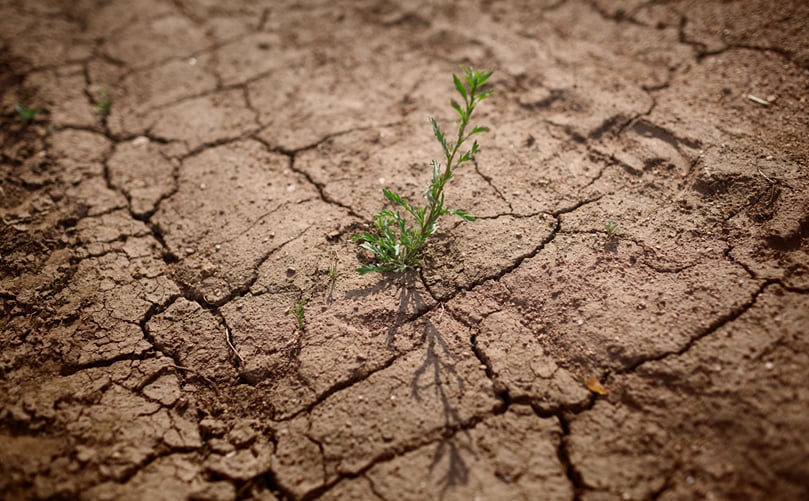
Global Distribution of Arid and Semi-Arid Regions Affecting Agriculture
Did You Know?
Potatoes require only 105 liters of water per kilogram, yet drought can cause up to 90% yield loss due to their shallow roots.
Drought and Its Global Impact on Crops
Drought stands as the most pervasive abiotic stress in agriculture, triggering widespread economic losses estimated at USD 30-50 billion annually and heightening food insecurity in both affluent and low-income nations. By imposing moisture deficits, it hampers water and nutrient uptake, curtails cell expansion, and disrupts metabolic pathways like photosynthesis and hormone balance, forcing crops to operate far below their genetic potential. In staple grains like maize and wheat, drought can precipitate 20-40% yield drops, while in tubers like potatoes, losses escalate to 50-80% during reproductive phases..
Abiotic stresses stressors drought, salinity, extreme temperatures and poor soils rarely act in isolation; their synergies amplify damage. For instance, drought paired with heatwaves (>30°C) can inhibit enzyme activity in photosystem II, slashing photosynthetic rates by 50%, while salinity exacerbates ion toxicity under water-limited conditions. Critical growth stages, including germination (where imbibition fails), flowering (pollen sterility rises) and grain-filling (assimilate remobilization falters), demand consistent moisture; deficits here trigger cascading failures. Visibly, plants exhibit stunted shoots, rolled leaves, chlorosis and root dieback, culminating in 30-90% productivity declines across species and severities. Beyond crops, drought erodes soil vitality by depleting organic carbon (up to 20% loss), suppressing microbial diversity (e.g., arbuscular mycorrhizal fungi) and halting nutrient cycles like nitrogen mineralization, perpetuating a vicious cycle of degradation.
As climate models forecast a 10-20% expansion of drylands by 2050, with intensified events like the 2018-2019 global drought affecting 500 million people, holistic countermeasures are imperative. These encompass resilient hybrids via wide crosses, precision agriculture (e.g., satellite-monitored deficit irrigation) and policy frameworks for water equity. Agroforestry integrations, such as intercropping with nitrogen-fixing legumes, further buffer systems by enhancing microclimates and soil hydrology.
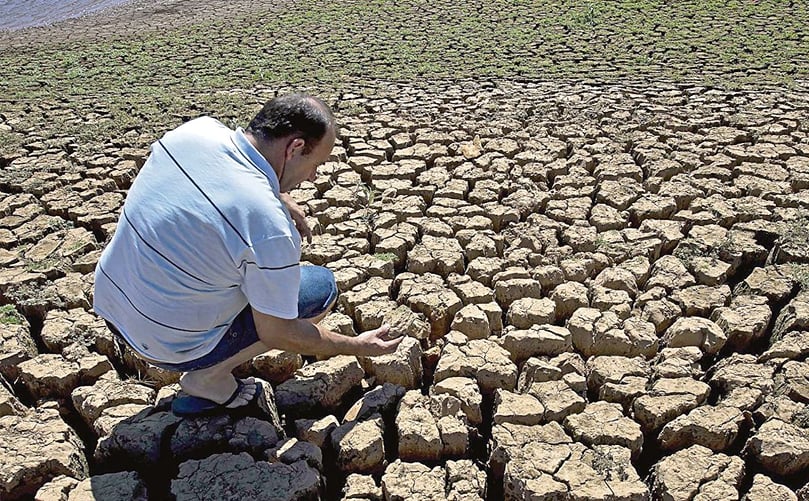
Drought: The Silent Crisis Undermining Global Agriculture
Effect of Drought Stress on Potato
Potatoes are among the most drought-sensitive major crops due to their fibrous and shallow root system typically concentrated in the upper 30–60 cm of soil and their indeterminate growth habit, which extends the period during which they remain vulnerable to water deficits. Drought affects all major phenological stages. During establishment, water scarcity delays canopy closure by up to 10–15 days, limiting early photosynthetic capacity. At stolon initiation, underground stem development is reduced by approximately 20–30% under moderate stress. Tuber initiation remains the most critical phase, where even mild water deficits can reduce tuber set by 30–50%, depending on cultivar and severity. During tuber bulking, drought slows cell expansion and dry-matter accumulation, leading to 20–60% reductions in tuber mass. At maturity, accelerated senescence and reduced photosynthetic duration weaken the harvest index and overall yield stability.
Physiologically, drought suppresses gas exchange through stomatal closure, often reducing CO₂ assimilation rates by 40–70%. This triggers excessive accumulation of reactive oxygen species (ROS), which disrupt membranes, proteins and chloroplast integrity. Impaired phloem loading and restricted assimilate transport further limit tuber growth, contributing to premature leaf yellowing, early abscission and breakdown of the source–sink relationship essential for bulking.
Yield losses are strongly stage-dependent. Early-season drought primarily reduces total biomass by 15–25%, mid-season stress sharply decreases tuber number sometimes approaching 50% losses and late-season water deficits impair quality, increasing reducing sugars and thereby worsening fry color and processing grade. Genotypic variation provides avenues for improvement such as drought-tolerant lines, including those derived from wild Solanum species, often maintain higher relative water content (>70%) and exhibit stronger osmotic adjustment, with proline accumulation rising 2–5 fold under stress. Repeated or prolonged drought episodes can also degrade soil physical structure promoting compaction and reducing infiltration thereby increasing the crop long-term vulnerability.
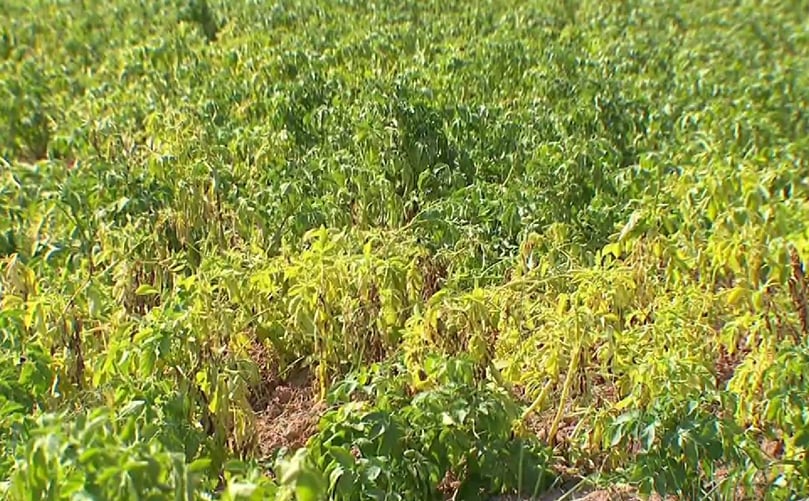
Drought-Stressed Potato Field Showing Delayed Canopy Closure
Did You Know?
A water deficit during tuber initiation can reduce potato tuber numbers by up to 50%, critical for yield.
Effects of Drought on Canopy Development, Root Growth and Tubers in Potatoes
Drought stress significantly affects potato canopy, roots, and tubers, influencing yield and quality. Understanding these effects aids in breeding tolerant varieties and improving practices in water-scarce regions.
Leaf and Canopy Responses: The potato canopy, comprising 80-90% of photosynthetically active tissue, contracts rapidly under drought, with leaf area index (LAI) plummeting 30-50% via curtailed expansion and accelerated senescence. Smaller leaves (20-40% size reduction) conserve water but slash light interception, while vein density surges (up to 25% increase) to bolster hydraulic efficiency, a trait amplified in tolerant cultivars. Leaf water potential dipping below -1.0 MPa triggers growth arrest, with RWC thresholds (<60%) differentiating elites like 'Raritan' (tolerant, RWC ~75%) from susceptibles like 'Shepody' (RWC ~50%). Chlorophyll degradation (10-30% loss) and Rubisco downregulation further erode carbon fixation, though antioxidants like ascorbate mitigate oxidative bursts.
Effects of Drought on Roots, Stolons and Tubers: Shallow rooting confines potatoes to surface moisture, rendering them prone to desiccation; drought elicits variable root responses some genotypes extend length (15-30% increase) and biomass for foraging, others prune laterals to prioritize survival. Stolon elongation, precursor to tubers, may elongate under mild stress for deeper probing but aborts under severe, slashing initiation sites by 25-40%. Tubers, as sinks, suffer delayed bulking and deformities, with skin cracking from uneven expansion; mycorrhizal symbioses can enhance P-uptake, buffering losses by 10-20%.
Effects of Drought on Fresh and Dry Tuber Mass: Tuber fresh mass, 75-80% water-dependent, evaporates under stress (up to 69% content drop), yielding spongy textures unfit for market. Early deficits cull numbers (20-50% fewer), while prolonged ones erode dry matter (starch down 15-30%), impairing processing viability via elevated glycoalkaloids. Specific gravity falls below 1.08, signaling poor storability; however, moderate stress can concentrate nutrients, enhancing nutritional density in resilient lines.
Breeding and Research for Drought Tolerance
Global potato breeding programs are increasingly prioritizing drought tolerance as climate variability threatens productivity in rainfed and marginal production systems. Breeding efforts blend conventional selection, molecular breeding and biotechnology to develop cultivars capable of maintaining stable yields under reduced water availability.
The International Potato Center (CIP) leads worldwide initiatives by screening its extensive germplasm bank of over 4,000 accessions, focusing on traits such as deeper or more efficient root systems, early maturity and enhanced water-use efficiency key characteristics that help plants escape or withstand terminal drought. Several breeding lines, including those enriched with Solanum phureja parentage, consistently outperform traditional cultivars by 20–30% under 40–50% reduced irrigation in multi-location trials across Africa and the Andes. These improvements reflect better tuber set, stronger canopy maintenance and greater partitioning efficiency under stress.
Molecular tools accelerate these gains. Marker-assisted selection (MAS) is used to track quantitative trait loci (QTLs) linked to drought-responsive traits such as root depth, osmotic adjustment, canopy temperature depression, and stay-green behavior. Advances in genome editing are opening new frontiers CRISPR/Cas9-based modifications targeting transcription factors like DREB1A and components of the ABA signaling pathway (e.g., SnRK2 proteins) have shown promising improvements in stress tolerance under controlled conditions, with edited lines exhibiting stronger stomatal regulation and improved survival rates during severe dehydration events.
Wild potato relatives including Solanum commersonii, S. chacoense and S. microdontum contribute valuable alleles for complex, polygenic drought tolerance. Their use in pre-breeding programs has produced lines combining multiple stress adaptations, including combined frost–drought resilience, an especially valuable trait in high-altitude and temperate production zones.
Collaborative research platforms are transforming breeding speed and precision. Partnerships such as the CIP–HZPC alliance, global CGIAR networks and national programs in India, China, Peru and East Africa deploy high-throughput phenotyping tools drone-based canopy imaging, thermal sensing for stomatal conductance, spectral indices for leaf area and chlorophyll content to measure drought responses in large populations. These technologies, combined with genome-wide association studies (GWAS) across 5,000–6,000+ diverse lines, are helping identify predictive biomarkers and reduce breeding cycles from 10–12 years to 5–6 years.
Emerging frontiers are especially promising. Synthetic biology approaches are exploring osmoprotectant engineering, such as fine-tuning proline, trehalose or glycine betaine biosynthesis pathways for improved cellular dehydration tolerance. Meanwhile, AI-guided breeding algorithms are being used to optimize cross combinations and predict genotype performance under future climate scenarios, with models suggesting potential yield improvements of 15–40% in drought-prone regions once these technologies are fully integrated.
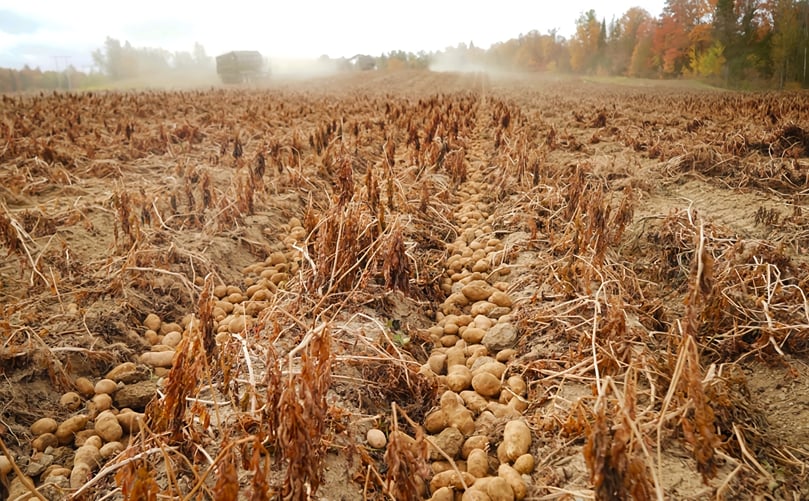
Deep-Rooted and Early-Maturing Potato Genotypes Used for Drought Escape
Collectively, these innovations position the potato sector for significant resilience gains, ensuring sustained production in water-limited environments and supporting global food security.
Drought Stress Avoidance Strategies in Potato Crops: Mechanisms and Mitigation Techniques
Drought stress avoidance in potato crops involves a combination of genetic, physiological and management-based strategies that help plants reduce exposure or minimize the effects of water scarcity. Potatoes can escape drought by completing their life cycle before severe stress occurs. Early-flowering and early-maturing cultivars are especially effective in regions like the Mediterranean, where terminal droughts are common. These varieties initiate flowering and tuberization while soil moisture is still sufficient, avoiding yield losses from late-season dryness. Breeding programs often target this trait to match local climate patterns and ensure stable production.
On a physiological level, drought stress triggers a series of responses controlled largely by the hormone abscisic acid (ABA). Increased ABA levels cause stomatal closure, reducing water loss through transpiration. This hormone also activates stress-response genes through signalling molecules such as SnRK2 kinases. Transcription factors like ABF, ABI5, WRKY and heat shock proteins (HSPs) play essential roles in protecting cells from dehydration. Likewise, the DREB1A gene is upregulated under stress, enhancing tolerance by promoting osmoprotectant synthesis and improving membrane stability. These molecular and physiological changes help the plant maintain turgor pressure and photosynthetic function during drought periods.
Agronomic mitigation techniques complement these natural defenses. Using mulch made from straw, crop residues, or plastics reduces evaporation and maintains soil moisture. Conservation tillage and residue management preserve soil organic matter, improving water infiltration and retention. Organic amendments such as compost, manure and biochar further enhance soil structure and moisture-holding capacity, creating a more favorable root environment.
Proper nutrient management also plays a vital role in building drought resilience. Key macronutrients like nitrogen (N), phosphorus (P), and potassium (K) strengthen photosynthesis, root growth, and osmotic regulation. Micronutrients including zinc (Zn), silicon (Si), boron (B) and manganese (Mn) support physiological stability and stress enzyme activity. When managed together, these techniques enable the potato crop to maintain productivity even under fluctuating water availability.
Did You Know?
Mulching can increase soil water retention by 20–40%, significantly aiding drought stressed potatoes.
Challenges in Drought Tolerance
Genetic Complexity: Potatoes possess a highly complex autotetraploid genome (2n = 4x = 48), leading to multiallelic inheritance, dosage effects and complicated segregation patterns. These genetic features make QTL mapping, genomic prediction and precise introgression significantly harder than in diploid crops. Recessive drought-tolerance alleles are often masked and elite breeding pools frequently suffer from reduced genetic diversity, with only 10–20% of alleles originating from wild relatives.
Introgressing key adaptive traits such as deeper rooting, delayed senescence (stay-green) or improved osmotic adjustment from species like Solanum brevidens or S. commersonii can require 8–12 generations of backcrossing. The process is slowed by barriers including linkage drag, hybrid sterility, ploidy mismatches and the retention of undesirable wild traits. Although genome editing offers precise solutions, regulatory restrictions on GMOs and edited crops in over 50 countries delay or prevent the deployment of CRISPR-derived cultivars for drought tolerance.
Climate Pressures: Climate change imposes compounding stresses. Rising temperatures often exceeding 1.5°C above historical baselines interact synergistically with drought. Heat stress above 29–30°C disrupts tuberization signals, delaying tuber initiation by 10–20 days and sharply reducing tuber set. Increased tissue respiration during heat–drought episodes can impose a 20–30% yield penalty, even where soil moisture is partially adequate.
Furthermore, climate instability fuels pathogen outbreaks, with diseases like late blight and Alternaria thriving under fluctuating humid–dry cycles. These interactions can impose an additional 15–25% yield loss, undermining field trials and making genotype by environment predictions increasingly unreliable. Erratic rainfall and shortened phenological windows also constrain multi-location testing, a critical requirement for releasing robust drought-resilient cultivars.
Access Barriers: Socio-economic challenges remain a major bottleneck for widespread adoption. In many developing regions, 80% of potato producers are smallholders, yet drought-tolerant varieties especially new releases often come with seed price premiums of 20–50% due to limited multiplication and higher breeding costs.
Water-saving technologies such as drip irrigation, tensiometers, or automated fertigation systems can cost USD 500–1000 per hectare, putting them out of reach for most growers unless supported by subsidies. Adoption rates remain below 30% in many regions due to cost, lack of credit, fragmented supply chains and gaps in training.
Gender inequities in extension services, limited availability of quality planting material, and farmer preference for familiar varieties (varietal inertia) further slow the diffusion of improved cultivars. These challenges underscore the need for public–private partnerships, inclusive seed systems, local breeding programs, and subsidy frameworks that ensure drought-tolerance innovations reach the most vulnerable producers.
Global Impact and Role in Food Security
Drought-tolerant potatoes significantly improve agricultural productivity in water-limited regions, boosting yields by 20–30% for smallholder farmers in Sub-Saharan Africa and Asia. These varieties also help combat malnutrition, particularly with iron-rich lines that enhance dietary nutrition. In Kenya, the deployment of 2025 biotech drought-tolerant potato lines has reached approximately 480,000 farmers, providing resilient crops capable of withstanding erratic rainfall and prolonged dry spells, there by enhancing food security and farmer livelihoods.
On a global scale, drought-tolerant potatoes contribute to more sustainable agriculture by reducing the need for chemical inputs and promoting biodiversity through the use of resilient genetic traits. The sector is projected to support a USD 16 billion market by 2031, reflecting their growing importance in ensuring stable food supplies amid the challenges of climate change. By combining increased yields, improved nutrition, and environmental benefits, drought-tolerant potatoes are becoming a vital tool for securing food systems worldwide.
"Drought tolerance in potatoes is a cornerstone of sustainable agriculture, blending cutting-edge science with practical farming wisdom to secure food for future generations. As water scarcity intensifies, this resilience is vital to empower farmers and nourish a growing world."