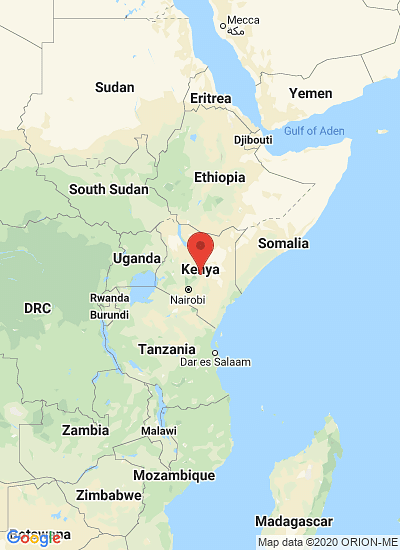

Farmers in Kenya are evaluating potato varieties developed using wild relatives to combat late blight, a strategy aimed at reducing pesticide use and lowering production costs for smallholder growers.
Wild potato genes help East African farmers cut pesticide costs and fight late blight
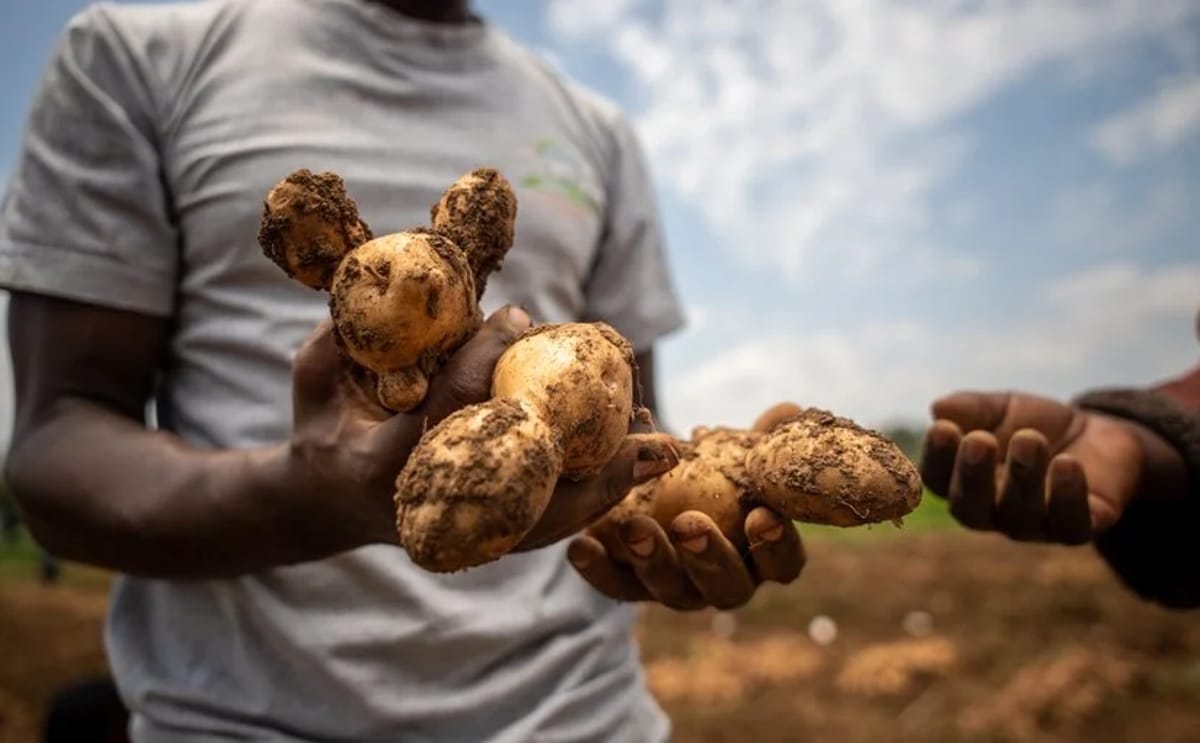
For many smallholder farmers in the tropical highlands of East Africa, the dream of a bountiful potato harvest is increasingly overshadowed by a 'chemical tax.' Disease pressure keeps farmers trapped in a costly cycle – spraying more pesticides each season, yet earning less at each harvest.
Peter Njuguna, a potato farmer and social media content creator in Njoro, Kenya:
"There is a big problem with inputs. Costs are rising by 50 to 60 percent. But farmers are not making much profit."
(Click picture to watch video)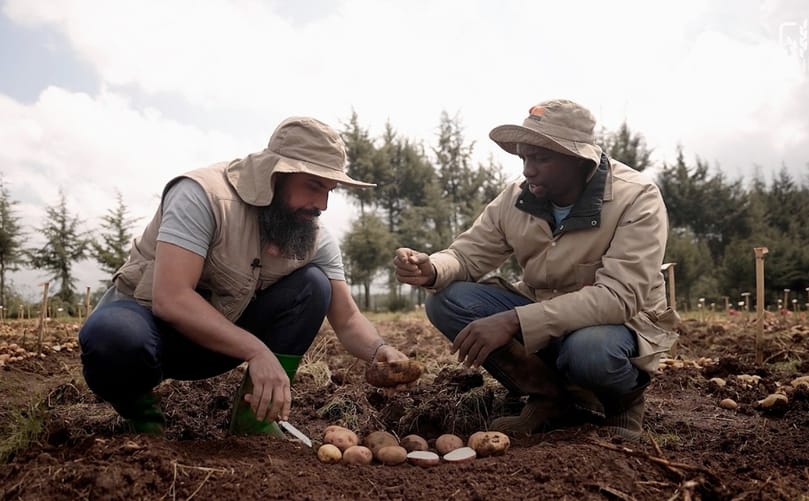
How Wild Potato Genes Can Help East African Farmers Beat the 'Chemical Tax'
The Heavy Cost of Protection
The culprit is often late blight, the most destructive potato disease worldwide. Late blight attacks potato plants and their tubers and can destroy a potato field in a matter of weeks. To save their crops and stay competitive with other countries, farmers in Kenya and Uganda spray pesticide 10 to 15 times per growing season. Sometimes they spray as often as every five days during the wet season.
These chemicals put pressure on the environment and pose health risks. They are also a heavy financial burden, often accounting for 15 to 25 percent of total production costs. In Kenya and Uganda, potatoes contribute significantly to the food security and household incomes of over a million smallholder farmers and their families. In many communities, potatoes are both a staple food and a cash crop.
Thiago Mendes, a breeder with the International Potato Center:
"Spending hundreds of dollars per hectare on pesticides can mean the difference between a profit and a loss. When we ask farmers what they value most in new varieties, they rank resistance to pests and disease above all other traits."
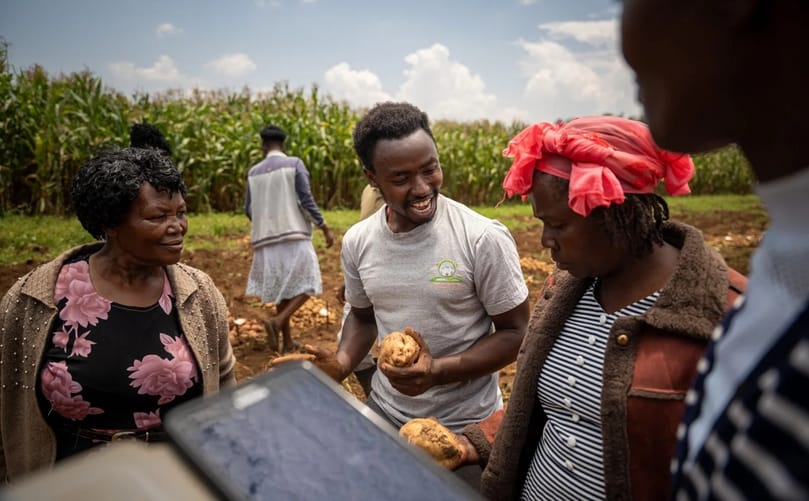
Potato farmer Peter Njuguna shares observations with fellow growers during the field evaluation in Njoro
Recalling the Wild Traits
Over time, many of the cultivated varieties in East Africa have lost their natural resistance. The solution to this chemical dependency may lie in the potato’s wild relatives. The first potatoes were domesticated in South America between 8,000 and 10,000 years ago, and the Central Andes remain home to more than 150 wild relatives of the crop.
Many produce tubers that are too small or bitter to eat, but they carry valuable traits. Over thousands of years, these hardy plants have evolved natural tolerance to heat, drought and freezing temperatures, as well as genes that help them resist pests and diseases.
The Crop Trust BOLD project is enabling scientists like Thiago to bring these traits back. By crossing wild species that carry natural resistance genes with cultivated potatoes, breeders are creating pre-breeding lines that can naturally withstand late blight. These new varieties can significantly reduce the need for pesticides.
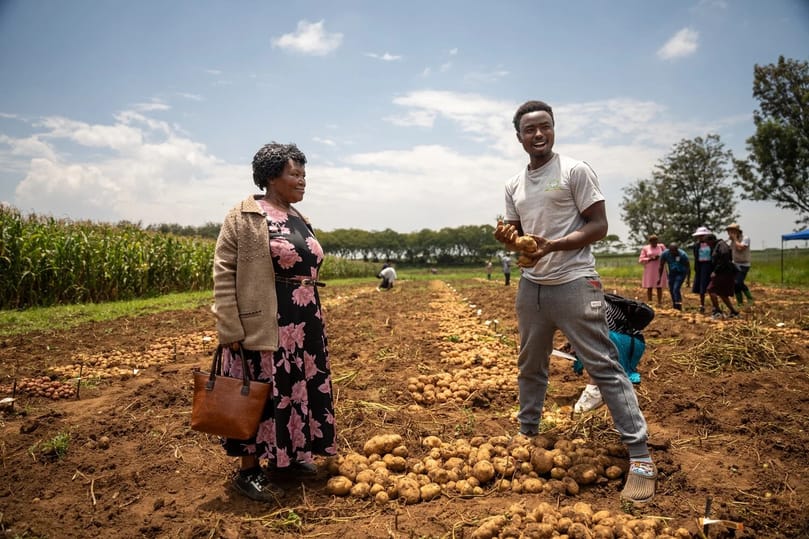
Potato farmer Peter Njuguna shares observations with fellow growers during the field evaluation in Njoro
From Genebanks to Fields
This is more than laboratory science. It is a collaboration with the people who know the land and what best grows here. At BOLD breeding trials in Kenya, farmers like Peter participate directly in participatory variety selection. They grow different varieties and walk the rows, evaluating which plants look the healthiest and will likely meet market needs. The right variety can mean fewer sprays, lower costs and the difference between profit and loss.
Thiago Mendes:
"Our mission is to connect this diversity from the genebank and make it available to the farmers."
By bringing Andean genetic traits into breeding programs in Kenya, the project is developing potato varieties better suited to the pressures farmers face in their fields today. For Peter and thousands of potato farmers in East Africa, the search for better potatoes is key to breaking the chemical tax cycle. Finding a variety that can hold up in the field with less spraying can improve lives, livelihoods and food security in Kenya and around the world.
Like to receive news like this by email? Join and Subscribe!
Get the latest potato industry news straight to your WhatsApp. Join the PotatoPro WhatsApp Community!
精选企业
相关新闻

九月 07, 2026
Calbee Potato Harvest Ceremony 2026 Highlights Stronger Hokkaido Potato Quality and Yield
Calbee Potato expects Hokkaido’s 2026 processing potato crop to reach 240,000–250,000 tons, with better quality and yields than 2025. Favorable temperatures and rainfall have boosted growth, although heavy rain remains a major harvest risk now.
九月 07, 2026
Aardappeldemodag 2026 Draws Over 4,500 Visitors as Dutch Potato Sector Faces Year of Extremes
Aardappeldemodag 2026 brought over 4,500 visitors to Westmaas amid a challenging year for the Dutch potato sector. The event focused on market pressures, extreme growing conditions, knowledge sharing, machinery and innovation.
九月 07, 2026
EUROPLANT与Finpom强调芬兰种薯优势,应对欧洲日益加剧的病毒压力
Finpom强调芬兰北部在高等级种薯生产方面的优势,因为气候变化提高了欧洲的病毒风险,同时通过LARISSA、JUVENTA、Filipa、FAVOLA和INA扩展了其EUROPLANT产品组合。