

Explore 烤薯条的整合式生产线 产品
Browse Companies Offering 烤薯条的整合式生产线
SINOBAKE

Frequently Asked Questions
A complete ready-to-use solution usually covers process design, planning the factory setup, making the equipment, installing it, getting it working properly, teaching the operators how to use it, providing help with recipes, setting up automation, creating all necessary documents and offering technical support over a long period. Because one supplier handles the whole project, the installation goes quicker and there are fewer problems with equipment working together.
Commercial baked potato chips are usually made with ingredients like potato flakes, potato granules, potato starch, water, vegetable oil, seasonings and other food additives that have special functions. Different types of products can be made based on what texture, taste and health benefits are wanted.
Production capacity needs to match what the market is expecting, not the highest output the machines can handle. Commercial turnkey lines usually handle between 100 kg per hour and more than 1,000 kg per hour, and they can be expanded in a modular way to grow with future needs.
Baked potato chips are made by shaping potato dough and baking it in a long, continuous oven before adding seasoning. Fried potato chips are made by cutting fresh potatoes into thin slices and then cooking them in hot oil. Baking usually leads to less oil being used, but still keeps the food crunchy.
Demand continues to grow across North America, Europe, Asia-Pacific, the Middle East, Latin America and Africa as consumers increasingly prefer healthier baked snack products over traditional fried snacks.
Yes. Modern seasoning systems allow manufacturers to switch between flavors such as barbecue, cheese, sour cream & onion, tomato, chili, seaweed and regional seasonings with minimal production downtime.
How much energy is used depends on how much can be produced, the type of oven used, the way it's heated and how automated the process is. Industrial plants usually need three-phase electricity, natural gas or LPG for the tunnel ovens, compressed air, ventilation systems and water for cleaning and sanitation purposes.
Yes. Most commercial baked potato chips are made using dried potato ingredients like flakes, granules and starch, instead of using fresh potatoes. This lets you grow crops all year long with better quality materials every time.
Before making an investment, check the supplier's engineering experience, the projects they have installed, their production capacity, the automation technology they use, their ability to support different recipes, the factory layout services they offer, how easy it is to get spare parts, the after-sales support they provide and the training they give to operators.
The cost depends on production capacity, automation level, oven type, packaging equipment, and factory requirements. Small commercial lines require a lower investment, while fully automated industrial systems with integrated packaging, PLC controls and customized layouts require significantly higher capital. Total project costs should also include installation, utilities, commissioning, operator training and after-sales support.
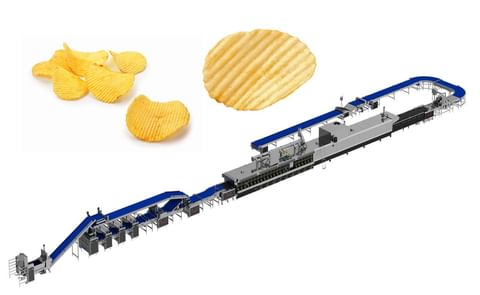
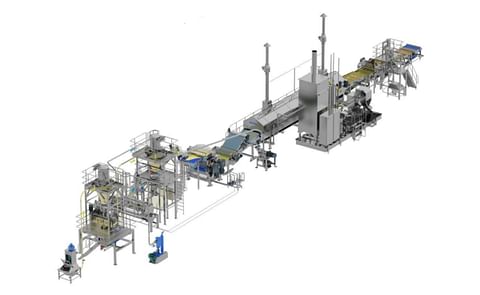
A turnkey baked potato chips line is a complete production solution designed to take potatoes from raw material handling to finished, packaged baked chips. Instead of purchasing individual machines from different suppliers, manufacturers receive an integrated production line that includes equipment, system design, installation, commissioning, operator training and technical support. This approach simplifies project management, shortens installation time and helps ensure all equipment works together efficiently.
The primary difference lies in the cooking process. A baked potato chips line uses controlled hot-air ovens to cook the slices, resulting in products with significantly lower oil content than traditional fried chips. Fried chips are cooked by immersing potato slices in hot oil, which creates a different texture and flavor profile. Baked chips are often chosen by manufacturers targeting consumers seeking lighter, lower-fat snack options while maintaining a crispy texture.
Yes. Many turnkey baked potato chips production lines can be configured to process sweet potatoes as well as other root vegetables. Depending on the product, adjustments to slicing thickness, baking temperature, processing time, and seasoning systems may be required. This flexibility enables manufacturers to diversify their product portfolio without investing in an entirely new production line.
Choosing the right production capacity depends on your expected market demand, available investment, factory space and future business plans. Small and medium-sized manufacturers often begin with moderate-capacity lines that can be expanded later, while large snack producers may invest in high-capacity continuous production systems. Selecting a scalable solution allows manufacturers to increase output as demand grows without replacing the entire production line.
Routine preventive maintenance is essential to ensure reliable performance and extend equipment life. Regular maintenance typically includes cleaning processing equipment, inspecting mechanical components, checking conveyor systems, servicing baking ovens, calibrating sensors and replacing worn parts as recommended by the manufacturer. A well-planned maintenance program helps minimize unexpected downtime, maintain consistent product quality and improve the long-term reliability of the production line.
Make This Page Even Better!
This content was last updated on 五月 27, 2026
Have a helpful detail to contribute? Catch something that should be corrected?