Introduction to Chips and Snacks Processing Technology
Chips and snacks are among the most widely consumed convenience foods worldwide, valued for their crunch, diverse flavors and easy portability. Modern chips and snacks processing lines enable large scale, efficient and consistent production of a wide range of products including traditional potato chips, extruded snacks, tortilla chips and healthier baked snack options.
Overview of Chips and Snacks Processing: Chips and snacks processing lines are fully automated or semi-automated systems designed to convert raw agricultural materials into ready-to-eat snack products. These integrated production systems include processes such as washing, peeling, cutting, frying, baking, drying, seasoning, quality inspection and packaging to ensure high efficiency, food safety and consistent product quality.
Importance of Modern Production Lines: Modern automated processing lines improve production capacity, enhance food safety, reduce labor requirements, minimize raw material losses and maintain uniform product quality. They allow manufacturers to meet growing consumer demand while complying with international food processing standards and safety regulations.
Evolution from Manual to Automated Manufacturing: Snack production has evolved significantly from small scale manual frying operations to advanced, continuous manufacturing systems. Innovations in extrusion technology, vacuum frying, automated quality inspection, robotics and digital process control have improved production efficiency, product consistency, energy utilization and sustainability.
Role in the Global Snack Industry: The global snack food industry is a rapidly expanding sector, driven by changing consumer lifestyles, urbanization, convenience trends and continuous product innovation. Recent market estimates value the global snack food market in the range of USD 280–720 billion with projections indicating steady growth through the 2030s at a CAGR of approximately 4–6% depending on market scope and category coverage.
Advanced chips and snacks processing lines play a critical role in supporting this growth by enabling high volume production, product diversification and efficient supply chains for multinational brands, regional manufacturers and private label producers worldwide.
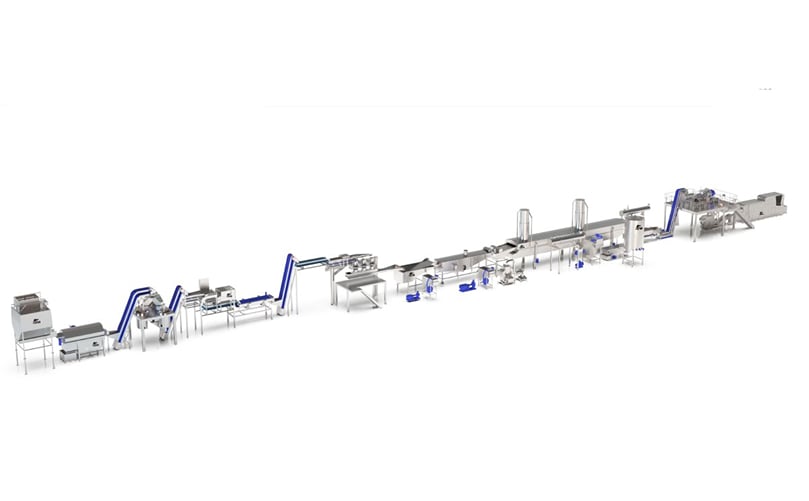
Industrial Chips and Snacks Processing Line
What Are Chips and Snacks Processing Lines?
Definition of Chips and Snacks Processing Lines: Chips and snacks processing lines are complete, integrated food processing systems designed to transform raw agricultural materials into finished, ready-to-eat and packaged snack products. These lines combine mechanical, thermal and automated technologies for washing, preparation, cutting, cooking, frying or baking, seasoning, quality control and packaging.
Purpose of Chips and Snacks Processing Lines: The primary objectives of chips and snacks processing lines are to enable high-efficiency, high volume production with minimal material losses while maintaining consistent product quality, including crispness, color, flavor, texture and shelf life. These systems help manufacturers comply with food safety, hygiene and quality standards while providing flexibility to produce multiple snack varieties, recipes, and product formats. Automation, energy optimization and efficient resource management help reduce production costs and support scalability for small, medium and large-scale snack manufacturers.
How Chips and Snacks Processing Lines Work: Chips and snacks processing lines operate through a sequence of interconnected processing stages, where raw materials enter at one end and move through automated stations using conveyors, vibratory feeders or pneumatic transport systems. Sensors, programmable logic controllers (PLCs), human machine interfaces (HMIs) and AI-based monitoring systems help control important parameters such as temperature, moisture, thickness, oil quality and product weight in real time.
These systems are designed for continuous production in high-capacity facilities or flexible batch operation for specialty and premium snack products.
Continuous vs. Batch Production
Continuous Production Lines: Continuous production lines are designed for large scale manufacturing of products such as standard potato chips and extruded snacks. Products move continuously through frying, baking, seasoning and packaging systems, enabling high throughput, consistent quality and reduced labor requirements. Batch Production Lines: Batch production lines are suitable for kettle style chips, specialty snacks and limited production runs. Ingredients are processed in separate batches, allowing manufacturers to achieve greater flexibility in product development, better control over unique flavors, textures and suitability for small scale and premium snack production.
Modular Processing Lines: Modern chips and snacks processing lines use modular components that can be reconfigured, expanded or upgraded based on production requirements. This allows manufacturers to increase capacity, switch between products such as potato chips and vegetable chips and integrate advanced technologies like vacuum frying and automated seasoning systems without replacing the entire production line.
Modular systems reduce downtime, improve adaptability and help manufacturers prepare for future market demands.
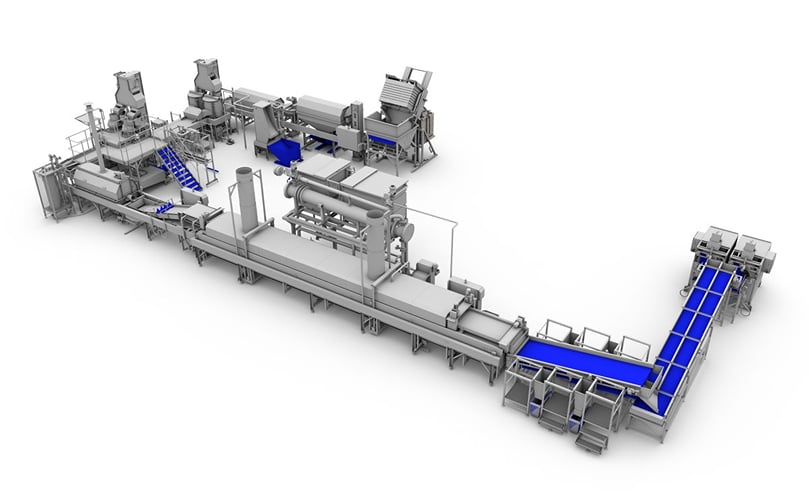
Commercial Chips and Snacks Manufacturing Process
Products Manufactured Using Chips and Snacks Processing Lines
Potato Chips: Potato chips are among the most iconic snack products manufactured using chips processing lines. They are produced from fresh potatoes that are washed, peeled, sliced, fried or baked and seasoned to achieve the desired flavor and texture. Product variations include ridged chips, wavy chips, kettle cooked chips with a thicker and crunchier texture and low-fat baked chips. Processing focuses on achieving uniform slice thickness, effective starch removal, precise frying conditions and low final moisture content (approximately 1–2%) to ensure crispness and shelf stability.
Tortilla Chips: Tortilla chips are manufactured from corn masa produced through nixtamalized corn. The process involves masa preparation, sheeting, cutting into shapes such as triangles, baking or frying and seasoning. These chips are known for their firm texture and are commonly consumed with dips. Processing requires precise control of dough properties, thickness and cooking conditions.
Corn Chips: Corn chips are produced from cornmeal dough through extrusion or frying processes. Compared with tortilla chips, they generally have simpler shapes and a denser texture. Processing focuses on achieving the desired structure, crispness and flavor profile.
Extruded Snacks: Extruded snacks are one of the most versatile categories produced using modern snack processing lines. Single screw or twin-screw extruders are used to process ingredients such as corn, rice, wheat and potatoes. During extrusion, ingredients are mixed, cooked under controlled temperature and pressure and forced through dies to create different shapes, including puffs, curls, balls and tubes. The products then undergo drying, frying or baking before seasoning. These snacks are widely used for cheese coated and flavored snack products.
Pellet Snacks (3D Snacks): Pellet snacks are semi-finished snack products manufactured through extrusion and drying processes. The dried pellets remain stable for extended storage and are later expanded through frying or hot air cooking to create final snack products. This technology allows manufacturers to produce complex shapes, textures and designs while improving production flexibility.
Puffed Snacks: Puffed snacks are lightweight products created through direct expansion during extrusion or through puffing technologies such as hot air expansion. They have a low-density structure and airy texture making them popular in snack foods and breakfast cereal applications.
Vegetable Chips: Vegetable chips are produced from vegetables such as beetroot, carrots, parsnips, kale and other specialty crops. The vegetables are typically sliced, prepared and processed through frying, baking or vacuum frying to retain attractive colors, improve texture and preserve nutritional characteristics.
Banana Chips: Banana chips are produced from sliced plantains or unripe bananas that are fried or baked with some varieties receiving additional sugar or seasoning coatings. These products are especially popular in tropical regions and require careful processing to prevent enzymatic browning and maintain product quality.
Cassava and Sweet Potato Chips: Cassava and sweet potato chips are manufactured using processing methods similar to potato chips. Cassava provides a gluten free snack option due to its high starch content, while sweet potatoes contribute natural sweetness, attractive colors and nutritional benefits. Processing requires proper control of slicing, moisture removal and cooking conditions.
Multigrain Snacks: Multigrain snacks combine different grains such as corn, wheat, rice, oats and quinoa to improve nutritional value, texture and consumer appeal. These products are commonly produced through extrusion or sheeting processes depending on the desired product structure.
Protein Snacks: Protein snacks incorporate ingredients such as pulses, lentils, chickpeas, nuts and plant-based protein isolates to meet growing demand for high protein snack options. These products are typically manufactured using extrusion or baking technologies to achieve desired nutritional and textural properties.
Seed-Based Snacks: Seed-based snacks are produced using ingredients such as sunflower seeds, pumpkin seeds, flaxseeds, chia seeds and sesame seeds. These products are commonly roasted, baked, coated or combined with other ingredients to create nutritious snack options. Processing lines focus on cleaning, sorting, roasting, seasoning and packaging while maintaining flavor, texture and nutritional quality.
Meat Snacks: Meat snacks include products such as meat chips, jerky, meat sticks and dried meat-based snack products. Processing involves meat preparation, seasoning, curing, drying, cooking and packaging under controlled hygiene conditions. These products require specialized processing systems to ensure food safety, moisture control, extended shelf life and consistent quality.
Ethnic Snacks: Ethnic snacks are traditional snack products associated with specific regions and cultures. Examples include Indian namkeen, sev, bhujia, samosa snacks and other regional specialties. Processing lines for ethnic snacks are designed to handle diverse ingredients, including pulses, grains, spices and vegetables, while maintaining traditional flavors, textures and preparation methods.
Other Specialty Snacks: Other snack categories include fortified snacks, organic snacks, functional snacks, gluten free products and innovative formulations containing ingredients such as probiotics, omega-3 fatty acids, dietary fibers or plant-based proteins. Modern processing lines provide flexibility to handle different raw materials, recipes and processing requirements for emerging consumer trends.
Each product category manufactured using chips and snacks processing lines involves specific raw materials, processing technologies and equipment configurations; detailed manufacturing processes, production methods and quality considerations for each snack type are explained in the dedicated sections below.
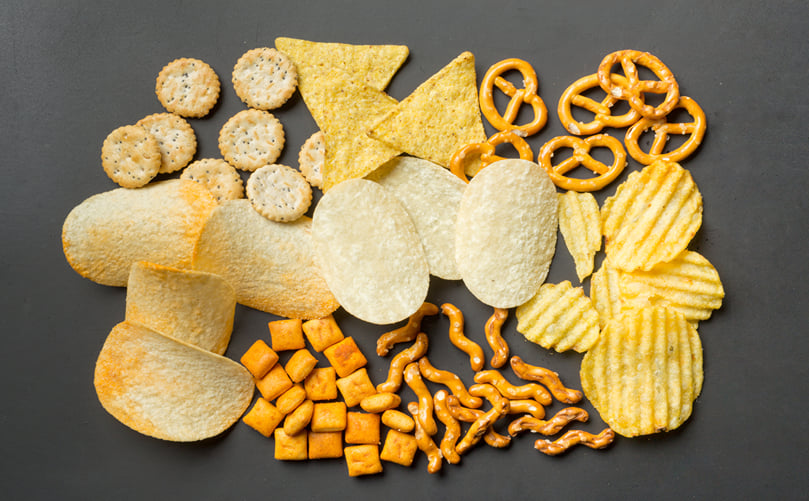
Types of Snacks Produced by Chips and Snacks Processing Lines
Benefits of Modern Chips and Snacks Processing Lines
Modern chips and snacks processing lines provide significant advantages that improve production efficiency, product quality, food safety and long-term operational performance. These advanced systems help manufacturers achieve higher productivity, reduce costs and respond effectively to changing consumer demands.
Modern processing lines enhance production capacity through continuous, high-speed operations capable of processing hundreds to thousands of kilograms per hour with minimal downtime. Automated systems, including PLC-controlled conveyors, precision temperature-controlled fryers and ovens and synchronized processing equipment, deliver higher efficiency compared with manual or semi-automated production methods. This enables manufacturers to increase output, reduce labor dependency and meet growing global snack demand without significantly increasing workforce or facility requirements.
Improved product quality and food safety are among the key benefits of advanced snack processing lines. Technologies such as optical sorting systems, AI-based inspection, precision slicing equipment and real-time monitoring of moisture and oil quality help maintain consistent product characteristics, including slice thickness, color, texture and flavor. Automated seasoning systems ensure uniform coating, while metal detectors, checkweighers and inline quality control systems reduce product defects and contamination risks. These processing lines support compliance with internationally recognized food safety standards, including HACCP, GMP, ISO 22000 and FSSC 22000. Advanced technologies such as vacuum frying, air frying and efficient oil filtration systems also enable the production of healthier snack options with reduced oil absorption and improved shelf life.
Modern processing lines also offer cost efficiency, flexibility, scalability and improved traceability. Energy-efficient equipment, oil recovery systems, waste reduction technologies and predictive maintenance using IoT-based monitoring help reduce operational expenses and improve resource utilization. Modular processing systems allow manufacturers to produce different snack categories, including potato chips, extruded snacks, vegetable chips and multigrain products with minimal equipment adjustments. These systems can be scaled from small production units to large industrial facilities, supporting business expansion. Integrated traceability solutions enable tracking of raw materials, processing conditions and finished products, improving quality management, regulatory compliance and sustainability reporting.
Overall, modern chips and snacks processing lines enable manufacturers to produce high-quality, safe and innovative snack products efficiently while supporting sustainability, operational flexibility and future market growth.