

Turnkey Popcorn Production Line: Complete Guide for Global Manufacturers
A turnkey popcorn production line is a complete production solution that takes popcorn kernels and turns them into finished, packaged popcorn ready for sale. Instead of purchasing equipment from multiple suppliers and managing the installation process independently, manufacturers receive a complete system from a single provider. This typically includes plant design, equipment supply, installation, commissioning, operator training and technical support making it easier to set up and start production.
As demand for ready-to-eat snacks continues to grow, more food manufacturers are investing in turnkey popcorn production lines to increase efficiency and simplify operations. Because all equipment is designed to work together, manufacturers can avoid many of the challenges associated with integrating machines from different suppliers. This helps reduce project delays, improve production reliability and maintain consistent product quality.
Another advantage of a turnkey approach is flexibility. Production lines can be tailored to suit different capacities, popcorn styles, flavour profiles and packaging formats. Whether producing salted popcorn, cheese popcorn, caramel popcorn or other specialty products, manufacturers can configure the line to meet their specific business needs. As production requirements grow, many turnkey systems can also be expanded with additional processing or packaging equipment.
For companies planning a new popcorn manufacturing facility or upgrading an existing one, a turnkey solution offers a practical and efficient way to move from project planning to commercial production. With a well-designed system, manufacturers can improve productivity, maintain product consistency and build a production operation that is ready to support future growth.
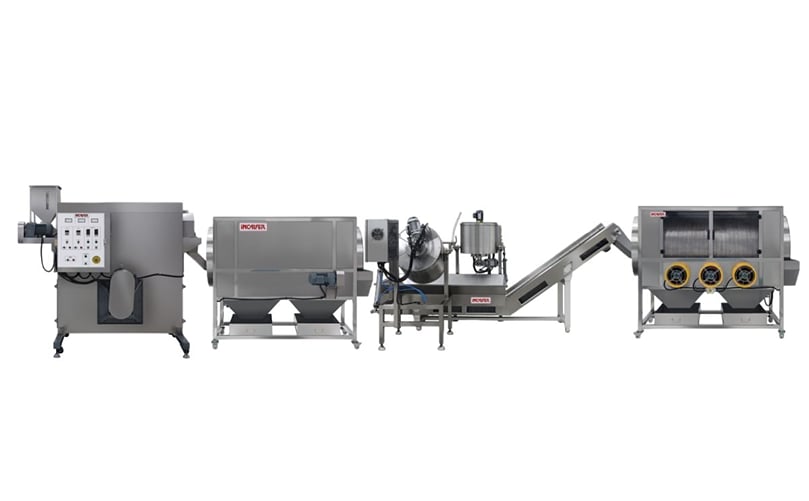
Turnkey Popcorn Production Line for Commercial Snack Manufacturing
What Does a Turnkey Solution Include?
A turnkey popcorn production line is more than just a collection of machines. It provides a complete solution that covers every stage of the project, from the initial planning phase to installation, production startup and long-term technical support. While the exact scope may vary between suppliers, a professional turnkey solution typically includes the following:
Project Consultation: The project begins with understanding the manufacturer's production goals, target products, production capacity, available factory space and budget. Suppliers may also provide guidance on process planning, local regulatory requirements and future expansion.
Plant Design and Layout: An efficient plant layout is essential for smooth production. This stage includes process flow planning, equipment positioning, utility planning, hygienic zoning and factory layout design to optimize material movement, productivity and food safety.
Equipment Manufacturing and Supply: The required processing, seasoning, conveying and packaging equipment is manufactured or sourced to meet the project's specifications. Food contact components are commonly made from food-grade stainless steel, such as SS304, while SS316 may be used for applications requiring greater corrosion resistance.
Installation and Commissioning: After delivery, the equipment is installed, connected to the required utilities and tested to ensure it operates correctly. This stage typically includes mechanical and electrical installation, system calibration, trial production runs and performance verification before commercial production begins.
Operator Training: Production and maintenance teams receive practical training on equipment operation, cleaning procedures, routine maintenance, safety practices and basic troubleshooting to ensure efficient day-to-day operation.
After-Sales Support: Most turnkey suppliers provide ongoing technical support after installation. This may include spare parts supply, preventive maintenance services, remote technical assistance, equipment upgrades and troubleshooting to help maintain reliable production over the long term.
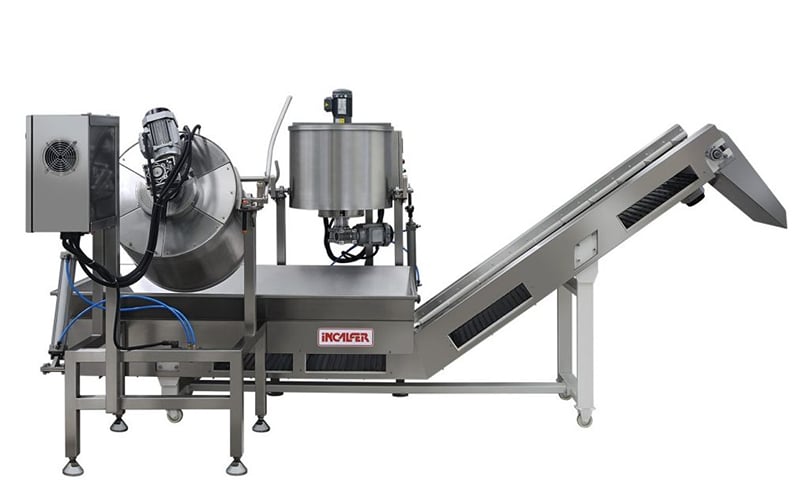
End-to-End Turnkey Popcorn Production Line Services
Plant Layout and Facility Planning for Maximum Production Efficiency
The success of a turnkey popcorn production line depends not only on the quality of the equipment but also on how the entire facility is planned. A well-designed plant layout ensures that materials move efficiently from raw kernel receiving to processing, seasoning, quality inspection, packaging and finished product storage. An organized production flow helps reduce unnecessary handling, improves productivity and supports consistent product quality.
During the planning stage, engineers evaluate factors such as production capacity, available floor space, utility requirements, operator movement, hygiene standards and future expansion plans. The objective is to create a layout that maximizes production efficiency while making equipment easy to operate, inspect, clean and maintain.
Material handling systems are carefully selected to transport popcorn between different processing stages with minimal product damage. Depending on the production capacity and plant design, these may include bucket elevators, belt conveyors, vibratory conveyors, screw conveyors or pneumatic conveying systems. Since popped popcorn is lightweight and fragile, gentle handling is essential to minimize breakage and product loss.
Food safety is another key consideration in facility planning. Production areas are typically separated into raw material, processing, seasoning, packaging and finished goods zones to reduce the risk of cross contamination. Adequate ventilation, dust extraction, proper drainage and easy-to-clean equipment layouts help maintain a hygienic production environment and support compliance with international food safety standards.
A professionally designed turnkey facility also provides flexibility for future growth. Manufacturers can expand production by adding extra popping units, seasoning systems, cooling conveyors, inspection equipment or additional packaging lines without redesigning the entire factory. This modular approach allows businesses to increase capacity as market demand grows while reducing future investment costs.
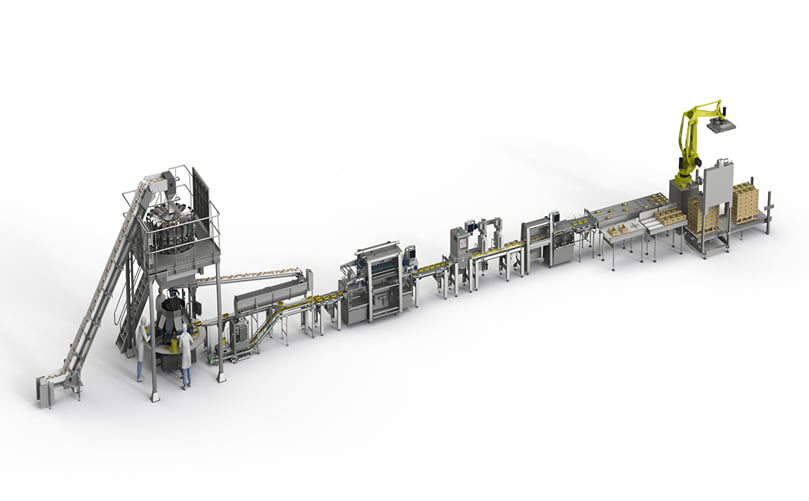
Efficient Facility Planning for a Turnkey Popcorn Processing Plant
Customization Options for a Turnkey Popcorn Production Line
One of the key advantages of a turnkey popcorn production line is its ability to be customized to meet different production requirements, product portfolios and business objectives. Rather than offering a one-size-fits-all solution, manufacturers can configure the production line to match their processing capacity, automation level, product range and packaging requirements while ensuring efficient operation and future scalability.
Production Capacity: Turnkey popcorn production lines are available in a wide range of production capacities from compact systems designed for small and medium sized businesses to fully automated industrial plants capable of continuous, high-volume production. Capacity selection depends on factors such as daily production targets, operating hours, available factory space and anticipated market growth. A properly sized production line helps maximize efficiency while avoiding unnecessary operating costs.
Popping Technology: The choice of popping technology has a direct impact on product quality, production efficiency and operating costs. Oil popping is widely used for producing traditional butter, cheese and flavoured popcorn with excellent taste and texture. Hot air popping is preferred for low fat and health-oriented products because it requires little or no added oil. Depending on production requirements, manufacturers can choose between batch systems for specialty products or continuous popping systems for large scale commercial production that require consistent output and minimal downtime.
Seasoning and Coating Systems: Modern turnkey lines can be configured with a variety of seasoning and coating technologies to produce different popcorn products. Dry seasoning drums provide uniform application of salt, cheese, spices, and powdered flavourings, while liquid spraying systems distribute oils and liquid seasonings evenly across the popcorn. For premium products, dedicated coating systems can produce caramel, chocolate or other confectionery-coated popcorn with controlled coating thickness and consistent product quality. Multi-recipe configurations also allow manufacturers to switch between different flavours with minimal production interruption.
Packaging Solutions: Packaging systems are selected according to the target market, product type and required shelf life. Turnkey lines can be integrated with automatic weighing and packaging equipment for pillow bags, stand-up pouches, gusset bags, family packs or bulk packaging. Many systems also incorporate nitrogen flushing or modified atmosphere packaging (MAP) to help maintain product freshness, preserve crispness and extend shelf life during storage and distribution.
Automation and Process Control: Automation levels can be tailored to suit different production scales and investment budgets. Semi-automatic systems combine manual operations with automated processing, while fully automated lines integrate processing, seasoning, conveying, weighing, packaging and quality inspection through a centralized PLC-based control system. Advanced automation enables precise control of popping temperature, seasoning application, product flow and packaging accuracy, resulting in consistent product quality, improved production efficiency and reduced labour requirements.
Future Expansion and Line Flexibility: A professionally engineered turnkey popcorn production line is designed with future growth in mind. As production demand increases, manufacturers can expand capacity by adding additional popping units, seasoning systems, cooling conveyors, inspection equipment, packaging machines or end-of-line automation without redesigning the entire facility. This modular approach allows businesses to respond to changing market demand while protecting their long-term investment.
Seamless Integration of the Complete Production Line
One of the key advantages of a turnkey popcorn production line is the seamless integration of all processing and packaging equipment into a single, coordinated system. Rather than operating as separate machines, each stage of the production line is connected through automated material handling systems, allowing popcorn to move smoothly from processing and seasoning to inspection, weighing, packaging and final product handling with minimal manual intervention.
Conveyors, elevators and transfer systems are carefully synchronized to maintain a continuous product flow while reducing bottlenecks and unnecessary product handling. This integrated approach helps improve production efficiency, minimize product breakage and support consistent throughput throughout the manufacturing process.
Modern turnkey lines are typically equipped with a centralized PLC-based control system that monitors and controls key production parameters, including popping temperature, conveyor speed, seasoning application, product flow, weighing accuracy and packaging operations. Some advanced production lines also support SCADA or remote monitoring systems, providing operators with real-time production data, performance monitoring and faster fault diagnosis.
By integrating all equipment into a single production system, manufacturers can simplify operations, improve process control, maintain consistent product quality, enhance food safety and reduce overall operating costs while achieving reliable, long-term production performance.
Quality Assurance Throughout the Production Line
Producing high-quality popcorn requires more than reliable equipment. Every stage of the production process from raw material inspection to final packaging, plays a role in delivering a product that meets customer expectations for taste, texture, appearance and food safety.
Quality control begins with the selection of premium popcorn kernels. Manufacturers check factors such as kernel size, cleanliness, moisture content and popping performance to help achieve a high expansion rate and reduce the number of unpopped kernels. Using high-quality raw materials creates a strong foundation for consistent production.
During processing, important operating conditions such as popping temperature, cooking time, seasoning application and cooling are carefully controlled. Keeping these parameters, stable helps produce popcorn with consistent colour, crisp texture, even flavour distribution and an attractive appearance while reducing product waste.
Before packaging, the product passes through several quality inspection stages. Sieving equipment removes unpopped kernels and broken pieces, while metal detectors help identify unwanted metal contaminants. Depending on the production requirements, some manufacturers also use X-ray inspection, optical sorting systems and automatic checkweighers to further improve product quality, packaging accuracy and food safety.
Packaging is the final quality checkpoint. Modern packaging systems monitor fill weight, seal quality, coding and package appearance to ensure every pack meets the required standards. For products with a longer distribution period, nitrogen flushing or modified atmosphere packaging (MAP) can be used to help maintain freshness and preserve product quality.
Food safety remains a priority throughout the entire production line. Turnkey popcorn production lines are commonly built using food grade stainless steel and hygienic designs that make cleaning and maintenance easier. Many systems are developed to support internationally recognized food safety standards such as HACCP, GMP, ISO 22000 and CE, helping manufacturers meet the quality requirements of both domestic and export markets.
Utility and Infrastructure Requirements for a Turnkey Popcorn Production Line
A turnkey popcorn production line performs best when it is supported by properly planned utilities and factory infrastructure. Before installation begins, equipment manufacturers evaluate the available power supply, heating source, compressed air, water, ventilation and factory layout to ensure the production line operates safely and efficiently. Careful utility planning not only simplifies installation but also helps reduce downtime, improve equipment performance and support long-term production reliability.
Electrical Supply: Industrial popcorn production lines require a stable electrical supply to operate conveyors, seasoning systems, packaging machines, control panels, cooling equipment and other auxiliary systems. The total power requirement depends on the production capacity, automation level and equipment configuration. During the engineering stage, suppliers calculate the connected electrical load and recommend suitable electrical panels, cable routing and protection systems for safe operation.
Heating System: Heat is the most critical utility in popcorn production because it directly affects popping performance and product quality. Depending on the production process and local energy availability, turnkey lines may use natural gas, LPG or electric heating systems. Selecting the right heat source helps maintain consistent popping temperatures, improve energy efficiency and reduce operating costs.
Compressed Air: Many automated components rely on compressed air for reliable operation. Pneumatic cylinders, control valves, packaging machines and product diverters use compressed air to perform fast and accurate movements throughout the production process. A clean, dry and stable compressed air supply helps prevent equipment failures and improves overall production efficiency.
Water Supply and Drainage: Unlike many food processing industries, popcorn manufacturing uses relatively little process water. Water is primarily required for equipment cleaning, sanitation and routine maintenance. Proper drainage systems are equally important, allowing cleaning operations to be carried out efficiently while maintaining hygienic working conditions.
Factory Space and Equipment Layout: Adequate factory space is essential for safe and efficient production. The layout should allow sufficient room for equipment installation, raw material storage, finished product handling, operator movement, maintenance access and future production expansion. Ceiling height should also be considered when installing bucket elevators, conveyors, ventilation systems and other overhead equipment.
Ventilation and Dust Management: Popcorn production generates heat, steam, cooking vapours and fine food dust that must be effectively controlled. Well-designed ventilation systems improve operator comfort, while dust extraction systems help maintain a cleaner production environment, reduce dust accumulation on equipment and support workplace safety. Proper air circulation also contributes to maintaining product quality throughout the production process.
Utility Planning and Site Preparation: As part of a turnkey project, the supplier prepares detailed utility drawings and installation requirements before equipment delivery. These documents typically include electrical layouts, utility connection points, compressed air requirements, gas or heating connections, water supply, drainage, ventilation and equipment positioning. Proper site preparation ensures faster installation, smoother commissioning and reliable production from the first day of operation.
Advantages of a Turnkey Popcorn Production Line
A turnkey popcorn production line offers several advantages over purchasing and integrating equipment from multiple suppliers. Because the entire system is planned, designed and supplied as a complete solution, manufacturers can simplify project management and reduce the challenges often associated with coordinating different equipment providers.
One of the biggest benefits is improved compatibility between processing and packaging equipment. Since all components are engineered to work together, installation and commissioning are generally more straightforward, helping reduce integration issues and shorten the time required to begin commercial production.
Turnkey solutions also support more efficient day-to-day operations. Integrated production systems improve material flow, reduce unnecessary product handling and provide better control over processing and packaging. This helps manufacturers maintain consistent product quality while improving productivity and making more efficient use of labour, energy and raw materials.
Another important advantage is long-term reliability. A single supplier is typically responsible for technical support, spare parts, maintenance and future system upgrades, making it easier to manage the production line throughout its operating life. Many turnkey solutions are also designed with modular layouts, allowing manufacturers to expand production capacity or add new processing and packaging equipment as business needs evolve.
By combining integrated engineering, reliable equipment and ongoing technical support, a turnkey popcorn production line provides manufacturers with a practical, scalable solution that supports efficient production, consistent product quality and sustainable business growth.
Applications of a Turnkey Popcorn Production Line
Turnkey popcorn production lines are used across a wide range of industries that require efficient, large-scale popcorn manufacturing. Their flexibility allows businesses to produce different popcorn products while meeting varying production capacities, quality standards and packaging requirements.
One of the largest user groups is snack food manufacturers, who produce ready-to-eat popcorn for supermarkets, convenience stores, specialty retailers and online markets. These manufacturers rely on automated production lines to maintain consistent product quality while increasing production efficiency.
Private label manufacturers also invest in turnkey popcorn production lines to supply retailers with store brand popcorn products. These businesses often require flexible production systems that can accommodate multiple flavours, packaging formats and customer specifications.
Cinema and entertainment venues remain an important market for commercial popcorn production. Popcorn continues to be one of the most popular concession products, creating demand for reliable production lines capable of supplying both freshly prepared and packaged popcorn to theatres, amusement parks, stadiums and other entertainment facilities.
Many food processing companies integrate popcorn production into their existing snack manufacturing operations alongside products such as potato chips, tortilla chips, extruded snacks and roasted nuts. Similarly, contract manufacturers use turnkey production lines to produce popcorn for multiple brands, allowing them to switch efficiently between different recipes, flavours and packaging formats.
Turnkey popcorn production lines are also widely used by export-oriented manufacturers that supply international markets. These businesses require production systems designed to support high product quality, food safety and compliance with the regulatory and customer requirements of different countries. In addition, hotels, catering companies, institutional foodservice providers and large-scale catering operations use commercial popcorn production lines to meet growing demand for ready-to-eat snack products.
The versatility, scalability and automation offered by turnkey popcorn production lines make them suitable for businesses ranging from growing regional manufacturers to large multinational food companies serving domestic and international markets.
Factors to Consider Before Investing in a Turnkey Popcorn Production Line
Investing in a turnkey popcorn production line is a long-term business decision that requires careful planning. Choosing the right production line involves more than comparing equipment specifications it requires evaluating production needs, future growth plans, operating costs and the supplier's ability to provide reliable technical support.
Production Capacity: The first step is to determine the required production capacity based on current demand and future business growth. A properly sized production line should meet production targets efficiently while allowing room for expansion as market demand increases.
Product Range: The types of popcorn products you plan to manufacture will influence the production line configuration. Whether producing salted, butter, cheese, caramel, chocolate or other speciality popcorn products, the equipment should support the required popping, seasoning, coating and packaging processes.
Factory Space and Plant Layout: Available factory space plays an important role in selecting the right production line. The equipment layout should provide sufficient space for material movement, operation, cleaning, maintenance and future expansion while maintaining an efficient production flow.
Automation Requirements: Automation should be selected according to production volume, labour availability and operational goals. While semi-automatic systems may suit smaller operations, fully automated production lines can improve process consistency, reduce manual handling and support higher production volumes.
Energy Efficiency: Energy consumption has a significant impact on long-term operating costs. Modern turnkey popcorn production lines often incorporate energy efficient equipment and optimized process controls to improve productivity while reducing electricity or fuel consumption.
Food Safety and Equipment Quality: The production line should be designed using food-grade materials and hygienic engineering principles to support safe food production. Equipment that is easy to clean and maintain can help improve operational efficiency and support compliance with applicable food safety standards.
Technical Support and Spare Parts: Reliable after-sales support is essential for maintaining continuous production. Before investing, manufacturers should evaluate the supplier's technical expertise, service capabilities, spare parts availability, operator training and response times to minimize production interruptions.
Scalability and Future Expansion: Business requirements often change over time. Choosing a modular production line that can be expanded with additional processing, seasoning, inspection or packaging equipment allows manufacturers to increase production capacity and introduce new products without replacing the entire system.
Total Cost of Ownership: The purchase price is only one part of the investment. Manufacturers should also consider installation, utility requirements, maintenance, spare parts, energy consumption, operator training and long-term operating costs when evaluating different turnkey solutions. Assessing the total cost of ownership provides a clearer understanding of the production line's long-term value and return on investment.
After-Sales Support and Technical Services
Reliable after sales support is an important part of any turnkey popcorn production line. Beyond supplying and installing the equipment, experienced manufacturers provide technical assistance to help customers maintain efficient production, reduce downtime and maximize the long-term performance of the production line.
Support typically begins with installation and commissioning. Technical engineers assist with equipment installation, utility connections, system testing and trial production to verify that the production line operates as designed. Operator training is also provided to help production teams understand equipment operation, routine cleaning, preventive maintenance, safety procedures, product changeovers and basic troubleshooting.
Preventive maintenance plays a key role in keeping the production line operating efficiently. Regular inspection of components such as motors, conveyors, bearings, heating systems, sensors and packaging equipment helps identify potential issues before they affect production. Scheduled maintenance also helps extend equipment life and maintain consistent product quality.
The availability of spare parts is another important consideration. Reputable suppliers maintain inventories of commonly replaced components and provide technical documentation to support maintenance and repairs. Quick access to spare parts can help reduce production interruptions and improve overall equipment reliability.
Many modern turnkey production lines also support remote technical assistance, allowing service engineers to diagnose software or control system issues without requiring an immediate site visit. Depending on the supplier, customers may also have access to software updates, equipment upgrades, additional processing modules or packaging system expansions as production requirements change.
Choosing a supplier with reliable after sales support helps manufacturers maintain stable production, improve equipment performance and protect their investment throughout the operational life of the turnkey popcorn production line.
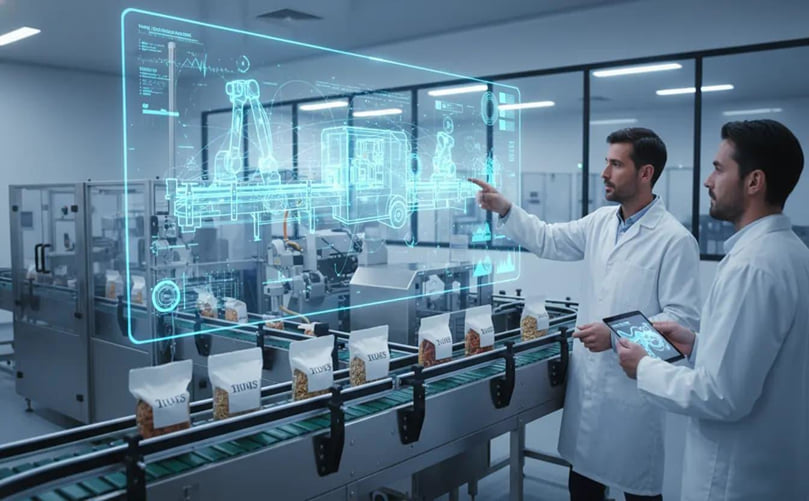
After-Sales Support for Turnkey Popcorn Production Lines
Sustainability Features of a Turnkey Popcorn Production Line
Sustainability has become an important consideration when investing in a turnkey popcorn production line. Modern systems are designed not only to increase production efficiency but also to reduce energy use, minimize waste and lower operating costs.
Energy-efficient technologies, such as induction heating, optimized gas burners and variable frequency drives (VFDs), help reduce electricity and fuel consumption while maintaining consistent production. Some production lines also include heat recovery systems that reuse excess heat, further improving energy efficiency.
Product waste is reduced through accurate process control. Precise moisture management, even seasoning application and efficient screening systems help minimize unpopped kernels, broken popcorn and ingredient losses. When the line is properly adjusted and maintained, waste levels can remain very low, improving both profitability and resource efficiency.
Modern oil and seasoning application systems are designed to apply only the amount needed for each batch. This reduces unnecessary oil consumption, lowers ingredient costs and makes it easier to produce lower-fat popcorn varieties that appeal to health-conscious consumers.
Packaging also plays a role in sustainability. Many turnkey production lines can work with recyclable, mono-material or compostable packaging materials, helping manufacturers meet changing customer expectations and environmental regulations without sacrificing packaging performance.
A clean production environment is equally important. Dust collection systems improve air quality inside the factory while recovering fine product particles that would otherwise be lost. Hygienic equipment designs also require less water and fewer cleaning chemicals during sanitation making routine cleaning faster and more environmentally friendly.
Overall, a sustainable popcorn production line helps manufacturers reduce operating costs, improve production efficiency, minimize environmental impact and produce products that meet the growing demand for healthier and more responsibly manufactured snacks.
Return on Investment of a Turnkey Popcorn Production Line
A turnkey popcorn production line is a long-term investment that can improve both production efficiency and business profitability. Although the initial cost may seem significant, the savings in labour, energy and raw materials, combined with higher production capacity, often allow manufacturers to recover their investment within a reasonable period.
One of the main financial benefits comes from automation. Because most production stages are connected and operate automatically, fewer workers are needed to run the line. At the same time, production becomes faster and more consistent, allowing more popcorn to be produced during each shift with less variation in quality.
A well-designed production line also helps reduce waste. Accurate popping, seasoning and weighing systems ensure that more of the raw materials become finished products instead of being lost during processing. Lower energy consumption and reduced maintenance requirements also help keep day-to-day operating costs under control making the business more profitable over time.
The cost of a turnkey popcorn production line depends mainly on its production capacity and level of automation. Small lines with capacities of 50–100 kg/hour generally cost between USD 15,000 and USD 40,000. Medium-sized lines producing 100–300 kg/hour usually range from USD 40,000 to USD 80,000, while fully automated industrial lines with capacities of 300–1,000+ kg/hour can cost anywhere from USD 80,000 to more than USD 300,000. These prices normally cover the production equipment and do not include installation, factory preparation or utility connections.
The time needed to recover the investment varies from one business to another. Small manufacturers with steady local or online sales may reach breakeven within 6 to 12 months. Commercial scale operations often recover their investment in 8 to 18 months, while larger industrial projects may require 12 to 24 months, depending on production volume, product pricing and market demand.
When planning a new production line, it is important to look beyond the purchase price. Expenses such as packaging materials, seasonings, electricity, maintenance, labour, transportation and product changeovers all affect the overall profitability of the business. Considering these costs from the beginning provides a more realistic picture of the return on investment.
In the end, a turnkey popcorn production line is not just an equipment purchase it is an investment in higher productivity, lower operating costs, consistent product quality and the ability to grow the business over the long term.
Why Choose a Professional Turnkey Popcorn Production Line Supplier?
Choosing the right turnkey supplier is just as important as selecting the right equipment. An experienced supplier does more than manufacture machines they provide the knowledge, engineering expertise and technical support needed to build a reliable and efficient popcorn production facility.
A professional supplier understands every stage of popcorn production, from kernel preparation and popping to seasoning, cooling and packaging. Their experience helps ensure the entire production line is designed to produce consistent, high-quality popcorn while minimizing product damage and waste.
Suppliers with a proven track record can also reduce project risk. Companies that have successfully installed similar production lines are better prepared to recommend the right equipment, solve technical challenges and deliver the expected production performance.
Another advantage is the ability to customize the production line. Instead of offering a standard solution, experienced suppliers can design the line to match your production capacity, available factory space, utility requirements and product range. This ensures the equipment fits your business today while allowing room for future expansion.
Installation and commissioning are equally important. Professional turnkey suppliers typically provide on-site installation, equipment testing, operator training and production start-up support to ensure the line operates smoothly from the first day of production.
Reliable after-sales service is another key factor. Fast technical assistance, readily available spare parts, remote troubleshooting and preventive maintenance support help minimize downtime and keep production running efficiently throughout the equipment's lifetime.
Finally, a reputable supplier manufactures equipment that complies with recognized international standards for quality, food safety and machine safety. This makes it easier for manufacturers to meet customer requirements, pass factory audits and supply products to domestic and international markets.
Working with a professional turnkey supplier gives manufacturers confidence that every stage of the project from planning and equipment manufacturing to installation and long-term support is handled by experienced specialists, helping ensure a successful and profitable popcorn production business.

