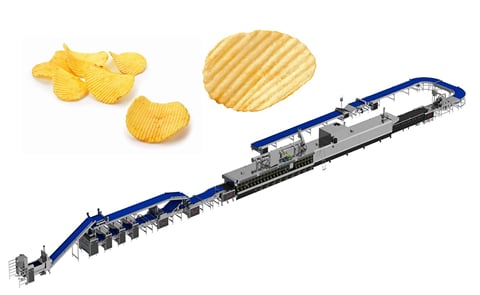

Turnkey Baked Potato Chips Production Line: Complete Guide for Global Manufacturers
A turnkey baked potato chips production line is a full setup made to make baked potato chips using ingredients like potato flakes, potato granules, potato starch, water, vegetable oil and seasonings. Baked potato chips are different from regular potato chips. Regular chips are made by cutting fresh potatoes into thin slices and then frying them in oil. Baked chips, on the other hand, are made by first making a dough from potatoes, shaping it into chip forms, baking it in a special oven, and then adding oil and seasonings before putting it into packaging. This process makes chips that are crispy and have less fat, while keeping them the same size, shape, and quality every time.
In a turnkey project, one supplier handles all parts of the production line. This usually covers designing the process, making the equipment, setting up the factory, installing the machinery, getting it ready to use, training the workers, and providing technical help after the sale. Because all the equipment is made to work with each other, makers can save time during setup, stop problems when machines don’t work well together, and begin making products for sale faster.
A usual line for making baked potato chips has steps like handling ingredients, mixing dough, rolling it into sheets, shaping it into thin layers, forming the chips, baking them, spraying with oil, adding seasoning, cooling them down, checking for quality, and then putting them into packages. Modern production lines are fully automated and use control systems based on PLCs to keep baking temperatures steady, moisture levels consistent, and product quality the same throughout the whole production process.
The amount of baked potato chips produced can vary based on what the manufacturer needs. Typically, production can handle between 100 kg per hour up to over 1,000 kg per hour. For bigger operations that need a lot of chips, larger custom systems can be made. Snack food makers often use these lines to grow their production, add healthier snack options, or set up new processing plants. As the need for baked snacks increases in markets around the world, including Asia, Europe, the Middle East, Africa, and the Americas, complete production lines provide a dependable and flexible option for making commercial baked potato chips.
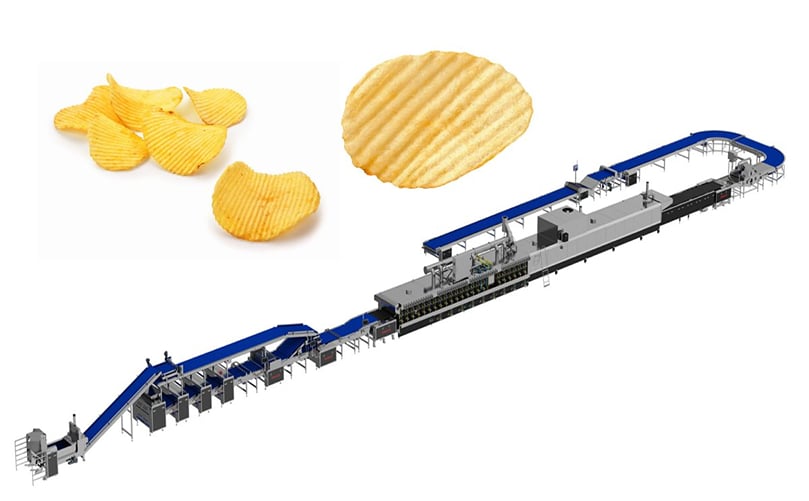
Complete Turnkey Baked Potato Chips Production Line
What Does a Turnkey Solution Include?
A turnkey baked potato chips production line is more than a collection of machines. It is a complete production solution in which one supplier is responsible for the entire project from process design and equipment manufacturing to installation, commissioning and technical support. Working with a single supplier helps reduce project delays, avoids compatibility issues between equipment and ensures the production line performs as designed.
A typical turnkey solution includes the following components:
Process Design and Engineering: The project begins with process design based on the customer's production goals, available raw materials and target products. The supplier evaluates production capacity, factory requirements, ingredient specifications and utility needs before designing the most suitable production line. Many suppliers also provide recipe development support and production cost estimates to help manufacturers plan their investment.
Complete Production Line: The equipment set includes all the steps needed to make the product, like handling raw materials, measuring ingredients, mixing dough, shaping it into sheets or forms, recycling dough if needed, baking continuously, adding oil spray when necessary, seasoning, cooling, checking for quality, and then packaging it. Depending on the product and how much can be made, the line might also have metal detectors, checkweighers, multiread weighers and automated packaging systems that use nitrogen flushing to keep the product fresh and make it last longer.
Factory Layout and Plant Planning: Most turnkey suppliers prepare detailed factory layouts that show equipment placement, production flow, operator access, utility connections and hygiene zones. Some also provide 3D plant layouts to help customers visualize the installation before manufacturing begins and to allow space for future production expansion.
Utility Planning: The supplier figures out what utilities are needed for the production line, like electricity, natural gas or LPG for the baking ovens, compressed air, ventilation and water for cleaning and keeping things sanitary. This information helps manufacturers get the factory ready before installation and makes sure the production line runs smoothly.
Installation and Commissioning: Once the equipment reaches the factory, the supplier's technical team carries out installation, equipment alignment, electrical connections, system testing and commissioning. Trial production is performed using the customer's raw materials to verify that the line operates correctly and that the finished product meets the required quality standards.
Operator Training: Training is an important part of a turnkey project. Operators and maintenance personnel receive practical instruction on machine operation, process control, cleaning procedures, routine maintenance, troubleshooting and product changeovers. Recipe adjustments are also made during this stage to achieve the desired product quality.
Documentation and Technical Support: A complete turnkey package includes operating manuals, maintenance guides, electrical drawings, spare parts lists and equipment documentation. Depending on the supplier and destination market, certifications such as CE and ISO compliance documentation may also be provided where applicable. Many suppliers also offer Factory Acceptance Testing (FAT) before shipment and Site Acceptance Testing (SAT) after installation.
After-Sales Service: Technical support continues after the production line is commissioned. Most suppliers provide warranty coverage, recommended spare parts, remote technical assistance, maintenance support, software updates for automation systems and on-site service when required. Long-term service agreements are also available from many equipment manufacturers.
The time required to deliver a turnkey baked potato chips production line varies according to production capacity, equipment configuration and factory requirements. In most cases, commercial systems are delivered and commissioned within 4 to 8 months although larger or highly customized projects may require additional time.
By placing the entire project under the responsibility of a single supplier, manufacturers benefit from better project coordination, faster startup and a production line that is designed to operate as one integrated system.
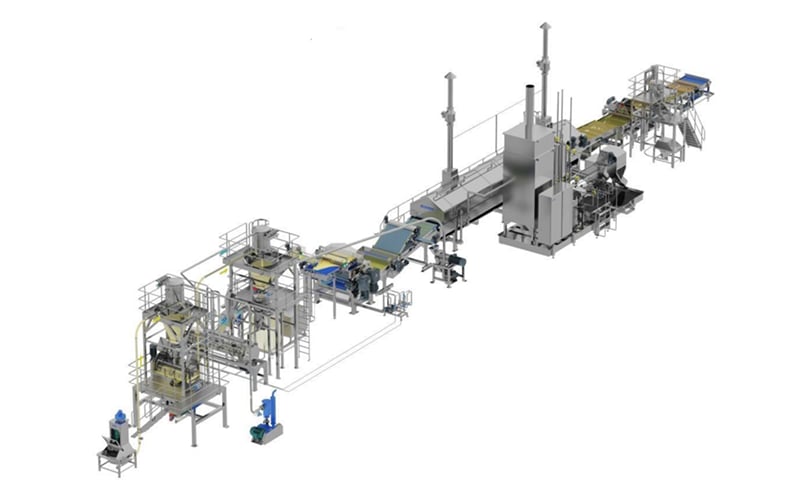
Components of a Turnkey Baked Potato Chips Production Line
Plant Layout and Facility Planning for Maximum Production Efficiency
The layout of a baked potato chips factory plays a major role in production efficiency, product quality, food safety and operating costs. A well-planned facility allows materials, personnel and finished products to move smoothly through the production process while minimizing contamination risks, unnecessary handling and downtime. In a turnkey project, the equipment supplier works closely with the manufacturer to design a layout that matches the available building space, production capacity, utility requirements and future expansion plans.
Product Flow: Most baked potato chips plants follow a one-way production flow. Raw materials are received and stored before being transferred to ingredient handling and dough preparation. The dough then moves through sheeting, forming, baking, seasoning, cooling, inspection and packaging. Finished products are transferred directly to the warehouse or distribution area. Keeping the process in one direction reduces unnecessary movement of materials and helps maintain product hygiene.
Hygiene and Food Safety: The production layout is designed to separate raw material handling from finished product areas. High care zones, such as seasoning and packaging are isolated from ingredient storage and dough preparation to reduce the risk of contamination. Personnel movement, cleaning procedures, waste handling and equipment access are also considered during the design stage. Depending on the target market, the facility may be designed to support food safety systems such as HACCP, ISO 22000, BRCGS, IFS or local regulatory requirements.
Layout Configuration: The final layout depends on the size and shape of the factory building. New facilities often use a straight-line arrangement because it provides a simple and efficient product flow. Where space is limited, suppliers may design L-shaped, U-shaped or other customized layouts to make the best use of the available floor area while maintaining easy access for operation and maintenance.
Equipment Positioning and Utilities: Production equipment is positioned to allow safe operation, routine cleaning and preventive maintenance. Utility services including electrical power, natural gas or LPG, compressed air, ventilation and water are planned alongside the production line to ensure reliable operation and simplify future maintenance. Adequate working space is also provided around major equipment such as mixers, baking ovens, seasoning systems and packaging machines.
Planning for Future Expansion: Many manufacturers plan for future growth when building a new production facility. A well-designed turnkey layout can accommodate additional baking ovens, seasoning systems, cooling conveyors or packaging lines without major changes to the existing production flow. Planning for expansion at the design stage reduces future installation costs and minimizes production interruptions.
Digital Factory Design: Many turnkey suppliers now use 3D plant layouts and digital simulations during the engineering stage. These tools allow manufacturers to review equipment placement, material flow, utility connections and maintenance access before installation begins. Identifying potential bottlenecks early helps improve production efficiency and reduces costly modifications during construction.
A carefully planned factory layout not only improves daily production efficiency but also supports consistent product quality, food safety compliance, easier maintenance and long-term operational flexibility. For manufacturers investing in a turnkey baked potato chips production line, effective facility planning is just as important as selecting the right processing equipment.
Customization Options for a Turnkey Baked Potato Chips Production Line
Every baked potato chip manufacturer has different production goals, factory conditions and market requirements. For this reason, turnkey production lines are rarely built to a standard specification. Instead, suppliers customize the equipment and process to match the customer's products, production targets, available utilities and future expansion plans.
Production Capacity: Production capacity is usually the first specification defined during project planning. Standard turnkey lines are available from 100 kg/h to more than 1,000 kg/h of finished baked potato chips, while larger capacities can be engineered for industrial scale operations. Many manufacturers also choose modular systems that allow production to be increased as market demand grows.
Product Shape and Texture: The forming section can be equipped with different molds or cutting dies to produce round, oval, ridged, square or custom shaped chips. Product thickness, surface texture, and chip dimensions can also be adjusted to achieve the desired appearance, crispness and eating quality.
Baking System: Continuous tunnel ovens are available with natural gas, LPG or electric heating, depending on local energy availability and operating costs. Baking conditions, including temperature, airflow and residence time are adjusted to suit different product formulations and quality requirements.
Oil Application: Although baked potato chips contain much less oil than fried chips, many manufacturers apply a light coating of oil after baking. This improves flavour, enhances mouthfeel and helps seasonings adhere evenly to the product. The amount of oil applied depends on the product specification and brand positioning.
Seasoning Options: Seasoning systems are designed to handle a wide range of dry flavourings. Recipe changes can be completed quickly, allowing manufacturers to produce salted, barbecue, cheese, sour cream and onion, chilli, tomato, seaweed and other regional flavours on the same production line.
Raw Materials and Recipes: Most baked potato chips are produced from formulations based on potato flakes, potato granules, potato starch or blends of these ingredients. The production line can be adjusted to suit different recipes, including products with reduced sodium, added fibre or other nutritional improvements.
Packaging Configuration: Packaging systems are selected according to the target market and pack size. Retail pouches, family packs, multipacks and bulk packaging can all be integrated into the production line. Additional equipment, such as metal detectors, checkweighers, nitrogen flushing and date coding systems is commonly included to improve product quality and shelf life.
Regional Requirements: Turnkey lines are also adapted to local operating conditions. Electrical standards, utility connections, language settings and compliance with local food regulations are considered during the engineering stage to ensure smooth installation and reliable production.
Choosing these options during the design stage allows the entire production line to operate as a single, integrated system. It also provides the flexibility to respond to changing consumer preferences and future business growth without major modifications to the production process.
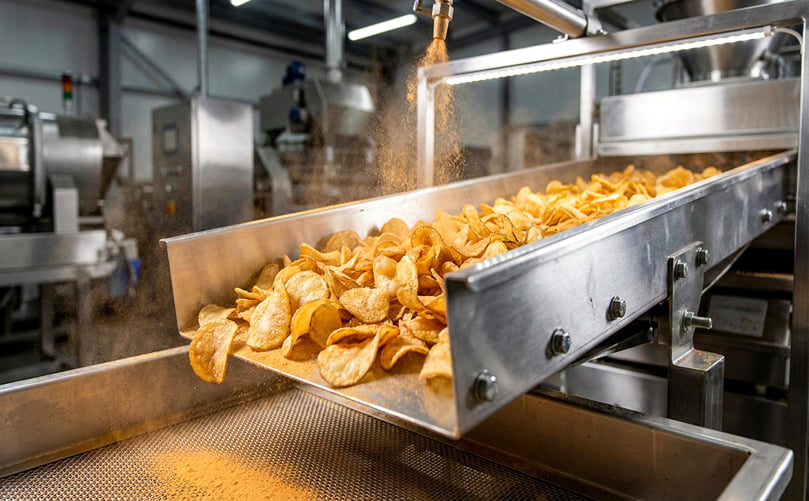
Baked Potato Chips in Different Shapes and Sizes
Seamless Integration of the Complete Production Line
The success of a turnkey baked potato chips production line depends not only on the performance of individual machines but also on how effectively they operate as one integrated system. From ingredient handling to final packaging, every stage of production must be synchronized to maintain a continuous product flow, minimize downtime and deliver consistent product quality. This integrated approach is one of the main advantages of a turnkey solution compared with purchasing equipment from multiple suppliers.
Coordinated Product Flow: Each machine is designed to operate in sequence with the next. Ingredient handling, dough mixing, sheeting, forming, baking, seasoning, cooling, inspection and packaging are synchronized so that product moves continuously through the line without unnecessary interruptions or product accumulation. Maintaining a balanced production flow helps improve efficiency and reduces the risk of bottlenecks.
Centralized Process Control: Most modern production lines are operated through a PLC-based control system with an HMI (Human Machine Interface). Operators can monitor and adjust key process parameters such as mixing conditions, conveyor speed, oven temperature, baking time and seasoning application from a central control panel. Recipe management functions also allow production settings to be saved and recalled, making product changeovers faster and helping maintain consistent product quality.
Dough Recovery: During chip forming, the dough remaining between the cut chip shapes is automatically collected and returned to the dough preparation process. This reduces raw material waste and improves overall production efficiency while maintaining a continuous manufacturing process. The exact recycling method depends on the product formulation and equipment design.
Integrated Safety and Utilities: Production equipment is designed to operate as a single system, with coordinated electrical controls, heating systems, ventilation, compressed air and safety devices. Emergency stop systems, equipment interlocks and oven safety controls are integrated throughout the production line to support safe operation and protect both personnel and equipment.
Packaging Line Integration: After baking and seasoning, the chips are cooled before entering the packaging section. Proper cooling helps preserve product texture and allows accurate weighing, sealing and nitrogen flushing where required. Synchronizing the packaging equipment with the processing line helps maintain a steady product flow and reduces unnecessary production stoppages.
Factory Testing and Commissioning: Before shipment, many turnkey suppliers conduct Factory Acceptance Testing (FAT) to verify that the equipment performs according to the agreed specifications. After installation, Site Acceptance Testing (SAT) and commissioning are carried out using the customer's raw materials to confirm production performance, product quality and equipment reliability under actual operating conditions.
A fully integrated production line simplifies plant operation, improves process stability and helps manufacturers produce baked potato chips with consistent quality and greater production reliability. By engineering every stage of the process as a single system, turnkey suppliers can reduce installation challenges, shorten startup time and support efficient long-term operation.
Quality Assurance and Process Control in a Turnkey Baked Potato Chips Production Line
Consistent quality is one of the biggest challenges in baked potato chip manufacturing. Small variations in raw materials, dough preparation, baking conditions or seasoning can affect the colour, texture, flavour and shelf life of the finished product. For this reason, quality control is built into every stage of the production process instead of being limited to the final inspection.
Raw Material Inspection: The process starts with the raw materials. Potato flakes, potato granules, potato starch, vegetable oil and seasonings are checked before production to ensure they meet the required quality standards. Maintaining consistent ingredient quality makes it easier to produce chips with the same appearance and texture from one production batch to the next.
Dough Preparation and Forming: Accurate ingredient dosing and thorough mixing produce a uniform dough with consistent moisture and composition. During the forming stage, the dough is sheeted and cut into identical chip shapes. Uniform thickness is important because it allows every chip to bake under similar conditions, reducing differences in colour and texture.
Baking Control: Baking is one of the most critical steps in the process. Temperature, baking time, airflow and conveyor speed must remain stable throughout production to achieve the desired crispness without over or under baking the product. Automated control systems continuously monitor these parameters helping operators maintain consistent product quality during long production runs.
Seasoning Application: The flavour of a baked potato chip depends not only on the seasoning blend but also on how evenly it is applied. Seasoning drums and dosing systems are designed to distribute flavour uniformly across the product while minimizing unnecessary waste. This helps ensure that consumers receive the same flavour profile in every pack.
Product Inspection: Before packaging, the chips pass through quality inspection systems to identify products that do not meet the required standards. Metal detectors and checkweighers are commonly installed on commercial production lines, while some manufacturers also use vision inspection systems to detect broken or defective products.
Hygienic Equipment Design: Food contact equipment is typically manufactured from food-grade stainless steel and designed with smooth surfaces that are easy to clean. Good hygienic design reduces the risk of contamination, simplifies routine sanitation and supports food safety programs implemented by the manufacturer.
Traceability and Food Safety: Production data, batch information and packaging records are stored throughout the manufacturing process, making it possible to trace finished products back to individual production batches if required. Turnkey production lines are also designed to support recognized food safety systems such as HACCP, while helping manufacturers meet the requirements of standards including ISO 22000, BRCGS and IFS Food, depending on the markets they serve.
Quality assurance is not a single inspection at the end of the production line. It is a continuous process that begins with ingredient selection and continues through mixing, forming, baking, seasoning, inspection and packaging. When each stage is properly controlled, manufacturers can consistently produce baked potato chips that meet both industry standards and consumer expectations.
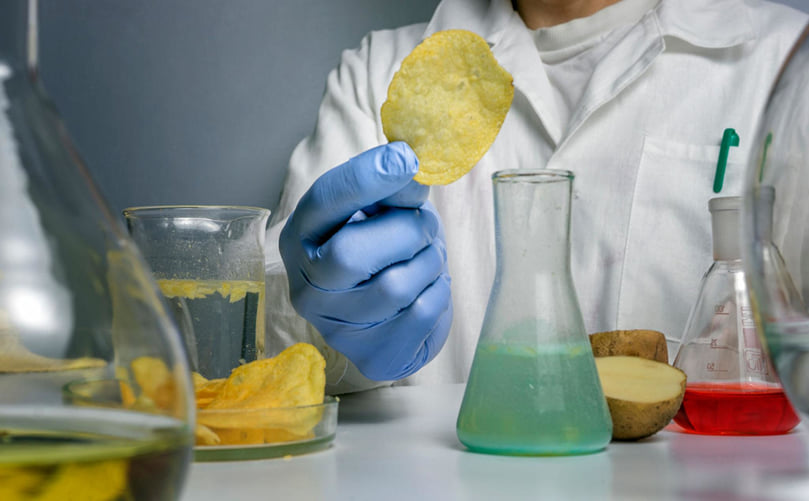
Quality Control in Baked Potato Chips Production
Utility and Infrastructure Requirements for a Turnkey Baked Potato Chips Production Line
Reliable utilities and properly planned infrastructure are essential for the successful operation of a turnkey baked potato chips production line. Before manufacturing begins, equipment suppliers prepare a detailed utility schedule covering electrical power, fuel, compressed air, water supply, ventilation, drainage and factory layout. Planning these requirements early allows the production facility to be completed before equipment installation, reducing commissioning time and avoiding costly modifications later.
Typical Utility Requirements: The exact utility demand depends on production capacity, oven configuration, heating method and the level of automation. The values below represent typical requirements for commercial baked potato chip production lines.
A 250 kg/h baked potato chips production line typically requires an installed electrical load of 100–130 kW, a gas consumption of approximately 25–30 kg/h of LPG (or the equivalent amount of natural gas) for gas fired ovens and a clean, dry compressed air supply of around 25–30 m³/h at 6–8 bar. A 500 kg/h production line generally requires 130–180 kW of installed electrical power, 45–60 kg/h of LPG (or equivalent natural gas) and 30–40 m³/h of compressed air at 6–8 bar. Actual utility requirements vary according to the oven design, production capacity, automation level and overall configuration of the production line.
Electrical Power: A three-phase industrial electrical supply is required to operate mixers, sheeters, forming machines, conveyors, baking ovens, seasoning equipment, packaging systems and process controls. Standard voltages are supplied according to local electrical standards, such as 380–415 V, 50 Hz or 460–480 V, 60 Hz. Most modern production lines use Variable Frequency Drives (VFDs) to improve motor control, reduce energy consumption and provide smoother operation during production. Backup power is often recommended in regions where power interruptions are common.
Heating System: The baking oven accounts for the largest share of energy consumption in the production line. Depending on local fuel availability and operating costs, ovens may be heated by natural gas, LPG or electricity. Many commercial tunnel ovens use modular heating zones, allowing operators to adjust baking conditions for different products. Some manufacturers also incorporate heat recovery and improved insulation to reduce overall energy consumption.
Compressed Air: Compressed air is required for pneumatic cylinders, control valves, product diverters and automated packaging equipment. Food-grade production requires clean, dry and oil free compressed air, particularly where air may come into contact with packaging materials or finished products.
Water Supply and Drainage: Water is used during dough preparation to hydrate potato flakes or granules and achieve the required dough consistency. Additional water is required for routine equipment cleaning and sanitation. An adequate drainage system should be provided to remove wash water efficiently and maintain hygienic production conditions.
Ventilation and Building Requirements: Continuous baking generates heat and moisture that must be removed through an effective ventilation and exhaust system. Production buildings should provide sufficient floor space and ceiling height for processing equipment, ovens, conveyors and utility services. Hygienic flooring, proper lighting and adequate maintenance access should also be considered during plant design to support efficient operation and food safety.
Supporting Infrastructure: In addition to processing equipment, manufacturers should provide suitable areas for raw material storage, packaging materials, finished goods, quality control, spare parts and maintenance activities. Proper warehouse planning helps maintain ingredient quality, improves inventory management and supports uninterrupted production.
Utility Planning During Project Engineering: As part of a turnkey project, equipment suppliers normally provide utility load schedules, piping and electrical connection drawings and installation requirements before equipment is manufactured. This allows civil contractors and utility providers to prepare the site while the production line is being built, reducing installation time and helping the project remain on schedule.
Careful utility planning is just as important as selecting the production equipment itself. A factory with properly designed electrical, fuel, water, compressed air and ventilation systems provide the foundation for reliable operation, consistent product quality and efficient long-term production.
Advantages of a Turnkey Baked Potato Chips Production Line
A turnkey baked potato chips production line offers several operational and commercial advantages compared with conventional batch processing or manually integrated production systems.
Healthier Product Profile: Baked potato chips contain substantially less oil than traditional fried potato chips because the product is baked rather than immersed in hot oil. This makes baked chips attractive to consumers looking for lower fat snack options and supports the growing demand for healthier snack products.
Improved Production Efficiency: Automated ingredient handling, forming, baking, seasoning and packaging reduce manual handling throughout the production process. As a result, manufacturers can operate the line with fewer operators than would typically be required for semi-automatic or batch-based systems.
Consistent Product Quality: Continuous processing helps maintain stable operating conditions, resulting in more uniform chip size, colour, texture and seasoning distribution. Better process control also helps reduce product variation and raw material losses.
Better Energy Management: Modern tunnel ovens are designed with improved insulation and controlled heating systems, which can reduce energy consumption compared with older baking technologies. Precise control of temperature and airflow also improves baking efficiency.
Faster Project Implementation: Because a turnkey project is supplied by a single company, equipment design, installation, commissioning and technical support are coordinated through one supplier. This usually simplifies project management and can reduce the time required to bring a new production line into commercial operation.
Cleaner Production Environment: Baked chip production involves much less oil handling than conventional frying operations. Lower oil usage reduces oil storage requirements, minimizes cleaning effort around the production line and helps maintain a cleaner working environment.
Easier Expansion and Product Changes: Turnkey lines are generally designed with a modular structure, allowing manufacturers to introduce new flavours, change chip shapes or add additional production and packaging equipment as market demand grows. This flexibility is valuable for companies planning to expand their product range over time.
Overall, a turnkey baked potato chips production line provides a combination of lower oil usage, improved process control, operational efficiency and future scalability, making it an attractive option for both new snack manufacturers and established food processors entering the baked snack market.
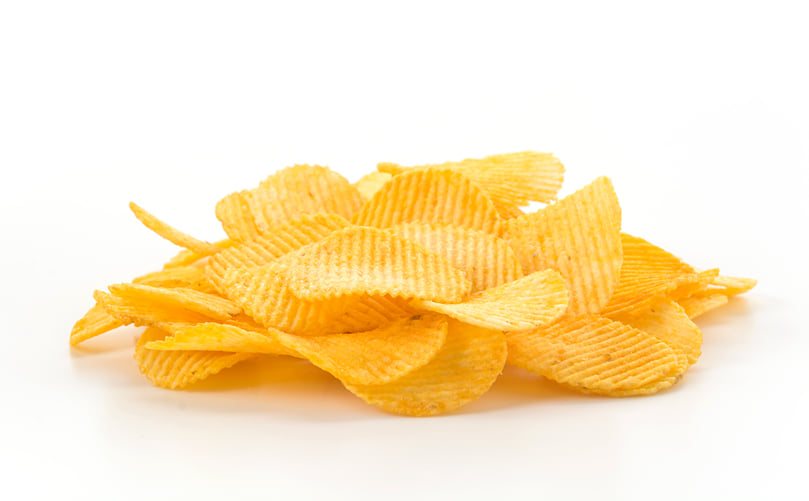
Healthy Baked Potato Chips with Low Oil Content
Applications of a Turnkey Baked Potato Chips Production Line
Turnkey baked potato chips production lines are used across the snack food industry to manufacture fabricated baked potato chips from potato flakes, potato granules, potato starch and other functional ingredients. Their flexibility allows manufacturers to produce a wide range of products while adapting to different consumer preferences, production capacities and market requirements.
Healthy and Better-for-You Snacks: As consumers become more conscious of fat, calorie and ingredient content, many snack manufacturers have expanded their portfolios to include baked potato chips. Because these products are baked instead of deep fried, they generally contain less oil than conventional potato chips, making them suitable for companies targeting the growing market for healthier snack options.
Premium and Value-Added Products: Turnkey production lines allow manufacturers to produce baked potato chips in different shapes, textures and flavours. This flexibility supports the development of premium snack brands, regional flavour varieties, limited edition products and value-added product ranges that differentiate themselves in competitive retail markets.
Private Label and Contract Manufacturing: Many food processors use turnkey production lines to manufacture baked potato chips for supermarkets, retailers, wholesalers and international food brands under private-label agreements. Automated production and consistent product quality make these systems well suited to large-scale contract manufacturing.
Product Diversification: Manufacturers already producing fried potato chips, extruded snacks, crackers, biscuits or other savoury snacks often invest in baked potato chip production to broaden their product portfolio. Since many processing, seasoning and packaging technologies are similar, integrating baked products into an existing snack factory can be an efficient way to expand production.
Export-Oriented Manufacturing: Turnkey production lines are widely used by companies supplying both domestic and international markets. With appropriate quality management systems, packaging technologies and food safety standards, baked potato chips can be manufactured to meet the requirements of export markets in Europe, North America, the Middle East, Asia-Pacific, Latin America and Africa.
Continuous Year-Round Production: One of the major advantages of fabricated baked potato chips is that production is not dependent on the seasonal availability of fresh processing potatoes. Instead, manufacturers use shelf-stable ingredients such as potato flakes, potato granules and potato starch, allowing production to continue throughout the year with more consistent raw material quality and fewer seasonal supply challenges.
New Food Processing Facilities: Turnkey production lines are also chosen by entrepreneurs and food companies establishing new snack manufacturing plants. Because a single supplier is responsible for equipment design, installation, commissioning and technical support, the overall project is easier to manage and production can begin more quickly than when equipment is sourced from multiple vendors.
The combination of production flexibility, consistent product quality and year-round manufacturing capability has made turnkey baked potato chips production lines an attractive investment for snack food manufacturers worldwide. As demand for baked and better-for-you snacks continues to grow, these production systems are expected to play an increasingly important role in both established and emerging snack markets.
Factors to Consider Before Investing in a Turnkey Baked Potato Chips Production Line
Investing in a turnkey baked potato chips production line involves much more than selecting equipment. The long-term success of the project depends on matching the production line to market demand, raw material availability, operating costs, factory infrastructure and the supplier's technical capabilities. A thorough feasibility assessment before purchase helps reduce investment risks and ensures the production line can operate efficiently throughout its service life.
Production Capacity and Market Demand: Production capacity should be based on realistic sales forecasts rather than maximum equipment output. While larger production lines offer economies of scale, they also require higher capital investment and greater operating costs. Many manufacturers choose a modular production line that can be expanded as demand increases, avoiding unnecessary investment during the early stages of the business. Turnkey suppliers typically offer systems ranging from 100 kg/h to more than 1,000 kg/h, allowing manufacturers to select a capacity that matches their production objectives.
Raw Material Availability: A reliable supply of potato flakes, potato granules, potato starch, vegetable oil, seasonings and packaging materials is essential for maintaining consistent production. Ingredient quality directly influences dough handling, baking performance, product texture and flavour. Manufacturers should evaluate supplier reliability, seasonal availability, transportation costs and long-term pricing before establishing a production facility.
Utility Availability and Energy Costs: Energy is one of the largest operating expenses in baked potato chip production. The choice between natural gas, LPG or electric heating depends on local energy prices, fuel availability and environmental regulations. Manufacturers should also assess the reliability of electricity, compressed air, water supply and ventilation systems, as interruptions can reduce production efficiency and increase operating costs.
Factory Infrastructure: Before purchasing equipment, manufacturers should confirm that the production facility can accommodate the planned processing line. Floor space, ceiling height, structural capacity, ventilation, drainage, utility connections and access for equipment installation all influence project implementation. Planning for future production expansion during the initial design stage can reduce modification costs later.
Food Safety and Regulatory Requirements: The production line should be capable of meeting the food safety and regulatory requirements of the intended market. Depending on where the finished products will be sold, manufacturers may need to implement food safety systems such as HACCP, ISO 22000, BRCGS or IFS Food, in addition to complying with national food regulations and customer-specific requirements.
Total Investment: The equipment purchase price represents only part of the total investment. A realistic project budget should also include shipping, customs duties, civil works, utility installation, commissioning, operator training, spare parts and working capital. Depending on production capacity, automation level and equipment configuration, a fully automated turnkey baked potato chips production line generally requires an investment ranging from several hundred thousand to several million US dollars.
Supplier Experience and Technical Support: Choosing an experienced supplier is as important as selecting the equipment itself. Manufacturers should evaluate the supplier's experience with similar projects, engineering capability, equipment reliability, availability of spare parts, response time for technical support and the quality of operator training and after-sales service. Visiting existing customer installations can also provide valuable insight into long-term equipment performance.
Total Cost of Ownership: Investment decisions should be based on the total cost of ownership, not simply the initial purchase price. Energy consumption, maintenance requirements, labour costs, spare parts availability, equipment reliability and production efficiency all influence operating costs over the life of the production line. A system with a higher purchase price may provide a lower overall cost of production if it delivers better energy efficiency, higher uptime and reduced maintenance requirements.
After-Sales Support and Technical Services for a Turnkey Baked Potato Chips Production Line
The relationship with the equipment supplier does not end when the production line is commissioned. Reliable after sales support is essential for maintaining production efficiency, minimizing downtime and ensuring the equipment continues to perform as expected throughout its service life. Most reputable turnkey suppliers offer a comprehensive service package that extends well beyond installation.
Installation and Commissioning: After the equipment is delivered, the supplier's engineers supervise or carry out mechanical installation, electrical integration and system commissioning. Trial production is conducted using the customer's raw materials to verify product quality, production capacity and process performance before the line is handed over for commercial operation.
Operator and Maintenance Training: Training is typically provided during commissioning to ensure operators and maintenance personnel understand equipment operation, process control, cleaning procedures, preventive maintenance, product changeovers and basic troubleshooting. The duration of training depends on the complexity of the production line and the experience of the operating team.
Process Optimization: Many suppliers continue to support customers after startup by assisting with recipe optimization, process adjustments and production trials. Fine-tuning operating parameters during the early stages of production helps improve product consistency, production efficiency and overall line performance.
Technical Support and Spare Parts: Most turnkey suppliers provide remote technical support to help diagnose operational issues and reduce production downtime. They also maintain inventories of commonly used spare parts and wear components, allowing replacements to be supplied quickly when required. For major issues, on-site technical assistance is usually available.
Warranty and Long-Term Service: Warranty terms vary between equipment manufacturers and project contracts, but most suppliers provide warranty coverage against manufacturing defects together with technical assistance during the warranty period. Many also offer preventive maintenance programs, annual service agreements, equipment upgrades, automation improvements and long-term technical support to help extend the operating life of the production line.
Global Service Network: For international projects, suppliers with an established global service network can provide faster technical assistance, local service partners, spare parts distribution and remote support. Evaluating a supplier's service capabilities, response time and experience with similar installations is an important part of selecting a turnkey production line.
Reliable after-sales support helps manufacturers maintain stable production, reduce unexpected downtime and maximize the long-term value of their investment. For many food processors, the quality of technical support and service is just as important as the performance of the production line itself.
Sustainability Features of a Turnkey Baked Potato Chips Production Line
Sustainability is becoming an increasingly important consideration for snack food manufacturers. Rising energy costs, stricter environmental regulations and growing consumer demand for responsibly produced food are encouraging processors to invest in production technologies that use resources more efficiently. Modern turnkey baked potato chips production lines incorporate several design features that help improve energy efficiency, reduce waste and support more sustainable manufacturing practices.
Lower Oil Consumption: One of the main advantages of baked potato chips is their significantly lower oil requirement compared with conventional fried potato chips. Because the chips are baked rather than immersed in hot oil, only a small amount of oil may be applied after baking, primarily to improve flavour and help seasonings adhere to the product. Lower oil consumption reduces the amount of edible oil purchased, stored, handled and eventually discarded.
Energy Efficient Baking: Modern baking ovens are designed to deliver consistent heat while making efficient use of energy. Features such as insulated oven chambers, controlled airflow and independently adjustable baking zones help optimize heat transfer and reduce unnecessary energy losses. Some manufacturers also offer heat recovery systems that capture waste heat and reuse it within the process, improving overall thermal efficiency.
Efficient Raw Material Utilization: During chip forming, the dough remaining between the cut chip shapes is automatically collected and returned to the dough preparation system. This continuous recycling process reduces raw material losses and improves production efficiency without interrupting the manufacturing process.
Reduced Product Waste: Automated process control helps maintain stable operating conditions throughout mixing, forming, baking, seasoning and packaging. Better control of critical processing parameters reduces product variation and minimizes the number of chips that are rejected because of defects or inconsistent quality.
Hygienic Equipment Design: Equipment is manufactured with hygienic design principles that make cleaning faster and more effective. Food-contact surfaces are typically constructed from food grade stainless steel, while smooth surfaces and accessible machine designs simplify routine sanitation. Efficient cleaning practices can reduce water use, cleaning time and chemical consumption over the life of the equipment.
Shelf Life and Packaging Efficiency: Consistent baking and controlled cooling help produce chips with stable moisture levels and the crisp texture expected by consumers. Where required, packaging systems equipped with nitrogen flushing help reduce oxidation, preserve flavour and maintain product quality during storage and distribution. This can contribute to lower product losses throughout the supply chain.
Supporting Environmental Goals: The overall environmental performance of a baked potato chips production line depends on factors such as the energy source, equipment efficiency, factory operations and packaging materials. By reducing oil consumption, improving energy efficiency, minimizing raw material waste and optimizing production processes, modern turnkey systems can help manufacturers lower resource consumption and support their broader sustainability objectives.
Return on Investment (ROI) of a Turnkey Baked Potato Chips Production Line
A turnkey baked potato chips production line represents a significant capital investment, making return on investment (ROI) an important factor during project evaluation. The time required to recover the investment varies from one business to another and depends on production efficiency, capacity utilization, operating costs and market demand. Well-managed facilities operating at high utilization with established sales channels generally achieve a faster payback than newly established operations or plants running below their designed capacity.
Production Capacity Utilization: The profitability of a production line depends largely on how efficiently it is used. Operating closer to the designed production capacity spreads fixed costs over a larger production volume, improving overall manufacturing economics and reducing the cost per kilogram of finished product.
Product Value and Market Position: Baked potato chips are often positioned as a premium snack because of their lower oil content and healthier image compared with conventional fried chips. In many markets, this allows manufacturers to achieve higher selling prices, although the actual price depends on brand strength, product quality, distribution channels and consumer demand.
Operating Costs: Raw materials, energy, labour, packaging, maintenance and transportation are the main factors influencing production costs. Efficient equipment, stable production processes and good maintenance practices help reduce operating expenses over the life of the production line.
Raw Material Costs: The cost and availability of potato flakes, potato granules, potato starch, vegetable oil, seasonings and packaging materials have a direct impact on production costs and profitability. Securing reliable suppliers and maintaining consistent raw material quality are important for both product quality and financial performance.
Sales Volume: A production line reaches its full economic potential only when supported by consistent market demand. Manufacturers should evaluate customer demand, distribution capacity and production planning before investing in larger capacity equipment to avoid underutilizing the production line.
Evaluating Total Cost of Ownership: Investment decisions should not be based solely on the purchase price of the equipment. The total cost of ownership includes installation, utilities, maintenance, spare parts, labour, energy consumption and operating efficiency throughout the equipment's service life. Considering these factors provides a more realistic assessment of long-term profitability.
Financial Planning: Most turnkey equipment suppliers can prepare customized financial estimates based on the manufacturer's planned production capacity, raw material costs, utility prices, labour rates and expected selling prices. These project specific evaluations provide a more reliable indication of potential profitability than general industry averages.
While payback periods vary considerably between projects, a well-planned production line supported by reliable raw material supplies, efficient operations and strong market demand has the potential to deliver an attractive long-term return on investment. Actual financial performance should always be evaluated using project specific technical and economic data rather than generic ROI estimates.
Why Choose a Professional Turnkey Baked Potato Chips Production Line Supplier?
Selecting the right turnkey supplier is as important as choosing the production line itself. A reliable supplier not only provides the equipment but also brings process expertise, engineering support, installation experience and long-term technical assistance. Managing the project through a single supplier helps ensure that all processing, baking, seasoning, automation and packaging systems are designed to operate together, reducing integration issues and simplifying project management. Industry leading suppliers typically include factory layout design, equipment manufacturing, installation, commissioning, operator training, recipe development and after-sales support as part of their turnkey solutions.
Proven Technical Expertise: Manufacturers with experience in baked snack processing understand the technical requirements of dough preparation, sheeting, forming, baking, seasoning, cooling and packaging. Their knowledge helps optimize production efficiency, maintain product consistency and reduce the time required to achieve stable commercial production. Many suppliers also assist with process optimization and product trials before full-scale production begins.
Complete Project Management: A professional turnkey supplier coordinates every stage of the project from engineering and equipment manufacturing to installation and startup. Factory Acceptance Testing (FAT) is commonly carried out before shipment to verify equipment performance, while Site Acceptance Testing (SAT) and commissioning ensure the production line operates as expected after installation. This coordinated approach reduces project delays and minimizes compatibility issues between individual machines.
Reliable Technical Support: Technical support continues after the production line enters commercial operation. Most established suppliers provide operator training, maintenance guidance, spare parts support, remote diagnostics and on-site service when required. Access to experienced technical teams helps reduce downtime and supports consistent long-term production performance.
Equipment Quality and Food Safety: Commercial baked potato chips production lines are typically constructed using food grade stainless steel in product contact areas and are designed to support hygienic manufacturing practices. When selecting a supplier, manufacturers should also evaluate compliance with applicable machinery and food safety requirements, together with the quality of components, automation systems and documentation provided.
Experience with Similar Projects: A supplier's previous installations provide valuable evidence of their technical capability. Reviewing reference projects, visiting operating factories where possible and discussing similar installations can help manufacturers assess equipment performance, engineering quality and after sales service before making an investment decision.
Long-Term Partnership: A turnkey production line is a long-term investment that may operate for many years. Choosing a supplier with strong engineering capabilities, reliable technical support and the ability to provide future upgrades helps manufacturers adapt to changing production requirements, new product developments and market demand over time.
A professionally engineered turnkey baked potato chips production line provides manufacturers with a complete production solution supported by technical expertise throughout the project lifecycle. Careful evaluation of a supplier's engineering experience, project portfolio, technical support and service capability helps reduce implementation risks and establishes a solid foundation for reliable, efficient and sustainable baked potato chip production.