

Introduction: Microscopic Marauders in Potato Fields
Spider mites, particularly the two-spotted spider mite (Tetranychus urticae Koch) are insidious microscopic marauders in potato (Solanum tuberosum L.) fields, where their sap-feeding behavior inflicts subtle yet progressive damage on foliage and yield. These tiny arachnids, measuring only 0.3–0.5 mm, possess pear-shaped bodies that vary in color from light yellow or green to dark green, brown or even bright red, with two characteristic dark dorsal spots on the abdomen distinctive features visible under magnification.
Females, the primary colonizers, use their stylets to pierce mesophyll cells and extract cell contents while injecting enzymes that disrupt chloroplasts and alter hormonal balance. This results in chlorosis, stippling and eventually bronzing of leaves. Although often secondary pests compared to aphids or potato beetles, T. urticae populations can explode under hot, dry conditions (25–35°C, <50% relative humidity), reproducing rapidly each female capable of laying up to 100 eggs within 2–4 weeks leading to severe infestations within a short period.
Their preference for dusty environments, especially near roadsides or adjacent crops such as alfalfa, promotes early colonization. Outbreaks are frequently triggered by the indiscriminate use of broad-spectrum insecticides that eliminate natural predators like predatory mites (Phytoseiulus persimilis) and lacewings. Highly polyphagous, T. urticae infests over 1,100 plant species worldwide. In potato, infestations cause 20–80% yield losses through defoliation and stunted tuber development and may occasionally facilitate the spread of viruses such as Potato virus Y (PVY), though transmission efficiency remains low.
In regions such as Ethiopia’s Hararghe zone, drought stress intensifies crop susceptibility, making T. urticae a major pest of concern. This underscores the urgent need for vigilant monitoring and integrated pest management (IPM) strategies to protect potato production and ensure food security in the face of rising climatic challenges.
(Click picture to watch video)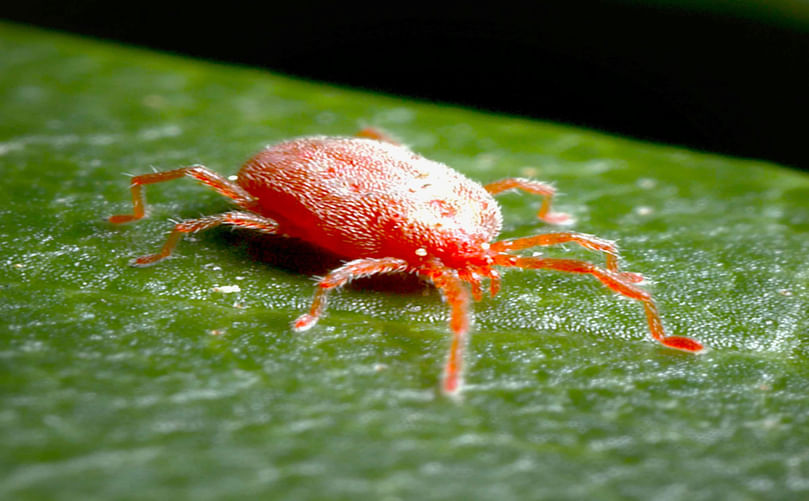
Complete life cycle of Mites
History: From Weeds to Widespread Potato Pest
The story of Tetranychus urticae as a potato pest began in the early 20th century, evolving from a minor weed-infesting species to a significant agricultural threat due to human-mediated dispersal and management practices. First described by Carl Ludwig Koch in 1836 on European nettles, T. urticae’s polyphagous nature spanning weeds, ornamentals and crops led to its documentation on potatoes in North America by the 1920s, coinciding with the crop’s expansion into arid western states such as Idaho and Washington.
Overwintering as diapausing females in soil litter or bark crevices, mites recolonized fields from nearby hosts. However, post-World War II intensification of potato monocultures and widespread organophosphate use inadvertently boosted populations by eliminating natural predators. By the 1950s–1960s, outbreaks devastated U.S. Pacific Northwest potato belts, with early studies (e.g., Orlob, 1968) investigating its potential role in PVY transmission, highlighting viral interactions.
The 1980s marked a pivotal escalation in Africa, where T. evansi a red variant from Brazil entered via the ornamental trade and rapidly adapted to tropical potatoes in regions such as Zimbabwe and South Africa, outcompeting T. urticae through parthenogenesis. In Ethiopia, T. urticae’s introduction to potatoes occurred around 2014–2015, coinciding with El Nino-induced droughts, causing up to 80% losses in Hararghe and spreading through infested transplants to neighboring areas.
Genomic studies since the 2010s reveal multiple invasion waves, with gene duplications conferring resistance to over 90 acaricides, fueling outbreaks in Europe (e.g., Spain’s tomato potato rotations) and Asia (India’s monsoon-prone hills). Cold-tolerance research (2018) demonstrates life-history shifts enhancing overwintering, while experimental evolution on hosts like beans underscores rapid adaptation to potato solanine defenses. Today, the historical legacies of globalization and climate variability sustain T. urticae as a resurgent threat, emphasizing the need for resilient integrated pest management strategies.
Global Distribution and Spread
Tetranychus urticae has a near-cosmopolitan distribution on potatoes, absent only from polar extremes like Antarctica. It thrives across temperate, subtropical, and tropical agroecosystems wherever potatoes are grown.
In the Americas, it is prominent in the U.S. Pacific Northwest (Washington, Oregon) and Midwest (Minnesota, Wisconsin), where dusty irrigation roads and rotations with mite-prone alfalfa drive annual invasions, infesting 20–50% of fields in dry years. South America’s Andean highlands (Peru, Bolivia) report sporadic outbreaks, while Brazil’s T. evansi variant has spread to potatoes via tomato trade.
Europe experiences hotspots in the Mediterranean (Spain, Italy) and greenhouse systems in the Netherlands, with gradual northward expansion into cooler areas like Germany under warming trends. In Asia, T. urticae is widespread: India’s Himalayan foothills and China’s Yangtze Basin see monsoon-driven surges, while Southeast Asia (Vietnam, Indonesia) contends with tropical strains.
In Africa, eastern Ethiopia’s Hararghe region has recorded 70–90% infestation rates since 2014, with spread extending to Kenya and Uganda via seed trade. Dispersal occurs through wind ballooning (up to 100 km), phoresy on aphids or machinery, and global commerce of infested transplants or soil. Clonal lineages dominate African invasions, while population genomics reveal multiple independent origins and convergent evolution of resistance alleles. Under projected climate scenarios, T. urticae’s range is expected to expand 20–30% by 2030.
Host Range and Cross-Infection Dynamics
Tetranychus urticae has an exceptionally broad host range, infesting over 1,275 species across more than 70 botanical families. Potatoes, while not the most preferred Solanaceae host, serve as an important target, with cross-infection sustaining populations across diverse agroecosystems. Primary solanaceous hosts include tomato, pepper, eggplant and tobacco, where shared volatiles facilitate host-seeking. Potato preference increases under plant stress, such as drought, which elevates sugar levels. Weeds like pigweed (Amaranthus spp.), lamb’s quarters (Chenopodium album) and nightshades (Solanum nigrum) harbor 10–50 times higher mite densities, acting as reservoirs and enabling spillover via wind or irrigation splash.
Cross-infection is influenced by biotype variation: the “green” form favors dicots like potatoes, while red strains (e.g., T. evansi) dominate tropical systems, transferring from tomatoes to potatoes with 80–90% efficiency in crop rotations. Heritable intraspecific differences modulate virulence; high-fecundity genotypes on beans adapt to potatoes through effector changes that suppress jasmonate defenses, improving fitness by 20–30%. Microbiota shifts, including Wolbachia endosymbionts, affect host acceptance, with potato-reared mites showing gut communities that enhance survival on related Solanaceae.
Virus interactions further complicate dynamics: T. urticae can non-persistently transmit PVY from infected weeds, and acquisition via aphids amplifies spread in polycultures. Experimental evolution studies demonstrate rapid host shifts, with potato-adapted lines outperforming ancestral populations on tomatoes by 15–25% in fecundity, driven by epigenetic modifications. In mixed cropping systems, proximity to cotton or beans increases potato infestation risk by 40–60%, highlighting the importance of rotation management to limit virulence evolution.
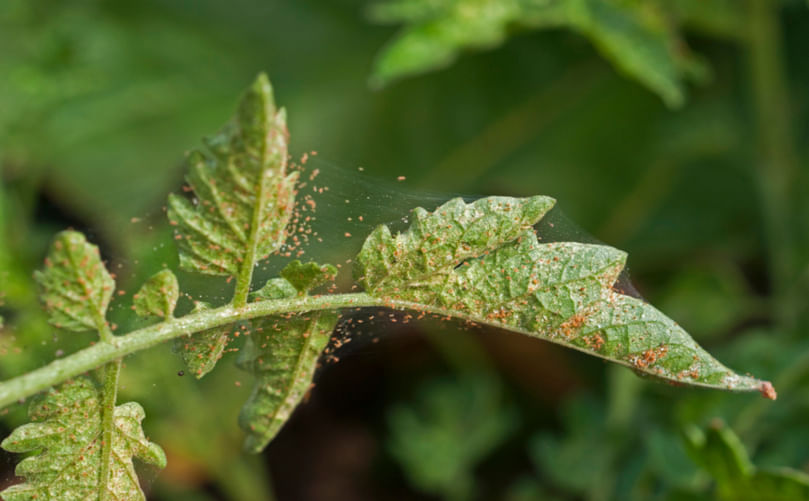
Illustration of spider mite infestation on host plants like tomatoes, showing potential cross-infection to potatoes and weeds.
Global Economic Burden and Quality Losses
Spider mites impose significant economic strain on global potato production, causing USD 100–600 million in annual losses through both direct yield reductions and indirect management costs. Smallholders in developing regions are disproportionately affected. Yield losses range from 20–50% in moderate outbreaks to 80–100% in severe epidemics, such as Ethiopian eastern Hararghe zone, where T. urticae reduces tuber formation by up to 8 tons per hectare. Globally, mites account for 31–40% of invertebrate-induced potato losses, contributing to the broader USD 470 billion annual crop damage from arthropods.
Quality degradation compounds these impacts. Infested tubers are smaller by 10–30%, have lower specific gravity affecting processing, and often show surface russeting or scarring from foliar stress. This results in 15–40% market downgrades for fresh and chip markets. In Europe and North America, outbreaks during the 2024–2025 seasons such as Germany’s heatwave events led to euros 50–100 million in lost value. In Asia and Africa, chronic infestations increase control costs by 10–20% due to scouting and repeated miticide applications. Trade disruptions from quarantines and resistant strains further escalate indirect costs. Among smallholders, these losses perpetuate poverty, as unmarketable produce forces reliance on low-value staples.
Biology, Life Cycle and Pathogenicity
Tetranychus urticae, the two-spotted spider mite, is a highly polyphagous arachnid with a haplodiploid sex determination system unfertilized eggs produce males, fertilized eggs produce females facilitating rapid adaptation through genetic diversity. Adults are 0.3–0.5 mm, pear-shaped (females oval, males tapered), pale green to reddish with two dorsal spots and possess four pairs of legs and chelicerae for piercing plant cells. On potatoes, mites preferentially colonize the abaxial leaf surface, forming colonies of 50–200 individuals aided by aggregation pheromones.
The life cycle includes five stages: egg (0.1 mm, translucent pearl, laid singly or in clusters of 5–20 along veins), larva (hexapod, feeding 1–2 days), protonymph and deutonymph (octopod, active feeders) and adult (reproductive phase). Under optimal potato conditions (25–30°C, 40–60% RH), development takes 7–10 days, producing 10–20 generations annually. Females lay 2–5 eggs/day for 2–4 weeks, totaling 80–120 offspring; males live 1–2 weeks.
Photoperiod regulates diapause: short days (<12 h light) induce orange diapausing females that overwinter in crop debris, resuming activity in spring. Dispersal occurs via crawling, phoresy on insects or aerial ballooning on silk threads.
Pathogenicity results from stylet insertion into mesophyll cells and injection of salivary effectors (e.g., tetranins), which manipulate host physiology. Effects include chloroplast disruption (chlorosis), ethylene induction for senescence, and suppression of jasmonate/ABA defenses while activating salicylic acid pathways, promoting mite proliferation. On potatoes, high mite densities (>50 mites/cm²) reduce photosynthesis by 20–40% per leaf and create wounds that increase susceptibility to pathogens. Potato secondary metabolites, such as solanine, can deter feeding, but resistant biotypes overcome this via detoxification enzymes.
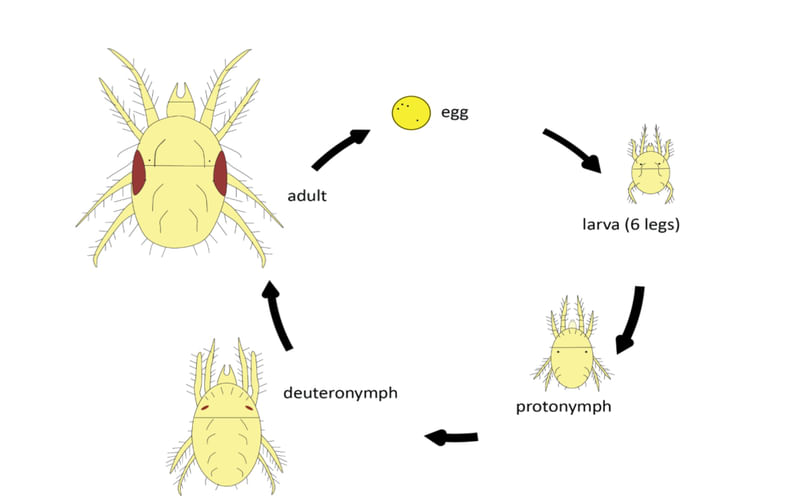
Life cycle diagram of spider mite, including eggs, larvae, nymphs and adults.
Factors Influencing Disease Severity
Spider mite damage on potatoes is shaped by a complex interplay of abiotic, biotic, and anthropogenic factors that affect population dynamics and plant susceptibility.
Abiotic Drivers: Hot, dry conditions (25–35°C, <50% RH) accelerate reproduction, increasing generations up to 20-fold, while low humidity reduces predator efficacy and promotes dispersal via silk-thread ballooning. Dusty roads or tillage double invasion rates by carrying mites into fields. Water-stressed plants emit volatiles that attract females, boosting oviposition 2–3 times and suppressing jasmonic acid-mediated defenses.
Biotic Interactions: Proximity to mite reservoirs such as alfalfa, corn, mint or wheat increases spillover, with field edges experiencing 40–60% higher densities. Nutrient imbalances, particularly excess nitrogen, favor lush foliage that encourages settling and webbing, while calcium or silicon deficiencies weaken cell walls, enhancing penetration. Co-infestations with aphids or whiteflies exacerbate severity by altering plant chemistry. Reduced natural enemies, often due to neonicotinoid residues, trigger “induced outbreaks,” where populations explode 10–100-fold post-application.
Anthropogenic Factors: Monocropping and intensive tillage disrupt predator habitats, while climate trends, such as prolonged heatwaves, have increased outbreaks by 20–30% in recent years. In Ethiopia’s Hararghe region, seasonal drought and temperatures above 30°C correlate with 50–80% field incidence, highlighting how environmental shifts intensify management challenges.
Symptoms and Damage
Spider mite infestations on potatoes often begin subtly but can escalate rapidly, primarily affecting foliage and indirectly reducing tuber development through diminished photosynthesis and plant vigor. Early symptoms appear as fine yellow or white stippling on upper leaf surfaces, caused by the mites piercing-sucking mouthparts extracting cell contents. These tiny spots (<1 mm) cluster along veins, initially on older leaves before spreading to younger foliage and terminals.
As mite populations grow (10–20 per leaf), stippling coalesces into bronze or reddish-brown patches, giving leaves a dusty, scorched appearance due to cell collapse and necrosis. Adults and nymphs produce fine silk webbing on leaf undersides and margins, which traps dust, worsens desiccation and can eventually enclose entire leaves or terminals.
Severe infestations (>50–100 mites/leaf) lead to leaf curling, distortion, premature drop and up to 50–70% defoliation, limiting carbohydrate translocation to tubers. Plants exhibit stunted growth, terminal yellowing, and overall vigor loss, which can mimic nutrient deficiencies or viral infections. Tubers become smaller and fewer, with scarred or russeted skins, lower starch content (10–20% reduction), and higher susceptibility to secondary rots. In extreme outbreaks, entire fields may suffer 30–100% yield loss.
Diagnostic tools include the "tap test" (shaking leaves over white paper to reveal moving mites) and microscopic examination for eggs (tiny pearls) or cast skins. Unlike aphids, mites do not produce honeydew, though sooty mold may develop on webbing.
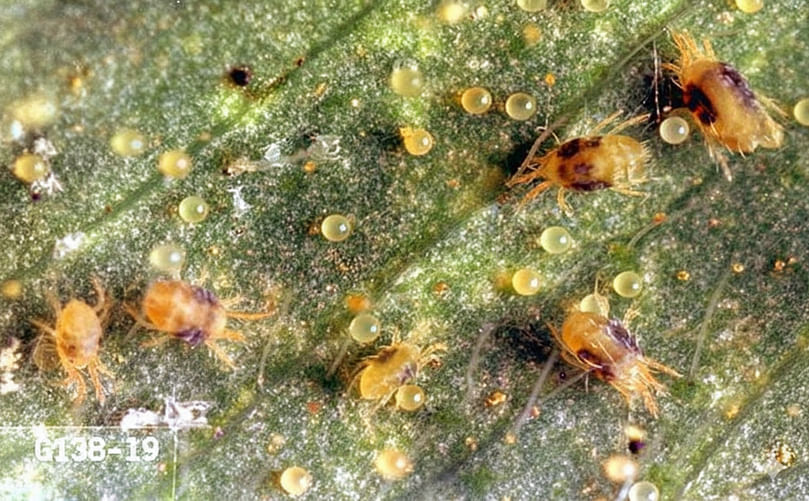
predatory mites attacking spider mites on potato leaves.
Management Strategies
Effective controlof spider mites on potatoes relies on an integrated pest management (IPM) approach that combines cultural, biological, chemical and monitoring tactics to keep populations below economic thresholds while minimizing resistance and non-target impacts.
Monitoring and Early Detection: Early scouting is essential. Inspect 10 leaves from 10 sites weekly, focusing on undersides, with action thresholds of 5–10 mites per leaf or 20% stippling. Diagnostic confirmation can be done via the “tap test” over white paper to detect moving mites.
Cultural Controls: Maintain adequate soil moisture (>60% RH) with drip irrigation, as dry soils (<50% RH) favor mite proliferation. Crop rotations of 2–3 years with non-hosts like cereals reduce overwintering sites. Reflective mulches repel crawlers by 30–50%, and windbreaks minimize dust-mediated dispersal. Avoid excessive nitrogen, which promotes mite reproduction, and use strategic planting schedules to bypass peak mite seasons.
Biological Controls: Specialist predatory mites, such as Phytoseiulus persimilis (2–5 per plant) or Neoseiulus californicus, can suppress 80–95% of populations within 1–2 weeks. Generalist predators lacewings (Chrysoperla spp.), lady beetles (Hippodamia convergens) and minute pirate bugs (Orius spp.) offer supplementary control. Entomopathogenic fungi (Beauveria bassiana, Metarhizium anisopliae) and nematodes (Steinernema feltiae) target eggs and immatures with 70–90% efficacy under moderate humidity. For organic systems, horticultural oils, insecticidal soaps or neem oil (1–2% solutions) effectively suffocate mites.
Chemical Controls: Use chemicals as a last resort, rotating IRAC mode of action groups to prevent resistance. Examples include Group 6 (abamectin, emamectin) for translaminar action, Group 23 (spiromesifen) for egg lipid synthesis disruption, Group 12C (etoxazole) for immatures and sulfur (Group UN) for broad-spectrum knockdown. Apply at first detection with thorough underside coverage (50–100 gal/acre), limiting 1–2 applications per season per group. Avoid pyrethroids or organophosphates, which flare populations by killing predators.
Resistant Varieties and Emerging Tools: Potato varieties with dense trichomes (e.g., Andean landraces) deter mite settling by 25–40% and can be integrated via breeding programs. Emerging strategies include RNA interference (RNAi) sprays targeting mite-specific genes and drone-applied biopesticides for precise coverage in large fields.
Prevention and Good Practices
Prevention focuses on excluding mites and promoting resilient agroecosystems, as early infestations are difficult to reverse. Use certified, mite-free seed tubers from reputable sources, inspected via quarantine protocols. Sanitize tools, equipment and greenhouses with 10% bleach or alcohol and rogue infested transplants before fielding. Post-harvest, destroy crop residues by deep plowing or flaming to eliminate overwintering diapausing females, reducing next-season inoculum by 70–90%.
Good practices emphasize habitat management. Implement drip irrigation to maintain soil moisture and foliar humidity while conserving water, avoid overhead irrigation except for brief high-pressure blasts that can dislodge 50–80% of mites on young plants. Plant border rows of mite-repellent crops (e.g., garlic, onions) or trap crops like alfalfa and use windbreaks (tall grasses) to limit dust-mediated invasions, which can increase spread 2–3 fold. Reflective mulches or kaolin clay barriers reduce mite settling by 40%.
Enhance biodiversity by intercropping with non-hosts (e.g., cereals) or cover crops that support natural predators, and schedule planting to avoid peak mite seasons (mid-summer in temperate zones). Store tubers at 4–10°C with ventilation to eliminate latent mites and maintain buffer zones (10–20 m) around high-risk neighboring crops like tomatoes. Regular monitoring with sticky traps or digital apps enables timely release of beneficial organisms, while record-keeping supports adaptive IPM. For organic systems, soil amendments like diatomaceous earth or silica increase plant toughness against initial attacks.
Future Threats to Crop Production
Climate change is expected to intensify spider mite pressures on potato production by creating hotter, drier conditions that accelerate reproduction and expand geographic ranges. Models project 2–3 additional generations per season and a 20–30% increase in outbreak frequency by 2030. In regions like the U.S. Midwest and Europe, northward range shifts could expose new potato belts, with incidence rising 15–25% under warming scenarios.
Erratic precipitation and extreme heatwaves (>35°C) stress plants, increasing susceptibility, while elevated temperatures enhance mite mobility and diapause survival. Genetic resistance in mites through sodium channel mutations (pyrethroid insensitivity) and detoxification enzymes already affects 95% of chemical classes, with recombination producing multi-resistant strains that circumvent barriers, including resistant varieties. Global trade of infested transplants further spreads these biotypes, as observed in recent African expansions of T. evansi.
Intensified tillage and disrupted soil microbiomes may weaken plant defenses, compounding projected losses of USD 200–600 million annually by mid-century. Emerging hybrid mites with broader host ranges could spill over from adjacent crops, and reduced predator efficacy under variable climates increases vulnerability in monoculture systems, underscoring the urgent need for resilient integrated pest management strategies.
Management Challenges
Controlling spider mites on potatoes is challenging due to their rapid life cycle (7–14 days) and cryptic habits on leaf undersides, which delay detection until populations surpass thresholds, often causing 20–40% yield losses before intervention. Broad-spectrum insecticides, such as pyrethroids, can trigger “induced” outbreaks by killing natural predators like Phytoseiulus persimilis, creating cycles of population resurgence that may take 2–4 weeks to stabilize and promoting resistance development.
Traditional chemicals are often ineffective: organophosphates target insects rather than mites, while other acaricides harm beneficials or face regulatory bans (e.g., EU neonicotinoids), restricting treatment rotations to 2–3 per season. Biological control agents struggle in hot, dry fields (<50% RH), where predator survival drops below 50% without humidity refuges.
Smallholders in developing regions face additional hurdles, lacking scouting tools (e.g., hand lenses) or access to predatory mites (USD 50–100/acre), resulting in over-reliance on ineffective sprays and chronic losses. Climate variability further complicates integrated pest management drought favors mites, while heavy rains wash off treatments and low economic thresholds for this secondary pest reduce proactive investment. Regulatory constraints, such as export residue limits, hinder novel tools like RNAi, while large field scales (>100 acres) challenge uniform coverage. Co-infections with aphids or viruses mask symptoms, complicating diagnosis and global trade circumvents quarantines, perpetuating invasions.
"Tiny though they are, spider mites can turn a thriving potato field into a desert of dust and webs proof that in agriculture, the smallest enemies often leave the biggest scars."