
Smart Potato Storage Bins: Revolutionizing Post-Harvest Preservation and Efficiency
Potato storage bins are specialized containers designed to hold harvested tubers in controlled environments, minimizing post-harvest losses that can reach 20–40% globally due to improper handling. These bins enable optimal preservation by maintaining precise temperature, humidity, airflow and gas balance, ensuring that tubers retain their nutritional quality and market value for 6–12 months. In modern potato storage systems, bins play a pivotal role in enabling scalable and automated operations, seamlessly integrating with ventilation and refrigeration systems to reduce energy costs by up to 50%.
Unlike traditional heap storage, where potatoes are piled on the ground or in simple pits leading to higher bruising and spoilage rates of 20–30% bin-based systems offer structured stacking, enhanced hygiene and uniform environmental control. Heap storage remains cost-effective for smallholders but is prone to uneven airflow and pest infestation, while bins ensure consistent conditions and easier monitoring.
The importance of storage bins lies in their ability to maintain tuber quality by preventing sprouting, rot and weight loss, with advanced designs now supporting sensor-based analytics for predictive maintenance. They also enable automation in loading and unloading, reducing labor requirements by up to 50% and improving ROI through minimized losses. Overall, storage bins align with sustainability goals, using recyclable materials to lower environmental impact while boosting economic feasibility in major producing regions such as India, the Netherlands and the USA.
Recent innovations in smart bins are transforming conventional storage into intelligent, data-driven systems capable of real-time monitoring and adaptive control.
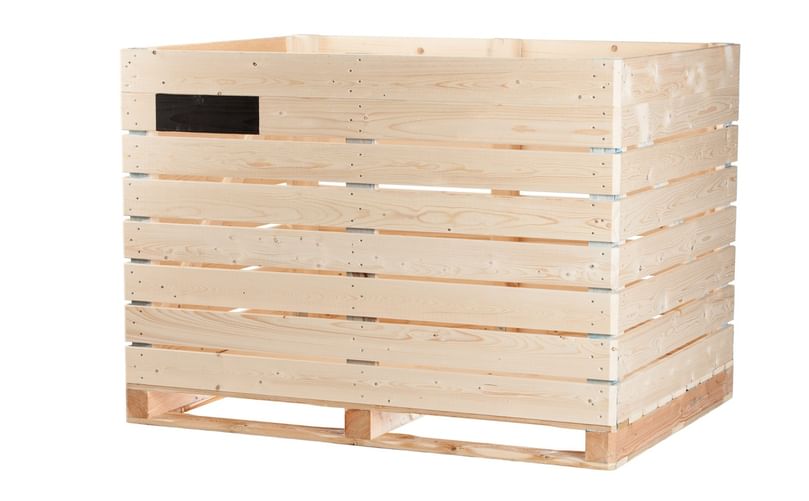
Modern Smart Potato Storage Bin
Revolutionary Potato Storage Bins: The Smart Solution Transforming Global Post-Harvest Management
Potato storage bins are purpose-built containers designed to create controlled microenvironments for harvested tubers, maintaining ideal conditions such as 4–13°C temperature and 90–98% relative humidity to extend shelf life and preserve quality. They form the backbone of modern storage systems, integrating with IoT sensors for real-time monitoring and helping reduce storage losses to below 5% in well-managed large-scale facilities.
In contrast, traditional heap storage involves piling potatoes directly on floors or open platforms, which results in pressure bruising, uneven ventilation and higher spoilage. Storage bins overcome these limitations by enabling structured stacking often up to eight layers high while providing uniform airflow and reduced pressure load.
Bins also support modular storage, allowing segregation of varieties, better disease control and improved traceability. Their design enhances operational efficiency by enabling automation; modern facilities use AGVs (Automated Guided Vehicles) for bin movement, cutting labor costs by nearly 40%.
The importance of storage bins lies in their ability to maintain tuber quality, with hygienic and well-ventilated designs reducing rot incidence by up to 50%. Advanced smart-bin systems equipped with analytics can predict issues such as pressure bruising or localized heating, improving sustainability and decision-making.
Globally, potato storage bins serve diverse supply chains, adapting to regional innovations such as solar-integrated systems in India. By minimizing waste and preserving marketable quality, bin-based storage delivers a 10–15% higher ROI in an industry valued at over USD 120 billion.
Design and Structure of Storage Bins
Potato storage bin design centers on durability, airflow efficiency and load-bearing capacity, with material choice significantly influencing longevity, hygiene and cost. Wooden bins, traditionally made from pine or cedar, offer natural breathability and lower upfront costs but are more vulnerable to moisture and decay, typically lasting 5–10 years. Metal bins, constructed from galvanized steel or aluminum, provide superior durability, corrosion resistance and easy sanitation, supporting heavy loads of up to 2 tons with minimal deformation. Plastic and composite bins are lightweight, modular and resistant to corrosion, making them ideal for mobile storage systems while supporting sustainability goals through recyclability.
Standard bin dimensions include 1.2 × 1.2 × 1.2 m for small units and 2 × 1.5 × 1.5 m for industrial-scale storage, with capacities ranging from 1–2 tons depending on the material and reinforcement. Structural strength is enhanced with corner posts, thickened walls and cross-bracing, enabling bins to withstand internal pressure loads typically around 11.5 Pa at a depth of 1.22 m. Many modern bins are designed to be stackable up to eight units high, with precise alignment features to maintain airflow channels, while fixed bins are preferred for large-volume bulk storage.
Key structural features include slatted sidewalls, bottom vents with around 15% open area and engineered safety margins to prevent collapse or deformation under pressure. Recent advancements in bin design incorporate composite reinforcements that reduce weight while offering better insulation and improved airflow performance.
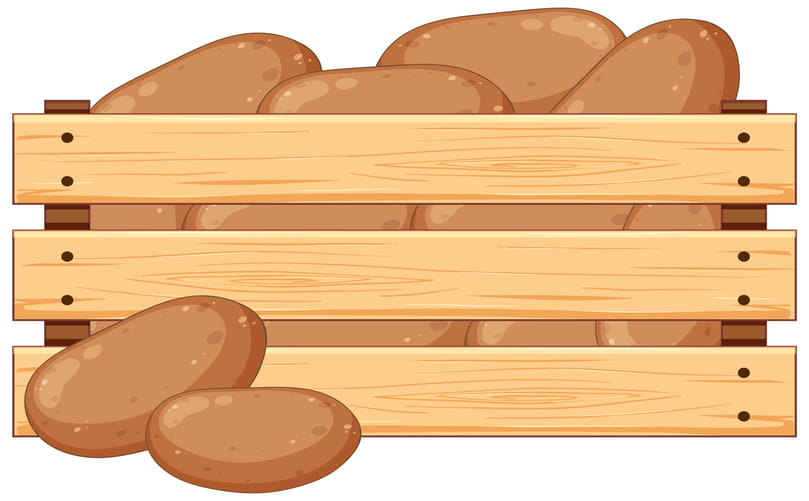
Structural Design and Airflow Features of Potato Storage Bins
Airflow and Ventilation Integration
Airflow in potato storage bins is critical for maintaining uniform environmental conditions, ensuring consistent drying, cooling and respiration management across all stacked units. Efficient design includes duct channels spaced at ≤8 feet, delivering airflow rates of 0.02–0.04 m³/s per tonne, which are essential for preventing localized heat buildup. Floor structures feature perforated or slatted bases with 10–20% open area to enable under-pile ventilation, reducing hotspots and improving air penetration.
Ventilation systems may operate through cross-ventilation, which pushes air uniformly through the bin stack for effective drying, or suction systems, which gently pull air through the bins especially beneficial in box-type installations to minimize dust movement. Integration with either centralized high-capacity fans or individual bin fans ensures 10–20 air changes per hour, helping control heat load and regulate CO₂ levels generated by tuber respiration.
This airflow balance stabilizes temperature and humidity, preventing condensation, sprout initiation and disease development. Modern systems use VFD-controlled fans to optimize airflow rates, cutting energy consumption by 30–50%. Sensor-based analytics automatically adjust airflow based on real-time temperature, humidity and CO₂ readings, extending dormancy and improving storage consistency. Sustainable ventilation strategies such as recirculation loops further reduce fan runtime by up to 35% while maintaining required airflow thresholds.
Overall, well-integrated ventilation reduces storage losses by up to 25%, ensuring high-quality tuber preservation throughout long-term storage periods.
Temperature and Humidity Management
Effective temperature and humidity management in potato storage bins is essential for maintaining tuber quality and preventing physiological disorders. High-performance insulation, typically R-20 or higher, minimizes temperature gradients and maintains ±0.5°C uniformity across stacked bins. Optimized airflow patterns blend cooled air evenly, preventing cold spots and avoiding chilling injuries such as blackheart.
Advanced sensors continuously monitor temperature and humidity gradients, triggering real-time adjustments to maintain 90–98% relative humidity, which is crucial for minimizing shrinkage and weight loss. Integration with refrigeration units and humidification systems supports gradual cooling at 1–2°C per day, aiding proper curing and reducing stress on tubers.
Proper temperature and humidity control suppresses sprouting, rot and pressure bruising, allowing potatoes to be stored safely for up to 12 months. IoT-based platforms log environmental data and enable predictive control strategies, reducing energy use by around 20% through optimized system cycling.
Humidity management often uses evaporative pads to supply moisture without causing condensation, helping maintain fry color and preventing sugar buildup associated with low humidity. Modern analytics systems can forecast environmental anomalies, enabling proactive interventions and improving storage efficiency. Sustainable designs increasingly incorporate phase change materials (PCMs) to buffer temperature fluctuations and reduce refrigeration load.
Loading and Unloading Mechanisms
Efficient loading and unloading mechanisms are essential for preserving tuber quality and optimizing workflow in potato storage facilities. For small-scale operations, manual loading using hoppers or small conveyors is common, but it is labor-intensive and increases the risk of handling damage. In contrast, automated loading systems equipped with high-capacity conveyors can handle 50–100 tons per hour, ensuring rapid throughput while keeping mechanical damage extremely low.
Gentle-handling elevators are widely used to lift potatoes to bin height without impact, reducing bruising rates to below 1%. These elevators typically include soft belts, low drop heights and cushioned contact surfaces. During unloading, bin tippers, hydraulic tilters and controlled discharge gates enable smooth and uniform emptying of bins. These systems integrate directly with sorting, grading and washing lines, creating a seamless post-harvest workflow.
Automation plays a key role in reducing tuber stress. AGVs (Automated Guided Vehicles) transport bins across the facility with precision, eliminating forklift impacts and manual handling errors. In bulk-loading configurations, conveyor systems are designed to fill bins evenly, preventing the formation of potato cones that restrict airflow and create hotspots.
Large industrial facilities increasingly deploy robotic stacking arms or automated palletizing systems capable of stacking bins safely and efficiently, boosting operational throughput by up to 40%. Safety and quality features such as padded contact surfaces, reduced drop heights and soft-start conveyor motors help protect tubers during every stage of movement.
Recent innovations include guided loading technology that uses cameras and sensors to optimize bin fill density, improving airflow uniformity and maximizing storage capacity. By reducing manual labor requirements by up to 50%, advanced loading and unloading systems significantly improve ROI while ensuring consistent product quality.
Materials and Hygiene Management
Effective materials and hygiene management is crucial for preventing contamination, controlling diseases and preserving potato quality throughout the storage cycle. Many modern bins use food-grade epoxy or polymer coatings on internal surfaces to prevent fungal growth, reduce moisture absorption and ensure compliance with export-grade hygiene standards. Metal bins, particularly those made from galvanized steel or aluminum, offer superior sanitation due to their smooth, non-porous surfaces, making them easier to clean and disinfect compared to wood.
Comprehensive cleaning protocols are essential between storage cycles. Facilities typically use a combination of steam cleaning, high-pressure water jets and approved disinfectants to remove soil, debris and microbial residues. Sloped floors and integrated drainage channels in bin designs allow efficient water runoff, significantly lowering the risk of pathogen buildup. Routine maintenance also includes vacuuming dust from vents and airflow channels, as accumulated dust can harbor spores and restrict ventilation.
Proper hygiene practices can reduce rot incidence by up to 50%, directly improving marketable yield. Regular sanitation schedules and proper handling procedures also support compliance with globally recognized certifications such as GlobalG.A.P., HACCP and export phytosanitary standards.
Recent innovations include antimicrobial surface coatings and UV-assisted sanitation systems, which enhance sustainability by reducing the need for chemical disinfectants. By combining durable materials with strict hygiene management, storage bins can achieve a service life of 15–20 years, offering long-term economic and operational benefits.
Automation and Monitoring Features
Modern potato storage bins are increasingly equipped with IoT-based automation and monitoring systems that enhance precision, reduce labor and protect tuber quality. These smart bins utilize integrated sensors to track temperature, humidity, CO₂ and O₂ levels, sending real-time alerts often via SMS or app notifications whenever values deviate from safe thresholds. Advanced monitoring also includes trace gas analysis, enabling early spoilage detection before visible symptoms appear, significantly reducing post-harvest losses.
RFID tagging and barcode systems allow full traceability, ensuring each bin’s movement and contents can be recorded from farm to fork. In large facilities, data streams from all bins integrate with SCADA (Supervisory Control and Data Acquisition) platforms, enabling centralized control, automated adjustments to ventilation or refrigeration and coordinated system-wide responses.
Automation reduces manual intervention by up to 50%, streamlining loading, unloading, and bin movement through AGVs and robotic systems. Predictive analytics, powered by machine learning, can forecast potential storage issues such as hot spots, CO₂ spikes or sprouting trends up to 7 days in advance, allowing proactive management. Monitoring platforms also maintain detailed data logs for auditing, certification and sustainability reporting.
For enhanced transparency, many systems now incorporate blockchain technology to provide a tamper-proof record of storage conditions, supporting premium markets and food safety compliance. Cloud dashboards enable remote oversight, allowing managers to monitor entire facilities from any location.
Together, these automation and monitoring features improve overall facility efficiency, delivering a 15–25% increase in ROI through reduced labor costs, lower energy consumption and enhanced quality preservation.
Energy Efficiency and Sustainability
Energy efficiency and sustainability are becoming key priorities in modern potato storage bin systems. Optimized bin design enhances airflow pathways, allowing VFD-controlled fans to operate at lower speeds without compromising ventilation, cutting energy consumption by around 30%. The use of recyclable materials, such as high-strength composites and food-grade plastics, further reduces environmental impact while improving insulation and durability.
In many APAC regions, solar-assisted ventilation and cooling systems are increasingly adopted, lowering carbon emissions by up to 25% and reducing dependency on grid electricity. Incorporating phase change materials (PCMs) inside storage structures provides passive thermal buffering, delivering up to 35% fan runtime savings by reducing temperature fluctuations.
From an economic standpoint, bin-based storage systems offer favorable life-cycle costs, often achieving a 2–3 year payback period due to reduced losses, energy savings and longer bin lifespans. These efficiencies align with sustainability policies and funding programs such as USDA and EU grants that support adoption of advanced post-harvest technologies.
By reducing spoilage, enhancing quality, and extending storage duration, bins significantly minimize waste translating into billions of dollars saved globally each year. Recent advancements in green technologies, such as low-GWP refrigerants and renewable-powered ventilation, have accelerated adoption across major potato-producing regions.
Overall, modern storage bins actively support circular economy goals by lowering waste, reducing carbon intensity and enabling long-term reuse through recyclable materials and energy-efficient designs.
Maintenance and Safety Considerations for Potato Storage Bins
Regular and structured maintenance is essential to ensure long-term performance, product safety and operational efficiency in potato storage bins. Modern facilities now integrate preventive, predictive and digital tools for safer and more reliable storage.
1. Routine Structural Inspections
- Periodic inspections focus on detecting rust, corrosion, warping, deformation or cracked welds, especially in metal and composite bins.
- Well-maintained bins can comfortably achieve a lifespan of 15–20 years, depending on environmental exposure and hygiene practices.
- Reinforcement of corners and stress points prevents fatigue caused by repeated loading cycles.
2. Stability and Load-Bearing Safety
- Proper stacking protocols are critical to prevent bin collapse.
- Industrial-grade bins are engineered to withstand vertical loads of several tons, but stability depends on flat flooring and correct stacking patterns.
- Pallet bases and anti-slip feet improve load distribution and reduce tipping risks.
3. Fire Safety Measures
- Use of non-flammable or fire-retardant materials (such as treated wood, composites and coated metals) is recommended.
- Adequate spacing between bins ensures airflow and reduces heat accumulation, lowering fire risk.
- Fire suppression systems (sprinklers, extinguishers) are placed strategically in large facilities.
4. Worker Safety and Access Control
- Access platforms, railings and non-slip walkways improve safety when checking sensors or inspecting stacked bins.
- CO₂ alarms and gas evacuation systems protect workers from dangerous concentrations during ventilation failures.
- Lock-out mechanisms prevent accidental activation of conveyors or bin tippers during maintenance.
5. Ventilation and Mechanical Safety
- Sealing air leaks around ducts, vents and bin joints maintains uniform airflow, ensuring proper curing and storage conditions.
- Safety interlocks stop ventilation fans or cooling systems during maintenance to prevent asphyxiation or mechanical hazards.
- Overpressure sensors prevent bin deformation during forced-air cooling.
6. Hygiene and Sanitation Protocols
- Routine cleaning removes soil, debris and spores that can trigger diseases like Fusarium dry rot or Pectobacterium soft rot.
- Scheduled washdowns and approved disinfectants maintain hygiene compliance, reducing disease incidence.
- Cleanliness directly improves overall product quality and reduces post-harvest losses.
7. Predictive and IoT-Based Maintenance
- IoT integration enables real-time monitoring of bin condition, detecting issues early.
- Sensors track vibration, airflow resistance, gas levels and structural strain to predict failures before they occur.
- Predictive maintenance models reduce downtime by 30–40%, improving facility efficiency and ROI.
8. Compliance and Certification Standards
- Proper maintenance aligns with standards like GlobalG.A.P., ISO 22000, HACCP and national food storage safety guidelines.
- Documentation of inspections, repairs and sanitization supports audit readiness and export requirements.
Cost and Economic Feasibility of Potato Storage Bins
The economic feasibility of potato storage bins is a key reason for their rapid adoption over traditional bulk or heap storage. Although the initial investment is higher, bins consistently deliver better long-term profits through reduced losses, efficient handling and higher-quality tubers.
Capital Investment Requirements: A standard potato storage shed equipped with bin systems typically costs between USD 150,000 and USD 250,000, depending on bin material, automation level and total capacity, which generally ranges from 500 to 2,000 tons. Compared to bulk storage, the infrastructure for bins such as conveyors, ventilation ducts and monitoring systems is more advanced, but this added investment ensures superior quality retention and safer long-term storage.
Operational Costs: Operational costs for modern bin storage range from USD 50–150 per ton per season, which is generally lower than traditional heap storage. This reduction comes from decreased shrinkage, fewer disease outbreaks and more precise ventilation, which prevents hotspots and spoilage. Bulk piles often carry hidden costs due to uneven cooling and mechanical damage, making bins more efficient even at scale.
Loss Reduction and Value Preservation: Storage bins significantly reduce post-harvest losses, bringing them down from 8–12% in bulk systems to about 3–5%. For large facilities handling potatoes valued at roughly USD 50 per ton, even a 3% reduction in losses saves millions annually. Processing varieties benefit the most, as improved airflow and disease control reduce sugar accumulation and bruising, ensuring higher acceptance rates at factories.
Return on Investment (ROI): The return on investment for bin-based storage is consistently strong, with 15–30% savings per ton due to minimized wastage, better temperature control and higher pack-out quality. Many systems deliver USD 4–USD 8 of value for every dollar invested, especially when paired with modern features like VFD-controlled fans, IoT monitoring, and efficient refrigeration. Most facilities report a payback period of 2–3 years, making bin systems financially attractive.
Energy and Chemical Savings: Bins also bring financial benefits by reducing energy usage. Optimized airflow patterns and fan control systems can cut electricity consumption by 20–30%, while improved curing and humidity management lower the need for sprout suppressants and disease-control chemicals. Automation further reduces labor expenses, contributing to additional annual savings.
Suitability for Developing Regions: In developing regions, low-cost bin structures made from wood or mud are often used. These systems, when upgraded with basic ventilation or insulation, provide excellent ROI relative to their low initial investment. Even simple modifications dramatically reduce spoilage and improve tuber quality, making them economically valuable for small and medium growers.
Overall Profitability: Overall, storage bins can halve post-harvest losses, significantly increasing the quantity of marketable potatoes. Better sorting, cleaner produce and more uniform quality enhance profitability and market competitiveness. By ensuring stable storage conditions and minimizing wastage, bin systems strengthen economic sustainability for growers and processors across all scales.
Regional and Industrial Applications of Potato Storage Bins
Potato storage bins are adapted differently across regions and industries based on climate, market needs and production scale. In countries like the Netherlands, seed potato storage operates at 3–5°C with high-humidity environments to preserve physiological age and dormancy. These facilities are highly automated, using advanced ventilation controls, robotic bin handling and full IoT integration, making the Netherlands one of the global leaders in precision storage technology.
In the USA, especially in the Columbia Basin, large processing industries rely on bulk-bin or box storage systems paired with high-capacity ventilation. These systems ensure uniform airflow, critical for processing varieties destined for French fries and chips. The focus in the U.S. is increasingly on energy efficiency and sustainability, driven by stricter environmental regulations and the rising cost of electricity.
India presents a contrasting landscape, where a mix of large cold-storage chains and smallholder farmers leads to diverse bin designs. Solar-assisted bins and low-cost modular wooden or composite bins are widely adopted in small farms to maintain temperatures without heavy energy use. Larger industrial operations are integrating hybrid cooling, energy-efficient fans and smart monitoring systems to meet rising demand for table potatoes and processing varieties. India's rapid adoption adds millions of tons of new storage capacity annually, making it one of the fastest-growing markets.
Regional adaptations are essential, especially in tropical climates. In countries across Asia, Africa, and Latin America, bins are modified with evaporative cooling pads, improved insulation and ventilation recirculation to manage higher ambient temperatures. These adaptations reduce reliance on full refrigeration while still maintaining acceptable storage conditions.
Across industries seed, table and processing bins offer scalability. Small farms rely on mobile or modular bins that can be shifted or repositioned, while large-scale enterprises use fully integrated bin systems combined with conveyors, automated loading and centralized controls. This flexibility allows bins to support a wide range of applications globally, ensuring quality preservation across diverse agroclimatic zones.
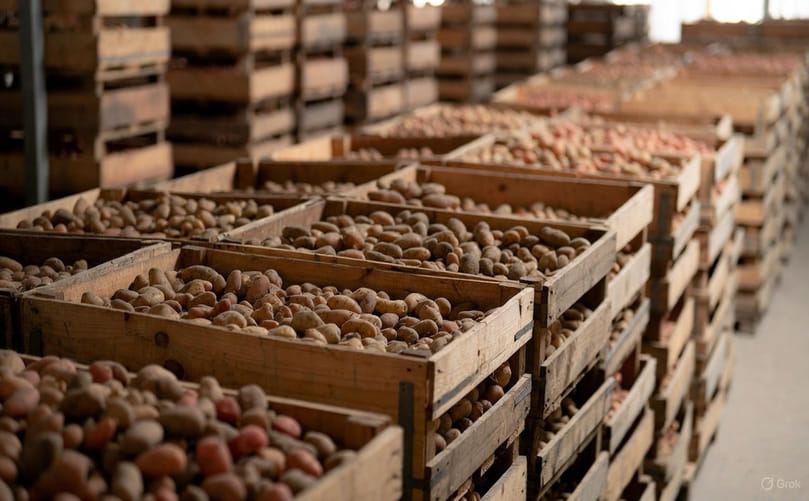
Technological Integration in Regional Potato Storage Facilities
Leading Manufacturers and Technologies
The global potato storage bin industry is driven by a handful of advanced manufacturers that specialize in ventilation, automation and energy-efficient technologies. Tolsma-Grisnich (Netherlands) remains a market leader, known for its innovative Air Control MAX system, which improves airflow uniformity while reducing fan noise by up to 36% and cutting energy usage by 20–25%. Their integrated platforms combine drying, cooling and climate control with advanced sensors and the company’s large-scale projects in Russia, New Zealand and Eastern Europe demonstrate its international presence.
Inter Agra Sp. K. another Polland pioneer is well known for its suction-based ventilation systems that ensure precise temperature and humidity regulation. Their technology allows air to be pulled evenly through every bin, preventing hotspots and supporting long-term dormancy maintenance especially valued in seed potato storage.
In India, Tata Steel Agriservices has expanded the market by offering affordable, insulated and durable storage bins tailored for small and medium growers. These solutions focus on low-cost innovation, making modern storage accessible in developing regions with limited infrastructure.
Technofarm and similar manufacturers serve emerging markets with modular bin systems that allow quick assembly, portability and easy integration with basic ventilation units. These solutions are highly suitable for tropical climates where infrastructure is evolving and cost-efficiency is crucial.
Companies like Mooij Agro, now part of the larger AgroVent Group, provide advanced automation technologies for potatoes and other root crops. Their systems integrate fan control, refrigeration automation, CO₂ management and cloud-based monitoring to ensure precision control across entire storage facilities.
Across the industry, leading manufacturers are increasingly focusing on smart technology integration. This includes airflow optimization software, IoT-linked sensors, predictive analytics for spoilage detection and energy-saving algorithms that maintain climate stability with minimal power consumption. These innovations collectively drive global adoption and continue to shape the future of potato storage systems.
Future Innovations in Potato Storage Bin Technology
The future of potato storage bins is rapidly evolving as digital technologies, sustainable materials and advanced engineering reshape the industry. One of the most significant advancements is the rise of smart bin systems powered by AI and machine learning. These platforms analyze temperature gradients, gas levels and airflow patterns to predict bruising, sprouting and early spoilage days before they occur, enabling proactive interventions and dramatically reducing losses.
Blockchain integration is emerging as a key trend, especially for export-oriented markets. By recording every stage of storage, movement and quality assessment, blockchain ensures tamper-proof traceability from farm to processor, improving transparency and meeting strict global compliance requirements.
Material innovation is also accelerating. Lightweight composite bins allow easier mobility and support the development of mobile cold storage units, especially useful for small farms and remote regions. Designs based on circular-economy principles use recyclable polymers, biodegradable coatings and solar-assisted drying systems, minimizing environmental impact while extending bin lifespan.
In engineering design, research is pushing airflow optimization even further. Bio-inspired duct geometries, modeled after natural structures like leaf venation and termite mounds, have demonstrated up to 25% improvements in airflow diffusion, resulting in more uniform curing and cooling.
AI adoption is expected to expand significantly across the next decade, enabling facilities to automate decision-making, optimize energy use and potentially halve long-term post-harvest losses. Supportive policies such as FAO-backed funding, climate-smart agriculture programs, and national cold-chain modernization schemes are accelerating adoption in developing regions.
Future storage bins are moving toward a zero-waste, fully automated model, where machine learning algorithms, renewable energy, and recyclable materials work together to deliver sustainable, efficient and highly reliable potato storage for global supply chains.