

Patrocinador del mes(Learn more)
Marzo 16, 2018
Canarias exportaría papa gracias a la atmósfera controlada
Canarias sabrá este lunes si funciona el plan activado por la Consejería de Agricultura del Gobierno regional para eliminar la polilla guatemalteca de la papa recolectada en los campos locales.From the archive


Marzo 01, 2018
Amount of stored potatoes in Europe high compared to previous years
The North-Western European Potato Growers report on volume and condition of the potatoes still in storageFrom the archive


Febrero 11, 2018
Agrico presents ‘the next generation of potatoes’ at Fruit Logistica in Berlin
Agrico presented its new generation potato varieties with high resistance to late blight (Phytophthora Infestans) at Fruit Logistica. On the first day of the fair, General Manager Jan van Hoogen explained the meaning of these new varieties.From the archive


Enero 28, 2018
AHDB PCN Calculator to be improved with new scenarios and more data on resistance and tolerance of potato varieties
A research project aims to improve the accuracy of the ‘AHDB Potatoes potato cyst nematode (PCN) pallida calculator’ which is currently used as an educational forecasting tool for potato growers in the United Kingdom.From the archive

Diciembre 18, 2017
Ulluco import and cultivation poses biosecurity risk for potato: DEFRA advice
Following an investigation by the Animal and Plant Health Agency earlier this year, it has been confirmed that ulluco tubers imported into the UK from a number of different sources were infected by harmful viruses, highlighting that there is uncertainty about the disease status of this crop in general.From the archive
Diciembre 18, 2017
New insights in attack mechanism Potato Blight open the door to biological protection
Identification of the receptor for Cytolisin - the killer toxin of Phytophthora infestans - opens door to biological methods to protect potatoes and selective, biological herbicides as alternative for glyphosateFrom the archive
Contenido Patrocinado
Contenido Patrocinado
Contenido Patrocinado
Noviembre 15, 2017
España: La polilla guatemalteca se extiende a otros municipios de Asturias
Funcionarios de la Consejería de Desarrollo Rural y Recursos Naturales descubrieron la plaga en una trampa instalada en el municipio de El Franco. Es una situación previsible pues la polilla no tiene que comer en las zonas afectadas y tiene que movilizarse para buscar alimento.From the archive
Noviembre 04, 2017
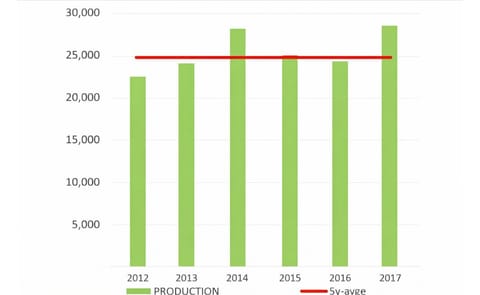
Estimates Potato Production North-western Europe Harvest 2017 adjusted upwards
Although the full harvest is not in the stores yet, the North-Western European Potato Growers (NEPG) estimates the actual harvest at 28.9 million tons for the 5 countries. This is more than the estimate of last September.From the archive
Octubre 26, 2017
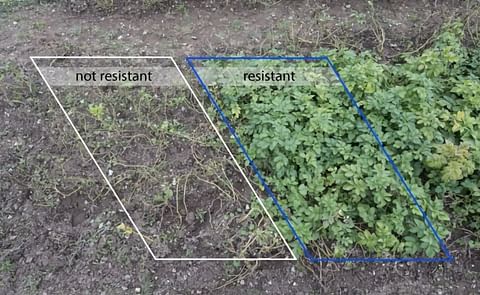
First field trial with GM Maris Piper resistant to late blight went brilliantly
A genetically-modified (GM) Maris Piper designed to resist the devastating plant disease late blight has worked “brilliantly” during the first year of field trials, according to scientists of The Sainsbury Laboratory (TSL)From the archive
Octubre 26, 2017
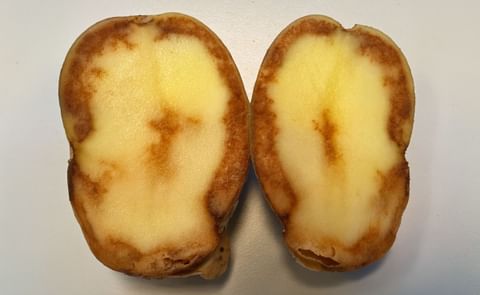
United Kingdom Potato Harvest 2017 without drama - but now the storage...
The potato harvest in the United Kingdom was mostly without drama. Hopefully this doesn't change during the storage season. But watch the changes in the CIPC regulation.From the archive

Septiembre 30, 2017
Hungarian Potato Growers Squeezed: Low Prices AND Low Yields
Potato growers in Hungary are in a tough position as potato prices are low. On top of that, yield has been negatively affected by heat and quality is far from optimal.From the archive

Septiembre 18, 2017
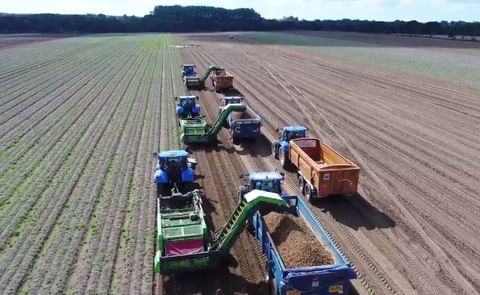
Potato Production North-western Europe up 13.5 percent compared to last year
For the current European potato harvest, the North-western-European Potato Growers (NEPG) estimate the total potato production at 27.9 million tons for the five NEPG countries (Belgium, Germany, France, The Netherlands and Great Britain). This is up 13.5 percent compared to last season.From the archive
Contenido Patrocinado
Septiembre 17, 2017
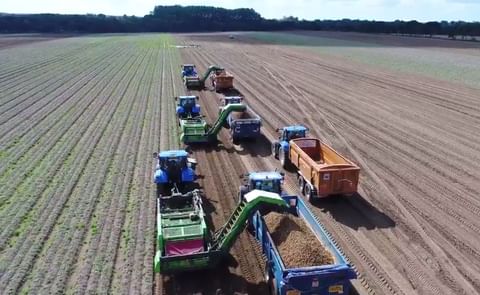
Aardappelproduktie Noord-west Europa 13.5 procent hoger dan vorig jaar
Op basis van proefrooiingen en praktijkresultaten verwacht de NEPG een totale oogst van 27,9 miljoen ton aan consumptieaardappelen in Noord-west Europa. Dat is 13,5% hoger dan vorig jaar.From the archive
Septiembre 13, 2017
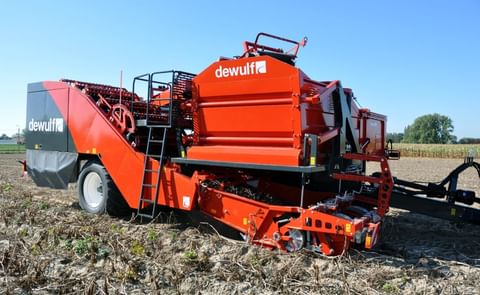
And here it is! The Dewulf Torro offset harvester with bunker at Potato Europe
Dewulf now unveils Torro, its long-awaited trailed 2-row sieving potato harvester with haulm conveyor, flat hedgehog units and bunker.From the archive

Septiembre 03, 2017
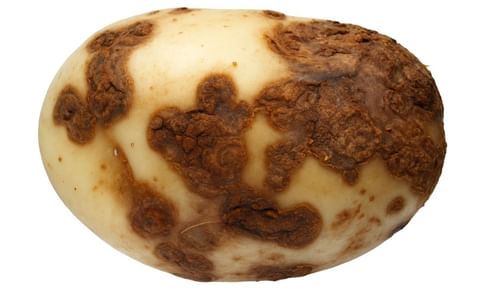
Increasing reports of widespread scab as United Kingdom potato harvest progresses
As the potato harvest in the United Kingdom progresses, there are increasing reports of widespread scab.From the archive
Agosto 23, 2017
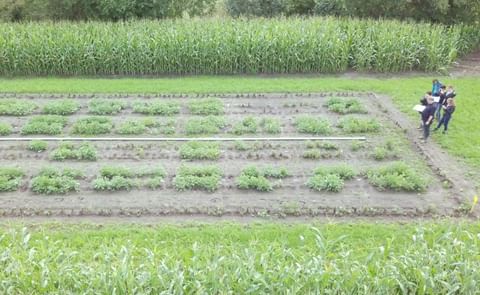
Solynta's revolutionary hybrid breeding technology protects potato from late blight by multi-resistance
The breeders of Solynta have succeeded in making potato plants insusceptible to the dreaded potato disease Phytophthora infestans, using their revolutionary hybrid breeding technique.From the archive
Agosto 22, 2017
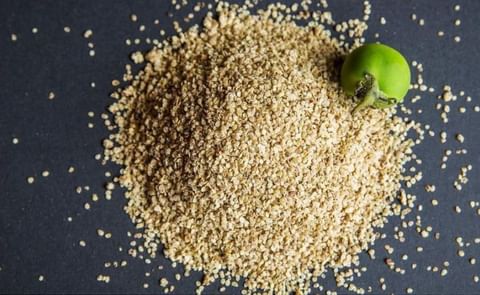
Solynta develops a blight resistant potato variety (non-GMO)
The Dutch company Solynta has developed a potato variety that is resistant to late blight (Phytophthora Infestans). As a result, it could greatly reduce the use of pesticides in agriculture.From the archive
Agosto 12, 2017
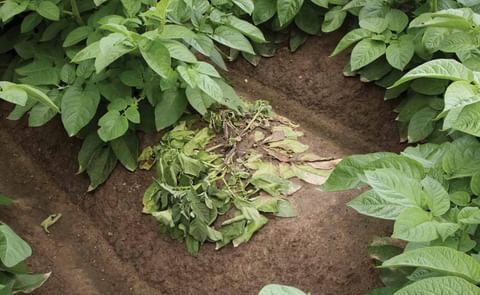
Scottish Potato Industry unites to fund major Blackleg Research project
In Scotland, a group of major potato businesses and public sector organisations have sponsored a £242,000 (USD 313,000) research project aimed at reducing the impact of potato disease blackleg on the Scottish seed potato industry.From the archive