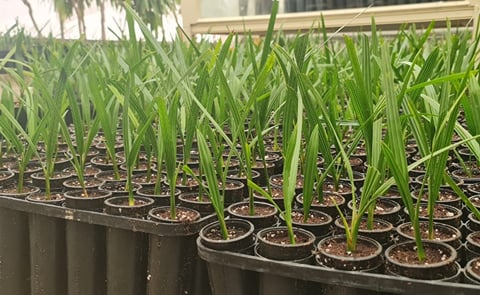
What Are Potato Mini Tubers?
Potato minitubers are small, disease-free seed potatoes typically 1–5 cm in diameter produced from tissue-cultured plantlets in sterile, controlled environments. Representing the first field-generation in the certified seed production chain, minitubers serve as the foundation for high-quality, pathogen-free seed multiplication.
Unlike conventional seed potatoes that are cut before planting, minitubers are planted whole, minimizing the risk of rot, viral, bacterial and fungal infections. Their controlled production ensures genetic purity, vigor, and uniformity, which are vital for healthy crop establishment.
Minitubers are larger than microtubers (typically >4 mm) but smaller than standard seed tubers, with most ranging from 6–30 mm depending on the production method. Plants derived from larger microtubers (>4 mm) tend to yield more vigorous growth, producing minitubers with higher numbers, weight, size and dry matter content.
In addition to superior seed health, minitubers offer practical advantages including lower transportation costs, longer dormancy and efficient handling. Key performance indicators for their production include minituber count per plant, yield per square meter and nutritional composition, all of which determine their commercial and agronomic viability.
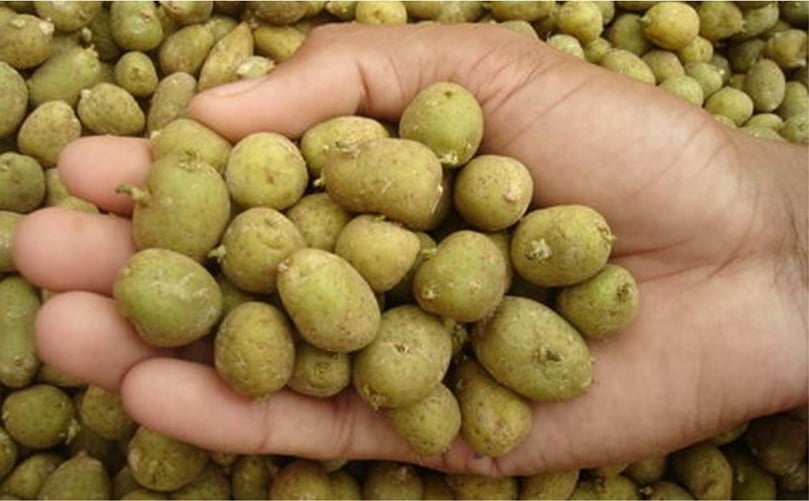
Representative Samples of Potato Minitubers
History of Potato Minituber Production
The evolution of potato minituber production stems from advancements in tissue culture and micropropagation that began in the mid-20th century, revolutionizing global potato seed systems. Although potatoes were first domesticated in the Andes 7,000–10,000 years ago, the foundation for modern, disease-free seed production was laid only in the 1970s with the advent of in vitro propagation methods designed to eliminate viral pathogens.
By the late 1970s, countries such as Peru and India adopted these technologies to overcome seed shortages and widespread diseases affecting productivity. The 1980s marked a pivotal era when aeroponic and hydroponic systems were refined for large-scale minituber multiplication, led by the International Potato Center (CIP) and collaborating institutions.
During the 2000s–2010s, technology transfer initiatives expanded minituber production across Sub-Saharan Africa, Asia and Latin America, driving a tenfold increase in output in several regions. These systems evolved from small laboratory setups into scalable, commercial operations, significantly shortening seed cycles and enhancing seed health.
The introduction of microtubers and minitubers fundamentally changed the potato propagation model by enabling rapid, clean seed multiplication independent of soil-borne diseases. Genetic studies further traced the cultivated potato’s single origin to southern Peru and northwestern Bolivia, informing breeding programs for regional adaptation.
Historical crises, notably the Irish Potato Famine of the 1840s, underscored the importance of disease-resistant and genetically pure seed systems, catalyzing modern innovations that underpin today’s resilient minituber-based production frameworks.
Production Methods for Potato Mini Tubers
The production of potato mini tubers begins with virus-free microplants from tissue culture, followed by cultivation in various systems to optimize yield, cost and disease control. Each methodsoil-based, hydroponic, aeroponic and tissue culture offers unique benefits and is chosen based on resource availability and scale. Advanced systems like aeroponics can yield over 100 tubers per plant, far surpassing traditional methods. Hydroponics provides precise nutrient delivery, while soil methods are more accessible but prone to variability. Tissue culture ensures pathogen-free starting material, essential for all subsequent production. Innovations in these methods have led to higher efficiency and sustainability in potato seed production. Plant density, nutrient solutions, and environmental controls are key factors influencing outcomes across systems. Challenges include high setup costs for advanced setups, but they offer long-term benefits in yield and quality. Research continues to refine these techniques for better adaptability in diverse climates.
Conventional Soil-Based Method: The conventional soil-based method involves planting micropropagated plants or microtubers in soil within protected facilities like greenhouses or net houses. It is relatively straightforward and rapid, allowing quick production of seed tubers, but it is labor-intensive requiring management of soil quality, irrigation and pests. Greenhouses must have insect-proof netting and strict sanitation to prevent contamination, with tuber size variability due to environmental factors like temperature. This method yields 5-10 tubers per plant, lower than soilless systems, but is more accessible for small-scale operations.
Soil-borne diseases are a risk, making it less efficient than aeroponics or hydroponics in terms of yield and uniformity. Acidification of soils over time from ammonium fertilizers affects production, requiring pH management. Observing tuber formation is challenging compared to aeroponics, but multiple harvests are possible. It uses more water and land than advanced methods but remains widely used in developing regions. Sustainability improvements include using peat-free substrates to reduce environmental impact.
Hydroponic Systems: In hydroponic systems, potato plants are grown in nutrient-rich water solutions without soil, using techniques like Nutrient Film Technique (NFT) or deep water culture. This method offers precise control over nutrient delivery, efficient water use and higher yields per unit area compared to soil-based systems. Common setups include substrates like perlite or coconut coir in greenhouses, reducing soil-borne disease risks and enabling year-round production. Hydroponics can produce 4260 g/m² tuber yield, significantly higher than conventional systems at 989.4 g/m².
The number of tubers per plant is 147% higher than in bed or pot systems for a single harvest. Innovative combinations like aero-hydroponic modules enhance efficiency in controlled environments. It maximizes oxygen to roots, promoting growth, though requires monitoring for root diseases. Hydroponics uses up to 90% less water and can increase yields by 20-30% over soil methods. Tuber yield per plant is about 70% lower than aeroponics, but it's more cost-effective for some setups.
Aeroponic systems:Aeroponic Systemssuspend potato plants in air, misting roots with nutrient solutions periodically to maximize oxygen availability and promote faster growth. This method yields 100 or more mini tubers per plant, often 500-610 per square meter at optimal density. It facilitates easier harvesting since tubers are not embedded in soil and reduces disease risks by eliminating soil pathogens. Aeroponics boosts yields by 45-75% compared to hydroponic or soil methods, with cultivar-specific results.
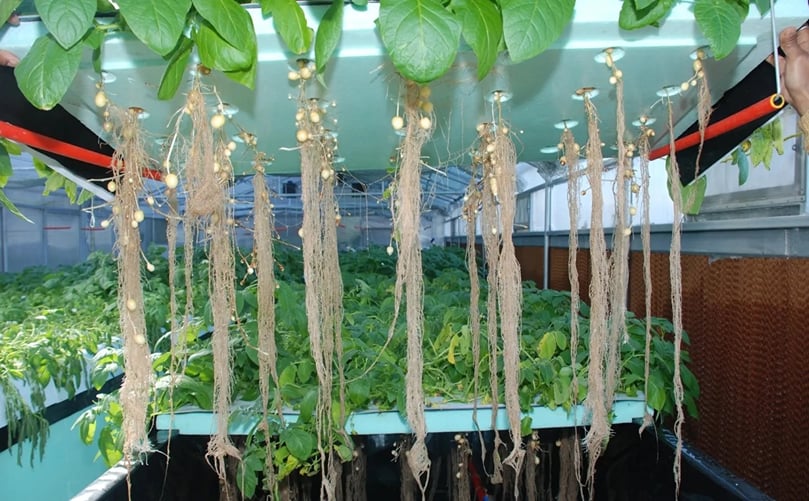
Aeroponic potato mini tubers in system
It uses minimal water, making it sustainable for resource-limited regions, though requires sophisticated equipment and reliable electricity. The system allows multiple harvests per year and is scalable for large-scale farming. Low multiplication rates in conventional systems are overcome, addressing non-homogenous tuber sizes. Seed quality deterioration is minimized, providing disease-free mini tubers cost-effectively. It complements potato production in developing countries by enhancing local seed systems.
Tissue Culture and Micropropagation: Tissue culture and micropropagation involve growing potato microplants or microtubers in sterile lab conditions using nutrient media to ensure virus-free starting material. This foundational step is critical for maintaining the health of subsequent generations and is used for vegetative propagation of commercial varieties. Microtubers are suitable for greenhouse planting due to their small size and serve as means for genetic stock preservation. The process allows rapid multiplication of disease-free material, reducing pathogen risks in vegetatively propagated crops.
In vitro techniques produce small tubers under controlled conditions, ideal for propagation and germplasm conservation. It enables excess production of high-quality seed potatoes for marginal farmers, improving food availability. Recent systems like hydroponics in wood fiber are explored for sustainability. The method is expensive but essential for rejuvenating mature potato material while retaining genetics. Plants are hardened before transfer to other systems, ensuring successful mini tuber production.
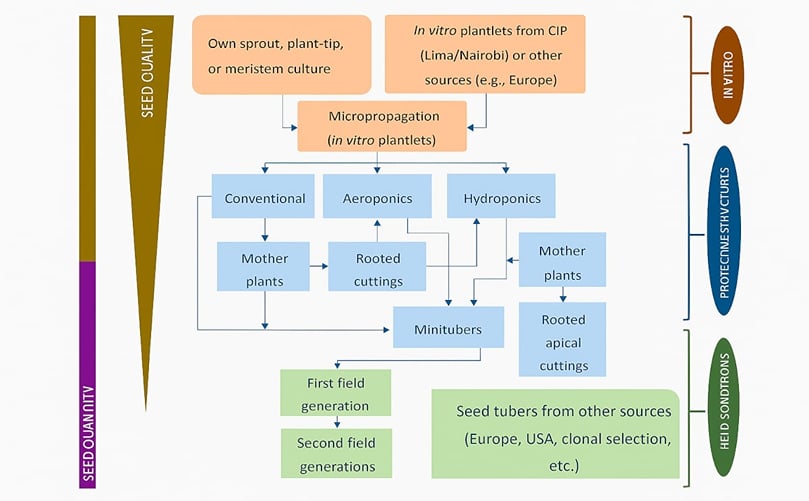
Schematic Representation of Seed Potato Supply Pathways
Benefits and Uses of Potato Mini Tubers in Agriculture
Mini tubers are transforming potato farming, particularly in seed production, due to their numerous advantage:
Disease-Free Propagation:Produced under sterile or controlled environments, minitubers drastically reduce the incidence of viral (e.g., Potato Virus Y), bacterial (e.g., Erwinia) and fungal (e.g., Phytophthora infestans, late blight) infections. This ensures pathogen-free seed material, minimizing disease accumulation over generations and leading to 20–30% higher yields compared to conventional seed systems. Their disease-free status is particularly valuable in regions plagued by soil-borne pathogens, maintaining high health seed chains critical for sustainable seed potato production.
Efficient Seed Multiplication: Mini tubers enable rapid multiplication of seed stock, reducing the number of field generations needed to produce certified seeds. In aeroponic systems a single plant can yield over 100 mini tubers in one cycle, compared to 5-10 in soil based systems, drastically shortening production timelines and reducing land requirements. This efficiency is vital for scaling up seed availability for commercial farming and research.
Resource Efficiency: Advanced systems like aeroponics and hydroponics use significantly less water and land than traditional methods making them sustainable options for regions with limited resources. They allow multiple harvests per season (up to 3-4 cycles annually in controlled environments) and simplify handling, storage and transport due to the tubers small size and uniform quality. Mini tubers are also less prone to mechanical damage during transport compared to larger seed potatoes.
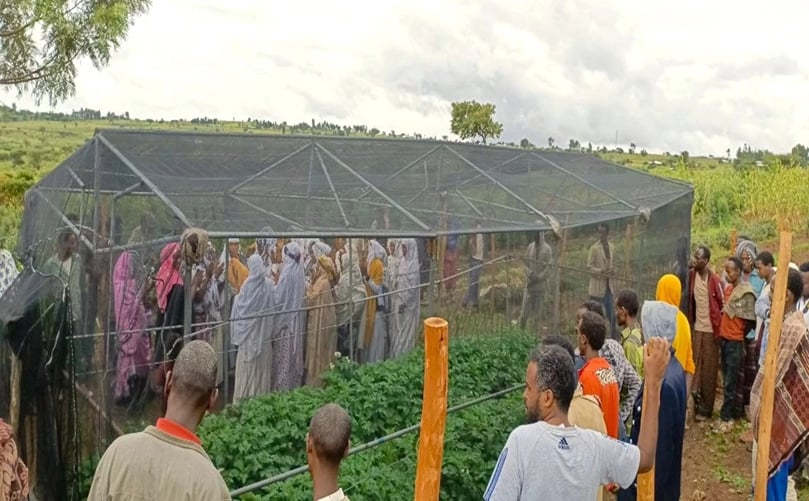
Enhancing supply of seed potato through farmer-managed mini-tuber production under screen houses
Uses in Farming and Industry: Mini tubers are primarily used as seed for commercial potato production, supporting both large scale exports and local markets. They are particularly valuable for subsistence farmers in developing regions, providing affordable, high-quality seeds that improve crop yields. In research mini tubers are used in breeding programs to develop new potato varieties with traits like drought resistance or enhanced nutritional content. Additionally, potatoes, including mini tubers are recognized as functional foods, rich in carbohydrates, vitamins (e.g., vitamin C) and minerals (e.g., potassium), contributing to food security and nutrition in developing regions.
Field trials demonstrate that mini tubers perform comparably to standard seed potatoes in terms of yield, though their smaller size may result in slightly smaller initial tubers in the first field generation. However, their high health status ensures consistent performance over subsequent generations.
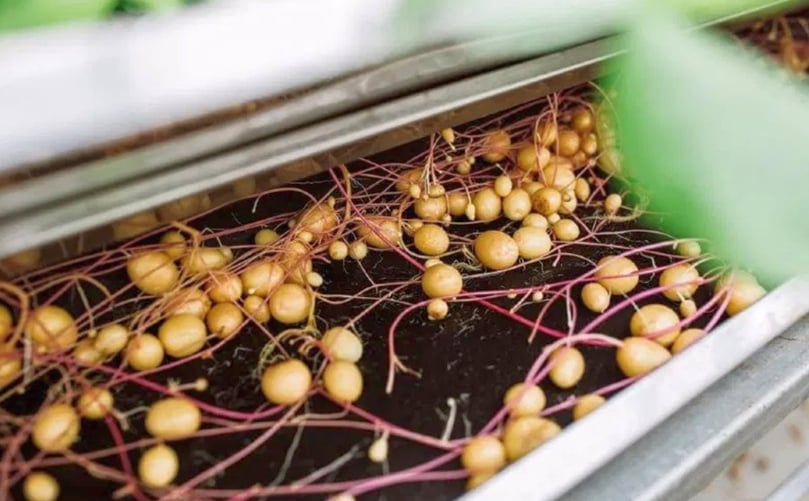
Aeroponic mini tubers harvest
Challenges in Potato Mini Tuber Production
Despite their advantages, mini tuber production faces several obstacles,
High Costs and Infrastructure: The production process requires significant investment in specialized facilities, such as greenhouses, aeroponic systems or tissue culture labs, along with reliable electricity and materials like nutrient solutions. Aeroponics, while efficient is particularly costly due to energy demands for misting systems and environmental controls, limiting adoption in resource constrained regions like parts of Africa or Asia.
Low Multiplication Rates and Variability: Traditional soil-based methods often produce tubers with inconsistent sizes and lower multiplication rates (e.g., 5-10 tubers per plant), affected by factors like plant density storage duration and soil quality. Even in controlled systems, achieving uniform tuber size and high yields requires precise management of environmental variables which can be challenging.
Disease and Degeneration Risks: Although designed to be disease-free, maintaining sterile conditions throughout production is difficult especially in soil-based systems where contamination risks are higher. Over multiple field generations, degeneration due to viral or bacterial buildup can occur necessitating robust quality control. Inconsistent regulatory frameworks for seed certification across countries further complicate quality assurance.
Scalability in Tropics/Subtropics: In tropical and subtropical regions, challenges like bulky seed sizes, high seed rates and perishability hinder efficient supply chains. Yield gaps persist due to environmental stressors (e.g., heat, drought) and phytosanitary issues in soil-based systems, which can introduce pathogens like bacterial wilt or nematodes.
Regional Adoption Issues: Inconsistent seed certification standards and regulatory frameworks across countries complicate quality control and international trade. Differences in definitions of “pre-basic” or “G0 seed” lead to market confusion and restrict cross-border movement of high-quality minitubers. Strengthening harmonized policies and regional accreditation systems is essential for efficient commercialization.
Comparison with Conventional Seed Potatoes
The use of minitubers represents a significant advancement over traditional seed potatoes, offering superior health, efficiency and adaptability across diverse production systems. However, differences in size, physiology and field performance must be carefully considered for optimal outcomes.
Size and Health Status: Minitubers, typically 5–25 mm in diameter, are disease-free and produced under sterile or controlled environments, ensuring genetic purity and pathogen-free planting material. In contrast, conventional seed potatoes exceed 50 mm in diameter and are more susceptible to viral, bacterial and fungal infections accumulated over multiple field generations.
Growth and Yield Performance: Field evaluations show that heavier minitubers produce superior emergence rates, canopy coverage and total yield compared to lighter minitubers or microtubers. While large conventional seed tubers generally yield higher marketable produce due to greater initial reserves, minitubers compensate through health status and uniform vigor, leading to consistent performance across multiple generations.
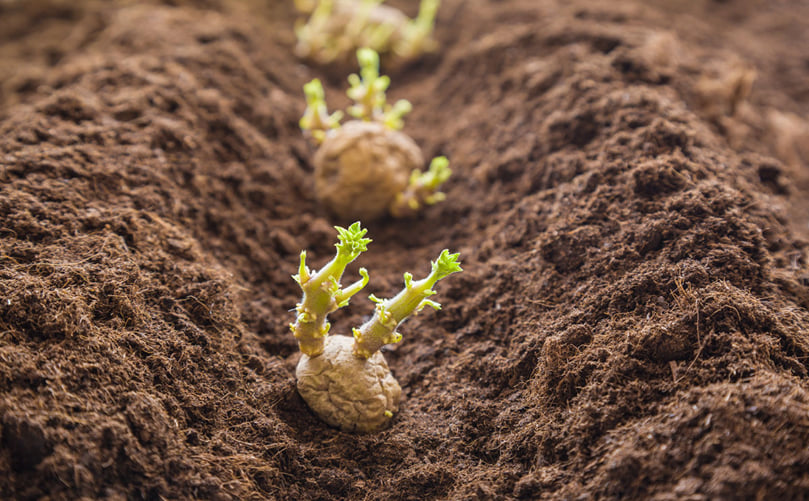
Sprouted potato tubers in soil
Aeroponic systems can produce 30–40 minitubers per plant, far exceeding the multiplication capacity of conventional soil-based systems. Similarly, hydrothermally treated plantlets yield 55–80% of the fresh weight obtained from traditional tubers, depending on their size and dormancy status.
Influence of Tuber Size and Storage: Studies indicate that smaller seed tubers enhance the yield of very small tubers by 39–56%, useful for rapid multiplication in seed systems. Microtubers and minitubers stored for longer durations (around 7 months) demonstrate better sprouting uniformity and field establishment than freshly harvested ones. Due to their small size, microtubers are usually planted shallower to facilitate emergence and minimize energy depletion during sprouting.
Physiological Age and Sprouting Behavior: Yield and performance depend heavily on the physiological age, dormancy period, and pre-sprouting techniques of seed tubers. Physiologically older or pre-sprouted tubers whether mini or conventional tend to show faster emergence and earlier tuber initiation, which can be beneficial in short-season environments.
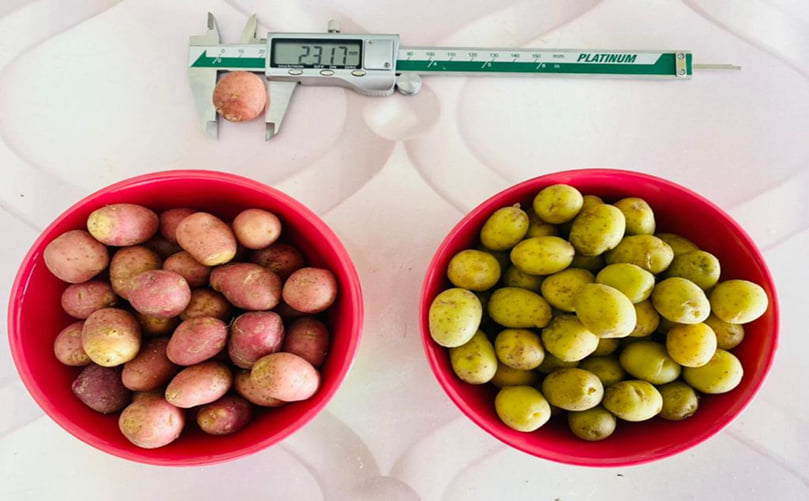
Bowls of assorted mini tubers
Economic Aspects of Potato Minituber Production
The economic sustainability of potato minituber production depends on optimizing yield, cost efficiency, and market value while maintaining high-quality, disease-free planting material. With growing demand for certified seed, minituber systems—especially aeroponics and hydroponics—play a key role in strengthening seed potato supply chains globally.
Cost Optimization and Productivity: Producing high-quality minitubers at low cost is vital for commercial viability. Economic performance varies with factors such as plant density, variety, nutrient management, and production system (aeroponics, hydroponics, or soil-based). Optimizing plant spacing and planting dates enhances cost-effectiveness across cultivars by improving per-plant yield and uniformity. In aeroponic systems, the cost per tuber decreases significantly as productivity per plant increases.
Comparative Profitability: While conventional soil-based systems often have lower profitability due to longer production cycles and higher disease incidence, organic and protected systems may yield greater net returns in specific regions, especially under smallholder or niche markets. Studies indicate that large seed tubers produce higher marketable yields and better net benefits, though their marginal returns decline with size beyond the optimal range.
Economic Efficiency Indicators: Potato production generally shows strong economic performance, with every ₹1 invested returning approximately ₹0.47 in net profit under efficient management. Profitability is often assessed using the profitability index, calculated as the ratio of yield value to direct production costs. Degeneration studies suggest that economic efficiency improves with newer seed generations, as disease-free planting materials enhance yield stability and reduce losses.
Influence of Technology and Irrigation: Use of improved varieties, aeroponic systems, and precision nutrient management enhances productivity and income potential. Additionally, sprinkler irrigation under semi-arid or rainfed conditions increases profitability by ensuring uniform growth and higher tuber recovery rates.
Regional and Market Variability: Economic returns vary widely by region and input cost structure. Reported incomes from minituber production range between 17,200 to 79,900 rubles per hectare, depending on market price, production technology, and yield levels. Countries investing in high-tech seed systems (e.g., aeroponics) generally achieve faster cost recovery and higher profit margins due to consistent quality and export-grade seed supply.
Future Prospects and Innovations in Minituber Production
The future of potato minituber production is being reshaped by technological innovation and sustainable production models. Advances in aeroponics, automated root zone control (ARC) and precision environmental management are enabling highly efficient pre-basic seed production, essential for meeting global seed demand.
Diversification of minituber production systems is helping address industry priorities for sustainability, scalability and resilience. Integration of smart greenhouse technologies, IoT-based monitoring, and AI-driven nutrient optimization ensures real-time management of light, humidity and misting schedules, leading to consistent yields and improved resource efficiency.
Hydroponic and aero-hydroponic hybrid systems are emerging as sustainable alternatives, using closed-loop nutrient recycling to reduce water and fertilizer waste. These systems also maintain genetic purity and disease-free status, key to ensuring high-quality seed outputs.
The introduction of the 3G seed strategy, emphasizing rapid in vitro multiplication followed by aeroponic or hydroponic minituber production, has drastically shortened seed generation cycles while enhancing productivity. Simultaneously, emerging processing technologies including automated sorting, grading and storage are improving overall operational efficiency and environmental sustainability.
Climate-controlled production systems now allow year-round cultivation, stabilizing supply chains and reducing dependence on seasonal cycles. Global agricultural innovation events increasingly highlight these technologies as central to the future of sustainable potato farming, supporting food security, climate adaptation, and economic growth worldwide.
"The development of potato mini tubers through cutting-edge technologies like aeroponics is not merely a scientific advancement it represents a transformative approach to sustainable agriculture, empowering farmers with disease-free, high-yielding seeds to secure food supplies for future generations."