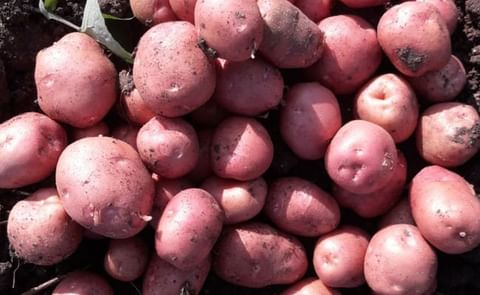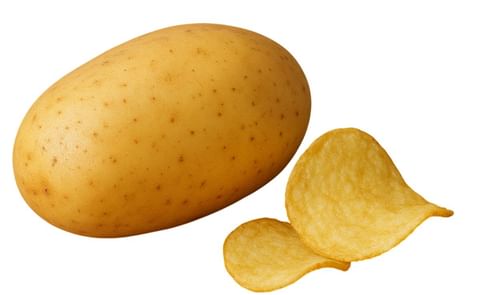

Optimized Potatoes for Premium Chip Production
Producing high quality potato chips begins with selecting potatoes specifically suited for chipping. These potatoes are bred and grown to deliver uniform tuber size and shape typically oval and 50–80 g which minimizes slicing waste, ensures consistent slice thickness and promotes even frying. Beyond physical uniformity, processors must address key chemical and nutritional challenges to achieve the desired product quality.
One major focus is reducing acrylamide formation, a heat induced compound regulated in many regions. Industry best practices aim to keep acrylamide levels below 350 µg/kg, in line with European Union benchmark values. Equally important is managing oil absorption, ideally within 30–35%, as excessive oil can increase caloric content, worsen texture and reduce shelf life.
Evolving consumer preferences are further shaping production practices. Modern markets favor low-sodium, reduced fat or baked chips and a growing array of innovative seasonings and natural flavor profiles. These trends encourage processors to adopt healthier formulations and more efficient frying or baking technologies.
Meanwhile, the supply chain behind chip production is adapting to climate variability, which influences tuber size, dry matter content, sugar accumulation and storage behavior. Maintaining reliability from cultivation to processing requires integrated management precise agronomic practices, optimized harvest timing, controlled storage conditions and carefully monitored frying processes.
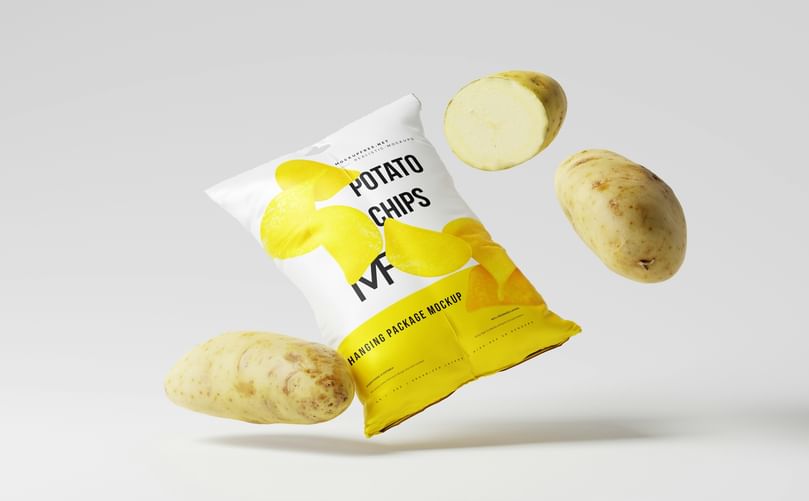
From Farm to Crunch: Premium Potato Chips
What Makes a Potato Perfect for Potato Chips?
The ideal chipping potato is very different from the one you would mash or roast. It is a highly specialized tuber developed through decades of breeding and precise agronomy to produce thin, ultra crisp, light-golden slices that stay crunchy for months in a bag. Every major chip manufacturer targets the same narrow set of traits and missing even one can downgrade an entire crop to french fry stock or animal feed.
The tuber must contain 20–25% dry matter, corresponding to a specific gravity above Approximately 1.080 in a salt brine test. High starch creates the rigid, glassy structure that fries into a crisp chip while minimizing oil uptake processors aim for 30–35% oil in the finished product. Waxy, high moisture table varieties collapse and produce greasy, soft chips.
Reducing sugars must stay extremely low. glucose and fructose below 0.1% and ideally <0.05% in varieties like Atlantic and Snowden. Once sugars exceed 0.2%, especially after cold storage the Maillard reaction accelerates too early, resulting in dark, bitter chips instead of the pale gold color associated with USDA chip color scores of 1–2.
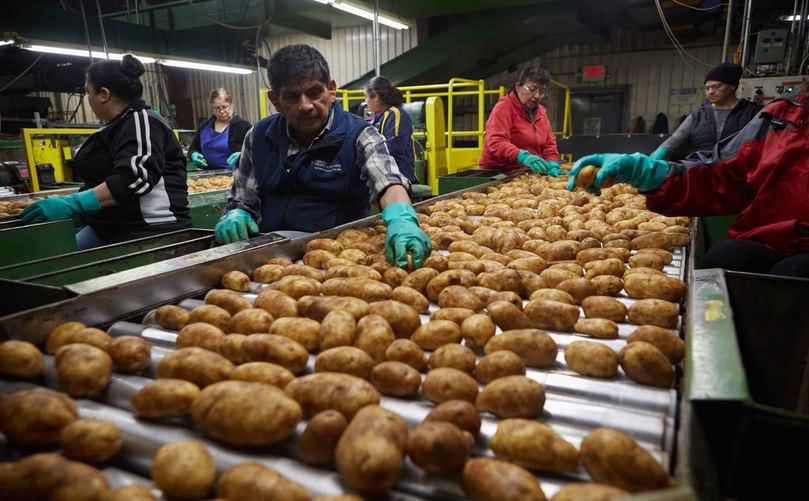
Tubers destined for chips should be 50–80 g, with a uniform oval or round shape that slices evenly at 1.2–1.8 mm. Irregular shapes or deep eyes increase peel loss and lead to fractured slices. A thin, smooth skin ensures efficient steam or abrasion peeling, keeping waste below 15–18%.
Resistance to bruising and internal defects is also essential. Issues like blackspot bruise, hollow heart and internal necrosis produce dark blotches after frying. Modern varieties such as Lamoka and Waneta have stronger cell walls and improved calcium uptake that reduce bruising during mechanical harvest and handling.
Because chip factories operate year round, potatoes must store well for 4–10 months at 7–10 °C and Approximately 95% humidity. Only select varieties Lamoka, Waneta, Payette, Hodag maintain low reducing sugars under these conditions, avoiding cold-induced sweetening that renders many cultivars unusable for light colored chips.
Disease and pest resistance is equally important. Tolerance to late blight, common scab, PVY and nematodes supports consistent yields and cleaner tubers while reducing the need for chemical inputs. Processors typically require <5% external defects to meet quality specifications.
Finally, modern breeding programs consider acrylamide formation. Since acrylamide results from the reaction of asparagine and reducing sugars during frying, newer clones such as Youjin885 in China and several Cornell selections are bred for naturally low asparagine and low sugars, often producing chips with <200 ppb acrylamide without additional processing interventions.
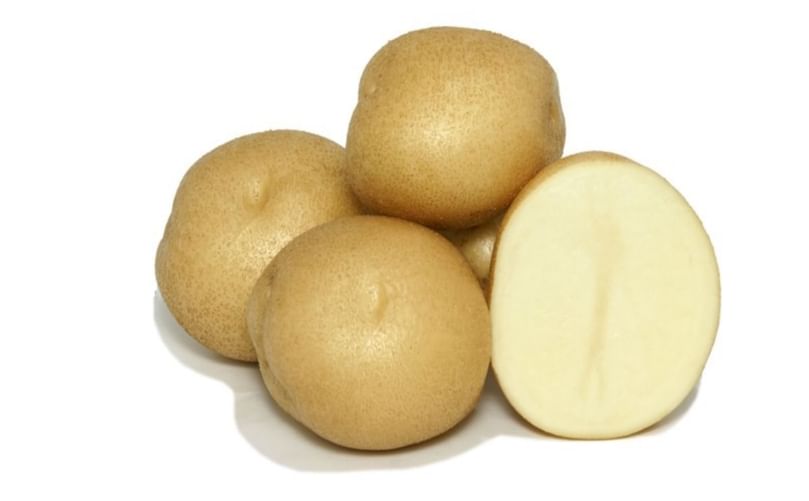
Perfectly Shaped Tubers Ready for Chipping
Chips Unleashed: A Crunch That Conquered the Planet
Globally, the potato chips industry is a major segment of the snack market. Market estimates place its value between USD 35 and 40 billion in 2024, depending on the research source. Forecasts project steady growth toward USD 44–59 billion by 2033–2034, with annual growth of about 2.5–4.2%. North America currently holds the largest share, supported by high per-capita consumption, while the Asia-Pacific region is expanding the fastest due to retail growth and a rising young consumer base. Leading players include PepsiCo with its dominant Lay and Ruffles brands, Kellanova with Pringles and Calbee in Japan and much of Asia. These companies maintain strong global presence through wide distribution networks, continuous product innovation and large investments in processing technologies.
Consumer preferences are shifting toward bold flavors, premium kettle cooked options, vegan and cleaner label products and more sustainable packaging. Online snack sales are growing rapidly as well. Despite challenges such as fluctuating potato prices and stricter regulations on acrylamide, the industry remains strong and continues to innovate across farming, processing and marketing. Potato chips therefore continue to be one of the most stable and influential snack products worldwide.
Potato chips are one of the most energy-dense potato based snacks. On average, 100 g of plain, fried potato chips provides around 530 kcal, along with approximately 6.4 g of protein, 34 g of fat, 54 g of carbohydrates and about 3 g of dietary fiber. Sugar content is typically very low, averaging 0.3 g per 100 g. Chips are also a notable source of minerals a 100 g serving contains roughly 1,100–1,200 mg of potassium, providing a significant portion of the daily requirement. They also supply around 8–12 mg of calcium and 1.0–1.3 mg of iron per 100 g. Depending on the potato variety and processing conditions, potato chips can retain 20–25 mg of vitamin C per 100 g, although this varies with storage, slicing thickness and frying temperature. The overall nutritional composition can differ depending on the type of oil used, frying temperature and degree of moisture loss during processing.
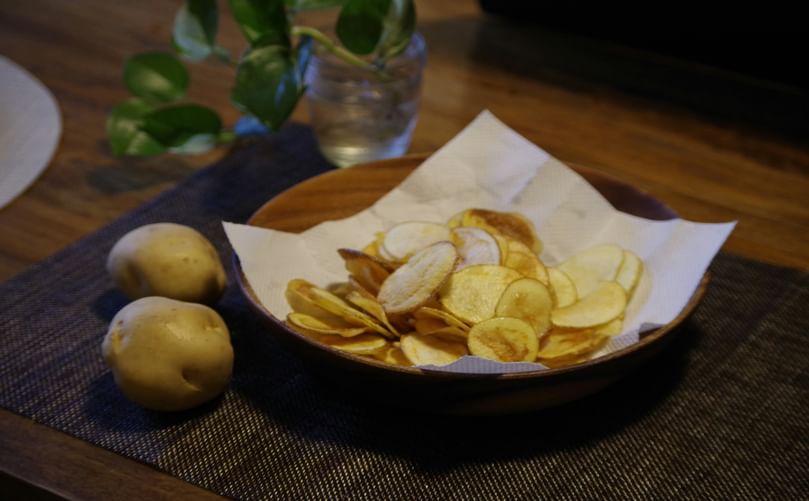
Golden Crunch Born from Farm-Fresh Potatoes
Potato Varieties That Drive the Global Chip Industry
Atlantic: Itis a well-established U.S. chipping variety developed by the USDA-ARS. It is known for its high specific gravity, strong starch content, and ability to produce light, uniform, high quality chips when properly stored and handled. Atlantic also carries resistance to the golden nematode Ro1 and shows moderate tolerance to common scab. Yields are generally high across most growing regions. However, when tubers grow excessively large, the variety can be prone to hollow heart, a trait often noted in extension and breeder reports.
Lamoka: Released by Cornell University and Penn State, has become one of the most reliable modern chipping potatoes. It offers strong storage performance, maintaining excellent chip color even after long periods in cold storage. Lamoka has high dry matter, resistance to golden nematode Ro1 and reliable scab tolerance. Its yield matches or exceeds Atlantic in many northeastern U.S. trials, and its stability in post-storage frying has made it a preferred choice for processors aiming for year-round production.
Waneta: Developed by Cornell, is valued for its exceptional chip color out of cold storage, making it ideal for processors operating late into the storage season. It provides long dormancy, good scab tolerance and resistance to golden nematode Ro1. Waneta typically produces large, uniform tubers. Although its yield can be slightly lower than Atlantic, its consistent frying color, low bruising risk and dependable storage behavior make it a widely accepted variety in industrial supply chains. Marcy (NY112) is another Cornell variety known for its strong yields and dependable chipping performance. It stores well and retains good chip color after short to medium storage durations. Marcy shows resistance to golden nematode and moderate scab tolerance. As a later-maturing variety, it fits well in regions with longer seasons. Its combination of high marketable yield, uniform tuber shape and reliable processing quality ensures its continued relevance in commercial chip production.
For other varieties: Innovator, Lady Rosetta, Rocco, Youjin885, BARI Alu-28 and Harley Blackwell, only general information is publicly available. Innovator is recognized internationally as a high-yielding processing potato with good size uniformity and stable sugar levels, making it suitable for both fries and chips. Lady Rosetta is widely grown in Europe and Asia for its round shape and consistent frying color, especially for flavored chip segments. However, for Rocco, Youjin885, BARI Alu-28, and Harley Blackwell, detailed and verified information regarding specific gravity, acrylamide levels, sugar content or precise yield metrics is limited in publicly accessible breeder or research sources. These varieties require breeder trial data for deeper technical accuracy.
Harvesting Techniques for High Quality Chipping Potatoes
Proper harvesting is critical to maintaining both yield and chip quality. Timing plays a key role: potatoes should be harvested 2–3 weeks after vine kill, once the skin has fully set. This reduces bruising and feathering, which can increase peel loss during processing.
Modern mechanical harvesters are designed to minimize damage. Equipment with rubber coated components and controlled drop heights can limit bruise incidence to less than 3%. Windrowing, or lifting potatoes into rows to air dry before pickup, significantly reduces field losses and soil contamination. Advanced harvesters often employ laser-guided systems to maintain consistent digging depth, preventing accidental cutting of tubers.
Temperature management during harvest is also crucial. The ideal range is 10–18°C, as harvesting in colder conditions substantially increases the risk of blackspot bruising. Immediate removal of haulm and vines using flail toppers or chemical desiccants is essential to prevent disease transfer into storage.
Post-harvest handling is equally important. Tubers are transported via padded conveyors and slow-moving belts, ensuring gentle handling from field to storage. Many large scale operations now integrate real time yield monitors and GPS mapping, allowing growers to track field variability and optimize management decisions for subsequent seasons.
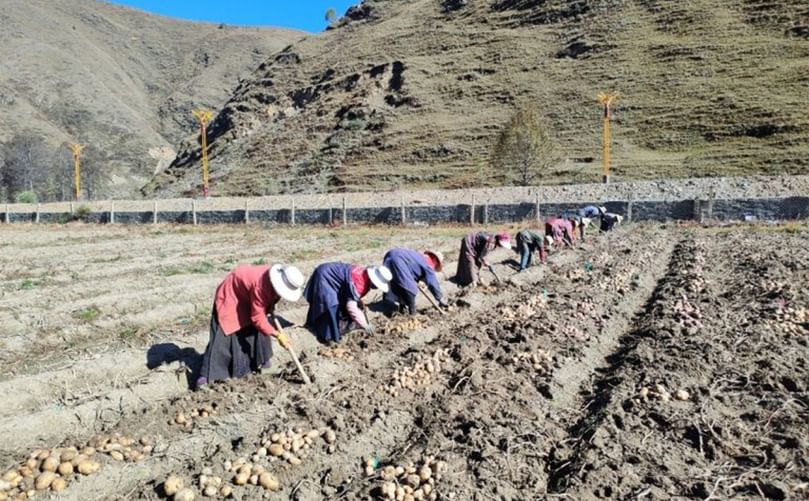
From Soil to Success: Potato Harvest in Action
Storage Practices for Chipping Potatoes
Chipping potatoes are typically stored for 6–9 months to ensure a consistent year round supply for processing. Effective storage requires precise management of temperature, humidity and airflow to maintain tuber quality and minimize losses.
The ideal storage temperature for chipping potatoes is 7–10°C, balancing sprout suppression with the prevention of cold induced sweetening, which converts starch into reducing sugars and can darken chips during frying. Relative humidity must be maintained at 92–95% to prevent tuber shriveling while avoiding condensation that could encourage rot. Forced-air ventilation systems deliver 15–20 m³ of air per ton per hour, removing field heat within 48 hours of loading to stabilize tuber temperature.
Traditionally, CIPC (chlorpropham) was used as a sprout suppressant. However, due to regulatory restrictions, many regions now rely on alternatives such as 1,4-dimethylnaphthalene (1,4-DMN) or natural compounds like essential oils. CO₂ levels are closely monitored and kept below 0.3% to prevent disorders such as blackheart.
Modern storage facilities employ automated climate control, where fans and ventilation respond to real-time tuber pulp temperature rather than ambient air, ensuring uniform conditions throughout the storage bulk. Suberization or wound healing, occurs during the first 2–4 weeks at 12–15°C before gradually lowering the temperature to the final holding range.
To maintain quality, regular sampling for fry tests is conducted throughout the storage period, ensuring that only lots meeting chip color, texture and sugar standards are shipped to processing plants.
Industrial Scale Processing Techniques
Industrial potato chip production lines are engineered for high throughput, precision and consistent product quality. Modern facilities typically handle between 5 and 15 tons of raw potatoes per hour, depending on equipment size and layout. These lines integrate every stage from raw potato unloading to the final packaging into a seamless, automated and energy efficient system.
Raw Material Handling & Pre-Processing: The process begins with automated bin tippers or hydraulic dumpers that gently unload potatoes into hydro flume channels. These water-based conveyors transport the tubers without causing damage while simultaneously performing the first stage of cleaning. Stone traps, destoners and rotary drum washers remove soil, stones and debris, ensuring only clean and intact potatoes enter the peeling section.
Steam Peeling: Steam peeling is widely adopted due to its speed and low peel loss. Potatoes are exposed to saturated steam at pressures of around 12 to 15 bar for roughly 10 to 20 seconds. When the pressure is suddenly released, the loosened skin “explodes” away from the tuber surface. After this step, mechanical polishers refine the tuber surface, producing a smooth, clean potato with peel losses typically in the 6 to 8 percent range.
Precision Slicing: Once peeled, potatoes move to high-speed slicing systems such as Urschel CC or TranSlicer machines. These slicers can process more than 10 tons of potatoes per hour while maintaining exceptional uniformity. Slice thickness is controlled within fractions of a millimeter, ensuring each chip fries evenly and develops a consistent texture and color. Many lines incorporate rinsing systems that wash away surface starch to prevent slices from sticking together during frying.
Pulsed Electric Field Treatment: Modern plants increasingly rely on pulsed electric field (PEF) technology to improve slicing and frying performance. In this process, potato slices are exposed to short, high-voltage pulses lasting microseconds to milliseconds. PEF treatments weaken cell membranes, making slicing smoother and reducing breakage. The improved moisture diffusion also cuts frying time by 20 to 25 percent and lowers oil absorption while enhancing the final chip’s texture and crunch.
Frying Technologies: Continuous fryers form the heart of industrial chip production. These systems use external heat exchangers to maintain extremely stable oil temperatures, often within one degree Celsius. Consistent heat prevents hotspots and enables uniform color development. Multi-zone fryers further refine the process by dividing frying into thermal stages. Chips first enter a high-temperature zone to rapidly form a crust, then move into intermediate and finishing zones where moisture is reduced and texture is finalized without over browning. Advanced oil filtration systems run continuously to remove fines and maintain oil quality.
Advanced Inspection & Quality Assurance: Before packaging, chips pass through sophisticated inspection systems. Optical sorters equipped with RGB, infrared and laser sensors detect defects such as greening, uneven color, burnt spots or folded chips. X-ray units identify dense foreign materials that visual systems may miss. These automated inspection stages ensure that only chips meeting strict quality requirements reach the packaging line.
High-Speed Weighing & Packaging: Packaging is fully automated through multihead weighers and VFFS (Vertical Form-Fill-Seal) systems such as Ishida or tna robag units. These systems consistently weigh chips with sub-gram accuracy and can package more than 100 bags per minute. Nitrogen flushing is typically used to preserve crispness and extend shelf life. The entire packaging operation runs with minimal human involvement, maintaining hygiene and maximizing speed.
Digital Integration & Smart Automation: Modern chip factories rely heavily on digital systems for monitoring and optimization. SCADA and MES platforms oversee all major operations, from raw material intake to final product dispatch, ensuring full traceability. Real-time analytics track parameters such as temperature stability, energy consumption, fryer behavior and equipment health. Predictive maintenance systems reduce downtime and contribute to overall equipment effectiveness (OEE) levels above 90 percent, a benchmark of world-class manufacturing.
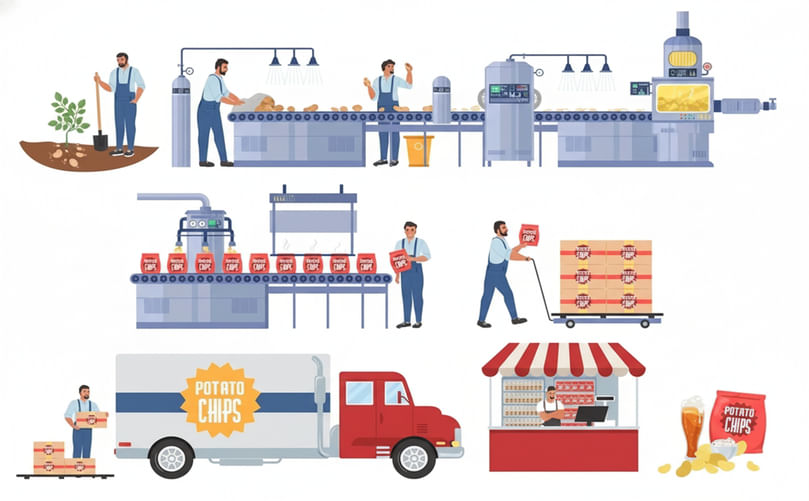
From Soil to Snack: The Potato Chip Journey
The Crunch Factory: Modern Techniques Behind Premium Potato Chips
Optimized Industrial Methods: Industrial potato chip production begins with highly efficient peeling systems, typically high-pressure steam peeling or abrasive peeling. These methods remove up to 90–95% of the potato skin while keeping peel loss low, generally around 8–12%. After peeling, modern optical sorters equipped with high speed cameras and sensors examine each tuber individually, removing defective pieces and foreign matter with remarkable accuracy, often reaching 99.9% in premium processing lines.
Precision Slicing and Heat Treatment: Once sorted, potatoes move to advanced slicing equipment such as Urschel or FAM slicers. These machines create uniform slices, usually between 1.3 and 1.7 mm, with specific waviness patterns that improve both crispness and seasoning adherence. The slices then undergo blanching at temperatures between 70–85°C for 2–5 minutes. This step is essential for enzyme inactivation and helps reduce surface sugars, which in turn produces lighter, more uniform chip color.
Controlled Frying and Oil Management: Continuous frying systems operate at 175–185°C, reducing the moisture content of the slices from nearly 80% to less than 2% in just a few minutes. Many modern factories also adopt pulsed electric field (PEF) technology, a process that gently perforates cell membranes. This innovation shortens frying time by 20–30% and lowers oil absorption by 15–25%, resulting in healthier and more uniform chips. After frying, de-oiling systems either centrifugal or hot-air based remove excess surface oil, helping premium chips reach a final oil content of around 30–32%.
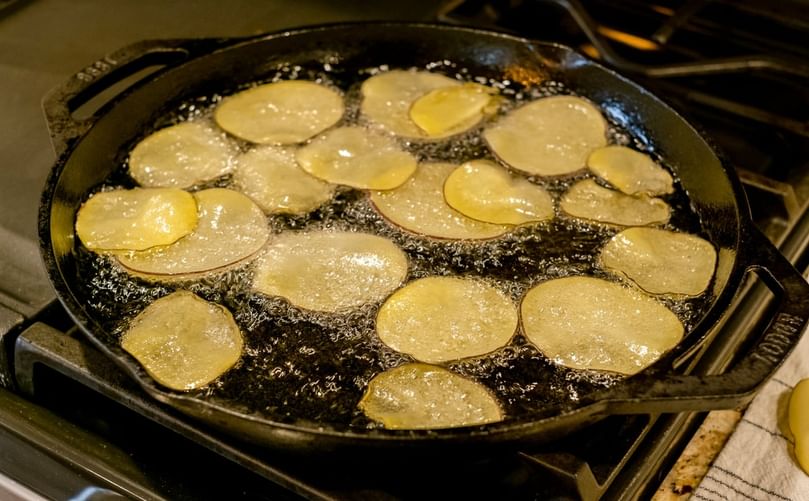
Controlled Frying for Consistent Chip Quality
Seasoning and Packaging Innovations: Seasoning is applied using electrostatic drums that distribute powders and flavors evenly with less than 1% variation from one batch to another. The final product is packaged using nitrogen flushing or modified-atmosphere systems, which keep chips crisp and extend shelf life to six months or even a year without relying on chemical preservatives.
Sustainability and Waste Recovery: Modern processing plants incorporate zero waste strategies, turning by-products into valuable resources. Starch recovered from wash water is reused in food or industrial applications, while potato peels are converted into biogas or processed into animal feed. This approach not only improves sustainability but also enhances overall processing efficiency.
Quality Factors in Potato Chip Production
The quality of potato chips is assessed using multiple critical parameters, with color being the first and most noticeable attribute. Premium chips are expected to display a very light golden hue, corresponding to USDA scores of 00–1.5 or SFI 1–2, both immediately after frying and after up to three months of shelf life.
Texture is another essential determinant. It is evaluated both through sensory tests, such as the snap test, and instrumental measurements of breaking force. Ideal chips require a breaking force of approximately 15–20 N and produce a crisp, audible crunch in the range of 70–80 dB, indicating the right balance of moisture and starch structure.
Oil content is carefully monitored to achieve both taste and health objectives. Traditional frying results in 30–35% oil, while vacuum-fried or air-dried chips can reach as low as 15%, catering to consumers seeking lower fat alternatives. Consistent flavor relies on controlling free fatty acids in frying oil to below 0.05% and ensuring rapid oil turnover in continuous frying lines, typically every 8–12 hours.
Acrylamide levels, a key food safety and regulatory concern, must be kept below 350 ppb in European markets, with many global brands aiming for less than 200 ppb. Achieving this involves selecting low-sugar potato varieties and in some cases, applying enzymatic treatments such as asparaginase.
Salt adhesion and particle size distribution are engineered for uniform taste release while minimizing excessive sodium intake. Microbial stability is ensured by maintaining aerobic plate counts below 1,000 CFU/g and confirming the absence of pathogens, supporting safe storage and extended shelf life.
Finally, sensory evaluation is conducted following ISO 8589 standards, where trained panels assess appearance, aroma, taste and aftertaste on a 9-point hedonic scale, providing objective feedback on consumer-perceived quality. Together, these factors define the premium standard for modern potato chip production.
Optical Sorters and Inspection Systems at Work
Innovations and Sustainability in Potato Chip Production
AI-Driven Slicing and Precision Processing: Modern potato chip lines now use AI-driven slicers like FAM STUMABO’s Scalibur™, which adjust blade angles in real time. This ensures uniform chip thickness and reduces waste by up to 30%. Advanced slicing is complemented by pulsed electric field (PEF) technology, used in over 50% of new European lines, which pre-treats slices to shorten frying time by 25%, reduce acrylamide formation by 60% and lower energy consumption by 20%.
IoT Automation and Water Efficiency: IoT-enabled automation allows real-time monitoring of equipment, predictive maintenance and optimized water usage during blanching, sometimes down to 2–3 liters per kilogram of chips. These technologies improve overall efficiency and minimize resource wastage across production lines.
Sustainable Farming Practices: Upstream, sustainable agriculture plays a critical role. Practices such as precision nutrient application and cover cropping boost soil carbon sequestration by 1–2 tons per hectare annually, while producing tubers with approximately 10% higher dry matter. These methods enhance both yield and processing quality.
Circular Economy and Waste Management: Circular economy initiatives help processors reuse by-products. Potato peels, comprising 15–20% of waste are converted into biogas for energy or high-protein animal feed, reducing landfill contributions by roughly 40%. Advanced water recycling systems recover 85–95% of blanching and washing water, aligning with zero-discharge goals.
Eco-Friendly Packaging and Emerging Technologies: Sustainability extends to packaging, with potato starch based biodegradable films replacing conventional plastics. These innovations are fully compostable and have reduced plastic waste by up to 70% in pilot programs. Advanced sensory technologies, currently in trial phases, embed flavor-releasing microcapsules in chips, enhancing taste while enabling a 25% reduction in salt content.
Renewable Energy and Carbon Reduction: Innovative energy solutions, including solar-powered drying are being tested to reduce oil dependency by 50% and carbon emissions by 30% in sunny regions like India and California. These approaches contribute to long-term environmental sustainability while maintaining high product quality.
Blockchain Traceability for Sustainable Sourcing: Global processors are increasingly adopting blockchain systems to verify eco-certifications and enhance transparency from farm to fork. By 2025, about 60% of leading chip producers are expected to integrate blockchain, reinforcing consumer trust in sustainable, responsibly sourced products.
Challenges in Potato Chip Production
Potato chip production faces a range of agronomic, technological and market challenges. Climate change has intensified the frequency of heat stress events, which can trigger secondary growth, hollow heart and sugar-end defects in tubers, directly impacting chip quality. Water scarcity in key growing regions such as Idaho and Belgium has forced growers to implement deficit irrigation strategies, which, while conserving water, can reduce yields and affect tuber uniformity.
Disease pressure remains a persistent concern. Late blight continues to be the most devastating pathogen, capable of destroying entire crops, especially in regions where fungicide use is limited or regulated. Soil-borne pests, including root-knot and potato cyst nematodes, can reduce marketable yields by 20–40% in infested fields, challenging both yield stability and processing quality.
Labor shortages, particularly during peak harvest periods, have accelerated the adoption of fully robotic harvesting and automated sorting systems. While these technologies improve efficiency and reduce dependency on seasonal labor, they require significant capital investment.
Supply chain volatility has also impacted the industry, with rising fertilizer and energy costs increasing production expenses by 15–25% in recent years. Simultaneously, consumer preferences are driving processors to reformulate products, moving away from artificial antioxidants and adopting natural alternatives such as rosemary extract or high-oleic oils, further adding complexity to production management.
Together, these factors underscore the need for integrated solutions, including precision agriculture, resilient potato varieties and sustainable processing technologies, to maintain consistent quality and profitability in the modern potato chip industry.
Future Outlook: The Transformation of the Global Potato Chips Industry
The global potato chips market is poised for significant growth over the next decade, with forecasts projecting it could reach USD 76–80 billion by 2030, driven by technological innovation, sustainability initiatives and evolving consumer preferences. AI-optimized supply chains will play a critical role, reducing waste by up to 25% through predictive analytics and precise demand forecasting.
Sustainability will become a core focus, with an increasing number of processors adopting circular economy practices. Up to 70% of facilities may implement zero-waste models, converting byproducts into biofuels and bioplastics, potentially reducing carbon emissions by 40%.
Technological advancements will also reshape product offerings. Innovations such as 3D-printed custom flavors and nanotechnology for controlled release seasonings will enable highly personalized snacks, expanding the premium segment to a larger share of global sales. Meanwhile, gene-edited potato varieties resistant to climate stressors could increase yields by 15–20%, ensuring a stable supply even as extreme weather events become more frequent.
Manufacturing will be dominated by automation, robotics and IoT, achieving efficiency levels up to 95% and reducing labor requirements by half, particularly in regions with labor shortages. Health-conscious products, including air popped chips and fortified varieties with probiotics, are expected to capture a growing market share as regulations tighten on acrylamide and sodium.
Emerging markets in Africa and Latin America will drive accelerated growth, supported by localized production and regional flavor innovation, with hundreds of new flavors launched annually to meet diverse consumer tastes. Advanced digital tools, such as digital twins for virtual plant simulation, will accelerate R&D, shortening innovation cycles and enabling eco-friendly innovations like carbon-neutral frying.
By the mid-2030s, blockchain traceability may become standard, ensuring fully sustainable and ethically sourced products. The potato chip industry will continue blending traditional expertise with cutting-edge technology, positioning it as a resilient, innovative, and health conscious component of the global savory snacks ecosystem, projected to approach USD 100 billion by 2040.