
Global Importance of Potato Cultivation
Potatoes remain a cornerstone of global agriculture, feeding over one billion people daily and accounting for nearly 20% of the world’s total vegetable production. Their rich nutritional profile high in potassium, fiber and antioxidants makes them vital in combating malnutrition, particularly in regions such as sub-Saharan Africa, where potato production has grown by 5% annually since 2020.
Beyond serving as a food staple, potatoes play a crucial role in the bioethanol and starch industries, contributing approximately USD 100 billion to the global economy each year.
The major producers include China (95 million tons in 2024), India (56 million tons), and the European Union (collectively 50 million tons), while the U.S. states of Idaho and Washington together produce about 25 million tons. Emerging production hotspots such as Ethiopia and Peru are leveraging their highland climates for year-round cultivation.
The objectives of proper potato planting extend beyond productivity to emphasize climate resilience for instance, adopting efficient irrigation and soil management practices can reduce water use by up to 30%. Economically, the goal is to achieve 40–60 t/ha yields while minimizing post-harvest losses (currently estimated at 15–25% globally). Additionally, sustainable practices such as cover cropping and integrated nutrient management can help reduce chemical input use by up to 20%, enhancing both soil health and environmental sustainability.
Land Preparation for Potato Cultivation
Land preparation is a critical foundation for successful potato cultivation, directly influencing plant health, yield potential and disease management. Potatoes require well-aerated, loose soil to support tuber expansion and root development, while poor preparation often leads to soil compaction, waterlogging and yield reduction. Preparations should ideally begin in the fall preceding planting, allowing adequate time for soil amendments to integrate. The major steps involved include soil testing, tillage and amendment incorporation.
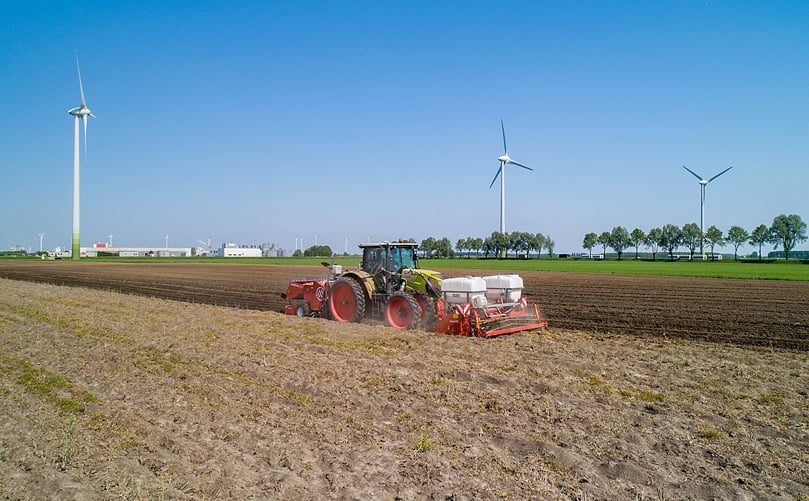
Farm Tractor Tilling Soil for Potato Cultivation
Soil Type and Characteristics: The ideal soil for potato cultivation is a well-drained sandy loam or loam, which ensures proper aeration and reduces the risk of tuber rot. Soils should have a friable layer at least 12–18 inches deep to allow root penetration. A slightly acidic pH between 5.5 and 6.5 promotes optimal nutrient uptake and reduces the risk of common scab caused by Streptomyces scabies. For early-season potatoes, a pH range of 6.5 to 7.5 is suitable on sandy soils, whereas heavier loams are more appropriate for main-season crops. When the soil pH exceeds 7.0, elemental sulfur at 500–1,000 lbs/acre can be applied to gradually lower it, while liming at 1–2 tons/acre helps correct overly acidic soils. Heavy clay or poorly drained soils should be avoided unless properly amended, as such conditions can cause up to 20–30% yield loss due to tuber decay.
Tillage Practices: Tillage begins with primary ploughing to a depth of 20–30 cm during autumn to invert the soil, bury crop residues and reduce overwintering pests. This is followed by secondary harrowing or disking to produce a fine, crumbly tilth suitable for uniform seedbed formation. In regions with wet spring conditions, such as the Pacific Northwest, ridge or bed formation is highly beneficial. Raised beds measuring 60–75 cm in width and 15–20 cm in height improve drainage and accelerate soil warming by 3–5°C, which enhances early growth. Precision tillage implements, including lister-bed shapers or chisels, help break subsoil compaction and incorporate residues efficiently without over-tilling, thereby preserving soil structure. Sustainable systems that rely on minimum tillage have been shown to reduce erosion by 40–50% while maintaining microbial balance.
Organic Matter and Soil Amendments: Organic matter plays an essential role in improving soil structure, moisture retention and biological activity. The incorporation of well-rotted compost or aged manure at 10–20 tons per hectare during fall enhances soil quality without introducing pathogens such as scab that can occur with fresh manure. In clay soils, organic matter improves drainage, while in sandy soils it increases fertility and water-holding capacity. Recent studies also highlight the benefits of applying biochar at 5–10 tons per hectare for long-term carbon sequestration and up to 20% higher moisture retention. The inclusion of cover crops such as alfalfa or clover helps build soil nitrogen naturally, providing 50–100 lbs/acre, while also preventing erosion. However, excessive organic additions in manured fields should be avoided, as they may increase scab incidence under neutral pH conditions.
Soil Testing and Nutrient Balancing:Regular soil testing is essential to determine nutrient status and organic matter levels, ideally maintaining 2–4% organic content. This information guides nutrient management plans, ensuring balanced fertilization and preventing over-application. Proper nutrient balance supports uniform tuber development and sustained plant vigor throughout the growing season.
Small-Scale and Sustainable Practices: For small-scale or container cultivation, a 50:50 mixture of compost and potting soil in deep containers (2–3 feet tall) with proper drainage mimics field conditions effectively. Sustainable practices such as no-till farming with organic mulching can reduce fuel consumption by up to 30% while promoting biodiversity and enhancing soil resilience over time.
Seed Selection and Preparation for Potato Planting
Selecting high-quality seed tubers is fundamental to achieving vigorous growth, strong disease resistance and high yields. Since potatoes are clonally propagated, they inherit genetic and pathological traits directly from the parent plant, making seed health a critical factor. Poor-quality or infected seed often introduces viruses, bacteria or fungi that can reduce yields by 20–50%. Hence, certified seed tubers sourced from accredited agencies are strongly recommended, as they are rigorously inspected for genetic purity and disease freedom.
Characteristics of Quality Seed Tubers: Ideal seed tubers should be uniform in size, typically weighing between 30–50 grams (1.5–3 ounces), to ensure even sprouting and growth. They should possess 2–3 healthy eyes per piece, firm texture and an absence of physical damage such as cuts, bruises, or shriveling. Tubers must also be free from sprouting inhibitors, which are commonly present in grocery store potatoes. Visually, good-quality seed shows no signs of common diseases such as blackleg, ring rot or viral infections like Potato Virus Y (PVY). Similarly, pest-free tubers should exhibit no evidence of tuber moth infestation, nematode damage or bacterial wilt symptoms. Certified seeds typically maintain virus titers below 1%, guaranteeing a clean start for the next crop.
Certified vs. Farmer-Saved Seed: Certified seed consistently outperforms farmer-saved seed, providing 20–40% higher yields due to its assured health and genetic integrity. However, in resource-limited regions, farmer-saved seed may serve as a practical alternative if managed properly. Such seed lots should undergo annual virus testing, preferably using ELISA methods, and field roguing should be practiced to remove symptomatic plants. Even under good management, farmer-saved seed should not be recycled beyond two to three generations, as disease accumulation inevitably reduces vigor and productivity.
True Potato Seed (TPS) Considerations: True potato seed (TPS) or botanical seed, offers a disease-free alternative and reduces dependency on bulky seed tubers. While promising for breeding and low-input systems, TPS still faces challenges in achieving uniformity and consistent yields. Selection of high-performing parental lines with known disease resistance and yield potential is essential for its effective use, particularly in hybrid TPS systems developed for tropical and subtropical regions.
Breaking Seed Dormancy: Many commercial potato varieties, such as Russets, exhibit prolonged dormancy after harvest, requiring intervention for uniform sprouting. Dormancy can be naturally broken through warm storage at 15–20°C for 2–4 weeks before planting. Alternatively, chemical treatments using gibberellic acid (GA₃) at 10–50 ppm as a 1–2 hour dip effectively stimulate sprouting. Exposure to natural ethylene gas (10 ppm for three days) or Rindite (25 ppm) has also proven to shorten dormancy by up to two weeks without compromising tuber quality. Proper dormancy management ensures synchronized emergence and even stand establishment in the field.
Seed Treatment and Health Management: Seed treatments play a crucial role in protecting young sprouts from soil-borne pathogens. Before planting, tubers should be treated with fungicides such as mancozeb at 2 g/kg to control black scurf (Rhizoctonia solani) and silver scurf. For organic or eco-friendly systems, bio-agents such as Trichoderma viride at 10 g/kg of seed tubers provide effective biological protection, reducing disease incidence by up to 50%. In organic farming systems, hot water treatment (44°C for 3 hours) can be used to eliminate surface-borne pathogens. A simple “bag test” cutting and incubating a few sample tubers for 3–5 days can help detect latent rot infections before large-scale planting.
Grading and Standards: Seed grading ensures uniformity and compliance with national or regional certification standards. For example, grading regulations such as those in North Dakota specify quality, condition, and size parameters for commercial seed lots. Maintaining such standards helps ensure consistency in emergence, vigor and tuber yield, while minimizing mechanical injury and disease spread during handling and planting.
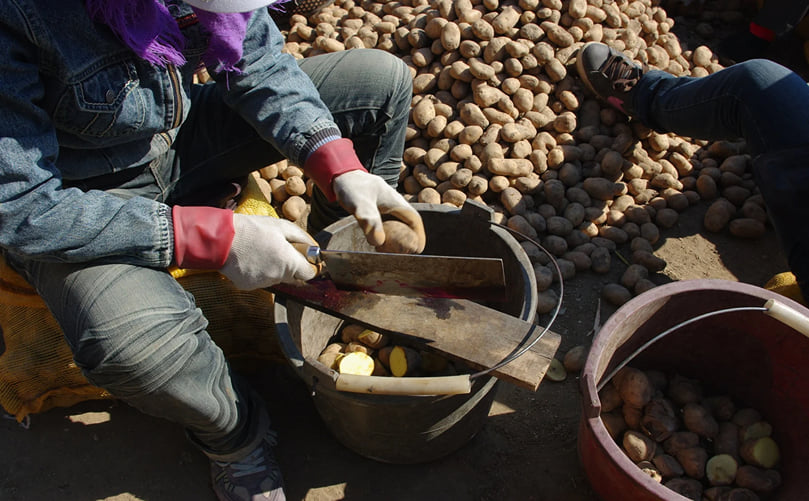
Farmer Sorting and Cutting Certified Potato Seeds
Variety Choice
Selecting the right potato variety is crucial for achieving high yields, market quality and resilience to local stresses. The ideal choice depends on maturity period, regional climate, intended use (fresh market, processing or storage) and resistance to abiotic (drought, heat) and biotic (pests, diseases) stresses. With more than 4,000 cultivated varieties worldwide, strategic selection can significantly enhance productivity often reaching up to 50 t/ha under optimal management.
Based on Maturity
Potato varieties are typically grouped by maturity period:
- Early varieties (70–90 days): Suitable for short seasons or double-cropping systems in subtropical regions. Examples include Yukon Gold (yellow flesh, versatile) and Irish Cobbler (75–90 days).
- Mid-season varieties (90–110 days): Balanced for yield and adaptability. Kennebec (white, disease-resistant) and Carola (organic-friendly) are common choices.
- Late varieties (110+ days): Suited for high-yield and long-storage potential. Bintje (120 days, excellent storage) and Caribou Russet (mid-late, high quality) are notable examples.
- Short-day late-maturing (SD): types adapt better to tropical or equatorial conditions.
High-Yielding and Region-Specific Varieties
- India: Kufri Jyoti – heat-tolerant, high-yielding (40–50 t/ha).
- United States: Russet Burbank – ideal for processing (35–45 t/ha); Ranger Russet – drought-resistant, high dry matter (18–22%) for fries.
- Europe: Innovator – saline soil tolerance, preferred by processors.
- Short-day Tropics: Andigenum hybrids – strong performance under warm, short-day conditions.
Organic and Specialty Selections
- Organic systems: Sarpo Mira – renowned for blight resistance and low input needs.
- Home gardens: Mixing early, mid and late varieties ensures extended harvest and diverse culinary use.
Stress-Tolerant and Modern Breeding Lines
Advances in breeding including CRISPR-edited varieties have introduced cultivars with enhanced blight resistance and 15% higher yield potential. These modern types complement traditional breeding lines for both sustainability and profitability.
Culinary and Market Considerations
Culinary quality varies with starch type:
- Waxy potatoes (reds): Hold shape during boiling and salads.
- Starchy potatoes (russets): Ideal for baking, mashing, and frying.
Growers and consumers can refer to comparative charts (e.g., Fedco’s variety guide) for visual and use-based selection by shape, color and culinary profile.
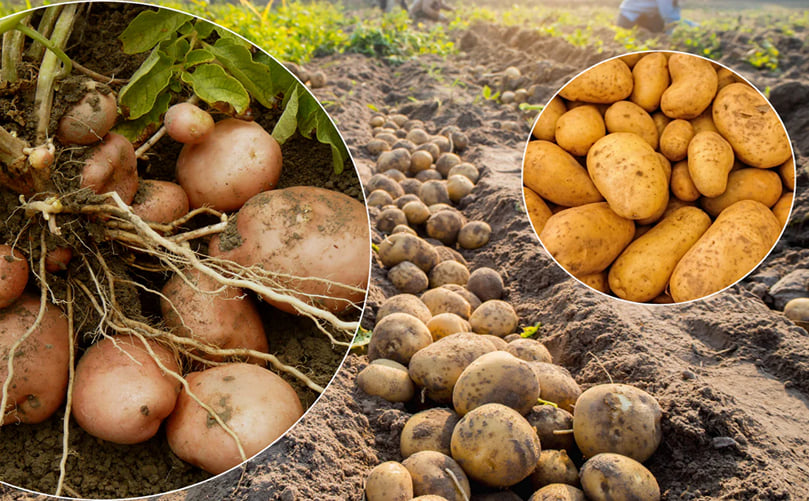
Choosing right variety for higher yield
Pre-Planting Operations
Pre-planting operations play a vital role in ensuring uniform emergence, vigorous plant growth and higher yields in potato cultivation. When managed effectively, these practices can advance harvest by two to three weeks and increase productivity by 10–20 percent. The major activities include sprouting or chitting, seed cutting and basal fertilizer application, usually initiated four to six weeks before planting.
Sprouting (Chitting): Sprouting or chitting, encourages early and uniform emergence by allowing seed tubers to develop short, strong shoots before planting. Tubers are placed in trays or shallow containers under cool, well-lit, and frost-free conditions with temperatures maintained between 10 and 15°C and light intensity of 200–500 lux. Over four to six weeks, the tubers develop green sprouts about one to two centimeters long, which are ideal for field establishment. The rose end should face upward and care must be taken to prevent excess moisture that could cause rot. This method is especially advantageous in temperate or high-altitude areas, where soil temperatures remain low during early planting. In contrast, in warm regions with rapid soil warming, chitting can be optional but still benefits uniform stand establishment. Energy-efficient LED lighting can be used in organic setups to promote sprouting while reducing electricity use.
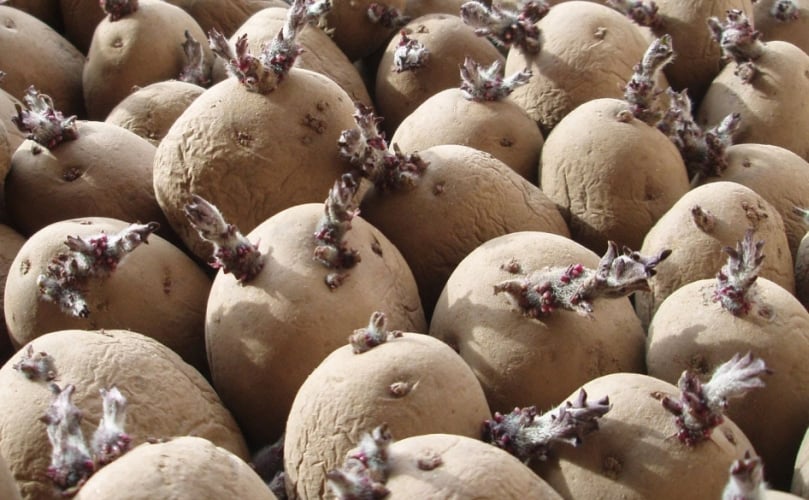
Farmer Cutting and Drying Sprouted Seed Potatoes
Cutting of Seed Tubers: When large seed tubers exceed 50–60 grams, they are cut into pieces weighing 40–60 grams, each containing two to three healthy eyes. This ensures better plant spacing and cost efficiency without compromising vigor. Cutting should always be performed with sterilized knives to prevent disease spread. After cutting, pieces are cured for two to four days at 15–20°C and 85–90 percent relative humidity to allow healing and suberization of cut surfaces, forming a corky protective layer that minimizes rot risk. Treated seed pieces can also be dusted with sulfur or dipped in a mild disinfectant such as one percent bleach solution for added protection. Whenever possible, small whole tubers below 50 grams are preferred because they eliminate the need for cutting and reduce infection chances.
Basal Fertilizer Application: Before planting, a basal dose of fertilizer is incorporated into the soil to support early root and stolon development. Superphosphate (50–100 kg P/ha) or a balanced NPK formulation such as 10-20-20 (200–300 kg/ha) is commonly applied in furrows or beds. Soils low in fertility benefit from compost application at about 10 tonnes per hectare to improve structure and supply micronutrients. However, excessive nitrogen should be avoided during this stage as it may promote lush vegetative growth at the expense of tuber development. Fertilizer recommendations must be based on soil test results, ensuring balanced nutrition. In pot or greenhouse systems, slow-release fertilizers are preferred to maintain steady nutrient availability in confined root zones.
Planting Methods
Potato planting methods vary with climate, soil type, topography and farm scale, with the primary goal of ensuring proper drainage, soil aeration, tuber protection and ease of mechanization. The choice of method significantly influences yield, disease incidence, and irrigation efficiency. Commonly used techniques include ridge and furrow, flat planting, and trench planting, each adapted to specific environmental and management conditions. On large farms, mechanical or semi-mechanical systems are often integrated to enhance precision and labor efficiency.
Ridge and Furrow Method: The ridge and furrow system is the most widely adopted approach, accounting for nearly 80 percent of global potato acreage. It involves forming raised ridges that are 60 to 90 centimeters wide and 15 to 30 centimeters high, with furrows in between for irrigation and drainage. Seed tubers are planted on top of the ridges, with the eyes facing upward and covered lightly with soil. This configuration promotes faster soil warming by 2 to 5°C during cool spring conditions and provides excellent drainage in high-rainfall areas such as northern India, the United Kingdom and parts of Europe. The system also facilitates subsequent hilling and mechanical harvesting, reducing waterlogging and tuber rot while improving yields by 15 to 25 percent under wet conditions.
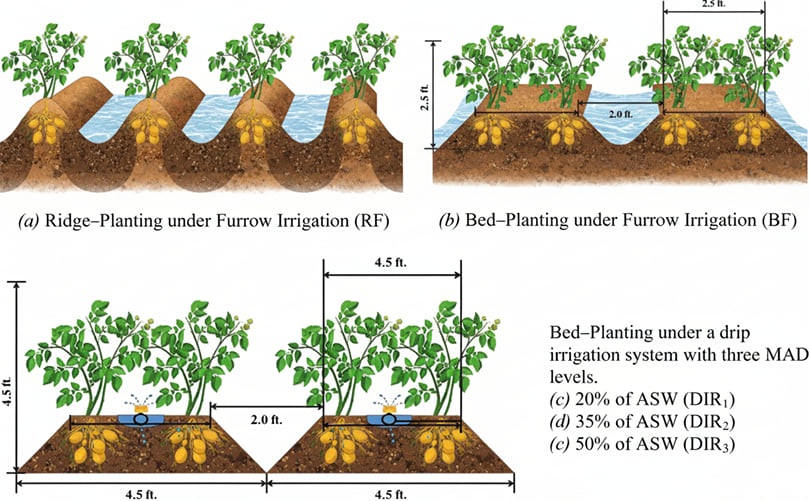
Ridges and Furrow Planting Method
Flat Planting: Flat planting is typically practiced in dry, irrigated regions with level terrain, such as the Nile Delta and the valleys of California. In this method, tubers are placed in shallow furrows 10 to 15 centimeters deep and covered evenly on level ground. The flat surface allows for uniform irrigation through sprinklers or drip systems, which enhances water use efficiency. This approach is suitable for well-drained soils and areas with controlled water availability. However, in humid or high-rainfall climates, flat planting may lead to poor aeration, soil crusting, or higher disease pressure from late blight. To mitigate these risks, farmers can use micro-beds or maintain soil cover with organic mulch or living cover crops.
Trench Planting: Trench planting is especially effective in hilly terrains and water-scarce regions. Trenches about 15 to 20 centimeters deep are prepared and tubers are placed at the bottom to utilize capillary moisture from deeper soil layers. As plants grow, soil is gradually drawn from the sides to cover the stems a process known as hilling which stabilizes the plants, conserves moisture and reduces runoff. This method can save 20 to 30 percent of irrigation water while ensuring adequate tuber formation even under semi-arid conditions. It is also common in home gardens and small-scale farms in undulating landscapes.
Mechanized and Manual Planting: Mechanized planting has gained prominence on large-scale commercial farms due to its accuracy, labor savings and consistency. Modern potato planters, such as two- to eight-row machines from manufacturers like Grimme, use cup or belt mechanisms for uniform spacing and depth placement. When integrated with GPS-based precision systems, these planters can achieve up to 95 percent accuracy, reducing seed wastage and labor requirements by 70 to 80 percent. Mechanical systems are compatible with ridge or flat planting and allow for simultaneous fertilizer placement, improving nutrient use efficiency.
In contrast, manual planting remains common among smallholders and organic producers. It involves the use of simple tools such as hoes or dibblers, allowing careful seed placement and individual plant inspection. Although it offers greater control over plant spacing and health, it is highly labor-intensive, covering only 0.1 to 0.2 hectares per person per day. In transitional systems, hybrid approaches like trench-and-hill or ridge-with-trench methods are sometimes adopted to combine the benefits of both mechanized precision and traditional adaptability.
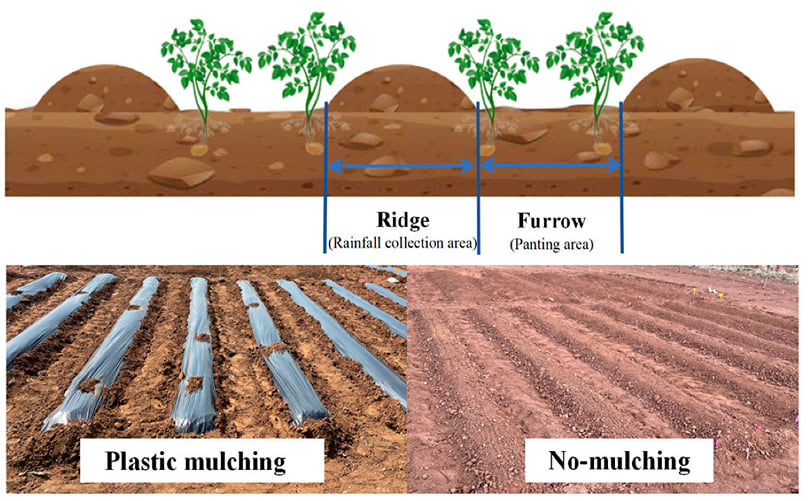
Row Planting of Potato Tubers with Proper Spacing
Planting Depth and Spacing
Planting depth and spacing are critical agronomic factors that directly affect emergence speed, tuber size, overall yield and pest resistance in potato cultivation. The ideal combination depends on soil texture, variety, climatic conditions and the planting method used. Proper adjustment ensures uniform sprouting within seven to fourteen days while protecting young shoots from frost injury and minimizing tuber greening. The target plant population generally ranges between 35,000 and 45,000 plants per hectare to maintain an optimal balance between vegetative growth and tuber development.
Planting Depth: The recommended planting depth varies from 5 to 10 centimeters, measured from the top of the tuber to the soil surface. Shallower planting, typically around 4 to 6 centimeters, is suited for heavy or moisture-retentive clay soils and for warm climates where rapid emergence is desired. Deeper planting, in the range of 8 to 12 centimeters, is preferred for sandy or light soils and in colder regions where frost protection and moisture conservation are priorities. For example, late-season crops in cool temperate areas benefit from deeper placement about 12 to 15 centimeters to buffer against temperature fluctuations and desiccation. In sandy soils, the slightly deeper depth helps prevent drought stress, while in loamy soils, a moderate depth of 7 to 10 centimeters promotes balanced root and stolon growth. When using cut seed pieces, they are generally placed eye-side down to encourage uniform sprouting, whereas small whole tubers can be planted slightly shallower to minimize the risk of decay under moist conditions.
Spacing: The spatial arrangement of potato plants greatly influences light interception, canopy structure and tuber size distribution. Row-to-row spacing typically ranges from 60 to 90 centimeters, providing adequate room for machinery access, hilling and airflow, which helps reduce disease incidence. High-density plantings, especially in early-maturing varieties or smaller fields, may use narrower spacing of 60 to 75 centimeters between rows. Plant-to-plant spacing within rows usually varies from 20 to 30 centimeters, depending on the growth habit and intended market size. Compact, early-maturing varieties such as Yukon Gold perform well at closer spacings of 18 to 25 centimeters, while more vigorous or late-maturing types like Russet Burbank require wider gaps of 25 to 35 centimeters to accommodate their sprawling growth habit.
For large-tuber production or processing-grade potatoes, wider spacing (30 centimeters between plants and 90 centimeters between rows) encourages the development of fewer but larger tubers. Conversely, closer spacing is preferred for baby or new potato production where smaller tubers are desired. Overcrowding, however, can reduce tuber size and marketable yield by up to 15 percent due to increased competition for nutrients and light. In intensive systems such as raised-bed or square-foot gardening, a grid spacing of 30 centimeters in 30-centimeter-deep beds offers efficient use of space. Plant population models and field simulations indicate that maintaining around 40,000 plants per hectare provides the best balance of yield and quality across different environments. Regional adaptations may be necessary for example, deeper planting in sandy soils of Texas or lighter planting in the colder soils of Alaska to align with local climatic extremes.
Seed Rate
Seed rate is a crucial factor influencing plant population, yield potential and overall production cost in potato cultivation. It depends on several variables, including tuber size, variety, spacing and the desired plant density, which typically ranges from 35,000 to 50,000 plants per hectare. The goal is to achieve a uniform stand that ensures optimal light interception, nutrient uptake and tuber development while maintaining cost efficiency.
Determining Seed Rate
For most commercial potato crops, the seed rate usually falls between 2.0 and 2.5 tonnes per hectare when medium-sized tubers are used. The quantity of seed required can be calculated using the formula:
Seed rate (t/ha) = (Number of plants/ha × Average tuber weight in g) / 1,000,000.
This allows for precise adjustments based on spacing and seed weight. For example, with 36-inch (90 cm) row spacing and 10-inch (25 cm) plant spacing equivalent to about 34,600 plants per hectare using tubers averaging 55 grams results in a seed rate of approximately 2.2 tonnes per hectare.
Seed size greatly influences the rate required. Small tubers (30–45 mm in diameter or 30–50 grams each) typically require 2.0 to 2.2 tonnes per hectare when planted at closer spacings of 20–25 centimeters to achieve 40,000–45,000 plants per hectare. Medium-sized tubers (45–60 mm, 50–60 grams) generally need 2.2 to 2.5 tonnes per hectare, while large tubers (>60 mm) may require 2.5 to 3.0 tonnes per hectare unless cut into smaller seed pieces to improve planting efficiency.
Variety and Management Adjustments: Seed rate can also vary according to the variety’s growth habit, maturity and intended use. Early-maturing varieties that produce fewer stems, such as Yukon Gold or Kennebec, perform best with slightly lower rates of 1.8 to 2.2 tonnes per hectare, promoting quicker canopy closure and early harvest. Late-maturing or high-yielding storage types, like Russet Burbank or Atlantic, require higher seed rates of around 2.5 tonnes per hectare to maintain sufficient plant population throughout their longer growth cycle. In high-density systems with closer plant spacing (15 cm), the seed requirement may drop to 1.8–2.0 tonnes per hectare when smaller tubers are used.
When planting minitubers or Generation 1 (G1) seed stock, seed rates of about 2.5 tonnes per hectare can produce commercial yields ranging from 25 to 35 tonnes per hectare under good management practices. For high-yield targets of around 50 tonnes per hectare using tubers averaging 50–55 mm, a rate of 2.5 tonnes per hectare is generally appropriate.
Whole vs. Cut Seed Tubers: Although cutting large tubers can reduce seed requirements by 20–30 percent, it carries a higher risk of rot and uneven emergence if not managed carefully. Whole tubers weighing 80–250 grams (3–10 ounces) are preferred wherever possible because they offer better vigor, uniform sprouting and lower disease risk. When cutting is necessary, it should be performed using sterilized tools and followed by proper curing before planting. Seed cost considerations are also significant, as potato seed typically accounts for 30–40 percent of total production costs, priced between USD 0.20 and USD 0.50 per kilogram depending on certification and variety.
Nutrient Management
Nutrient management in potato cultivation is a critical determinant of yield, tuber quality and soil sustainability. Potatoes are heavy feeders, extracting large quantities of nutrients from the soil approximately 4–6 kg of nitrogen (N), 0.7–1 kg of phosphorus (P₂O₅) and 5–7 kg of potassium (K₂O) for every ton of tubers produced. Achieving high yields of 30–50 tonnes per hectare therefore requires a carefully balanced fertilization strategy that integrates both mineral and organic sources while minimizing nutrient losses and environmental impacts.
Balanced NPK Application: A well-balanced NPK regime forms the foundation of potato nutrition. The general recommendation ranges from 95–180 kg N, 50–125 kg P₂O₅ and 100–305 kg K₂O per hectare, depending on variety, soil fertility and yield targets. Nitrogen should be supplied in split doses one-third applied basally before planting and the remaining two-thirds as top-dressings during tuber initiation and bulking stages to reduce leaching and promote uniform tuber development.
For early-maturing varieties, a relatively low nitrogen rate (95–120 kg/ha) encourages rapid tuberization and prevents excessive vine growth, whereas late-maturing or high-yielding cultivars benefit from 150–180 kg/ha to sustain prolonged vegetative activity. Potassium, vital for tuber size, starch accumulation and disease resistance, should be provided in sulfate or nitrate form where possible, as chloride-based fertilizers can reduce specific gravity in processing potatoes. In sandy or light soils, a baseline of 120:80:100 kg/ha (N:P:K) is generally effective under irrigation.
Micronutrient Management: Micronutrients, though required in smaller quantities, play essential roles in enzyme activation, chlorophyll synthesis and tuber quality. Zinc (Zn) at 5–10 kg/ha can be applied through soil incorporation or foliar sprays to improve enzyme function and growth vigor. Boron (B), supplied at 1–2 kg/ha, enhances tuber initiation and prevents internal browning and deformities. Magnesium (Mg) at 10–20 kg/ha supports chlorophyll formation and carbohydrate translocation. Deficiencies in these elements often result in physiological disorders such as cracking, hollow heart or reduced starch accumulation. Regular soil or tissue testing should guide corrective measures to maintain nutrient balance throughout the crop cycle.
Fertigation and Precision Approaches: Fertigation delivering nutrients through irrigation significantly improves fertilizer-use efficiency, enhancing nutrient uptake by 20–25% compared to conventional broadcasting. Precision nutrient management using soil or petiole analysis helps tailor application rates according to field variability, optimizing resource use. Maintaining soil pH between 5.5 and 6.5 ensures maximum nutrient availability, especially for phosphorus and micronutrients like zinc and iron.
Organic and Integrated Nutrient Management (INM): Integrating organic amendments into the nutrient program supports long-term soil fertility and reduces dependence on synthetic inputs. The incorporation of farmyard manure (FYM) or compost at 10–30 tonnes per hectare, combined with biofertilizers such as Azotobacter and phosphate-solubilizing bacteria (PSB), can reduce chemical fertilizer needs by 25–30% while improving soil structure, microbial activity and cation exchange capacity (CEC).
In saline or degraded soils, organic formulations such as Organomix or bio-based blends enhance nutrient uptake by 15–20%. Integrated nutrient management strategies applying 75% of the recommended NPK along with 25% organic manure and zinc supplementation have been shown to increase yields by 10–20% while maintaining soil health. For fully organic systems, leguminous cover crops like clover or vetch can be used for nitrogen fixation and green manuring, contributing to sustained productivity without synthetic fertilizers.
Irrigation Management
Effective irrigation management is essential in potato cultivation, as the crop has a relatively shallow root system and requires a consistent moisture supply throughout its growth cycle. On average, potatoes need 500–700 mm of water per season, depending on climate, soil type and variety. Proper scheduling ensures that plants receive adequate water during the three most critical stages emergence (sprouting), tuber initiation (flowering) and bulking (60–90 days after planting) which together account for nearly 70% of total water demand.
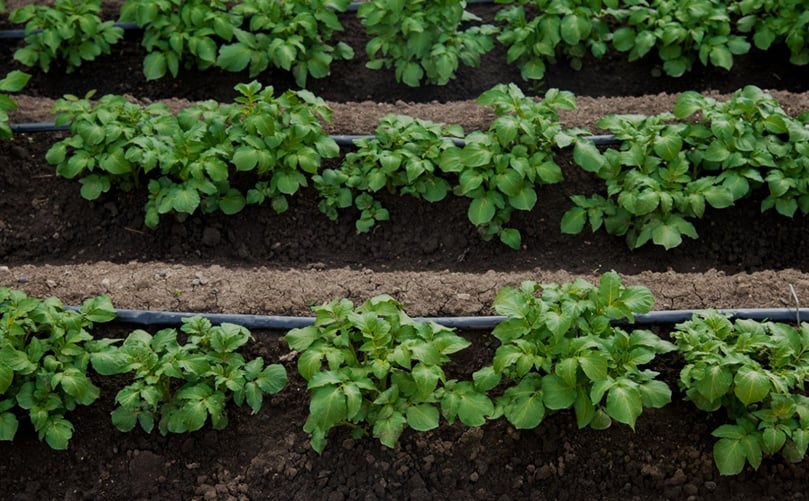
Drip Irrigation System in a Potato Field
Water Requirement and Crop Stages
During the bulking stage, potatoes have the highest moisture requirement, with evapotranspiration rates reaching 6–8 mm per day. Maintaining soil moisture between 70–90% of field capacity promotes optimal tuber expansion, while mild deficit irrigation of 20–30% below ET during late bulking can enhance tuber quality, dry matter content and storability. However, moisture levels below 60% field capacity may cause tuber malformation, cracking or reduced yield.
Soil texture greatly influences irrigation frequency. Sandy soils require frequent, smaller irrigations to offset low water-holding capacity, while loamy soils allow longer intervals between applications due to higher moisture retention. In clay loams, fewer but deeper irrigations help avoid surface crusting and improve root aeration.
Irrigation Methods
Several irrigation methods are practiced based on farm size, topography, and resource availability:
- Furrow irrigation: is the most traditional and widely used system, applying 25–50 mm of water every 5–10 days. It is cost-effective and suitable for ridge and furrow planting but can result in uneven wetting in light soils or sloping fields.
- Sprinkler irrigation: offers uniform coverage and flexibility across soil types, effectively reducing late blight incidence by up to 40% through improved canopy aeration. This method is particularly useful in areas with undulating terrain or irregular field shapes.
- Drip irrigation: Featuring emitters spaced 20–30 cm apart with discharge rates of 1–2 L/hr, provides precise water delivery directly to the root zone. It reduces water use by 30–35% and improves nutrient-use efficiency when combined with fertigation systems, making it ideal for arid and semi-arid regions.
Scheduling and Monitoring
Modern irrigation scheduling relies on evapotranspiration (ET) data, soil moisture sensors, and digital models to optimize timing and frequency. The Checkbook method uses daily ET values and rainfall data to maintain soil water balance, while advanced tools such as FAO-56, WISP or tensiometers guide irrigation when soil moisture drops to 70–90% of field capacity.
Typical frequency ranges from 3–7 days, depending on climatic demand. For instance, if the ET rate is 0.32 inches per day, irrigation should be applied approximately every 3.5 days. In regions like Australia, real-time moisture monitoring has been shown to significantly reduce both over- and under-watering, improving water-use efficiency and yield stability.
An optimum schedule for many regions is 20 mm of water every seven days, equivalent to about 1,800 m³ per hectare per week, though precise needs should always be adjusted based on soil moisture, weather and crop stage.
Weed and Pest Management
Integrated Pest Management Approach
Integrated Pest Management (IPM) in potato cultivation integrates cultural, biological, mechanical and chemical practices to effectively control weeds, insects and diseases while maintaining ecological balance. The approach aims to minimize yield losses often ranging from 15–50% and reduce pesticide resistance and environmental contamination through strategic, science-based interventions.
Weed Control
Weeds such as nightshade, pigweed, lamb’s quarters and barnyard grass compete aggressively with potatoes for nutrients, water and light, leading to 15–30% yield reduction if unmanaged. Preventive measures form the first line of control, including crop rotation with cereals, timely cultivation during hilling and mulching with organic residues. A 10 cm straw mulch can suppress 70–90% of weed emergence, conserving soil moisture and moderating temperature.
Chemical control is applied selectively, with pre-emergence herbicides such as metribuzin or S-metolachlor used at recommended rates to target annual grasses and broadleaf weeds. These are most effective when combined with non-chemical methods like flame weeding or cover cropping using legumes and brassicas, which naturally inhibit weed seed germination. Maintaining clean field borders and irrigation channels also prevents weed proliferation.
Major Pests and Control Measures
Potatoes are vulnerable to a range of insect pests, with aphids, cutworms and potato tuber moths being the most destructive.
- Aphids act as virus vectors, capable of transmitting diseases like PVY and PLRV, resulting in up to 50% yield loss. Regular scouting is essential, with action thresholds of 5–10 aphids per leaf. Biological and organic options include neem oil sprays (5 ml/L), insecticidal soaps, or releasing beneficial insects such as ladybird beetles and Encarsia formosa for natural suppression.
- Cutworms, which feed on young stems and reduce plant stand by 30%, are managed through bait traps, soil solarization, or biological insecticides such as spinosad and chlorantraniliprole. Mechanical barriers and deep plowing before planting also help destroy pupae in the soil.
- Potato tuber moths pose a serious risk in storage and field conditions. Control includes pheromone traps (20 per hectare), Bacillus thuringiensis (Bt) sprays, and proper field sanitation—removing residues and avoiding exposed tubers.
Preventive and Advanced Strategies
Regular field scouting (weekly) and economic threshold-based interventions form the backbone of effective IPM. Crop rotation for 3–4 years with non-solanaceous crops like cereals breaks pest life cycles, while resistant varieties offer genetic protection against blight and virus-transmitting pests.
In conventional systems, selective insecticides like imidacloprid (Admire Pro) provide protection from early-season beetle infestations, whereas biological controls and biotech innovations such as RNA interference (RNAi) technologies have shown potential to reduce spray frequency by up to 50%.
In organic systems, the focus shifts toward ecological balance enhancing populations of natural enemies, using traps and barriers and optimizing irrigation to discourage pest habitat formation. Effective weed and pest management ultimately ensures healthy crop stands, improved tuber quality, and long-term soil and ecosystem sustainability.
Hilling / Earthing Up
Purpose and Importance
Hilling, also known as earthing up, involves mounding soil around the base of potato plants to encourage tuber formation, prevent greening, suppress weeds and improve soil aeration and drainage. This practice can enhance yields by 15–25% by stimulating the development of adventitious roots and providing optimal conditions for stolon expansion. In addition to promoting healthy tuber growth, hilling also prevents solanine accumulation caused by light exposure, which can make tubers toxic and unmarketable.
Timing and Frequency
Hilling is typically performed two to three times per growing season, depending on soil type, climate and variety. The first hilling should occur when plants reach 15–20 cm (6–8 inches) in height, usually 2–3 weeks after emergence. The second hilling follows about 20 days later, when plants reach 25–30 cm in height. A third hilling may be done at the onset of flowering if soil erosion or exposure is evident. Operations should be completed before canopy closure to prevent stem breakage or foliar damage, with earlier scheduling in windy or heavy rainfall conditions.
Methods and Techniques
Hilling can be performed manually or mechanically, depending on farm scale and resources.
- Manual hilling uses hoes or rakes to pull soil from between rows, creating mounds about 15–20 cm high while keeping the plant tops exposed. This is ideal for small plots, home gardens or organic systems.
- Mechanical hilling employs tractor-mounted hillers or ridgers, which can cover multiple rows simultaneously and reduce labor by up to 60%, improving uniformity in commercial operations.
- In trench planting systems, soil is drawn from the sides to cover the base of plants gradually.
Adaptations and Organic Practices
For organic or sustainable systems, hilling can be combined with mulching, such as applying straw or compost layers over ridges to conserve moisture, suppress weeds and deter pests like tuber moths. In container or raised-bed cultivation, soil or compost can be added incrementally as plants grow, maintaining optimal coverage without overcompaction.
Variety-Specific Considerations
Hilling is especially crucial for indeterminate varieties (e.g., Russet Burbank), which produce tubers along extended stolons and respond strongly to additional soil coverage. Determinate varieties, with shorter stolons, require fewer hillings but still benefit from initial mounding for weed and greening control.
Disease Management
Disease management in potato cultivation is essential to prevent yield losses that can exceed 50% during severe outbreaks. Effective control requires an integrated disease management (IDM) approach that combines resistant varieties, cultural practices, biological and chemical control, and continuous monitoring. Research highlights evolving pathogen strains and climate-linked shifts in disease pressure, demanding more adaptive and sustainable management strategies.
Major Diseases and Impacts
The most prevalent diseases affecting potatoes worldwide include late blight (Phytophthora infestans), early blight (Alternaria solani), black scurf (Rhizoctonia solani) and bacterial wilt (Ralstonia solanacearum). Emerging threats also include water molds and viral complexes such as PVY and PLRV.
- Late blight remains the most destructive, causing rapid foliar necrosis and tuber rot under humid conditions, with global losses estimated at $5–10 billion annually.
- Early blight produces concentric brown leaf spots that lead to premature defoliation and reduced photosynthesis.
- Black scurf forms corky lesions on tubers and stolons, reducing marketability by 20–30%.
- Bacterial wilt, prevalent in warm and wet tropical soils, causes vascular discoloration and irreversible wilting, persisting in soil for years.
Recent findings in reveal the emergence of fungicide-resistant blight strains, emphasizing the need for rotational use of active ingredients and adoption of disease-forecasting models.
Preventive and Cultural Measures
Prevention begins with certified disease-free seed and 3–4-year crop rotation with non-solanaceous crops such as cereals or legumes, which can reduce soil inoculum by 40–60%. Maintain an acidic soil pH (5.0–5.5) to suppress common scab and ensure good drainage and air circulation to reduce humidity-driven pathogens like late blight.
Timely removal and destruction of volunteer potato plants and infected debris prevents pathogen carryover. In hot, humid regions, ridge planting and wider spacing improve airflow and reduce foliar wetness.
Resistant Varieties and Biotechnology
Adopting disease-resistant varieties remains one of the most cost-effective strategies. Modern varieties like Sarpo Mira (highly resistant to late blight) and Unica (multi-disease resistance) provide 50–70% natural protection. CRISPR-edited and gene-stacked cultivars have gained importance, offering targeted resistance to evolving blight and bacterial wilt strains. For temperate regions such as North America and Europe, breeding efforts prioritize resistance to Dickeya spp. (blackleg) and Erwinia complexes.
Chemical and Biological Controls
Chemical control remains vital when disease pressure is high.
- For late blight, apply protectant fungicides like mancozeb, copper oxychloride or chlorothalonil at 7–10 day intervals during wet weather, alternating systemic and contact products (e.g., cymoxanil, propamocarb or dimethomorph) to delay resistance.
- Early blight is effectively managed with strobilurins (azoxystrobin, pyraclostrobin).
- Biofungicides such as Trichoderma viride (10 g/kg seed) and Bacillus subtilis reduce disease incidence by 40–50%, making them suitable for organic or eco-conscious production systems.
Forecasting tools like BlightCast, Smith Period models, or mobile-based disease alerts now support predictive spray scheduling, reducing unnecessary chemical applications and improving precision.
Sanitation and Regional Considerations
For bacterial wilt and soil-borne pathogens, soil solarization at 40–50°C for 6–8 weeks can destroy up to 80% of pathogen populations. Avoid overhead irrigation, which facilitates pathogen spread through splashing water.
Regional adaptations are key:
- In subtropical India, use heat-tolerant, wilt-resistant varieties and apply organic amendments for microbial balance.
- In European regions, shifting late blight populations demand updated fungicide programs and monitoring using digital diagnostic tools and video guides for early identification.
Harvesting in Potato Cultivation
Harvesting potatoes requires precise timing and careful handling to minimize damage and maintain quality for storage and market use. Properly executed harvest operations can reduce tuber bruising to below 5% and significantly extend storage life. The choice of harvest time and method depends on the intended market (fresh, seed or processing) and field conditions.
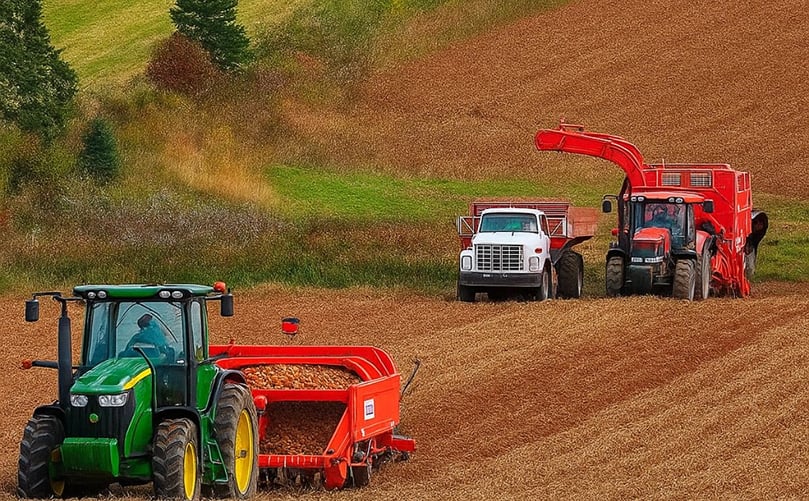
Modern Potato Harvester Lifting Tubers from the Soil
Maturity Indicators
Potatoes are considered mature and ready for harvest when 80–90% of the vines have yellowed or died back and tubers resist skin rubbing a sign known as skin set, which typically occurs two to three weeks after vine killing. For table use, tubers larger than 45 mm in diameter are preferred.
- New potatoes (immature) are harvested 7–8 weeks after planting or soon after flowering when the skin is still tender.
- Mature potatoes are usually harvested 90–120 days after planting, once foliage senesces and the skin has set firmly.
Pre-Harvest Management
In preparation for harvest, irrigation is reduced two to three weeks prior to allow the soil to dry and tubers to harden. Vine killing (using desiccants like diquat or mechanical flailing) promotes skin toughening and prevents tuber rot under wet conditions. This pre-harvest drying phase also reduces field losses and improves storability.
Harvesting Methods
For small plots (less than 5 hectares), harvesting is performed manually using forks or shovels on dry days. Workers gently lift the tubers to avoid punctures or bruising, with an efficiency of around 0.2 tons per hour per person.
In commercial fields, mechanical harvesters such as tractor-mounted or self-propelled units (e.g., Grimme models) are preferred. These machines use chain diggers, sieves and sorting conveyors to separate tubers from soil and debris efficiently, achieving outputs of 2–5 tons per hour. Modern harvesters include automatic separation devices and GPS-guided systems for precision and reduced labor dependence.
Post-Harvest Handling
Tubers should be harvested under dry soil conditions (<20% moisture) to prevent clumping and mechanical injury. During collection, use padded conveyors, lined bins, and gentle transfer systems to reduce impact damage. Immediately after harvest, potatoes should be cooled to 10–15°C to slow respiration and disease development. Sun exposure must be avoided to prevent greening and solanine accumulation.
Regional Considerations
Regional practices vary based on climate and market demand. In European regions, emphasis is placed on harvest timing and tuber condition to ensure long-term storability. In home and small-scale gardens, tubers are hand-harvested, brushed free of soil and kept in shaded, well-ventilated areas. Crop rotation after harvest enhances soil health and reduces the buildup of soil-borne pests and diseases for the next planting season.