

What Makes a Potato Perfect for French Fry Processing?
Potatoes destined for French fry manufacture are a specialised crop class selected for high dry matter (typically 20–25%), elongated tuber shape, low reducing-sugar content and strong storage stability. These physical and biochemical traits (high specific gravity, starch composition and low glucose/fructose) determine oil uptake, fry colour, texture and processing yields so variety choice and postharvest handling are as important as on-farm yield.
Processing-grade cultivars such as Russet Burbank, Ranger, Umatilla, Clearwater and several modern European lines have been bred and trialled specifically to deliver consistent dry matter, low cold sweetening and disease resistance, which together reduce defects, acrylamide risk and production losses at scale. Industry variety trials and USDA processing reports document these preferences and the agronomic trade-offs processors accept (yield vs. storage vs. fry quality).
Postharvest temperature management and storage are critical temperatures below Approximately 7°C promote cold-induced sweetening (raising reducing sugars and darkening fries), while reconditioning and controlled storage (Approximately 7–10°C, high RH) are standard mitigation strategies used by processors to protect colour and limit acrylamide formation. Regulatory guidance and recent research emphasise storage protocols and reconditioning as central controls in industrial supply chains.
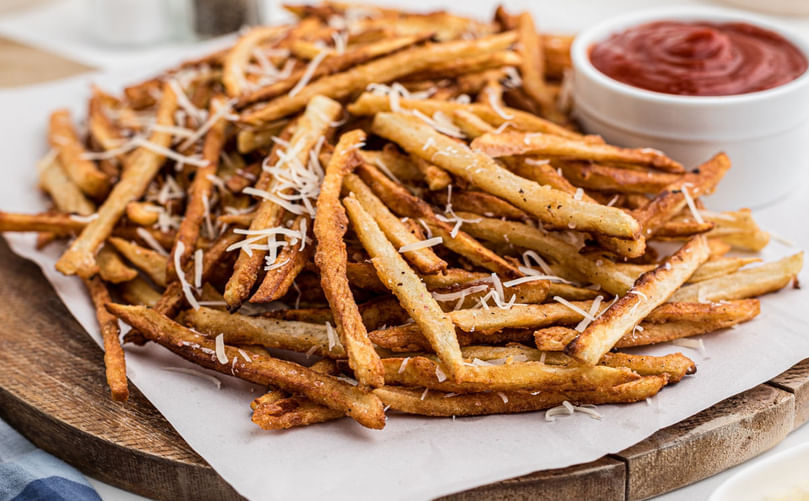
Golden Perfection: Crispy French Fries Fresh from the Fryer
French Fries: The Crispy Global Giant
French fries are one of the most popular potato based products worldwide. They are traditionally prepared by cutting potato strips from fresh tubers, which are then deep fried in oil. In the global French fry industry, five major players three based in North America and two in Europe account for nearly 75% of total production. The global frozen potato market is projected to reach USD 74.4 billion by 2025, growing at a CAGR of 3.8% from 2018 to 2025. Leading manufacturers of frozen French fries include Ore-Ida, Cascadian Farm Organic, Alexia Foods, Trader Joe’s, Checkers & Rally, McCain and Kroger. Although French fries are generally considered a high-calorie food due to their oil content, they also provide certain essential nutrients, including vitamins and minerals.
French fries, like potato chips are a high energy, fat rich food. On average, 100 g of fully fried French fries provides 312 kcal of energy, 3.43 g of protein, 14.73 g of fat, 41.44 g of carbohydrates, 3.8 g of total dietary fiber, 0.3 g of sugars and 1.85 g of ash. However, this nutritional composition can vary depending on the quality of oil used and the frying time and temperature. Frozen French fries are a good source of vitamin C, providing 10.5 to 24.5 mg per 100 g serving, which can contribute approximately 30% of the daily value for a 2,000-calorie reference diet. They are also a good source of potassium, containing 385–433 mg per 100 g serving (about 12% of the daily value), along with 8–11 mg of calcium and 0.54–0.77 mg of iron per 100 g serving.
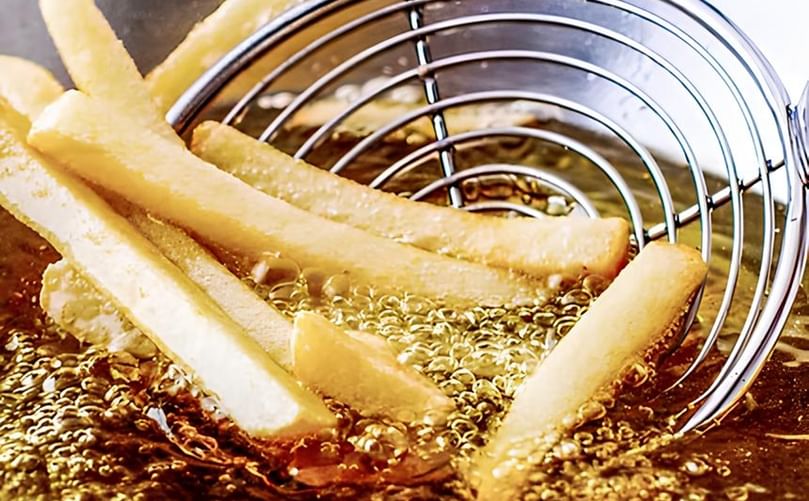
From Farm to Fryer: The Rise of the Modern French Fry
Optimal Varieties for French Fry Production
Variety selection is pivotal for French fries, prioritizing high starch, low moisture tubers with elongated shapes to minimize waste and ensure uniform cuts. Breeding programs focus on disease resistance, yield and processing traits like low acrylamide formation.
- Russet Burbank: The benchmark variety, comprising 70% of U.S. processing acreage and the primary choice for McDonald's fries, due to its high dry matter (20-22%), elongated shape (length:width ratio >2:1), and low reducing sugars (<0.25%), yielding crispy, golden fries with minimal oil absorption. Developed in 1873 by Luther Burbank as a mutation of the 'Russet Burbank' seedling, it matures late (120-150 days) and stores well, but is susceptible to hollow heart and requires careful irrigation to avoid sugar ends.
- Ranger Russet: A resilient alternative bred in 1991 by USDA and the University of Idaho, with 21-23% dry matter and superior storage (up to 10 months at 7-10°C), reducing cold-induced sweetening by 15-20% compared to Russet Burbank. It yields longer fries (up to 10% more usable length) and absorbs 10-15% less oil, making it ideal for export it is blight-resistant and adapts to variable climates.
- Umatilla Russet and Clearwater Russet: Released in 1998 and 2011 respectively, these perform well in late-season trials with reduced irrigation (40% less water), maintaining 22-24% dry matter and specific gravity of 1.085-1.095, which minimizes fry darkening by 20%. Umatilla Russet excels in pale fry color, while Clearwater offers high yields (35-40 tons/ha) and virus resistance, suitable for sustainable farming .
- Innovator and Dakota Russet: Innovator a Dutch variety popular in Europe, boasts 23-25% dry matter, blight resistance, and high yields (45 tons/ha), ideal for premium fries with low acrylamide. Dakota Russet released in 2011, provides robust texture and storage stability, reducing defects like net necrosis by 30%.
Emerging Varieties: In 2025 German-bred varieties like 'Peribonka' and 'Trent' are gaining traction for their agronomic traits, while CIP biofortified lines in Africa integrate processing quality with nutrition. Breeding emphasizes climate resilience, with CRISPR-edited varieties targeting sugar reduction for better fry color.
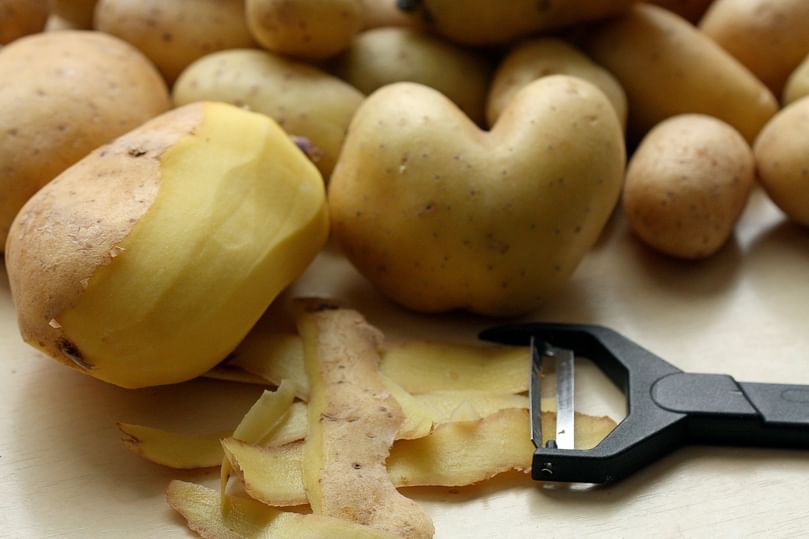
Potato Used for French Fry Manufacturing
These varieties are bred through programs like those at University of Idaho and CIP, focusing on genomics for enhanced processing traits.
Premium Quality Standards for French Fry Potatoes: A Deep Insight
High-quality French fries begin with the right raw material and the potato industry follows strict quality protocols because even small defects can cause 10–20% production losses. Global standards set by the USDA, the European Union and major processors outline the physical, biochemical and safety characteristics required for potatoes to qualify for French fry production.
Dry Matter and Starch Content: Foundation of Texture and Crispiness
The most important quality trait in processing potatoes is their dry matter content. French fry processors prefer potatoes with 20–25% dry matter because this range produces fries that stay crisp on the outside while remaining soft and fluffy inside. When dry matter falls below 18%, potatoes tend to absorb more oil, resulting in greasy, soggy fries. Higher dry matter enhances firmness, supports uniform frying and improves overall texture.
Starch quality also plays a major role. Potatoes with more than 15% starch and a high amylose fraction (typically 70–80%) yield fries with better internal structure. Russet varieties, for example, often contain 75–80% amylose, allowing them to absorb 10–15% less oil during frying while maintaining a consistent interior. This is why varieties such as Russet Burbank, Innovator and Atlantic are preferred in large-scale processing.
Reducing Sugars: Key to Fry Colour and Acrylamide Control
Reducing sugars, mainly glucose and fructose, must be kept at low levels ideally below 0.1–0.25% of tuber weight to produce fries with a golden colour. When sugar levels rise, the Maillard reaction accelerates during frying, causing fries to become too dark. This not only affects appearance but also increases acrylamide concentration. The EU recommends keeping acrylamide levels below 500 µg/kg, and processors usually target even lower levels for export acceptance.
Storage conditions strongly influence sugar levels. Potatoes stored below 7°C undergo cold-induced sweetening, where reducing sugars may increase by up to 50%, making them unsuitable for processing. To prevent this, potatoes are typically stored at 7–10°C with 90–95% relative humidity after a proper curing period of 10–14 days. These conditions help maintain stable sugar profiles and overall processing quality.
Specific Gravity: Rapid Indicator of Processing Suitability
Specific gravity serves as a quick and reliable indicator of potato solids content. The ideal range for French fry production is 1.080–1.100. Potatoes within this range produce fries with lower oil absorption, minimal shrinkage and better texture. Processing plants commonly use the underwater weight method to measure specific gravity because it is both fast and accurate. High-specific-gravity potatoes often reduce oil absorption by nearly 10%, contributing to healthier and more appealing fries.
Size, Shape and Defects: Maximizing Efficiency and Consistency
Uniformity in tuber size and shape is essential for efficient French fry production. The preferred tuber size is 50–110 mm in diameter, with an elongated, oval-to-oblong shape and a length-to-width ratio above 2:1. This shape maximizes strip yield and ensures consistent cooking. According to USDA Grade A standards, potatoes must have more than 90% usable yield during cutting. Defects such as bruising, hollow heart, scab, greening and mechanical damage should remain below 5% because these imperfections lower recovery rates and compromise both texture and appearance.
Nutritional and Safety Standards: Protecting Consumers and Enhancing Value
In addition to physical quality, processors closely monitor biochemical safety. Glycoalkaloids, mainly solanine and chaconine, must remain below 20 mg per 100 g fresh weight to avoid bitterness and toxicity risks. Modern breeding and biofortification programs are now developing varieties that improve nutrient density particularly iron, zinc and vitamin C while maintaining the essential traits required for French fry production. These advancements help processors deliver fries that are not just tasty but also more nutritious.
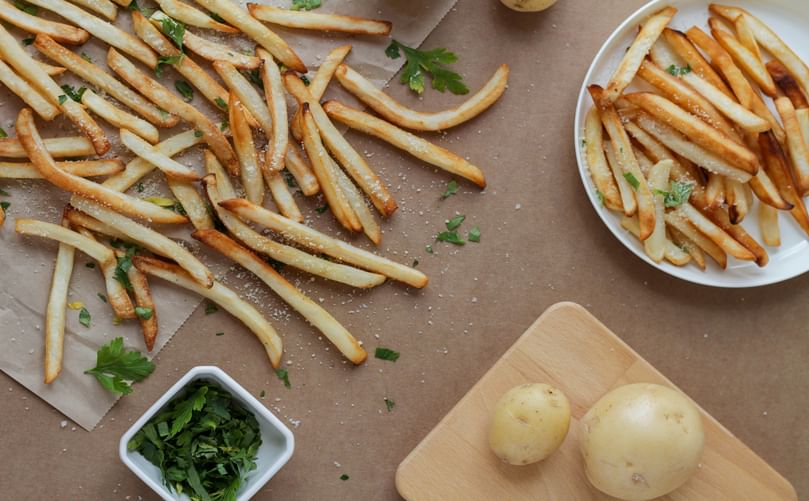
How Frying Temperature Impacts Nutrition
Industrial-Scale Processing Techniques for French Fries
French fry manufacturing is a highly engineered process that converts raw potatoes into uniform, crispy, long-shelf-life products. The United States processes more than 2.6 million tons of potatoes into fries annually, while Europe handles over 1.8 million tons, supported by sophisticated machinery, precise temperature control and advanced quality checks.
Cleaning and Peeling Technologies: Processing begins with removal of soil and debris using high-pressure water jets operating around 100 PSI, ensuring the tubers are free from contaminants before peeling. Steam peeling is the global industry standard, exposing potatoes to 150°C steam for 30–60 seconds, which loosens the skin and achieves less than 5% flesh loss. Abrasive peeling with rotating brushes is used where texture retention is important, while lye peeling with 10–15% sodium hydroxide solutions is preferred in some organic certified plants because the solution can be recovered and reused, reducing wastewater load by 10–15%. Automated optical inspections detect any remaining peel to maintain food safety standards.
High-Precision Cutting and Smart Sorting: Modern factories use water-jet cutters operating at 200–300 bar to create uniform strips, typically 9–12 mm thick and 60–80 mm long. Water-jet cutting reduces starch loss and minimizes mechanical stress, producing 10–15% less waste than steel blade cutting.
Sorting lines equipped with hyperspectral and AI-based vision systems scan every fry for green patches, bruises or sugar-end defects with up to 99% accuracy. These systems remove 5–10% of substandard pieces and reduce manual labor requirements by nearly 30%, improving consistency and throughput.
Controlled Blanching for Texture and Color Development: Blanching is a critical thermal step where strips are immersed in hot water between 70–85°C for 2–5 minutes. This process inactivates polyphenol oxidase (preventing browning), removes excess reducing sugars (lowering acrylamide formation during frying by 20–30%), and stabilizes the starch matrix for better crispness. Manufacturers often adjust pH with citric acid or apply a thin dextrose layer to enhance golden color. Ultrasonic blanching technologies now being explored in European and Asian plants reduce blanching time by 30–40% while retaining up to 90% of heat-sensitive nutrients, making it an emerging energy-efficient method.
Par-Frying, Oil Control and Stabilization: The partially cooked stage, known as par-frying, occurs at 160–175°C for 1–2 minutes, ensuring the surface sets while the interior remains soft. Vegetable oils such as palm, sunflower, or blends are used based on flavor and oxidation stability. The fries are then cooled to 0–4°C to halt cooking. Oil management systems continuously monitor free fatty acid levels and polar compounds, extending oil life and maintaining product safety. This stage accounts for 60–70% of total processing energy, making it a major target for efficiency improvement.
Advanced Freezing and Shelf Life Extension: After par-frying, fries undergo rapid freezing using Individual Quick Freezing (IQF) systems. Temperatures of –35°C or lower, achieved through blast freezers or liquid nitrogen tunnels, lock in structure and prevent ice crystal formation that can damage texture. This process ensures a 12–18 month shelf life without compromising crispness or flavor. Nitrogen flushing in packaging further prevents oxidative rancidity and color deterioration.
Final Preparation, Packaging, and Quality Assurance: Some products undergo a final frying or oven-bake step depending on target markets (retail, food-service or fast-food chains). Quality parameters such as color, texture, and starch gelatinization are measured using colorimeters (USDA grades A–F) and texture analyzers capable of detecting crispness thresholds above 2 N/mm. Packaging lines are automated, filling 2.5 kg bags at speeds exceeding 300 bags per hour, supported by UV-sterilized conveyors to maintain hygiene standards.
Technological Innovations and Energy Efficient Processing: Pulsed Electric Field (PEF) treatment is increasingly used to perforate potato cell membranes, allowing moisture to escape more easily. This reduces oil uptake by 20–30%, improves drying efficiency and results in a more uniform fry color. Cryogenic systems using nitrogen can reduce overall energy consumption by up to 15% compared to conventional freezers. Research programs in India and Canada are evaluating solar-assisted frying lines to offset the heavy energy footprint of industrial oil heating systems.
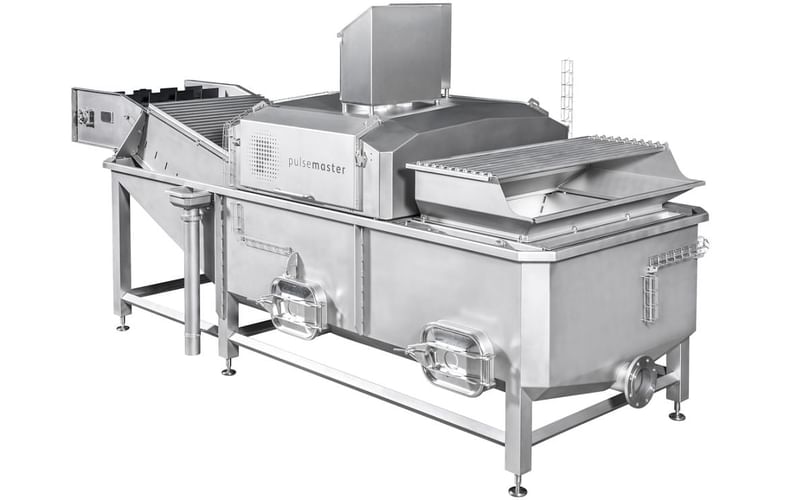
Pulsed Electric Field (PEF) Treatment in Potato Processing
Innovations and Sustainability in French Fry Production: Advanced Technologies and Eco-Friendly Approaches
The French fry industry is rapidly evolving as processors adopt new technologies to improve product quality, reduce environmental impact and increase operational efficiency. Recent advancements highlight a clear shift toward healthier, cleaner and more sustainable production systems.
PEF and Ultrasound Technologies: Transforming Processing Efficiency
Modern processing plants are increasingly using Pulsed Electric Field (PEF) technology to enhance fry quality. PEF treatment weakens potato cell membranes, which improves moisture removal during drying and frying. This results in 20–30% lower oil absorption and a 25% faster drying rate, making the final product healthier and more energy-efficient to produce.
Ultrasound assisted processing also offers significant benefits. It improves starch extraction efficiency by around 15%, and in coloured or specialty potatoes, it can preserve up to 90% of heat sensitive antioxidants such as anthocyanins. This maintains nutritional quality while reducing the need for harsh mechanical or thermal treatments.
Low-Acrylamide Innovations: Improving Safety and Compliance
Acrylamide formation remains one of the biggest concerns in fried foods. To address this, processors are using low-amylose (waxy) potato varieties, which reduce syneresis and maintain texture in frozen fries. These varieties tend to form less acrylamide during frying.
Another major innovation is the application of asparaginase enzymes, which convert asparagine the precursor of acrylamide into aspartic acid. This can lower asparagine levels by up to 50%, helping processors keep acrylamide levels well below EU guidelines, which recommend staying under 500 µg/kg.
Sustainable Processing Practices: Waste Reduction and Green Energy
Sustainability has become a core priority for large-scale processors. Potato peel waste, which accounts for 15–20% of total raw material is now being converted into renewable fuels. Recent European pilot programs have shown that this waste can yield over 6 million liters of bioethanol annually, demonstrating strong potential for circular economy integration.
In countries like India, solar-powered drying units are being adopted to reduce reliance on conventional energy. These systems cut energy expenditures by about 15% and reduce carbon emissions by nearly 10 tons per facility, making them suitable for decentralised processing units.
Biodegradable packaging derived from starch-based blends is being tested in European facilities, particularly in Germany. These materials offer a promising alternative to plastic while maintaining the moisture and texture stability required for frozen French fry packaging.
Automation and AI: The Next Generation of Smart Processing
Modern French fry factories are integrating advanced AI-driven monitoring and automation platforms. These systems use real time data to control frying times, manage oil quality and reduce batch-to-batch variation. As a result, processors have reported up to 20% waste reduction and 15% lower energy usage.
High-capacity robotic systems are now capable of handling close to 1,000 tons of potatoes per day in some of the largest U.S. processing plants. These robots ensure consistent trimming, sorting, and loading operations, enhancing productivity and reducing labor costs.
Global Production and Market Trends in French Fry Manufacturing
The global French fry sector forms one of the largest and most rapidly expanding segments of the potato processing industry, which is projected to reach USD 57.79 billion by 2032, growing at a CAGR of 5.6% . Frozen French fries represent nearly 67% of all frozen potato products, reflecting their universal demand across quick-service restaurants (QSRs), retail markets and export channels. Production remains heavily concentrated in North America and Europe, while Asia is emerging as the fastest-growing region due to rising urbanization and cold-chain advancements.
Regional Production Landscape
North America continues to dominate French fry output, with the United States producing approximately 2.6 million tons annually. The state of Idaho alone contributes nearly 60% of U.S. French fry potatoes, owing to its volcanic soil, optimal climate and high-solids cultivars like Russet Burbank and Ranger Russet. The U.S. exports around USD 1.2 billion worth of frozen fries each year, supported by strong demand from global fast-food chains.
Europe remains the second-largest producer, with Belgium and the Netherlands accounting for 40% of Europe’s total fry production. These countries benefit from cutting-edge agronomy, strict quality standards and large-scale processing facilities that ensure consistent fry color, texture, and specific gravity. Belgium continues to hold its reputation as the “French fry capital” owing to both cultural heritage and industrial capacity.
Asia is witnessing accelerated growth at 7% CAGR, driven primarily by India and China. Increasing consumption of Western-style foods, expansion of QSR chains and major investments in refrigerated transport have strengthened the region’s production. India, in particular is scaling cultivation of processing varieties such as Kufri Frysona, Innovator and Lady Rosetta to reduce import dependency.
Evolving Market Dynamics
Global demand for frozen fries is growing by approximately 5% annually, with nearly 70% of U.S. households purchasing frozen fries at least once a month. Convenience, long shelf life and versatility continue to drive this surge. Consumer preferences are shifting, with notable increases in:
- Low-fat and air-fryer-compatible fries (sales up 15%)
- Organic and preservative-free fries
- Gluten-free or plant-based coated fries for better crispiness
Trade patterns have changed significantly over the past decade. Europe experienced a 28% decline in exports between 2005 and 2013, primarily due to competition from North America and Asia. Meanwhile, Asia-Pacific imports increased by 12%, reflecting expanding consumption and developing retail infrastructure.
Technological and Agronomic Innovations
European research, especially from Germany and the Netherlands, has focused on developing low-reducing-sugar potato varieties that ensure lighter fry colors and lower acrylamide levels. U.S. processors like Lamb Weston have invested over USD 200 million in R&D, focusing on sustainability, energy-efficient lines and next-generation coatings that enhance crispiness after freezing.
Emerging innovations include:
- Low-sugar and low-amylose potato lines for superior fry quality
- Energy-efficient frying systems that reduce oil degradation
- Biodegradable packaging to improve industry sustainability
- AI-driven optical sorting improving defect detection accuracy and reducing waste
French fry production thus continues to evolve through cutting-edge agronomy, smart processing systems, and a rising global appetite for ready-to-cook foods.
Future Outlook: The Transformation of the Global French Fry Industry
The French fry sector is on the brink of major technological, environmental and market-driven transitions, setting the stage for a more efficient, sustainable and resilient industry by 2030. As consumer preferences shift toward healthier, cleaner and more ethically produced foods, processors and growers are accelerating innovation across the entire value chain from farm genetics to factory automation.
Technological Breakthroughs
Advanced analytics and automation continue to redefine processing efficiency. AI-driven production lines are projected to boost yields by 20–30%, using hyperspectral data and predictive modeling to estimate sugar levels, optimize blanching and adjust frying temperatures in real time. Gene-edited processing varieties developed using CRISPR technology are expected to reduce reducing sugar accumulation by 15%, lowering acrylamide formation during frying by up to 40% without compromising taste or texture.
The upstream sector is also undergoing transformation. Robotic and autonomous harvesting systems are being adopted to decrease dependence on seasonal labor, potentially lowering harvesting costs by 25% while improving tuber quality through precision handling.
Sustainability and Circular Economy Targets
Sustainability remains a central focus for processors and regulatory bodies. The shift from conventional oil-based fryers to electric or hybrid frying systems could cut energy consumption by nearly 20%, improving both environmental performance and long-term cost efficiency. Circular economy models are gaining momentum: potato peel and starch-rich waste streams are increasingly being converted into bioethanol, with EU pilots targeting up to 10 million liters of biofuel annually by 2035. Life-cycle analyses indicate that industry wide adoption of such systems could achieve 25% waste reduction.
Water reuse systems, renewable-energy-powered cold storage and biodegradable packaging from potato starch blends are also emerging as industry norms.
Market Growth and Consumer Trends
Global demand for French fries is expected to strengthen through 2030, with market projections indicating a value of USD 31.43 billion. The Asia-Pacific region continues to lead growth at 8% CAGR, driven by rapid urbanization, rising middle class consumption and significant improvements in cold chain and QSR penetration.
Consumer preferences are steadily shifting toward healthier options. Organic, preservative-free and air-fryer-friendly fries are gaining traction, with organic fries alone projected to reach 15% market share by 2030 as consumers prioritize clean label convenience foods.
Climate Adaptation and Agricultural Resilience
Adapting to climate variability remains essential for long term supply security. Breeding programs are developing drought-tolerant and heat-resilient potato varieties that maintain high dry matter and low reducing sugars under stress, reducing the risk of dark-colored fries. Controlled-environment production such as vertical farming already explored in Japan and other regions offers stable tuber quality with reduced pesticide use and year-round availability. These systems ensure consistent supply for processors, particularly in regions vulnerable to climate disruptions.
Did You Know?
Ultrasonic pre-treatment reduces oil uptake 20-30% in fries per 2024 sustainability studies, saving 50,000 tons of oil annually in Europe.