
Mechanization: The Engine of Modern Potato Farming
Mechanization plays a pivotal role in modern potato farming, transforming it from a labor-intensive activity into a highly efficient and scalable system. Potatoes rank as the world’s fouth most important food crop after rice, maie and wheat, with over 368 million tons produced annually across 17 million hectares. The integration of machinery addresses critical challenges such as labor shortages, inconsistent yields and environmental pressures, by automating processes that were once manual and time-consuming.
In regions such as East Africa, where smallholder farmers dominate production, mechanization has significantly improved planting capacity, ridging efficiency and harvest yields, while reducing post-harvest losses by up to 30% and tuber damage by 15–20%. Globally, mechanization boosts productivity by 20–50% as demonstrated in Thailand, where precision tools have enhanced small-scale yields and promoted sustainability.
Equipment enhances efficiency by minimizing soil compaction, optimizing resource use, and enabling timely field operations a crucial factor for potato cultivation, where delayed activities can increase disease risks such as late blight. Labor savings are substantial: mechanized planting reduces workforce requirements by 70–80%, allowing labor to be redirected to more skilled or value-adding tasks.
Yield improvements are linked to uniform planting depth and spacing, as well as better soil management. Studies show that minimum tillage systems incorporating mechanization can increase yields by 10–15% while preserving soil structure and moisture. Tuber quality also benefits: fully mechanized harvesting can reduce bruising by up to 25%, improving both storage potential and marketability.
The scale of operation influences equipment choice. Smallholder farms (<5 ha) typically depend on tractor-mounted or manually assisted tools due to affordability and accessibility, whereas large commercial farms (>50 ha) employ self-propelled and automated machinery for high-volume processing and precision management. In Uganda, for instance, where 480,000 smallholders collectively produce around 400,000 tons of potatoes annually, the adoption of mechanization could increase profits by up to 44% through more efficient disease control and reduced fungicide use.
Overall, mechanization not only enhances productivity and profitability but also supports sustainable agricultural growth, aligning with global goals for food security and climate resilience.
Land Preparation Equipment
Land preparation forms the foundation of successful potato farming. It ensures loose, well-aerated soil that promotes strong root and tuber development, while also improving drainage to prevent waterlogging and rot. The process involves breaking compacted layers, leveling the field, and forming raised beds operations tailored to soil types such as sandy loams, which are ideal for potato cultivation.
Tractor and Rotavator: Tractors ranging from 50–100 HP power rotavators to pulverize the soil into a fine tilth, creating a uniform seedbed essential for even sprouting and growth. Rotavators also shred crop residues and incorporate organic amendments, reducing the number of field passes by 20–30% compared to conventional plowing. In potato cultivation, they typically operate at a depth of 15–20 cm, improving soil aeration and contributing to 10% larger average tuber size.
Disc Plough and Harrow:Disc ploughs are used to invert and loosen hard or compacted soils, burying weeds and residues up to 30 cm deep. This is followed by harrowing to refine the soil surface. Tandem disc harrows efficiently break clods and level the land, especially in stony or uneven fields. Modern models such as John Deere’s heavy-duty harrows are designed for minimum-till systems, helping reduce erosion while improving soil microbial activity and enhancing yields by 5–10%.
Bed Maker and Ridger: Bed makers and ridgers are used to create raised beds or ridges (75–90 cm wide and 20–30 cm high) that facilitate better drainage, soil warming and root aeration particularly vital in humid or high-rainfall regions. Adjustable ridger models, such as the 3QL series, are versatile for crops like potatoes, beans, and other vegetables. Proper ridge formation also reduces the incidence of common scab by up to 15% and improves overall root development. In smaller plots, disc ridgers can enhance yield efficiency for crops like sweet potatoes and yams.
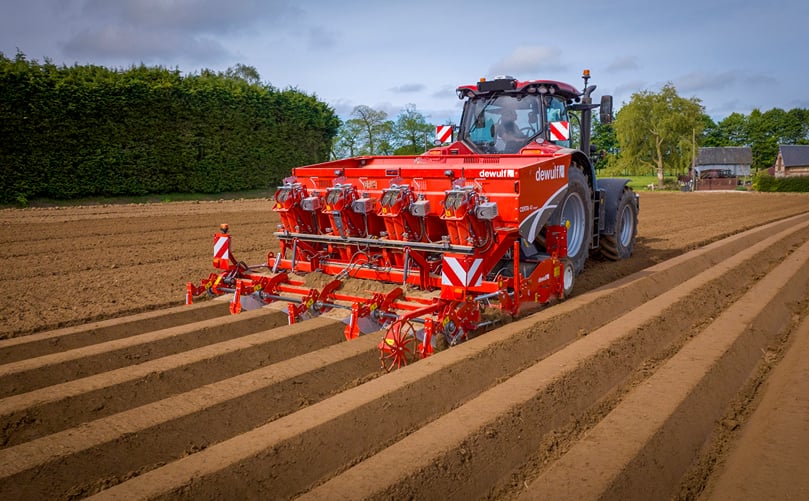
Preparing the Perfect Bed: Power Behind Productive Potato Fields
Subsoiler: In areas prone to soil compaction, subsoilers play a crucial role by loosening deep layers (40–60 cm) without inverting the soil. This improves water infiltration, root penetration and nutrient uptake. By breaking hardpans, subsoilers can reduce surface runoff by up to 20% and improve tuber yield, particularly in heavy clay soils where drainage is limited.
Seed Preparation and Planting Equipment
Uniform seed preparation and precise planting are crucial for achieving even crop emergence, consistent tuber size and higher yields. Potatoes are typically planted at a depth of 10–15 cm with in-row spacing of 25–35 cm, depending on the variety and soil conditions. Mechanized systems ensure accuracy in spacing, depth and fertilizer placement, leading to better plant stands and resource efficiency.
Seed Cutting Machine: Large seed tubers are cut into 40–60 g pieces, each with at least one viable “eye,” to promote healthy sprouting and optimal plant population. Seed cutting machines improve uniformity while minimizing disease risk caused by uneven or contaminated cuts. Modern models such as Milestone precision cutters produce consistent seed sizes, improving sprout viability to 85–95%. Mechanized cutting also reduces labor demand and ensures rapid processing for large planting operations.
Seed Treater / Sprayer: To prevent fungal and bacterial infections, freshly cut seed pieces are treated with protective fungicides such as chlorothalonil or mancozeb. Seed treaters or sprayers whether dusters, rotary applicators or liquid misting systems ensure uniform and controlled chemical coverage. This treatment reduces the risk of seed-borne blight and soft rot by 20–30%, improving field emergence and early vigor. Some automated seed treaters can process several tons of seed per hour, maintaining consistent chemical dosage and safety standards.
Potato Planter: The potato planter is one of the most important implements in modern potato cultivation. It ensures accurate placement of seed tubers and fertilizers in one pass, greatly enhancing planting efficiency.
- Semi-Automatic Planters (e.g., Spedo SPA-T) use mechanical hoppers and conveyor cups to plant one to two rows at speeds of 4–6 km/h, ideal for small and medium farms.
- Automatic Planters (e.g., Grimme series) can handle 4–8 rows simultaneously, integrating seed placement, fertilizer application and ridging. These systems can achieve a field capacity of 0.35–0.55 ha/hour, depending on field conditions.
- Tractor-Mounted Models (e.g., BCS Power Planter) allow adjustment of row spacing (20–50 cm) and planting depth, improving adaptability across soil types and potato varieties. They can also reduce seed requirements by up to 15% through precise spacing control.
Proper spacing not only prevents overcrowding and tuber deformation but also optimizes field populations to around 30,000–40,000 plants per hectare, ensuring efficient use of nutrients and sunlight. Newer small-scale and two-wheel tractor-mounted planters are particularly beneficial for African and Asian smallholder farmers, offering low-cost mechanization solutions.
Efficiency and Impact: Mechanized planting systems offer clear advantages over manual methods. They can increase yields by 10–20% through uniform emergence and accurate fertilizer placement. The integration of GPS-guided planting systems further enhances precision, ensuring consistent depth and spacing across large fields. Combined with efficient seed treatment and cutting, these technologies collectively improve productivity, reduce labor input, and promote uniform crop maturity, leading to higher-quality marketable tubers.
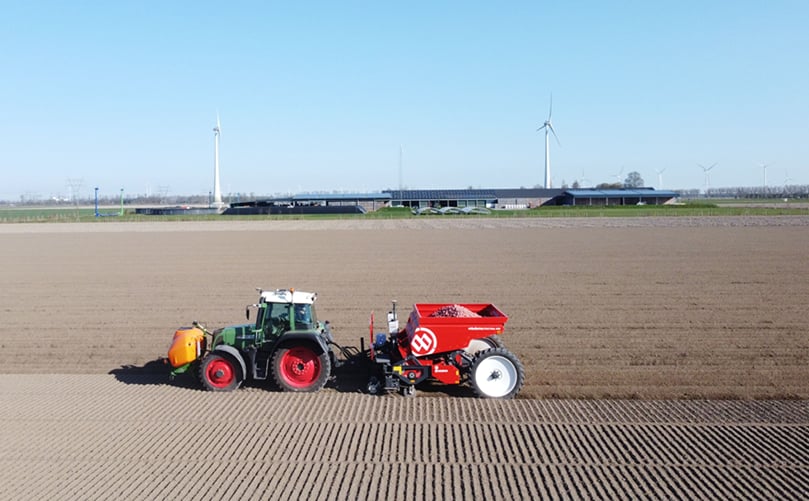
Automated Seed Potato Cutting for Uniform Planting
Irrigation Equipment
Potatoes require a consistent and well-regulated water supply to achieve optimum growth and tuber quality. On average, they need 500–700 mm of water throughout the growing season, depending on soil type, climate and variety. Uneven or excessive watering can cause cracking, hollow heart and misshapen tubers, while water stress reduces yield and starch content. Therefore, adopting efficient irrigation systems is essential for maintaining soil moisture within the ideal range and ensuring uniform tuber development.
Drip Irrigation System: Drip irrigation provides water and nutrients directly to the root zone through emitters, minimizing evaporation and percolation losses. This system can save 30–50% of water compared to conventional surface irrigation while maintaining consistent moisture levels.
Drip systems also enable fertigation, allowing nutrients like nitrogen and potassium to be applied in soluble form along with irrigation water. Models such as DripWorks kits are particularly effective in arid and semi-arid regions, improving water-use efficiency and yields by up to 15%.
Additional benefits include reduced weed growth, lower disease pressure (due to dry foliage) and improved tuber uniformity. For large-scale farms, automated drip controllers and pressure-compensating emitters ensure consistent discharge even on uneven terrain.
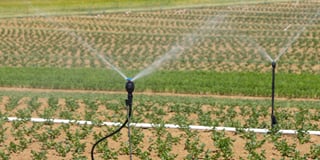
Sprinkler System: Sprinkler irrigation distributes water uniformly over the crop canopy, making it suitable for light or sandy soils and fields with irregular topography. These systems simulate natural rainfall and are adaptable for both small and large farms.
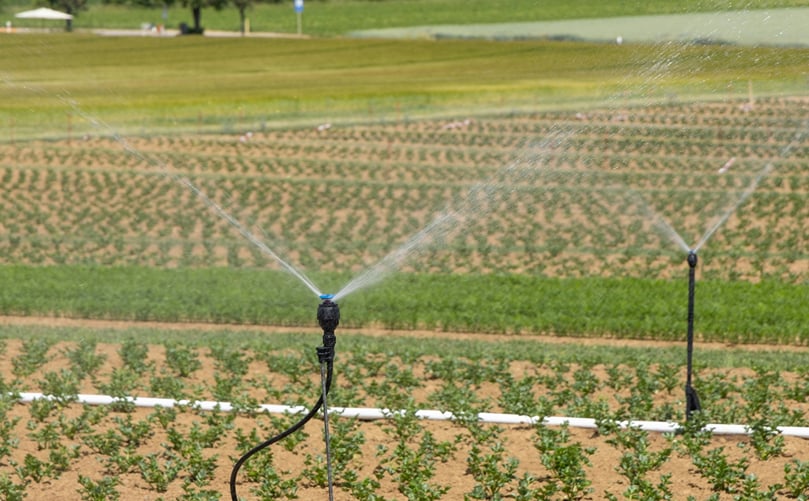
Spinkler Irrigation Delivering Water Directly to Potato
Modern low-drift nozzles minimize evaporation and wind losses, ensuring efficient coverage. Systems like Spectrum’s automated sprinkler stations can monitor soil moisture and adjust irrigation depth accordingly, improving efficiency and water conservation. Portable or center-pivot sprinklers are ideal for areas where flexibility is needed, especially during critical stages like tuber initiation and bulking.
Water Pumps and Filters: Reliable pumps and filtration systems are integral to both drip and sprinkler irrigation setups. Compact 25W pumps, such as those by Spider Farmer, deliver flows of approximately 12 L/min and can be equipped with low-level water sensors to prevent dry running and energy waste. Proper filters (screen or disc types) are essential to remove suspended particles and prevent emitter clogging, which ensures uniform water distribution and system longevity. For large farms, multi-stage centrifugal pumps are preferred for consistent pressure maintenance across long irrigation lines.
Moisture Sensors and Automation: Advanced irrigation systems increasingly use moisture sensors to automate water delivery based on real-time soil data. Capacitive soil moisture probes measure volumetric water content, helping farmers fine-tune irrigation frequency and volume. Integration with IoT-based systems enables automatic irrigation scheduling, reducing human error.
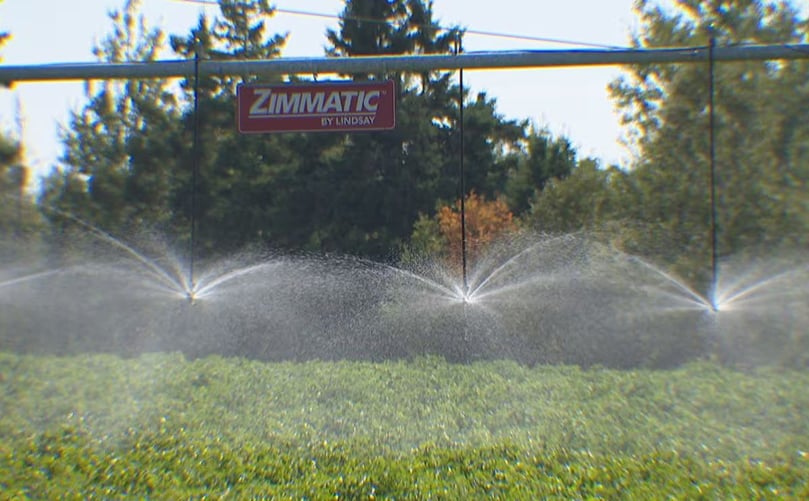
Irrigation on potato field
By maintaining soil moisture within the optimal range, these technologies can cut over-irrigation by 20–40%, conserve water and prevent nutrient leaching. The resulting precision irrigation not only enhances resource efficiency but also supports sustainable water management and improved tuber quality.
Fertilizer and Pesticide Application Equipment
Efficient and precise nutrient and pesticide application are crucial in potato farming to achieve high yields and quality tubers while minimizing input waste and environmental impact. Potatoes have high nutrient demands, typically requiring around 150–200 kg nitrogen (N) per hectare, along with balanced phosphorus (P) and potassium (K) inputs. Proper equipment ensures uniform distribution of fertilizers and agrochemicals, optimizing crop uptake and reducing losses through leaching or drift.
Fertilizer Spreader / Applicator: Fertilizer spreaders are designed to apply nutrients evenly across the field, either through broadcasting or band placement methods. Modern spreaders, such as Salford’s air boom applicators, use pneumatic systems to distribute granules with precision at high field speeds, maintaining consistent rates even on uneven terrain.
Uniform application ensures balanced nutrient availability and prevents localized over or under-fertilization. Advanced models can be integrated with GPS and variable-rate technology (VRT) to adjust fertilizer output based on soil fertility maps, improving efficiency and cutting overall fertilizer costs by up to 15%.
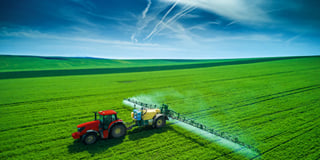
Boom Sprayer / Knapsack Sprayer:Boom sprayers are essential for large-scale potato operations, enabling uniform pesticide, herbicide and foliar nutrient application across wide areas. Models such as the Case IH Patriot series offer adjustable boom widths and low-drift nozzles, ideal for the short canopy of potato crops. These sprayers reduce chemical wastage and ensure full leaf coverage, improving pest and disease control efficiency.
For small or fragmented fields, knapsack sprayers remain practical and cost-effective. They allow targeted application, especially during early crop stages or in trials. Low-profile, hand-held versions prevent mechanical damage to plants while maintaining spray accuracy.
Fertigation Unit: In modern potato production, fertigation units integrate nutrient delivery directly into drip irrigation systems, providing precise nutrient doses according to crop stage and soil conditions. This technique enhances nutrient uptake efficiency by 20–30%, minimizes leaching and ensures continuous nutrient availability in the root zone.
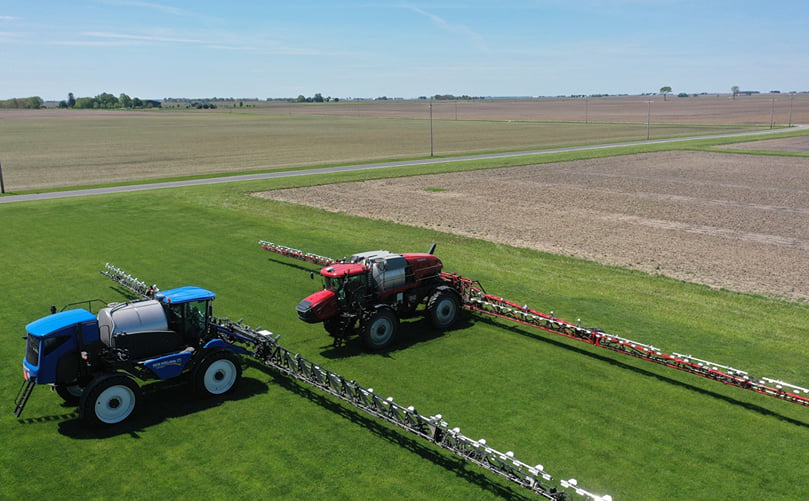
Advanced Wide-Span Boom Sprayer in Full Operation
Automated fertigation systems can be programmed to deliver N-P-K and micronutrient solutions at specific intervals, synchronizing nutrient supply with crop demand. This precision feeding supports better canopy growth, uniform tuber bulking and overall yield improvement while reducing fertilizer waste and groundwater contamination.
Crop Management and Intercultural Equipment
Effective crop management during the 90–120 day growth cycle of potatoes is essential for maintaining plant vigor, ensuring uniform tuber bulking, and minimizing weed competition. Intercultural operations such as weeding, ridging, and mulching play a vital role in improving soil aeration, conserving moisture, and promoting healthy tuber development.
Ridger and Cultivator: Ridgers and cultivators are indispensable for mechanical weed control and soil aeration in potato cultivation.
- Hoe ridgers (e.g., Norma models) are designed for earthing-up, where soil is heaped around the base of potato plants to encourage tuber formation, protect developing tubers from sunlight exposure (which causes greening) and suppress weeds.
- Cultivators loosen compacted soil, enhance root respiration and facilitate nutrient uptake. Rotary or spring cultivators efficiently break soil crusts and uproot emerging weeds, contributing to better plant growth and uniform field conditions.
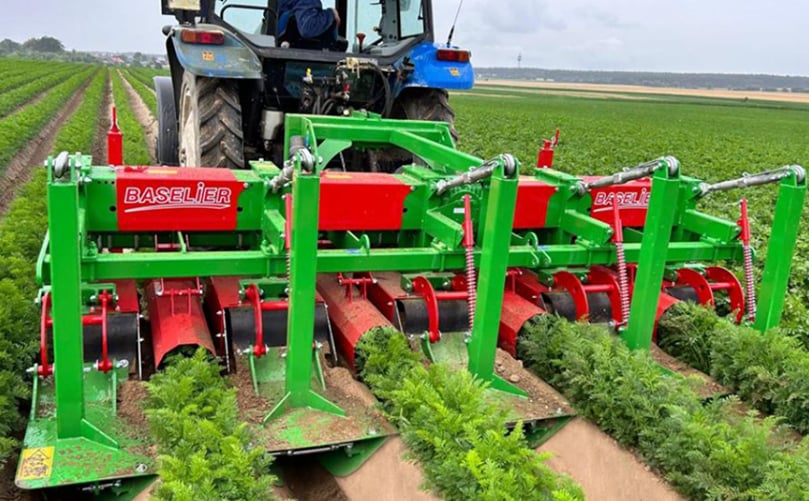
Inter-Row Cultivator Weeding Between Potato Plants
Mulching Equipment: Mulching machines apply plastic or organic films over ridges or beds to retain soil moisture, regulate temperature, and reduce weed emergence. Plastic mulching, commonly used in precision potato farming, conserves 20–30% irrigation water and improves early tuber bulking by maintaining favorable soil temperature. Modern mulch layers ensure tight film contact with soil, preventing wind lift and allowing drip irrigation lines to be installed simultaneously for fertigation efficiency.
Weeders and Hoe Attachments: Mechanical weeders and hoe attachments offer an eco-friendly alternative to chemical herbicides. Models such as Sutton Ag’s mechanical weeders use rotating or slicing blades to cut weeds between rows without damaging potato plants. These tools can reduce herbicide use by 50–70%, lower input costs and improve soil structure through gentle tillage. Adjustable row spacing and blade depth settings make them suitable for different potato varieties and soil types, ensuring precise and sustainable weed management.
Harvesting Equipment
Efficient harvesting is vital to minimize tuber injury and post-harvest losses, which can reach 10–20% under manual methods. Mechanized systems ensure gentle handling, uniform lifting and reduced labor costs.
Potato Digger / Harvester: Potato diggers and harvesters lift tubers from the soil using rotating blades or share plates that separate soil and debris.
- Tractor-mounted models (e.g., single-row or 53-inch width) are ideal for small to medium farms, offering affordable and efficient operation.
- Self-propelled harvesters (e.g., Oxbo AR4BX, with a 14-ton bunker) suit large-scale farms, integrating soil separation and automatic loading. Advanced models include multi-row diggers and hydraulic depth control, ensuring minimal damage even in heavy soils. Sieving mechanisms gently separate soil and vines, reducing bruising and maintaining tuber quality.
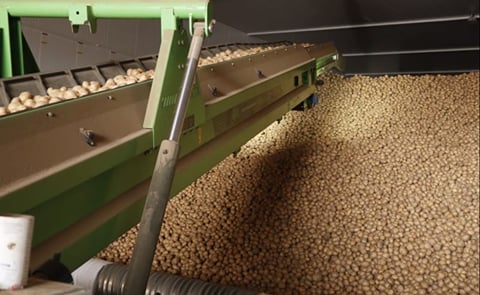
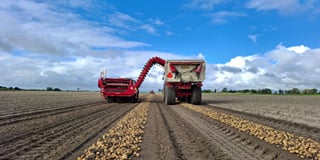
Conveyor or Elevator System: Integrated conveyor or elevator belts transport tubers from digger blades to collection hoppers or trailers. These systems are designed for <5% mechanical damage, crucial for storage and processing quality. Rubberized or padded conveyors further minimize impact, while automatic height adjustment ensures consistent loading even on uneven fields.
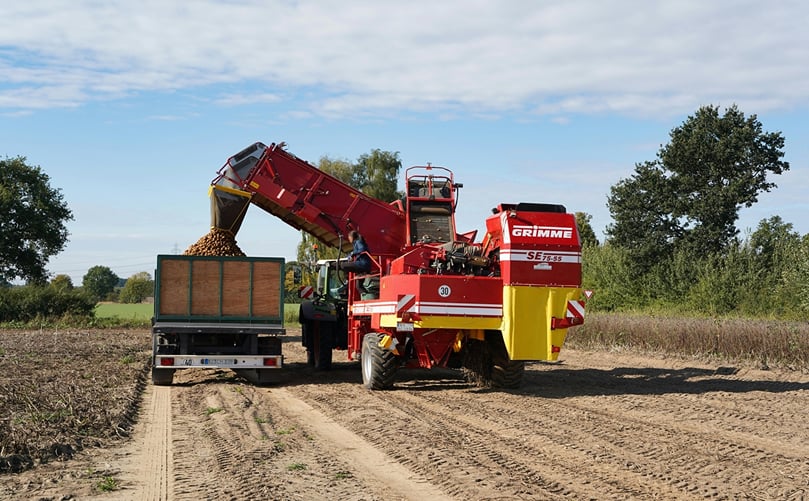
Self-Propelled Potato Harvester Unloading into Trailer
Post-Harvest Handling Equipment
Post-harvest handling is crucial to maintain tuber quality, minimize losses, and extend storage life up to 6–9 months under controlled conditions (4–10 °C, 85–90% RH). Mechanized handling reduces post-harvest losses by up to 20%, ensuring better market value and storage stability.
Grading Machine:Grading machines sort potatoes based on size, shape, and weight, improving market uniformity and packaging efficiency.
- Optical graders, such as Scotts Evolution (installed in over 1,000 facilities), use cameras and sensors to detect surface defects and ensure precision sorting.
- Advanced models like TOMRA sorters utilize AI-driven optical sensors to remove damaged or diseased tubers, reducing waste and enhancing overall pack-out quality.
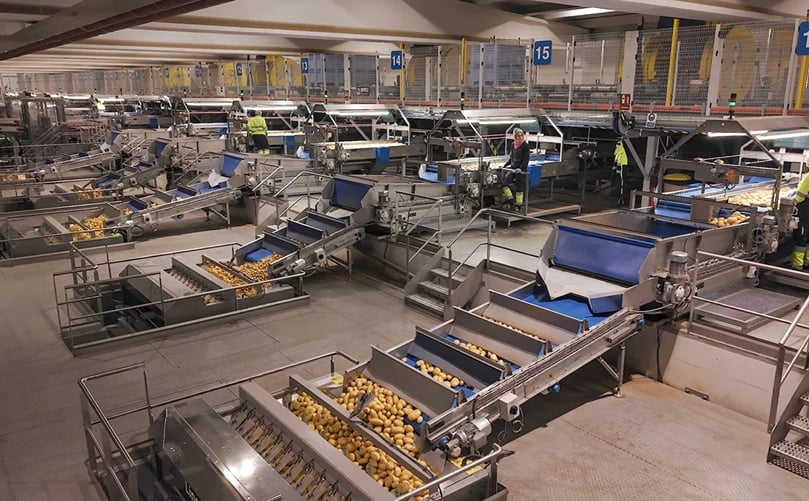
Precision Grading Systems for High-Quality Potato Sorting
Washing and Cleaning Units: These systems remove soil, stones, and debris before packaging or storage.
- Vanmark washing lines handle high-throughput operations efficiently for both fresh and processing potatoes.
- Wyma integrated systems can manage washing, brushing, drying, and packing at capacities of 5–90 tons per hour, ensuring cleanliness without bruising.
Conveyor Belts and Bins: Conveyor systems enable smooth transfer of tubers between stages—washing, grading, and storage—while minimizing impact damage.
- Brands like Allround design soft-handling conveyors and elevators specifically for potatoes.
- Ventilated storage bins ensure consistent airflow and humidity control, preventing sprouting and rot during long-term storage.
Storage and Cooling Units:Proper storage systems maintain quality and reduce physiological losses.
- Ventilated bulk storage units regulate temperature and humidity, cutting spoilage by up to 20%.
- Integrated systems often include cooling units, toppers, graders, and big bag fillers, supporting multi-crop use (potatoes, onions, carrots).
- Automation in temperature and CO₂ monitoring helps maintain tuber firmness and prevent disease spread.
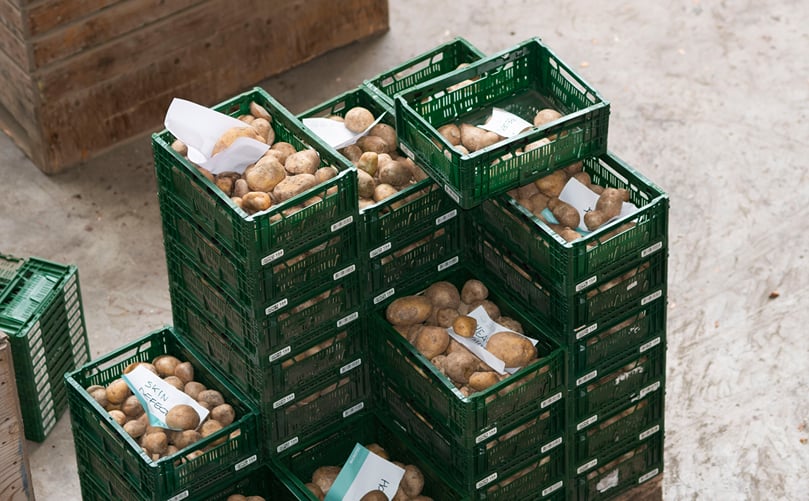
Post-Harvest Storage: Preserving Quality and Freshness
Modern and Smart Technologies
Modern potato farming is rapidly evolving through the integration of smart and precision technologies that enhance efficiency, sustainability, and profitability. These innovations collectively reduce input use by up to 20%, optimize resource utilization, and support climate-resilient production systems.
GPS-Guided Tractors and Auto-Steering Systems: Precision farming begins with GPS-enabled tractors and auto-steering technology, ensuring accurate field operations with minimal overlap or missed areas.
- John Deere’s autonomy-ready tractors feature Real-Time Kinematic (RTK) guidance for sub-inch precision, improving planting accuracy and reducing fuel use by 10–15%.
- Auto-steering systems minimize operator fatigue and allow continuous operation, especially during long planting or ridging sessions.
- Electrification kits and automated adjustment systems improve tuber separation during harvesting, further reducing losses and energy consumption.
Drones and Aerial Monitoring: Agricultural drones provide real-time insights through high-resolution imaging and variable-rate spraying.
- Equipped with multispectral or NDVI cameras, drones assess stand count, canopy cover, nutrient stress and weed infestation, enabling early interventions.
- Spraying drones reduce pesticide and water use by 15–25%, especially in uneven terrains or smallholder farms.
- Companies like DJI Agras and XAG are leading drone integration for precision potato management, enabling site-specific applications and improved disease surveillance.
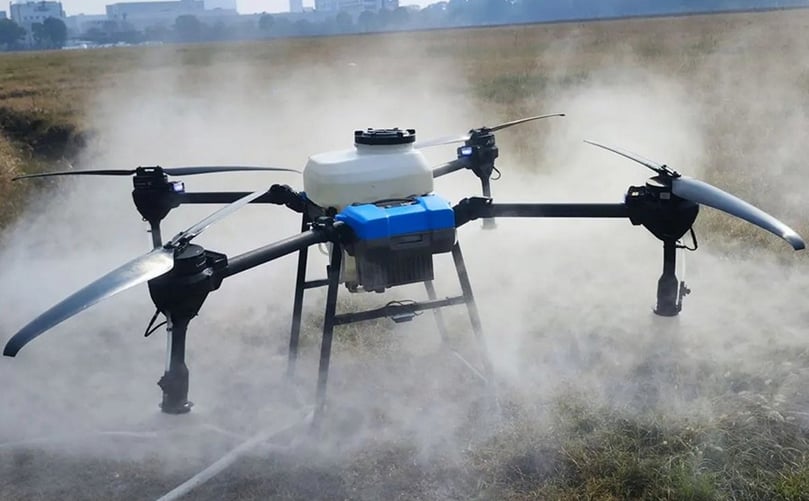
Drone Spraying: Precision Application for Sustainable Potato Farming
IoT-Based Sensors and Smart Monitoring: The Internet of Things (IoT) connects soil, weather and crop sensors for continuous monitoring and decision support.
- Soil moisture and temperature probes help schedule irrigation precisely, reducing overwatering by 30–40%.
- Picketa’s LENS system analyzes leaf nutrient composition in seconds, offering actionable fertilization insights directly in the field.
- Smart weather stations and automated irrigation controllers integrate with cloud platforms, optimizing fertigation and water use efficiency.
AI and Data-Driven Decision Tools: Artificial Intelligence (AI) transforms data into real-time recommendations, improving both yield and sustainability.
- Kubota’s hydrogen-powered autonomous tractor uses AI for path planning, environmental adaptation and emission reduction.
- Hyperspectral imaging detects nitrogen deficiencies and disease symptoms early, allowing corrective action before yield loss.
- Data analytics platforms compile inputs from sensors, drones, and machinery to guide variable-rate seeding, spraying, and nutrition, enhancing resource efficiency.
Emerging Smart Farming Innovations: Cutting-edge systems are reshaping potato propagation and management:
- Aeroponics is revolutionizing seed potato production, enabling year-round disease-free mini-tuber generation with 90–95% water savings.
- Robotic harvesters and AI-based grading systems ensure precision and quality during post-harvest stages.
- Integrating blockchain and farm management software ensures traceability and compliance with sustainability standards.
Safety and Maintenance
Proper safety practices and regular maintenance are essential for ensuring the reliability, efficiency and longevity of farm equipment. Consistent upkeep not only prevents accidents and mechanical failures but also maintains the precision required for potato farming operations.
Routine Checks and Cleaning: Routine inspections help detect potential issues early. Operators should perform visual checks before and after each use to identify leaks, worn parts or loose fittings. Lubrication of moving components and seasonal replacement of hydraulic fluids are important to prevent wear and corrosion. After every operation, equipment should be thoroughly cleaned to remove soil, debris and plant residues that can cause rust or harbor pathogens. Clean machinery operates more smoothly and lasts longer. Storing implements in a dry, covered area also protects them from weather-related damage and extends their service life.
Calibration and Accuracy: Maintaining calibration is critical for the accuracy of planters, sprayers and fertilizer applicators. Regular calibration following standard methods, such as Syngenta’s protocols, ensures proper seed placement and chemical dosage. After any major maintenance work or change of input, recalibration is essential to sustain performance. During adjustments, operators must always follow safe stop procedures turning off the engine, disconnecting power and engaging the brakes before making any modifications or repairs.
Safety Measures and Operator Awareness: Operator safety is central to all mechanized operations. Farmers and workers should be fully trained in equipment handling and aware of potential hazards, particularly around moving parts. The use of reflective vests, safety footwear, gloves, and protective eyewear minimizes the risk of injury. Awareness of machine blind spots, maintaining clear communication during operation and avoiding any adjustments while the machinery is running are key safety practices. Emergency tools such as first-aid kits and fire extinguishers should always be within reach.
Contamination and Hygiene Control: Clean and sanitized equipment reduces the risk of disease transmission between fields. Machinery should be washed and disinfected, especially after working in infected areas, to prevent the spread of bacterial wilt and soft rot. Care should also be taken to avoid fuel or oil spills that can contaminate soil or water sources. Maintaining hygiene not only protects the crop but also supports sustainable soil management.
Cost Considerations
The cost of potato farming equipment varies widely depending on scale, technology level and region. Basic implements such as ridgers or cultivators may cost around USD 3,000, while advanced self-propelled harvesters can exceed USD 500,000. Ownership is economically viable for large or long-term operations but involves recurring expenses such as maintenance, fuel and depreciation typically amounting to around 5% of the equipment price annually.
For small and medium-scale farmers, renting or custom-hiring equipment provides a practical alternative, reducing upfront investment and financial risk. Custom-hiring services are generally 20–30% cheaper in the short term compared to full ownership, making them ideal for seasonal or small-acreage cultivation. In developing regions such as India and parts of Africa, government-supported custom-hiring centers have made mechanization more accessible to smallholders who cannot afford individual ownership.
Policy incentives also play a crucial role in promoting mechanization. Subsidy programs in the United States and the European Union typically cover 20–50% of the cost of adopting sustainable or precision technologies such as GPS-guided planters, solar-powered pumps or low-emission tractors. These initiatives lower barriers to entry and encourage adoption of energy-efficient machinery that reduces long-term production costs.
When assessing financial viability, farmers should consider the total cost of ownership, including purchase price, fuel consumption, labor, spare parts, repairs and depreciation. Studies, such as budget models from UC Davis, show that variable expenses like labor and fuel often dominate production costs, while machinery accounts for 10–20% of total expenses. Despite these costs, mechanization consistently delivers strong returns: field data suggest that adopting mechanized systems can generate profit gains of up to 44%, primarily due to higher yields, reduced losses, and greater operational efficiency.
Global Potato Farming Equipment Market Overview
The global market for potato farming equipment represents a rapidly growing segment within the broader agricultural machinery sector, driven by the expansion of potato production, increasing mechanization and the emphasis on sustainable and precision farming practices. With global potato output surpassing 368 million metric tons in 2023, demand for specialized machinery continues to rise especially across major producing regions such as Asia-Pacific (led by China and India), Europe and North America.
The broader agricultural machinery market is projected to reach 293.92 billion USD by 2029, expanding at a CAGR of 5.7%, while the potato-specific machinery segment is expected to outpace this growth due to mounting labor shortages, efficiency demands and technology adoption.
Key Market Segments
Harvesting Equipment: The largest and fastest-growing segment, valued at 5.1 billion USD in 2023, is projected to surge to 16.4 billion USD by 2031, registering a 13.8% CAGR. Growth is driven by the adoption of self-propelled, multi-row and automated harvesters, which reduce manual labor and crop damage. For 2025, the segment value is estimated at 6.6 billion USD.
Planting Equipment: The potato planter market stood at 330 million USD in 2023 and is forecasted to reach 458 million USD by 2030 at a 4.8% CAGR. Rising adoption of multi-row, GPS-guided and variable-rate planters is enabling small and medium-scale farmers to improve uniformity and efficiency.
Cultivation and Land Preparation Tools: Valued at approximately 2.77 billion USD in 2025, this segment benefits from the increasing use of minimum tillage and soil conservation technologies, ensuring better soil structure and moisture retention.
Post-Harvest and Grading Equipment: Industrial graders and sorters are estimated at 218 million USD in 2025, projected to reach 303 million USD by 2033 with a 4.2% CAGR. Key innovations include optical sorting, AI-based quality grading, and automated handling systems that improve throughput and reduce waste.
Market Outlook
Combining these segments, the potato farming equipment market is valued between 10–12 billion USD in 2025, with a projected CAGR of 7–10% through 2030, significantly outpacing the general agricultural machinery sector. Growth is underpinned by:
- Government subsidies promoting farm mechanization in emerging economies
- AI and IoT integration in smart farming tools
- A global shift toward eco-friendly and electric-powered machinery
- Expanding demand from processed potato industries and climate-resilient farming systems
However, challenges such as high initial investment, supply chain disruptions and limited access for smallholders persist. Despite these, opportunities abound in autonomous systems, hydrogen-powered tractors and data-driven decision platforms that enhance efficiency and profitability.
Major Industry Players
Leading companies include John Deere, CNH Industrial, AGCO Corporation, Grimme Group and CLAAS, all of which are at the forefront of innovation in precision planting, automated harvesting and sustainable machinery tailored to potato farming operations.
Key Leading Companies in Potato Farming Equipment
The potato farming equipment industry is led by specialized manufacturers that drive innovation in harvesting, planting, and handling technologies to meet global demands for efficiency and sustainability. The global potato harvesters market reached USD 5,125.2 million in 2023 and is projected to hit USD 16,405.5 million by 2031, with a CAGR of 13.8%. Below are the top players, with concise company descriptions limited to 1-2 sentences each.
Grimme Landmaschinenfabrik GmbH & Co. KG: Founded in 1861, Grimme is a German family-owned company and the world’s largest manufacturer of potato, beet and vegetable machinery, offering more than 150 machine types from single-row harvesters to advanced self-propelled systems. In 2024, the GRIMME Group recorded EURO 814 million in turnover and continues to expand through major investments in production and logistics infrastructure.
Dewulf NV: Based in Belgium, Dewulf is a full-liner manufacturer specializing in potato and root crop equipment, with production sites in Belgium, the Netherlands and Romania. A third-generation family business with around 300 employees, Dewulf’s product range covers soil cultivation, planting, harvesting, storage and transport solutions, emphasizing durability and efficiency.
Spudnik Equipment Company, LLC: Founded in 1958 in Blackfoot, Idaho, Spudnik is North America’s largest potato equipment manufacturer and a member of the GRIMME Group. With over 500 employees, the company designs and builds advanced machinery for field and storage operations, including solutions for potatoes, sugar beets and specialty vegetables, with a strong focus on automation and grower support.
Lockwood Manufacturing: Established in 1935 and now part of Crary Industries, Lockwood is a leading U.S. manufacturer known for more than 80 years of expertise in potato equipment. Its product line includes planters, windrowers, harvesters and innovative handling systems such as the VACS MOBILE vacuum technology, which improves efficiency and reduces tuber damage during handling.
Oxbo International Corporation: Oxbo, part of the Ploeger Oxbo Group, is a global leader in specialty harvesting and precision application technologies across vegetables, root crops, forage, fruit and seed corn. Operating through ten factories worldwide, Oxbo is recognized for innovations like the AR-4BX self-propelled potato harvester, designed for high-capacity harvesting with minimal damage.
Allan Equipment Manufacturing Ltd: Headquartered in Prince Edward Island, Canada, Allan Equipment is the country’s largest designer and manufacturer of potato harvesting machinery. With over 60 years of operation, the family-run company also produces blueberry harvesters, electric models and serves as a full-line dealer for brands such as Claas, Miedema, Vaderstad and Agrifac, combining innovation with local craftsmanship.
Together, these six companies dominate the global potato equipment market through continuous R&D investment typically 5–7% of annual revenue and extensive dealer networks spanning multiple continents. Their innovations consistently reduce mechanical damage, labor costs and environmental impact, while maximizing yield, efficiency, and profitability across all scales of production.