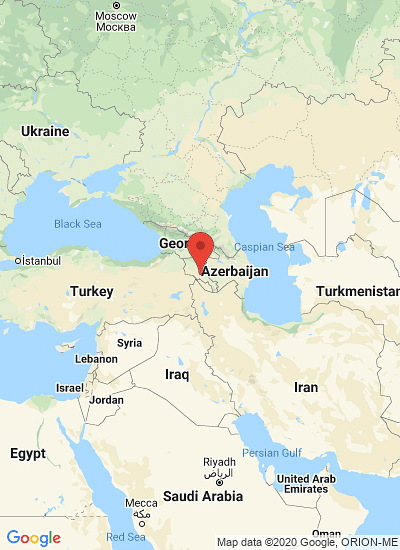

The total potato crop harvested in Armenia the past season will exceed the demand in the domestic market, according to the Minister of Agriculture in Armenia, Gerasim Alaverdyan. "The current potato cultivation area in Armenia is 33,000 hectares with a total harvest volume of 620,000 tons,"he said.
According to his estimate, roughly 400,000 tonnes of the current crop will be supplied to the domestic market, while the remaining volume (100,000-150,000 tons) will be exported abroad, in particular to Georgia.
The minister also added that during the next several years the Armenia’s authorities will significantly increase potato exports to CIS countries, and that several such agreements have already been signed. "I think that sales of 100,000-150,000 tonnes of potatoes this year will not be a big problem for us, because we have already agreed all the export conditions with some of our former partners,"the Minister said.
Armenia plans increased potato export to CIS countries

¿Te gustaría recibir noticias como esta por correo electrónico? ¡Únete y suscríbete!
Get the latest potato industry news straight to your WhatsApp. Join the PotatoPro WhatsApp Community!
Noticias relacionadas
Septiembre 28, 2026
México: menor oferta de papa podría impulsar los precios durante el invierno
En México, el cierre de cosechas, los menores rendimientos y la reducción de la superficie sembrada podrían restringir la oferta de papa y generar presión al alza sobre los precios entre diciembre de 2026 y febrero de 2027.

Septiembre 28, 2026
España: la sequía reduce la cosecha de patatas en 2026
La producción española de patata caerá entre un 8% y un 10% en 2026, hasta unos 1,8 millones de toneladas, con descensos de hasta 35% en Andalucía debido principalmente a la sequía y los menores rendimientos.

Septiembre 23, 2026
Chile: buscan mejorar el diagnóstico molecular de la sarna polvorienta y la sarna común en papa
En Chile, el proyecto SCAB-ID 2.0 busca validar un sistema de qPCR multiplex capaz de detectar y diferenciar simultáneamente la sarna polvorienta y la sarna común de la papa, con miras a transferirlo a laboratorios de diagnóstico agrícola.