

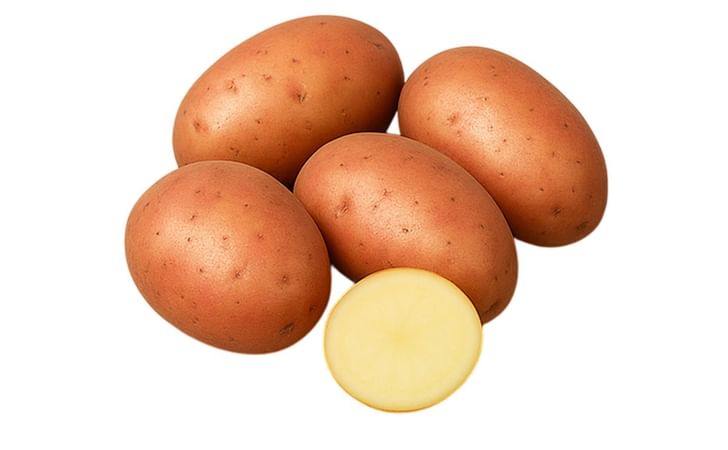

The Rossy potato is known for its smooth, reddish-brown skin and white to cream-colored flesh, it features a firm texture and rich, earthy flavor. Ideal for boiling, baking, roasting, and frying, Rossy potatoes hold their shape well during cooking.
They thrive in well-drained, fertile soil with adequate moisture and are typically harvested in late summer to early fall. This variety is valued for its versatility in culinary applications and good storage qualities.
- Appearance: Rossy potatoes likely have a characteristic skin color and flesh that might be similar to other named varieties. For instance, they may have a smooth, light brown or reddish-brown skin with white or cream-colored flesh.
- Texture: They might have a medium to firm texture, making them versatile for different cooking methods.
- Flavor: The flavor could be rich and earthy, possibly with a slightly nutty undertone, which is common in many well-regarded potato varieties.
- Culinary Uses: Rossy potatoes, given their likely medium to firm texture, would be suitable for a variety of dishes, including boiling, baking, roasting, and frying. They should hold their shape well during cooking, making them ideal for salads, casseroles, and other dishes where intact pieces of potato are desired.
- Storage: They would have good storage qualities, meaning they can be kept for a longer period without significant loss of quality if stored in a cool, dark, and dry place.
- Nutritional Value: Rossy potatoes would be expected to provide a good source of carbohydrates, offering energy. They would also contain vitamins such as vitamin C and B6, and minerals like potassium and iron, similar to other potato varieties.
- Disease Resistance: Rossy potatoes may have resistance to certain common potato diseases, though specifics would depend on the variety's breeding.
- Popularity: The variety would likely be appreciated for its versatility and good cooking qualities, making it a favorite among both home cooks and professional chefs.