
The Role of Spraying in Modern Potato Cultivation
Spraying is a fundamental practice in potato cultivation, ensuring the targeted delivery of essential inputs that protect and nourish the crop throughout its growth cycle. Potato fields, often characterized by dense row plantings and variable soil conditions, require reliable spraying systems to achieve thorough canopy coverage and prevent losses from environmental stresses.
Over time, spraying has evolved from labor-intensive manual methods to sophisticated mechanized systems that significantly enhance farm productivity. In regions with high disease pressure particularly those prone to foliar pathogens precise and timely spraying is crucial to safeguard tuber development and yield potential.
Modern spraying practices are increasingly integrated into holistic crop management strategies, aiming to optimize resource use and improve application efficiency. Beyond disease protection, spraying also enhances nutrient uptake, thereby improving both the quality and quantity of the harvest. Ultimately, effective spraying supports sustainable potato production by balancing high efficacy with minimal ecological impact.
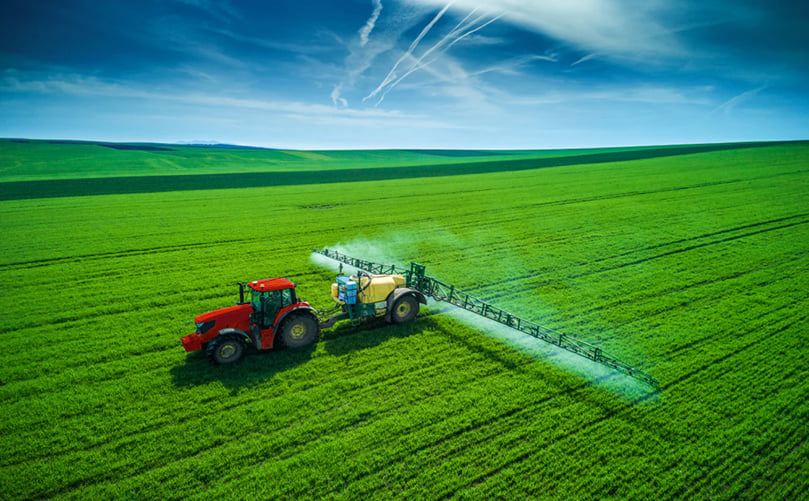
Sustainable Spraying Practices for High Yield
Importance of Accurate Chemical Application in Potato Farming
Accurate chemical application in potato farming is vital for maximizing efficacy while minimizing waste and environmental impact. Precise fertilizer placement ensures nutrients reach the root zone without leaching into groundwater, thereby improving nutrient-use efficiency and reducing pollution risks.
Equally important, pesticides must be applied at the correct dose to effectively control key pests such as the Colorado potato beetle, while preventing the development of resistance that could compromise long-term crop protection. Fungicides, particularly those used against late blight, rely on uniform canopy coverage to prevent disease outbreaks that can cause yield losses of up to 50%.
In addition, foliar fertilizers applied during critical growth stages enhance tuber size, starch accumulation and overall market value while supporting longer storage life. Conversely, inaccurate dosing or uneven application can lead to runoff, contamination of aquatic ecosystems and non-compliance with environmental standards.
Modern precision-spraying technologies such as variable rate application and GPS-based field mapping allow farmers to adjust rates according to field variability. This approach aligns with integrated pest management (IPM) principles, fostering healthier crops, sustainable production and more resilient farming systems.
Why Farmers Are Shifting from Tractor-Mounted to Self-Propelled Sprayers
Farmers are increasingly adopting self-propelled sprayers over traditional tractor-mounted systems, primarily due to performance limitations in navigating dense potato fields. Tractor-mounted sprayers often struggle to move through tight rows without damaging vines, while their heavier weight can lead to soil compaction reducing aeration and root growth in the sensitive potato root zone.
Self-propelled sprayers, in contrast, offer superior ground clearance, maneuverability and row alignment, allowing operators to cover fields efficiently during critical spray windows. These machines are designed to straddle rows with minimal crop disturbance, ensuring consistent chemical distribution across the canopy.
The shift is also driven by labor efficiency and productivity. Self-propelled models can spray larger areas in less time, reducing operator fatigue and the need for multiple passes. From an economic standpoint, they deliver faster returns on investment through optimized chemical use, reduced overlaps and lower fuel and maintenance costs.
Moreover, modern self-propelled sprayers integrate seamlessly with precision agriculture technologies including GPS guidance, auto-section control and variable rate application enabling more accurate and sustainable spraying. This transition supports scalable, high-efficiency operations, especially in commercial potato production where uniformity and quality are key to profitability.
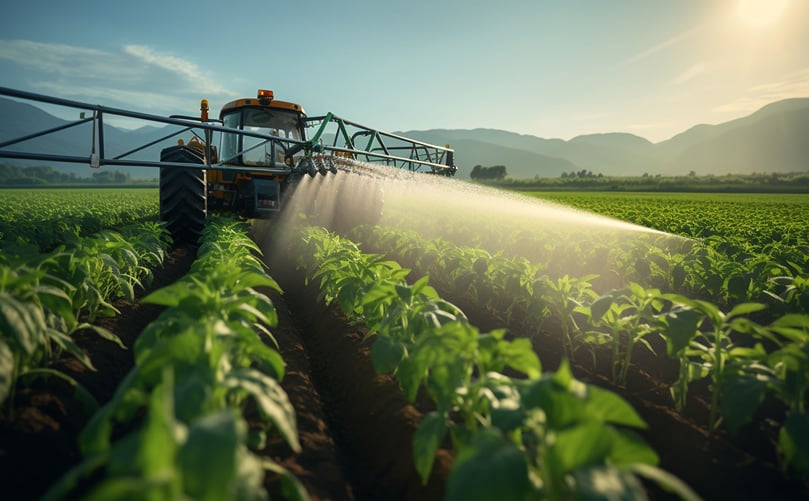
Shift from tractor-mounted to self-propelled sprayers
What Are Self-Propelled Sprayers?
Self-propelled sprayers are advanced, autonomous agricultural machines designed for the precise and efficient dispersion of liquid crop inputs such as fertilizers, pesticides and fungicides across large fields. These machines integrate both mobility and accuracy, enabling farmers to apply chemicals uniformly while minimizing waste and environmental impact.
Built on robust chassis frameworks, self-propelled sprayers are equipped with high-capacity tanks and extendable booms that ensure wide-area coverage in a single pass. They often feature adjustable track widths to accommodate the varied row spacing used in potato cultivation, allowing for flexibility across different field layouts.
Suspension systems provide stability and maintain consistent boom height on uneven terrain, ensuring even application across the crop canopy. Meanwhile, digital control interfaces offer real-time monitoring of parameters such as flow rate, pressure and nozzle performance enhancing both accuracy and reliability.
Constructed with corrosion-resistant materials, these machines withstand exposure to agrochemicals and harsh field conditions, significantly extending operational lifespan. Overall, self-propelled sprayers represent a major advancement in agricultural mechanization, purpose-built for intensive row crops like potatoes where precision and efficiency are essential.
Key Components of Self-Propelled Sprayers: Engine, Boom, Tank, Control System and GPS Guidance
The efficiency of a self-propelled sprayer relies on the seamless integration of its core components each engineered to enhance precision, coverage and operational ease in the field.
The engine, typically a high-torque diesel unit, powers both propulsion and hydraulic systems, ensuring smooth and stable movement across varying field conditions. Booms, generally ranging from 24 to 40 meters in width, fold hydraulically for transport and feature multiple nozzle sections that enable sectional control, preventing over-application and improving chemical efficiency.
The tank, made from durable and corrosion-resistant polyethylene, usually holds between 2,000 and 6,000 liters, reducing the need for frequent refilling during extended spraying operations. Control systems integrate electronic valves, pressure regulators and pumps to maintain consistent spray volume and pattern uniformity, even under fluctuating terrain or speed conditions.
Advanced GPS guidance systems use satellite-based navigation to automate path following, significantly reducing operator error and ensuring precise coverage of potato rows. Additionally, onboard sensors monitor real-time environmental factors such as wind speed and direction to optimize drift control and improve application accuracy.
Together, these components create a cohesive, technology-driven system that streamlines spraying workflows, enhances productivity and supports sustainable crop management in potato farming.
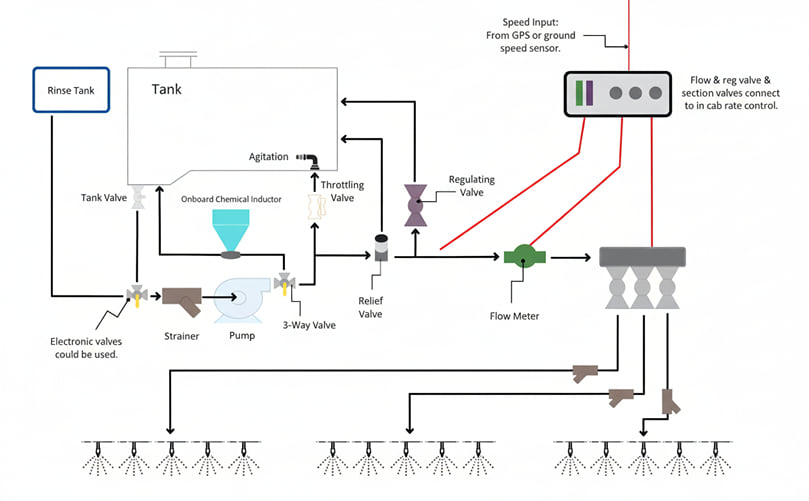
Complex boom sprayer plumbing diagram with rinse tank, chemical inductor tank, regulating valves and three-section control.
How Self-Propelled Sprayers Differ from Mounted and Trailed Sprayers
Self-propelled sprayers stand apart from mounted and trailed models through their independence, maneuverability and design efficiency qualities that make them ideal for intensive crops like potatoes.
Mounted sprayers depend entirely on tractors for mobility, which limits their versatility and often restricts boom widths to less than 20 meters. While suitable for smaller farms, their reliance on the tractor power and limited clearance can cause crop contact during spraying, especially in dense potato rows.
Trailed sprayers, on the other hand, offer larger tank capacities but require towing, which increases the turning radius and risk of soil disturbance particularly in soft or ridged fields. Their added length also makes navigation difficult in irregular or compact plots.
In contrast, self-propelled sprayers operate as fully autonomous units, capable of speeds up to 20 kilometers per hour without any external power source. Equipped with four-wheel steering, they execute tighter turns especially useful on headlands in rectangular or irregular field shapes. Their higher ground clearance prevents vine damage and enables operation at later growth stages.
Furthermore, self-propelled designs feature low centers of gravity, ensuring stability on uneven or sloped terrains where trailed models are more prone to tipping. This autonomy and engineering refinement translate into greater operational flexibility, efficiency and precision across diverse potato-growing environments.
Advantages of Self-Propelled Sprayers in Potato Farming
Uniform Application of Crop Protection Chemicals
Self-propelled sprayers ensure exceptional precision in the application of crop protection products, achieving over 90% uniform coverage across potato canopies. This consistency is crucial in controlling foliar diseases such as early blight and late blight, where even minor untreated areas can serve as infection hotspots.
Advanced nozzle systems enable adjustable droplet sizes, optimized for effective leaf penetration while minimizing runoff. In dense potato plantings, boom height sensors automatically adjust to maintain the ideal distance above the vines, ensuring uniform distribution even over uneven terrain.
This level of precision reduces the need for repeated applications, saving both time and input costs, while improving chemical efficiency. Field studies have shown that self-propelled sprayers enhance adhesion and retention of protective residues on foliage, extending their effectiveness and reducing disease pressure.
By promoting thorough, accurate spraying, these machines contribute to healthier potato crops, reduced chemical wastage and more predictable yield performance, aligning with both economic and environmental sustainability goals.
Reduced Soil Compaction Through Optimized Wheel Design
Optimized wheel configurations in self-propelled sprayers help distribute machine weight evenly, exerting minimal ground pressure on sensitive potato soils. The use of wide, low-pressure tires or rubber tracks prevents deep rut formation, which can otherwise hinder root expansion and water movement within the soil profile.
In clay-heavy soils common in major potato-growing regions this design plays a crucial role in preserving soil structure, maintaining aeration and promoting nutrient accessibility. By contrast, conventional tractor-mounted sprayers often cause compaction that can reduce potato yields by up to 10% due to restricted tuber growth and impaired root respiration.
Additionally, adjustable track widths enable operators to align wheel paths precisely with row spacing, reducing crop contact and preventing vine damage during applications. Over time, this minimizes soil degradation, supporting sustainable crop rotations and long-term field productivity.
Ultimately, the optimized wheel design of self-propelled sprayers enhances both soil health and operational efficiency, aligning with modern principles of sustainable potato cultivation.
High Field Efficiency and Reduced Turnaround Time
Self-propelled sprayers significantly enhance field efficiency, enabling operators to cover large areas rapidly often exceeding 100 hectares per day under optimal conditions. Their advanced steering systems reduce turnaround times at headlands by allowing tighter, smoother turns, thereby minimizing non-productive movement and fuel consumption.
Automated folding booms further streamline operations, allowing quick transitions between passes and improving workflow continuity. In potato cultivation, where timing is critical for disease management, such efficiency ensures that applications are completed within narrow weather windows, reducing the risk of infection and chemical wash-off.
Thanks to stabilized suspension systems, operators can maintain higher average speeds without compromising spray accuracy or canopy coverage. Overall, the optimized design of self-propelled sprayers can reduce total application time by up to 30% compared to traditional tractor-mounted or trailed systems.
This improvement not only boosts productivity but also frees up valuable time for other essential farm activities, contributing to a smoother and more efficient operational flow across the potato production cycle.
Operator Comfort and Automation
Modern self-propelled sprayers are designed with operator comfort and automation at the forefront, ensuring both efficiency and safety during long working hours in the field.
Enclosed cabins create a controlled environment that shields operators from chemical exposure, dust and noise common challenges during intensive potato spraying operations. Joystick-based controls offer intuitive handling and precise maneuverability, reducing physical strain and improving control accuracy during extended shifts.
Integrated air-conditioning systems maintain optimal cabin temperature across varying weather conditions, minimizing fatigue that can lead to operational errors. Enhanced visibility features, including panoramic windows and rear or boom-mounted cameras, provide clear field views and safer navigation through dense potato canopies.
Automation technologies such as auto-leveling booms, automated rate control and GPS-guided steering further reduce manual intervention, maintaining precision while easing workload. Collectively, these features allow operators to maintain high productivity levels over longer periods while ensuring safer, more accurate spraying performance.
Cost-Effectiveness in Large-Scale Operations
In large-scale potato farming, self-propelled sprayers offer substantial cost efficiencies by reducing fuel use, labor and input waste per hectare. Their precision spraying systems minimize overlaps and chemical losses, allowing the initial investment to be recovered within just a few seasons through lower input costs and improved yield protection.
Maintenance expenses remain manageable thanks to modular designs that simplify servicing and part replacement, ensuring minimal downtime. Their scalability makes them particularly valuable for extensive farms, where operational efficiency compounds over time and translates directly into higher profitability.
Additionally, fuel-efficient engines and optimized drive systems lower long-term energy consumption, further enhancing economic sustainability. Supported by data-driven application control, these sprayers safeguard yields against disease and pest-related losses, providing reliable returns.
Overall, self-propelled sprayers represent a strategic investment for commercial potato producers aiming to maximize profitability through precision, efficiency and reduced operational costs.
Technology and Innovation in Self-Propelled Sprayers
GPS and Auto-Steering Systems for Precision Spraying
Modern self-propelled sprayers leverage GPS-guided and auto-steering technologies to achieve centimeter-level accuracy, revolutionizing precision spraying in potato cultivation. These systems guide machines along predefined paths within potato rows, ensuring uniform chemical distribution across the field.
Auto-steering functions virtually eliminate overlaps and missed zones, guaranteeing that every section of the canopy receives the correct dosage without excess application. Integration with field mapping and variable-rate software enables operators to customize spraying routes based on soil type, topography or pest and disease pressure.
This level of automation reduces operator workload, allowing them to focus more on system monitoring and field performance rather than manual steering. Even in undulating or irregular terrains, GPS systems maintain straight, consistent paths and automatically adjust for wheel slip or drift, enhancing reliability and precision.
By transforming spraying into a data-driven process, these innovations not only optimize input use but also strengthen sustainability and profitability in modern potato production systems.
Variable Rate Technology (VRT) for Targeted Chemical Use
Variable Rate Technology (VRT) enables dynamic adjustment of spray application rates based on prescription maps generated from soil analyses, yield data and crop-sensing technologies. In potato cultivation, VRT ensures that nutrient-deficient zones receive higher fertilizer doses to enhance uptake efficiency, while well-balanced areas receive proportionally less preventing waste and over-application.
When applied to crop protection, VRT allows fungicide and pesticide rates to vary according to real-time disease or pest pressure gradients detected in the field. Integrated soil and canopy sensors transmit live data wirelessly to the sprayer, enabling on-the-fly modifications to spray rates and volumes without operator intervention.
This targeted approach significantly reduces input costs while maintaining the same or even higher levels of efficacy across heterogeneous field conditions. Environmentally, it helps minimize nutrient leaching and runoff, particularly in erosion-prone or water-sensitive areas.
By promoting site-specific management, VRT aligns perfectly with the principles of precision agriculture, tailoring chemical use to the exact needs of potato crops and supporting both profitability and environmental sustainability.
Section and Nozzle Control to Prevent Overlap
Section and nozzle control technologies in self-propelled sprayers play a vital role in enhancing precision and reducing chemical waste during potato spraying operations. Sectional control systems divide the boom into multiple segments, automatically shutting off nozzles in areas that have already been treated, guided by real-time GPS signals. This prevents double-dosing particularly at field edges and headlands, which is a common challenge in rectangular potato field layouts.
Advanced Pulse Width Modulation (PWM) nozzle systems further refine application accuracy by adjusting individual nozzle flow rates in response to changes in ground speed or spray pressure. This ensures uniform droplet distribution and consistent coverage across varying field conditions.
Drift reduction mechanisms activate automatically in windy conditions, safeguarding nearby non-target areas and maintaining compliance with environmental regulations. Built-in calibration tools guarantee that each boom section and nozzle responds precisely to digital control commands, maintaining consistent output over time.
Collectively, these innovations minimize chemical overlap and drift, leading to significant savings in input volumes and improved environmental stewardship. Section and nozzle control exemplify how modern automation can refine traditional spraying practices, boosting both efficiency and sustainability in potato production.
Integration with Farm Management Software and Data Analytics
Modern farm management software seamlessly integrates with self-propelled sprayers, transforming field operations into data-driven systems. During spraying, the machine logs detailed application data, including chemical usage, spray rate and field coverage. This information syncs automatically to the software, allowing post-operation analysis to identify inefficiencies in potato block treatments.
Advanced analytics platforms visualize real-time coverage maps, helping operators pinpoint under- or over-applied areas. Predictive modeling tools further enhance decision-making by analyzing historical weather patterns, soil data, and disease trends to forecast optimal spray timings. Cloud-based storage and sharing capabilities streamline coordination across multiple operators or farm locations, ensuring consistency in large-scale operations.
Additionally, the integration of drone and satellite data layers enhances precision by cross-referencing canopy density and stress indicators. These insights enable adaptive management and resource optimization across potato fields.
Ultimately, this digital ecosystem transforms raw field data into actionable insights, driving better planning, improved input efficiency, and more sustainable potato crop stewardship.
Use of Sensors for Disease and Weed Detection
Advanced onboard sensors in self-propelled sprayers are revolutionizing disease and weed management in potato cultivation. By analyzing foliage reflectance through spectral imaging, these sensors detect early signs of diseases such as late blight or early blight well before visual symptoms appear. This enables timely, preventive action that safeguards yield potential.
For weed control, machine vision and hyperspectral cameras accurately differentiate potato plants from invasive species. Once identified, the system triggers spot spraying, activating only the relevant nozzles. This precision targeting minimizes chemical use while maintaining high control efficiency, protecting both crop health and surrounding ecosystems.
Integration with the sprayers control system allows real-time adjustments in application rates and locations, ensuring that clean areas remain untouched. Field studies have shown that this approach can significantly reduce overall herbicide and fungicide footprints, supporting sustainable potato production practices.
In essence, sensor-based detection promotes a data-driven, eco-friendly pest management strategy, combining early intervention with environmental responsibility.
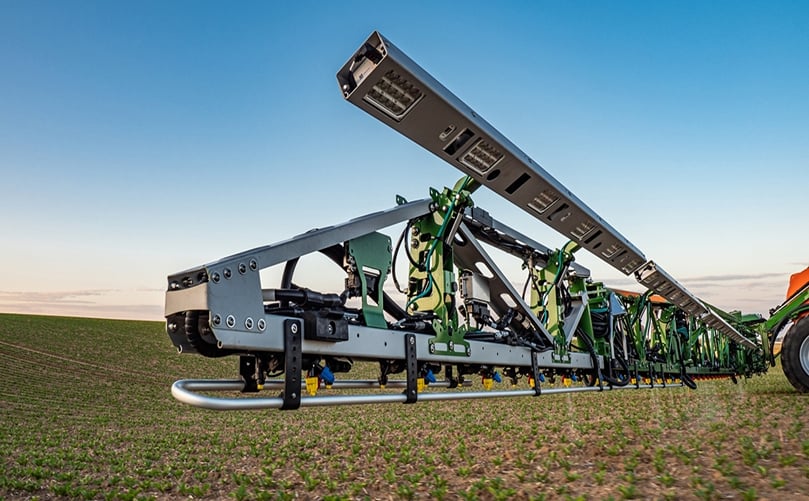
Advanced Weed Detection with One Smart Spray Technology
Suitable Models and Specifications
Several leading agricultural equipment manufacturers have developed self-propelled sprayers tailored to meet the demands of modern potato cultivation, balancing precision, power and adaptability across various farm sizes.
John Deere 4 Series (e.g., R4045, R4060): Known for their durability, GPS-enabled auto-steering and JDLink connectivity, these sprayers support precision spraying with seamless integration into digital farm management systems. Their high ground clearance makes them ideal for dense potato canopies.
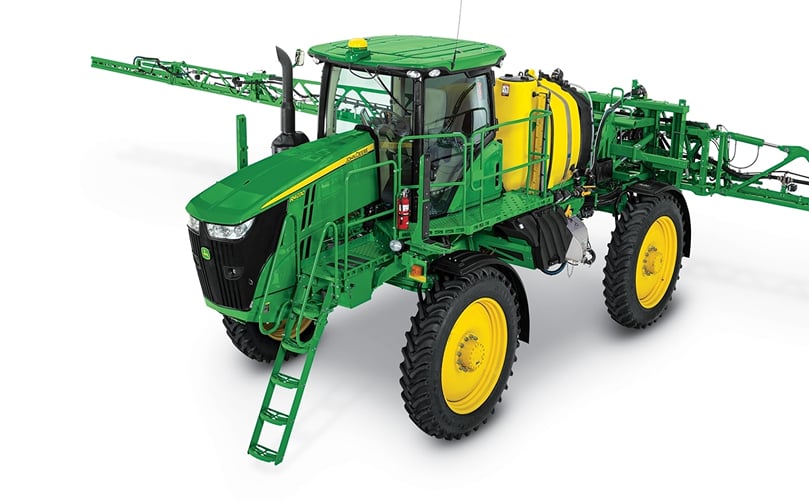
Popular self-propelled sprayer models John Deere Case IH
- Case IH Patriot Series (e.g., 3330, 4440): Offers versatile boom configurations and adjustable track widths, enabling efficient coverage in both compact and expansive potato fields. Designed for stability on slopes and uniform spray performance.
- New Holland SP Series (e.g., SP310F): Recognized for exceptional clearance that allows safe operation over tall potato vines. The advanced Boom Control System ensures consistent height and uniform droplet distribution, even on undulating terrain.
- Mahindra EarthMaster Sprayers: Provide cost-effective, fuel-efficient solutions for emerging markets and mid-scale farms. They emphasize simplicity, reliability and ease of maintenance while delivering effective crop protection.
- Amazone Pantera Series (e.g., Pantera 4504): Equipped with contour-following booms and adaptive chassis suspension, these sprayers maintain steady performance on uneven ground. Integrated Amatron control systems enhance accuracy and user convenience.
Each of these models reflects feedback from potato growers, offering features tailored to crop height, row spacing and soil conditions. Together, they represent a broad spectrum of technological sophistication and affordability, allowing farmers to choose based on their operational scale and agronomic needs.
Typical Specifications: Capacity, Boom Width and Ground Clearance
Self-propelled sprayers are engineered with specifications that balance high performance, durability and field adaptability, making them ideal for intensive potato farming operations.
- Tank Capacity (2,000–6,000 L): Large-capacity polyethylene tanks reduce downtime by minimizing refill frequency, enabling continuous spraying over expansive potato fields. Their chemical-resistant construction ensures long service life even with frequent pesticide or fertilizer use.
- Boom Width (24–40 m): Wide hydraulic booms facilitate rapid field coverage, especially suited to broad-row potato layouts. Quick-fold mechanisms allow for compact transport between plots, while multi-section controls enhance precision in irregular field shapes.
- Ground Clearance (1–2 m): High-clearance designs permit safe operation above mature potato canopies (up to 1 m) without crop damage. This feature supports late-stage fungicide applications when foliage density peaks.
Together, these specifications offer an optimal mix of reach, stability and efficiency, ensuring uniform application even across variable terrain while maintaining operator flexibility in diverse field conditions.
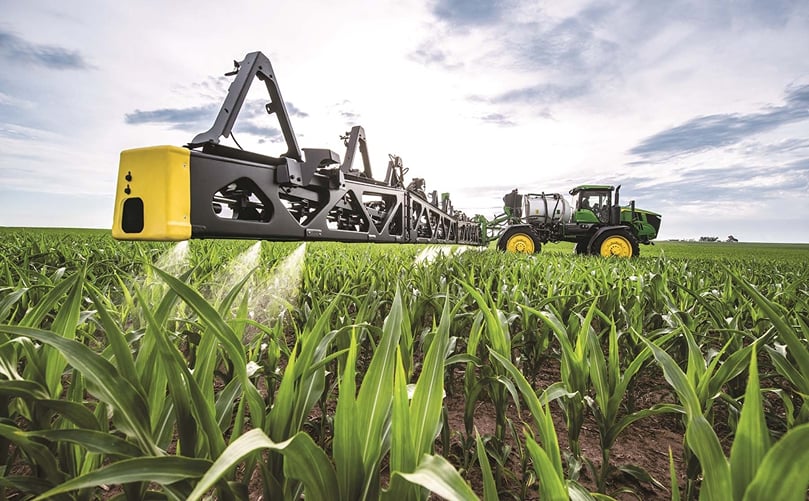
John Deere’s See & Spray precision technology, shown operating, enables targeted application using its self-propelled dual-tank system. It can also be retrofitted to existing sprayers or used in green-on-brown mode for efficient fallow field management.
Speed and Engine Power Range
Self-propelled sprayers are built for high performance and endurance, combining power with precision for demanding potato cultivation.
- Operational Speed (12–22 km/h): These machines balance speed with accuracy, maintaining uniform spray patterns even at higher velocities. The optimized speed range enhances field productivity while minimizing drift and overlap errors.
- Engine Power (220–420 HP): Robust diesel engines provide the torque required to manage heavy tanks, wide booms and challenging terrains. This power ensures steady performance on slopes and during long operational hours common in large-scale potato farms.
- Fuel Efficiency & Reliability: Advanced combustion systems and cooling technologies enhance diesel efficiency, reducing fuel costs during extended spraying cycles. Engines are designed for low maintenance and durability across multiple growing seasons.
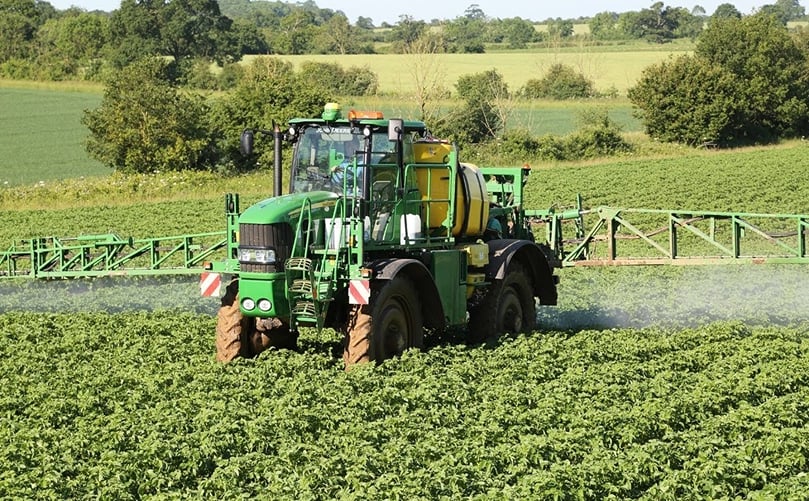
John Deere model in potato field
Together, these capabilities enable consistent, high-speed operation without sacrificing precision, making them indispensable for time-sensitive spraying in potato production.
Application in Potato Fields
Spraying Fungicides for Late Blight and Early Blight: Fungicide applications target late blight with protectant sprays initiated at canopy closure for barrier formation. Alternating chemistries prevent resistance buildup in recurrent outbreaks. Early blight control focuses on lower leaves with penetrant formulas for thorough coverage. Timing aligns with humidity thresholds to preempt spore germination. Boom adjustments ensure droplets reach shaded undersides. Efficacy monitoring via scouting refines subsequent doses. These strategies safeguard yields in susceptible varieties.
Foliar Feeding During Tuber Development: Foliar nutrients supplement soil applications during bulking to accelerate tuber initiation. Balanced NPK mixes enhance starch accumulation without excess vegetative growth. Application volumes of 150 to 300 liters per hectare maximize absorption. Mid-season timing coincides with peak demand for micronutrients like zinc. Adjuvants improve adhesion on waxy leaves. This feeding boosts overall plant vigor and harvest uniformity. It addresses deficiencies that limit tuber quality.
Desiccation Before Harvest: Desiccation hastens vine senescence for uniform skin set and easier mechanical harvest. Contact herbicides like diquat are applied at full bloom for rapid kill. Rates of 400 to 600 milliliters per hectare achieve even desiccation within weeks. Weather-dependent timing avoids residue carryover into tubers. Post-application scouting confirms efficacy across the field. This practice minimizes green material in harvesters. It optimizes timing for storage entry.
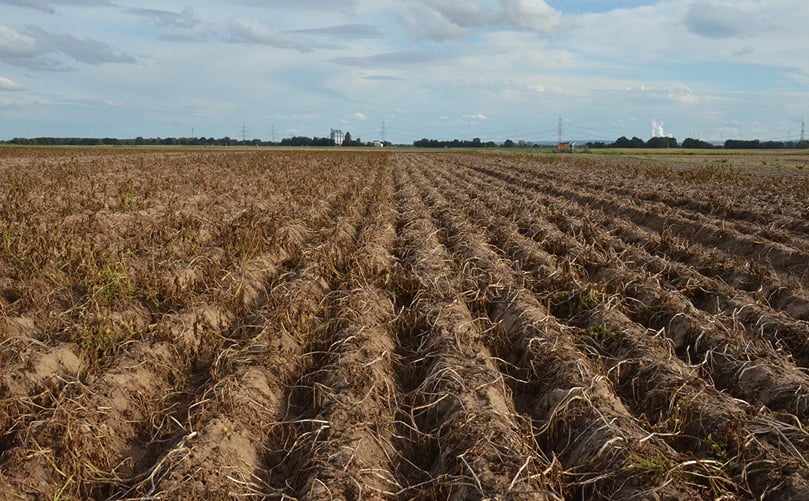
Desiccation before harvest in potato fields
Tips for Timing and Calibration for Potato Crops: Calibrate nozzles for droplet sizes of 150 to 250 microns to balance coverage and drift. Time applications during low-wind periods to enhance deposition. Triple-rinse tanks post-use to prevent contamination in rotations. Boom height should match canopy stage for optimal overlap. Record pressures and flows for consistent results. Scout fields beforehand to tailor rates. These steps ensure reliable performance.
Economic and Environmental Benefits
Reduction in Input Costs (Up to 15–20%): Precision technologies in self-propelled sprayers curb chemical use by 15 to 20 percent through targeted delivery. Fuel savings arise from efficient routing and engine optimizations. Lower refill frequency cuts labor hours per hectare. Maintenance predictability aids budgeting in annual operations. Yield protections offset any residual costs. These reductions compound in multi-year cycles. Growers realize tangible margins from streamlined inputs.
Improved Yield and Tuber Quality: Uniform applications protect against losses, lifting yields by 10 to 15 percent in disease-prone fields. Enhanced nutrient delivery promotes larger, more uniform tubers. Reduced compaction fosters better root health for sustained growth. Quality metrics like specific gravity improve with timely interventions. Fewer defects enhance market premiums. This translates to higher revenue per acre. Consistent practices build long-term productivity.
Lower Chemical Drift and Environmental Pollution: Air-induction nozzles minimize fine droplets that drift off-field, protecting pollinators and waterways. Sectional controls limit applications to intended zones only. Reduced volumes decrease overall environmental loading. Buffer zone compliance becomes easier with precision guidance. Soil residue risks drop with accurate dosing. These features align with stewardship programs. They support biodiversity in farm landscapes.
Sustainability and Reduced Fuel Usage: Efficient designs lower diesel consumption to under one liter per hectare. Integration with renewables like biofuels extends green credentials. Precision cuts waste, aligning with global sustainability goals. Soil health preservation aids carbon sequestration. Water use in mixes decreases proportionally. These aspects reduce the farms ecological footprint. Adoption promotes resilient, low-impact agriculture.
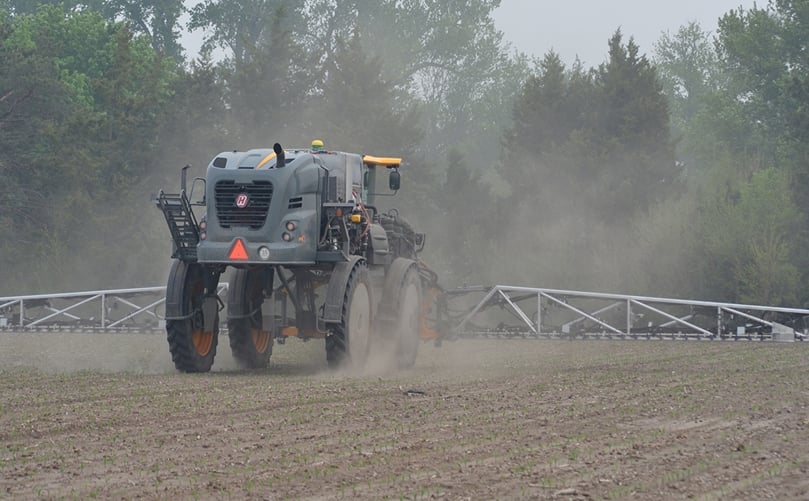
Reduction in input costs with precision sprayers
Challenges and Limitations
High Initial Investment: The upfront cost of self-propelled sprayers can exceed hundreds of thousands of dollars, posing barriers for smallholders. Financing options may strain cash flows in variable markets. Resale values help, but depreciation affects long-term planning. Scale requirements favor larger operations for justification. Leasing alternatives mitigate entry hurdles. Training investments add to totals. Careful assessment ensures viability.
Maintenance and Technical Know-How Requirements: Routine servicing demands specialized tools and parts availability in remote areas. Hydraulic and electronic failures require prompt diagnostics. Operator training gaps can lead to misuse and downtime. Annual inspections prevent minor issues from escalating. Parts sourcing varies by region and model. Skilled labor shortages complicate upkeep. Proactive schedules extend service life.
Suitability for Small and Uneven Farms: Maneuverability suffers on plots under 50 hectares, where setup time outweighs benefits. Uneven terrains challenge stability, risking uneven applications. Narrow gateways limit access in fragmented landscapes. High clearance aids rows but not all configurations. Adaptation kits help, but custom fits add expense. Larger fields maximize utility. Site evaluation guides adoption.
Future Trends
AI-Assisted and Autonomous Sprayers: AI algorithms will enable fully autonomous navigation, freeing operators for oversight roles. Machine learning refines spray patterns from accumulated field data. Weed detection via computer vision targets interventions precisely. Integration with IoT expands real-time responsiveness. Battery advancements support unmanned operations. These evolutions promise labor efficiencies. Adoption will reshape workforce dynamics.
Electric or Hybrid-Powered Models: Electric models reduce emissions, aligning with clean energy mandates. Hybrid systems blend diesel reliability with battery bursts for peaks. Lighter frames enhance soil protection in sensitive areas. Charging infrastructure grows alongside grid improvements. Range extensions suit full-day potato runs. Cost drops make them competitive. They advance low-carbon farming.
Integration with Drones and Satellite Imaging for Precision Spraying: Drones scout fields, feeding hyperspectral data to sprayers for adaptive rates. Satellite imagery maps variability at scale for pre-planning. Synergistic systems layer aerial and ground insights. Edge computing processes data onboard for immediacy. This fusion amplifies precision across operations. Collaborative tech ecosystems emerge. It heralds hyper-accurate agriculture.