


Octubre 03, 2010
New PMN webcast: Aphid management in potatoes
'Focus on Potato' has published a new webcast: 'Aphid Management in Potatoes'
From the archive


Septiembre 29, 2010
Potato Storage: Proper storage techniques can reduce disease pressure
Storage conditions can be ripe for diseases to develop and devastate potato crops, leading many universities to seek ways to control or prevent diseases before they become a problem. At the University of Maine (UM) a fungicide testing program looks at...From the archive

Septiembre 23, 2010
Sarna común: una posible solución en el suelo
Los productores de papa han estado esperando que los científicos encuentren un camino para combatir la sarna común de la papa. Los investigadores han encontrado un defensor en el suelo. Traducción al castellano del Ing. Agr. Carlos A. Del Caso del artí...From the archive

Septiembre 02, 2010
New PMN webcast: The Changing face of Potato Virus Y
"Focus on Potato"of the Plant Management Network has published a new webscast: The Changing Face of Potato Virus Yby Dr. Stewart Gray of USDA-ARSFrom the archive

Septiembre 01, 2010
El CIP acaba de publicar en ingles un manual técnico sobre tizón tardío
El desarrollo de nuevas tecnologías ha permitido a los especialistas un mejor entendimiento de la biología del Phytophthora infestans (Mont.) de Bary. Sin embargo, mucha de esta información se presenta de forma fragmentada o en publicaciones que a vece...From the archive
Agosto 09, 2010
Potato Psyllids found in North Dakota
The North Dakota State University (NDSU) Blight Line reports the finding of a potato insect pest new to North Dakota, the potato psyllid.From the archive
Contenido Patrocinado
Contenido Patrocinado
Contenido Patrocinado

Julio 08, 2010
'Focus on Potato' offers webcasts and science backed information for crop protection
The Plant Management Network (PMN), a nonprofit publisher of applied agricultural and horticultural information, announces the launch of Focus on Potato, a resource that features webcasts and other science-backed information tools that will help potat...From the archive
Julio 08, 2010
Emisiones en Internet sobre protección de cultivos
La Red de Manejo de Cultivos (PMN, por sus siglas en ingles), una editorial sin fines de lucro con información agrícola y hortícola, anuncia el lanzamiento de "Focus on Potato", un recurso en ingles con emisiones por Internet y otras herramie...From the archive
Julio 08, 2010
Othello welcomes potato growers and scientists
Potato growers and scientists from Washington, Oregon and Idaho congregated at Washington State University’s Othello Research facility at Cox and Booker roads during Potato Field Day June 24 to exchange pertinent facts about pest control and water mana...From the archive
Julio 07, 2010
Late blight found in Walsh Country, North Dakota
Despite hot dry weather, Late Blight was found in a field in northern Walsh County in northeast North Dakota late last week.This is in addition to finds in Dickey County in southeast North Dakota and in the Carberry and Carman areas of southern Manitob...From the archive
Junio 30, 2010
Late Blight shows up in Washington
Potato late blight has been found and confirmed in the south Columbia Basin and Washington State University plant pathologist Dennis Johnson says more confirmations of the disease are expected this week. He says the disease was found in two locations. ...From the archive
Junio 16, 2010
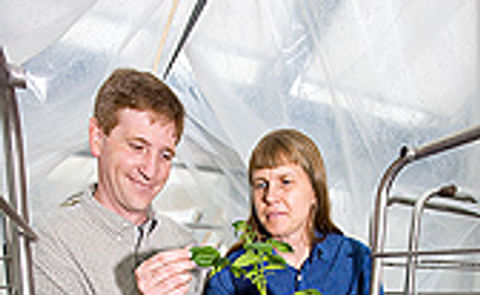
Germoplasma de papa silvestre contiene una clave a la resistencia a enfermedades
Científicos del Servició de Investigación Agrícola (ARS) han identificado germoplasma de una especie silvestre de papa que ofrece resistencia a algunas enfermedades principales de la papa.From the archive
Contenido Patrocinado
Junio 16, 2010
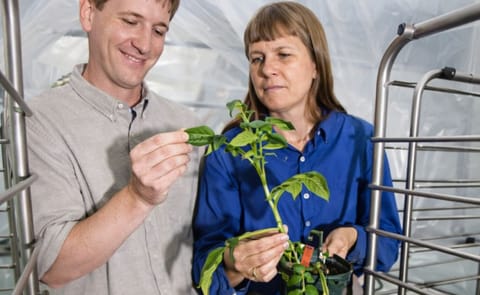
ARS: Fighting Potato Diseases by Enhancing Germplasm
Wild potato germplasm that offers resistance to some major potato diseases has been identified by Agricultural Research Service (ARS) scientists.From the archive

Mayo 25, 2010
Research: Moth larvae spit boosts potato yield
When a major South American pest infests potato tubers, the plant produces bigger spuds, reports a study by Cornell, University of Goettingen and National University of Colombia researchers.The secret is in the spit, write the researchers online in the...From the archive

Mayo 20, 2010
Late blight hotlines
Worldwide, late blight is rated the worst of potato diseases. Intermittently since the 1990s, spores have turned up in commercial fields of Idaho, Washington, California and Oregon. When the spore is present it reproduces like a wildfire in cool, mois...From the archive

Mayo 14, 2010
ARS and University of California attack zebra chip disease
Developing a chemical attractant to monitor and manage the potato psyllid is the goal of a new cooperative agreement signed in March between the Agricultural Research Service (ARS) and the University of California (UC) at Riverside.From the archive
Mayo 06, 2010
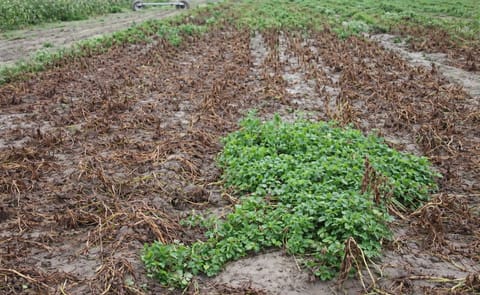
Defender: Late blight-Resistant Potato variety from ARS Research
Potatoes are America’s number one vegetable crop. Per capita, Americans consume about 130 pounds annually.From the archive

Abril 24, 2010
Will there be a sequel to last summer's late blight with tomatoes, potatoes?
Many readers are no doubt aware of last summer's late-blight infestation, in which a fungus, Phytophthora infestans, decimated local tomato and potato plantings. The fungus overwinters in southeastern United States but does not generally overwinter in ...From the archive