

February 03, 2014
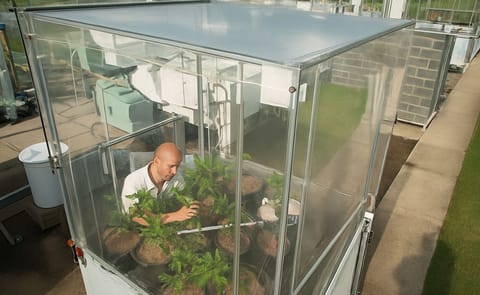
Potatoes Show Promise for Meeting Climate Change Challenges
New research shows that potatoes—often cultivated as a rainfed crop with little or no irrigation—are still the go-to tuber when times get tough.From the archive

January 13, 2014
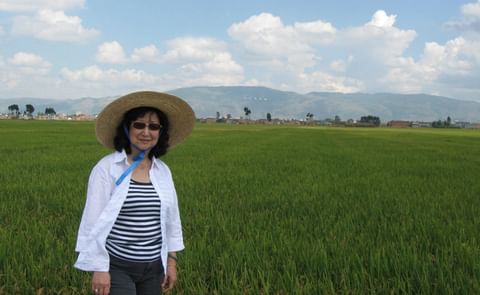
UAF scientist veers toward potato research when life brings a detour
Jenifer Huang McBeath of the University of Alaska Fairbanks has been researching biological controls and developing environmentally friendly methods for farmers to combat plant diseases since 1985. She never intended to switch her focus to potatoes...From the archive
January 08, 2014
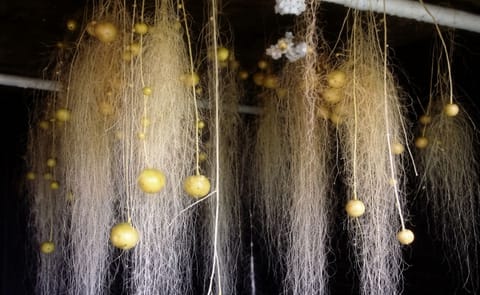
Aeroponics to boost New York State potato production
The mashed potatoes or latkes that enhance your holiday feast have taken a long path from tuber to table – in many cases, several years. A project at Cornell University could trim that time.From the archive

December 17, 2013
Potato breeder leaves mark on industry
Joseph Pavek bred the popular potato variety Ranger Russet and developed much of the germplasm still used by breeders today, though he retired in 1999.From the archive
December 05, 2013
New Study Finds Corn Oil Superior to Extra Virgin Olive Oil in Lowering Cholesterol
Corn oil significantly reduces cholesterol with more favorable changes in total cholesterol (TC) and LDL-C than extra virgin olive oil, new research shows.From the archive
November 30, 2013
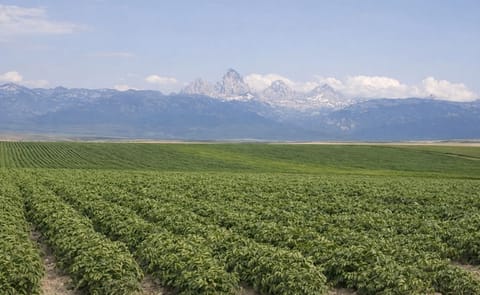
Report shows flat Idaho potato production costs
A new University of Idaho economic report shows potato procution costs have held steady.From the archive
Sponsored Content
Sponsored Content
Sponsored Content

November 18, 2013
Can a computer invent creative new recipes? IBM thinks so...
Computers are constantly getting smarter. But can they ever be creative? A team of IBM researchers believes so. They’ve built a program that uses math, chemistry, and vast quantities of data to churn out new and unusual recipes.From the archive

October 21, 2013
ARS potato breeders worked during US government shutdown to save clones.
Scientists with the USDA’s Agricultural Research Service potato genetics program in Aberdeen, Idaho, were granted special permission to return to work during the US government shutdown, potentially preventing the loss of unique breeding material.From the archive
August 27, 2013
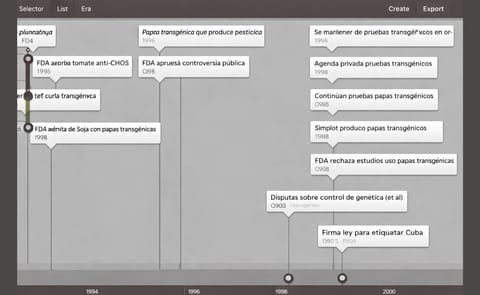
Cronología del desarrollo de la papa transgénica
Línea de tiempo que incluye algunos de los eventos más importantes ocurridos en América y Europa durante el desarrollo de la papa genéticamente modificada.From the archive
August 21, 2013
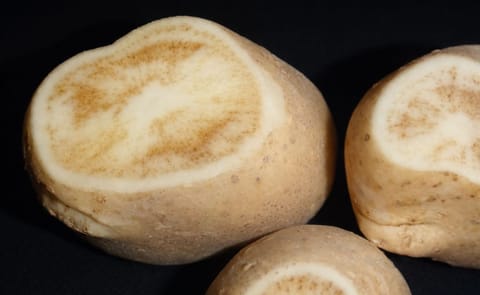
Potato Psyllid Trapping and Management - Focus on Potato webcast
This webcast by the Plant Management Network on Potato Psyllids, responsible for the transfer of the Zebra chip disease consists of two parts:From the archive
August 12, 2013
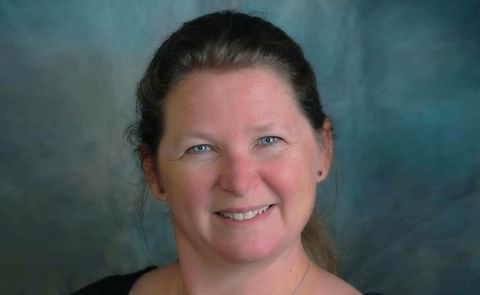
Nora Olsen new president Potato Association of America
Nora Olsen is The Potato Association of America president for 2013-2014. Olsen is a professor and Extension potato specialist at the University of Idaho’s Kimberly Research and Extension Center.From the archive
August 07, 2013
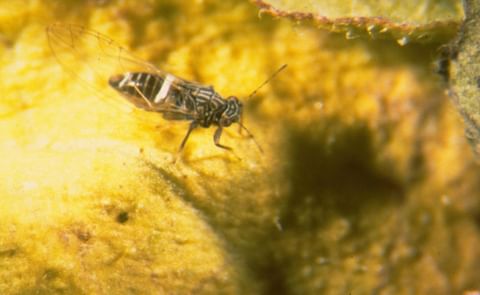
Potato psyllids in Pacific North West show far less zebra chip disease this year
About the same number of potato psyllids have been caught on sticky traps in Idaho fields this season as by this time last summer, but far fewer of the tiny, winged insects have tested positive for the Liberibacter bacterium, which causes the crop dise...From the archive
Sponsored Content
July 29, 2013
Prince Edward Island Potato Board supports new oil seed research
The Prince Edward Island Potato Board is hoping a new investment in oil seed research will help farmers make the most of a growing oilseed industry.From the archive

July 24, 2013
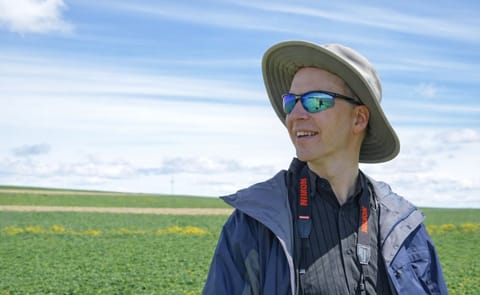
The hard question: Pesticides or GMO's
De Jong, a potato breeder and geneticist at Cornell University in Ithaca, New York, hopes that at least one of the plants will yield a best seller, but it’s far more likely that they’ll amount to compost.From the archive

June 30, 2013
Portion size & size label affect how much we eat
Portions (8, 12 or 16 ounces) are given different labels – small, medium or large – at different restaurants. Research shows consumers use such labels to dictate how much food they think is a “normal” portion, and then adjust their intake accordingly.From the archive
June 23, 2013
Fifty years of potato seed lot trials by Washington partnership
This year marks the 50th anniversary of the partnership between the Washington State Potato Commission (WSPC) and Washington State University (WSU) for potato seed lot trials.From the archive

June 05, 2013
Research: Infected volunteer potato plants unlikely to spread zebra chip disease
Volunteer potato plants growing from seed infected with zebra chip are likely too few in number and survive too briefly to contribute to the spread of the crop disease, according to new Oregon State University research findings.From the archive
April 25, 2013
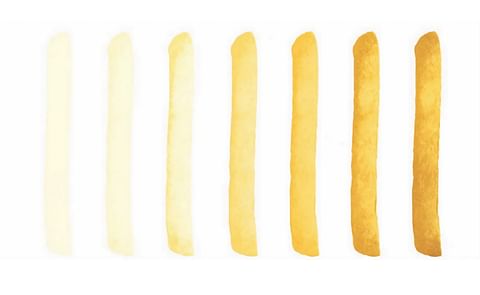
The role of vision in flavor: 'Seeing the flavor of Foods'
The eyes sometimes have it, beating out the tongue, nose and brain in the emotional and biochemical balloting that determines the taste and allure of food, according to a scientist speaking at the 245th National Meeting &Exposition of the American ...From the archive