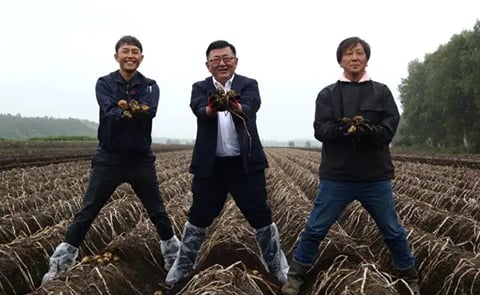
Automation is no longer optional for potato processors, it's the difference between staying competitive and losing ground. Here's how modern processing lines are cutting waste, energy use, and labour dependency, all at once.
European Potato Processing Industry Focuses on Automation and Efficiency

Europe's potato processing industry is entering a new phase - one defined less by how much processors can grow, and more by how much value they can extract from every tuber that enters the line. Automation and processing efficiency have moved from operational nice-to-haves to the deciding factors in who stays competitive.
A wave of pressure is driving the shift. Labour is harder to find and more expensive to keep. Energy costs remain volatile. And this summer, a punishing heatwave pushed temperatures above 40°C across France, Germany, Belgium, the Netherlands and Poland - striking right as crops entered the critical tuber bulking stage. Agronomists are warning that prolonged heat and dry conditions during this window can mean smaller tubers, inconsistent sizing, and higher rates of internal defect.
Meanwhile, the competitive map is being redrawn. China and India are investing heavily in new frozen fry and value-added processing capacity, and European market share is beginning to erode. For processors across the UK, Ireland, Scandinavia, Germany, Spain and Portugal, the message is clear: the path forward isn't chasing volume against lower-cost regions - it's building lines that are more efficient, more automated, and more resilient to a raw material that's becoming harder to predict. This is precisely the shift Wyma's equipment is engineered for.
Getting more from every tuber
Processing efficiency has become the defining metric in this market. Modern fry lines have pushed raw potato requirements down from roughly 2.0 kg to around 1.6 kg per kilogram of finished product which is a meaningful gain in yield per hectare that helps offset shrinking growing areas and climate-driven yield drag.
This is exactly where equipment design earns its keep, and it's the standard Wyma builds to. When raw material arrives with more size and quality variation than it used to, the systems handling intake and preparation: washers, destoners, graders and optical sorting, need to work harder to protect yield rather than let variability translate into downgrade. Wyma's washing and optical grading equipment is built for this kind of variable-lot processing, separating usable product from defect and debris with the precision needed to keep yield up even when the crop itself is inconsistent.
Doing more with less water and energy
Energy recovery is becoming just as central to the efficiency story. Advanced processing lines that recapture vapour and convert it back into steam can cut fresh steam demand by up to 80%, a significant saving as energy costs and decarbonisation pressure both climb.
Water tells a similar story, and it's a standard Wyma engineers into its systems as a baseline, not an add-on. As regulatory scrutiny around water use and discharge intensifies across Europe, closed-loop recirculation is shifting from a nice-to-have to an expectation. Wyma's water recycling systems are designed to reduce fresh water draw and the downstream cost of treating and discharging it, giving processors a way to build efficiency gains into the line itself rather than bolting them on afterwards.
Fewer hands, more automation
Once a temporary blip, labour scarcity is now here to stay. Processors across global markets are designing lines built to run with only one or two operators, supported by digital monitoring, predictive maintenance and faster cleaning cycles. Automation isn't just about cutting labour cost; it's about protecting uptime and consistency when the workforce to run a line manually simply isn't there.
Wyma's automated conveyor, grading and optical sorting systems are built around this reality, reducing manual handling at the points in a line where labour has traditionally been heaviest, while giving processors the digital visibility to catch quality issues before they compound. This is also where flexibility earns its value: food-service and retail buyers increasingly want a single supplier for fries, croquettes, hash browns and other formed products, pushing processors toward lines that can pivot between product formats without a full retool. Equipment engineered for adaptability, not just throughput, is what makes that kind of product-mix flexibility possible.
Built for a more volatile crop
The heatwave currently affecting Western and Central Europe is a reminder that raw material variability isn't going away. Tuber size, dry matter content and defect rates will keep fluctuating year to year as growing conditions become less predictable. The processors best positioned to manage that volatility won't be the ones with the highest theoretical throughput - they'll be the ones whose washing, grading and sorting systems can flex with whatever the season delivers, without sacrificing consistency downstream.
That's the standard Wyma builds to: automated, high-quality machinery designed not for a single ideal crop, but for the variable reality processors are actually facing. As the European potato sector moves from a volume game to a value game, the right processing line isn't just a production asset, it's a hedge against a raw material that's only going to keep changing.
Like to receive news like this by email? Join and Subscribe!
Get the latest potato industry news straight to your WhatsApp. Join the PotatoPro WhatsApp Community!
精选企业

产品



相关新闻
九月 28, 2026
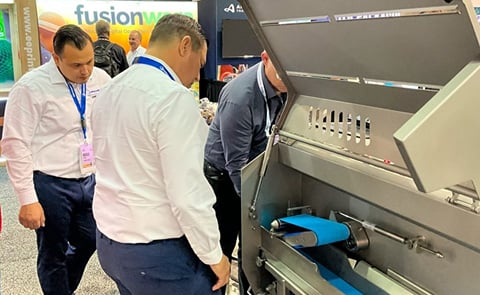
Urschel与KRONEN将在2026年全球果蔬与花卉展上展示一体化食品加工生产线解决方案
Urschel与KRONEN将在2026年全球果蔬与花卉展上展示切割技术和生产线构建解决方案,包括Little Gem Aspire Dicer和GS 10-2 Slicer,以及用于清洗、干燥和去皮环节的设备。
九月 02, 2026
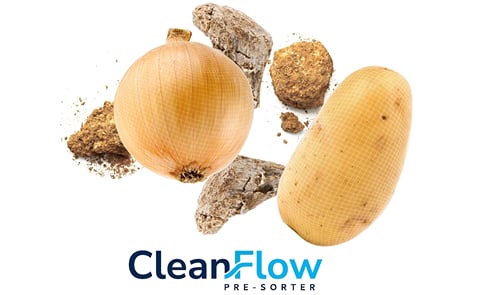
Ellips Launches CleanFlow Pre-Sorter to Remove Stones, Clods and Defects Before Grading
Ellips introduces the CleanFlow Pre-Sorter, using True-AI to remove stones, clods and defects before potato and onion storage or grading, handling up to 120 t/h while reducing equipment wear, storage losses and manual labour.
八月 16, 2026
Laser Sorting Raises the Bar for Quality and Food Safety in Potato Products
Optimum Sorting's laser technology detects hidden defects, foreign materials, wet centers, soft rot and solanine in potatoes, fries and chips, delivering high-precision sorting with 0.3 mm resolution and up to 3,333 scans per second.