

Sponsor of the month(Learn more)

九月 03, 2017
Cornell University to receive 400k for update of nematode research facilities
In a visit to the Nematode Quarantine laboratory at Cornell University last Friday, US Senate Minority Leader Chuck Schumer, announced a commitment of $400,000 from the USDA for the upgrades to the facilities and equipment.From the archive


八月 29, 2017
Fredericton Potato Research Lab invites the public
More than 300 people stopped by Fredericton Research and Development Centre's open houseFrom the archive

八月 25, 2017
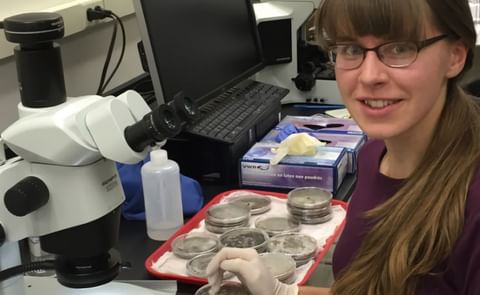
National Potato Council awards scholarship to Adrienne Gorny for nematode research
Adrienne Gorny, a fourth-year doctoral student in Plant Pathology and Plant-Microbe Biology at Cornell University, is the recipient of the 2017-2018 NPC Academic Scholarship.From the archive
八月 23, 2017
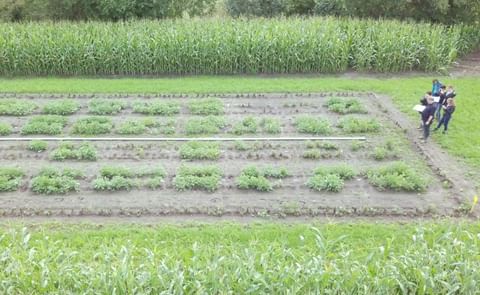
Solynta's revolutionary hybrid breeding technology protects potato from late blight by multi-resistance
The breeders of Solynta have succeeded in making potato plants insusceptible to the dreaded potato disease Phytophthora infestans, using their revolutionary hybrid breeding technique.From the archive

八月 22, 2017
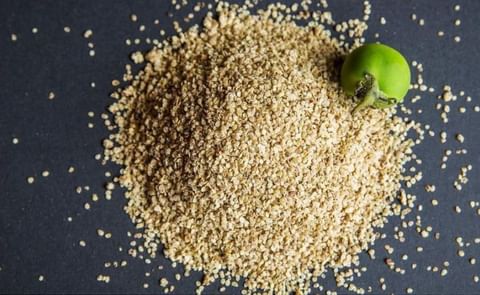
Solynta develops a blight resistant potato variety (non-GMO)
The Dutch company Solynta has developed a potato variety that is resistant to late blight (Phytophthora Infestans). As a result, it could greatly reduce the use of pesticides in agriculture.From the archive
八月 17, 2017
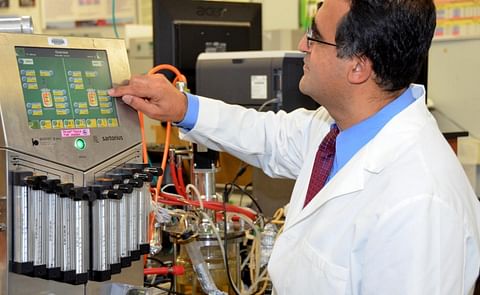
Penn State Researchers find new way to convert potato waste to ethanol
With more than two dozen companies in Pennsylvania manufacturing potato chips, it is no wonder that researchers in Penn State's College of Agricultural Sciences have developed a novel approach to more efficiently convert potato waste into ethanol.From the archive
Sponsored Content
Sponsored Content
Sponsored Content
![Dirk Hays,Texas A&M AgriLife Research plant geneticist: “With Ground Penetrating Radar (GPR), we can image the size of the tubers and get a correlation to the actual physical size of the potato without harvesting them. [...] We can get an almost one-to-](https://media.potatopro.com/texas-a-and-m-gound-penetrating-radar-early-potato-1200.jpg?width=480&height=295&crop=smart&mode=crop "Dirk Hays,Texas A&M AgriLife Research plant geneticist: “With Ground Penetrating Radar (GPR), we can image the size of the tubers and get a correlation to the actual physical size of the potato without harvesting them. [...] We can get an almost one-to-")
八月 17, 2017
Early maturing potato cultivars can be identified using ground-penetrating radar, finds Texas A&M Agrilife
Dirk Hays,Texas A&M AgriLife Research plant geneticist: “With Ground Penetrating Radar (GPR), we can image the size of the tubers and get a correlation to the actual physical size of the potato without harvesting them. Potatoes are a dream for Ground Penetrating Radar.”From the archive
八月 15, 2017
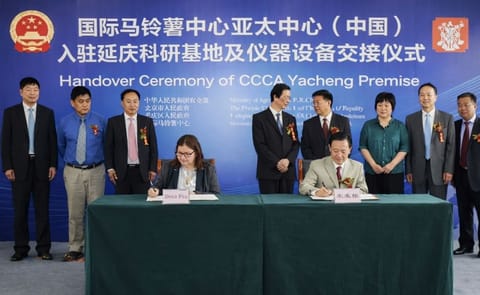
Handover of International Potato Center - China Center for Asia Pacific (CCAP) to China
he new International Potato Center-China Center for Asia Pacific (CCCAP) facilities were formalized in a handover ceremony in Yanqing, Beijing on July 11th, 2017.From the archive

八月 12, 2017
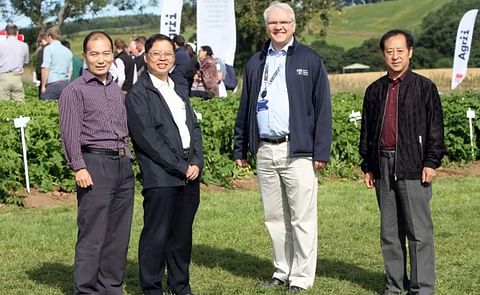
Potatoes in Practice stage for Scotland - China Potato Research announcement
The Chinese Government and leading potato company, Xisen Potato Group have committed £3 million to a collaboration with James Hutton Limited (JHL) to breed new varieties and research resistance to pests and diseases, tuber storage and potato processing.From the archive

八月 12, 2017
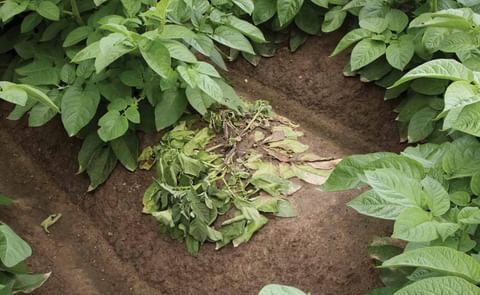
Scottish Potato Industry unites to fund major Blackleg Research project
In Scotland, a group of major potato businesses and public sector organisations have sponsored a £242,000 (USD 313,000) research project aimed at reducing the impact of potato disease blackleg on the Scottish seed potato industry.From the archive

八月 07, 2017
Start-up of Punjab’s Centre of Excellence for Potato delayed
The Potato Centre of Excellence, Punjab’s only centre of its kind being set up at Dhogri village in Jalandhar, has not been completed yet, though the deadline for the project was 2015.From the archive


八月 03, 2017
Perfecting the Pipers crisp
When Pipers Crisps — one of Britain’s best-known crisp brands — wanted to understand more about the science behind their premium products and processes they turned to food experts at the University of Nottingham.From the archive
Sponsored Content
八月 03, 2017
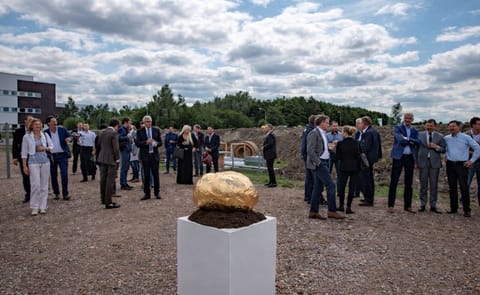
Avebe finds fertile land at the Zernike Campus to 'grow' their new Innovation Centre
Construction of Avebe's Innovation Centre at the Zernike Campus has started and this milestone was celebrated by 'planting' a potato time capsule.From the archive

八月 02, 2017
Research: Less food waste when using frozen produce
Consumers create less waste from frozen vegetables, potato products and berry fruit than from fresh, or alternatives in cans or jars.From the archive

七月 07, 2017
Boise researchers to develop an 'extremely low cost' sensor to detect rot in potato storage
Research of Boise State University plan to develop a wireless sensor network that would be able to detect temperature, humidity levels, carbon dioxide and ammonia levels in real time, to help with early detection of rot in stored potatoes.From the archive
七月 06, 2017
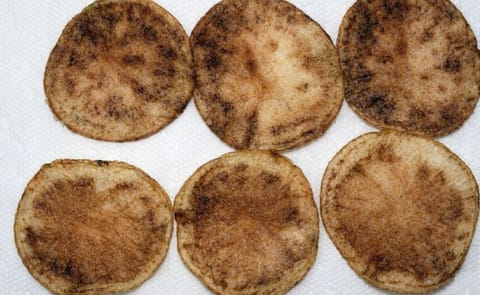
CRC develops new DNA methods to detect zebrachip bacteria in potato psyllids
Plant Biosecurity CRC scientists have identified stable regions in the genome of Candidatus Liberibacter solanacearum (CLso), which causes the serious disease Zebra Chip in potato and tomato crops. This research will provide new diagnostics that will significantly reduce uncertainty in biosecurity assessments.From the archive


七月 01, 2017
Elea highlights benefits PEF for snack sector at Snackex 2017
Elea GmbH, leading manufacturer of equipment for Pulsed Electric Field treatment (PEF) used the recently concluded Snackex to highlight the opportunities PEF offers to snack manufacturers. Elea also introduce its Elea SmoothCut™ One system.From the archive

六月 27, 2017
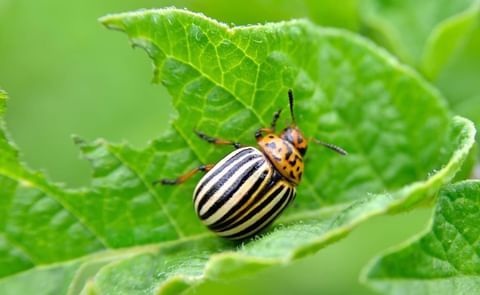
To protect crops, farmers could promote potato beetle cannibalism
UMaine scientists say farmers could try to protect their potato crop by utilizing agricultural practices — including crop rotations and push-pull strategies — to create field conditions that favor Colorado potato beetle cannibalism.From the archive