
Introduction
The potato, Solanum tuberosum is a culinary titan that has shaped diets, economies and cultures for millennia. From the crispy, golden French fries that dominate fast-food menus to soulful specialties like France’s stretchy aligot, India’s fiery aloo tikki and Peru’s vibrant causa the potato’s versatility is unmatched. Originating over 8,000 years ago in the Andes this tuber fuels a multi billion dollar industry from Mumbai street stalls to Paris’s Michelin starred bistros.
"From Andes to Plate: The Potatoes Global Journey
A Storied Past: The Origins and Global Journey of French Fries
The potatoes epic begins in the Andean highlands of Peru and Bolivia, where indigenous communities domesticated over 4,000 varieties more than 8,000 years ago, sustaining empires like the Inca. At altitudes up to 15,000 feet, farmers developed freeze drying to create chuno, a preserved potato that lasted years and fueled long journeys. Spanish conquistadors introduced the potato to Europe in the 1570s but its nightshade family ties (related to toxic belladonna) sparked suspicion some labeled it cursed or linked it to leprosy.
By the 17th century, its resilience in poor soils and high caloric yield (160 calories, 3–4g fiber, 620mg potassium per medium potato) made it a lifeline across northern Europe, powering populations through wars and famines, including the Irish Potato Famine (1845–1852), which killed 1 million and drove millions to emigrate, reshaping nations like the U.S. and Canada. French fries likely emerged in Belgium’s Meuse Valley, where locals, skilled at frying small river fish in beef tallow, substituted sliced potatoes during winter shortages when rivers froze, possibly in the late 1600s.
By the early 1700s, vendors in Namur and Dinant sold these frites in paper cones with creamy mayonnaise, andalouse or samurai sauce, a tradition thriving in Belgium’s 3,500+ friteries, many with drive thru windows or 24/7 hours. Belgian historian Pierre Leclercq cites 1700s municipal records, though France claims a rival origin during the 1789 French Revolution, Paris vendors near the Pont-Neuf bridge fried potato strips as affordable street food, dubbed pommes Pont-Neuf. The term “French fries” arose during World War I, when American soldiers in French-speaking Belgium mistook the dish for French.
Thomas Jefferson, a culinary pioneer, popularized fries in America, serving “potatoes in the French manner” at a 1802 White House dinner, captivating guests. The 20th century transformed fries into a global phenomenon. In the 1940s, J.R. Simplot pioneered frozen fry technology, enabling mass production. McDonald’s standardized fries as a menu cornerstone, perfecting their golden crunch with Russet Burbank potatoes and precise frying protocols. Today, over 20 million tons of frozen fries are produced annually, gracing tables from Belgian friteries to Mumbai’s chaat stalls, Dubai’s luxury restaurants, Tokyo’s fusion eateries and Nairobi’s street markets, embodying comfort and culinary innovation.
The Potato Empire: Global Market Dynamics and Economic Impact
French fries and potato specialties drive a massive industry, fueled by fast-food culture, convenience dining and demand in emerging markets like Asia, Africa and the Middle East. The global French fries market is valued at over USD 15 billion, driven by urbanization (e.g., 55% of India’s population is urban), rising incomes (up 3–5% annually in China and India) and the expansion of quick-service restaurants (QSRs) like McDonald’s, KFC and local chains like Indonesia’s HokBen.
The frozen potato products market, including fries, tots, hash browns, wedges and croquettes, exceeds USD 20 billion, while the broader processed potato market (frozen and non-frozen, like mashed mixes, chips and dehydrated products) surpasses USD 40 billion. North America and Europe hold over 60% market share, with Americans consuming approximately 30 lbs of fries per person annually and Belgians topping 100 lbs, supported by a fritery culture vying for UNESCO intangible heritage status.
Asia-Pacific is the fastest-growing region, propelled by Westernized diets, with China and India doubling processing capacities to millions of tons. Latin America and Africa are emerging markets, with Brazil and South Africa seeing steady growth due to urban sprawl and QSR penetration. Challenges include raw potato price volatility recent oversupplies in Europe and Latin America cut prices by 20–30%, impacting farmers but lowering processor costs.
Health trends boost demand for low-fat, air-fried or organic fries, with 40% of consumers favoring eco-friendly products. Sustainability drives innovations like biodegradable packaging (used by 30% of European producers), water efficient farming (saving 20–30% in arid regions) and upcycled byproducts like peel-based snacks or biogas, ensuring the potatoes economic dominance from Idaho’s fields to global factories.
Titans of the Trade: Leading Manufacturers and Their Global Reach
Multinational giants dominate the French fries and frozen potato specialties market, leveraging vast supply chains, cutting-edge technology and partnerships with fast-food chains to produce billions of pounds annually. These companies shape the industry with innovations in health, sustainability and flavor. Here’s an exhaustive overview
McCain Foods Limited (Canada): The world’s largest fry producer, McCain generates over USD 10 billion in revenue, operating 50+ plants across six continents and supplying approximately 33% of global fast-food fries to McDonald’s, Burger King, Wendy’s and KFC. Its portfolio includes straight cut, crinkle-cut, wedges, sweet potato fries organic lines and specialties like hash browns and potato bites. McCain prioritizes sustainability, recycling 95% of wastewater and converting peels into biogas (powering 15% of plant energy). Its AI-driven sorting and Pulsed Electric Field (PEF) technology reduce oil use by 20%.
Lamb Weston Holdings (USA, Idaho): North America’s top producer, with over USD 6 billion in revenue, Lamb Weston excels in innovative cuts like crinkle cut, steak fries, sweet potato fries and lattice fries. A key McDonald’s supplier, it serves QSRs, retailers and schools, using FarmWise AI to optimize yields by 12%.
J.R. Simplot Company (USA, Idaho): A frozen fry pioneer since the 1940s, Simplot supplies approximately 50% of McDonald’s U.S. fries. Its farm to factory model ensures quality for fries, tots, hash browns and wedges, serving QSRs, supermarkets and institutions like hospitals. Simplot’s Innate biotech potatoes cut acrylamide by 50%.
Aviko (Royal Cosun, Netherlands): Europe’s fry leader, processing 1.5 million tons annually, Aviko specializes in premium frites, organic lines and low-acrylamide products. Its AI sorting (99.9% accuracy) and energy efficient frying save 10% energy with exports to 80+ countries.
Farm Frites (Netherlands):Handling 800,000 tons yearly, Farm Frites leads exports to the Middle East with halal-certified fries, wedges and bites, operating in 40+ countries. Its spiced fries cater to Asian and African palates, with solar-powered plants cutting emissions by 15%.
Emerging Players: India’s Pepizo Foods and Chillfill produce masala-seasoned fries and frozen aloo tikki for local QSRs and street vendors, with exports to Southeast Asia growing steadily.
These titans produce over 80% of global frozen fries, with McCain and Lamb Weston commanding approximately 40% market share. Smaller players drive regional innovation, while sustainability and health-focused products shape the industry.
The Perfect Potato: Varieties and Exhaustive Selection Criteria
Not all potatoes are destined for the fryer. The ideal varieties for French fries and potato specialties balance high starch content, low reducing sugars and uniform shape to produce crispy, golden fries with a fluffy interior while minimizing health risks like acrylamide, a carcinogen formed during high heat frying at 177–191 °C. The International Potato Center (CIP) and global industry standards, developed through decades of agronomic research and processing trials, identify top-performing varieties tailored for specific culinary, industrial and market needs.
These potatoes are selected not only for their frying performance but also for their adaptability to diverse climates, resistance to diseases and alignment with sustainability goals, ensuring a steady supply for the multi billion dollar potato industry.
Russet Burbank (USA): The gold standard for French fries, Russet Burbank boasts 20–22% dry matter (starch) and 0.1–0.3% reducing sugars, delivering a fluffy interior, crispy exterior and minimal browning for the iconic McDonald’s fry. Its long, oval tubers (10–15 cm) yield uniform 6–10mm strips, ideal for high volume cutting lines but its susceptibility to late blight requires careful pest management and storage at 8–10°C with 95% humidity to prevent sugar buildup. Revered in Idaho’s volcanic soils, this variety’s reliability has made it a cornerstone of the U.S. potato industry, producing millions of tons annually for fast-food giants and retail frozen fries.
Innovator (Netherlands): Specifically bred for frozen fry production, Innovatores low sugar content (<0.2%) and bruise resistance reduce acrylamide formation by 30%, catering to health conscious European markets. Its high yields (40–50 tons/hectare) and adaptability to automated processing lines make it a favorite for industrial processors like Aviko, while its consistent texture ensures a premium fry experience. Innovator’s development by HZPC reflects decades of Dutch expertise in potato breeding, optimizing for both agronomic efficiency and consumer safety.
Ranger Russet (USA): A fast growing variety (90–100 days), Ranger Russet offers size consistency and resistance to potato virus Y, making it a versatile choice for fries, tots and hash browns in North American markets. Its robust disease resistance reduces pesticide use by up to 30%, supporting sustainable farming, while its uniform tubers streamline high-speed cutting for QSRs like Wendy’s. Grown extensively in the Pacific Northwest, Ranger Russet’s reliability ensures a steady supply for both fresh and frozen applications.
Bintje (Belgium/Netherlands): With medium starch (18–20%) and a creamy texture, Bintje is the heart of European frites, delivering rich flavor and golden color through traditional double-frying. Its storage sensitivity (prone to sprouting below 6°C) makes it ideal for fresh cut friteries in Belgium’s 3,500+ fry shops, where it is paired with sauces like andalouse or mayonnaise. A cultural icon in the Low Countries, Bintje’s legacy dates back to 1905, embodying the region’s devotion to perfect fries.
Maris Piper (UK): Starchy (20–22%) and favored for thick “chip shop” fries, Maris Piper yields 35–45 tons/hectare and is a staple in UK and Irish pubs for its crisp crust and fluffy center. Its versatility extends to roasting and mashing, but its frying prowess shines in traditional fish and chip shops across Britain. Maris Piper’s widespread cultivation reflects its adaptability to the UK’s temperate climate, ensuring consistent quality for both home cooks and commercial kitchens.
Agria (Germany): Boasting high dry matter (22–24%) and vibrant yellow flesh, Agria produces flavorful, crispy fries for premium European markets, with minimal waste (3–5%) in automated lines. Its rich potato forward taste makes it a chef favorite for upscale restaurants, while its high yields support large scale processing for frozen products. Agria’s rise in Germany underscores the countries focus on quality driven potato innovation.
Sweet Potato (e.g., Beauregard, USA): With lower starch (15–18%) and high beta-carotene (8,000–10,000 µg/100g), Beauregard requires thin cuts (4–6mm) to combat its 75–80% moisture content, ensuring crispiness for health focused consumers. Grown in the U.S. South, its yields of 25–35 tons/hectare and nutrient density make it a retail favorite, often air fried for lower fat content. Sweet potatoes vibrant orange hue and natural sweetness have fueled their global popularity, from American diners to Asian fusion eateries.
Kennebec (USA): Low-sugar (<0.2%) and creamy, Kennebec delivers restaurant quality fries with excellent golden color, yielding 30–40 tons/hectare for diners and small scale processors. Its smooth texture suits fresh cut applications but careful handling is needed to prevent bruising during transport. A favorite in New England, Kennebec’s versatility extends to baking and boiling, making it a multi purpose gem.
Yukon Gold (Canada/USA): Waxy (16–18% starch) with a buttery flavor, Yukon Gold is best for baking or short fries, as its lower starch risks crumbling in high speed fry lines. Its golden flesh and rich taste make it a premium choice for home cooks and restaurants, particularly in Canada, where it was developed in the 1980s. Yukon Gold’s popularity in North America highlights its appeal for rustic, skin on potato dishes.
Fontane (Netherlands): A high yield variety (45–55 tons/hectare), Fontane’s low sugar and bruise resistant traits make it a rising star for frozen fries in Europe industrial plants. Its durability in mechanical processing ensures consistent quality for global brands like Farm Frites, while its adaptability to sandy soils boosts Dutch agricultural efficiency.
Lady Rosetta (Netherlands): High-starch (22–24%) and firm, Lady Rosetta is versatile for fries and chips, with low oil uptake (8–10%) and yields of 40–50 tons/hectare. Its ability to maintain texture under high heat frying makes it ideal for crispy snacks, popular in both European and Asian markets. Lady Rosetta’s robust agronomic traits support sustainable farming practices, reducing resource inputs.
Asterix (Netherlands): Red skinned with high dry matter (20–22%), Asterix produces vibrant specialty fries, resistant to scab and nematodes for lower pesticide use. Its striking appearance appeals to gourmet markets, while its processing durability suits frozen fry production for export. Asterix’s development underscores the Netherlands focus on visually appealing, high performance potato varieties.
Exhaustive Selection Criteria:
High Dry Matter Content (20–24%): Starch content is critical for achieving a crispy, light fry with oil absorption limited to 8–12%, as it creates a dry, fluffy interior that contrasts with a crunchy exterior. Low dry matter (<18%) leads to soggy fries, while excessively high levels (>24%) produce dense, heavy textures unsuitable for fast-food standards. Research from the Journal of Food Engineering shows this range optimizes frying efficiency, reducing energy consumption by 10–15% and ensuring consumer-preferred texture.
Low Reducing Sugars (<0.3%): Reducing sugars like glucose and fructose drive the Maillard reaction at frying temperatures (175–190 °C), causing dark browning and acrylamide formation, a potential carcinogen. Maintaining levels below 0.3%, as mandated by EU standards (<500 µg/kg acrylamide), ensures golden fries and minimizes health risks, with improper storage below 6°C spiking sugars to 0.5–1%.
Uniform Shape and Size: Long, oval tubers (10–15 cm, e.g., Russet Burbank) minimize cutting waste to under 5% and ensure even cooking, critical for fast-food consistency across millions of servings. Irregular tubers increase off cuts by up to 20%, diverting excess to lower value products like tots or mash. Uniformity reduces processing costs and enhances fry presentation, a priority for QSRs and retailers.
Low Defect Rate: Advanced AI optical sorters, achieving 99.9% accuracy, reject tubers with green spots (containing toxic solanine), blemishes or deformities, reducing losses by 10–15%. Bruise resistant varieties like Innovator improve yields by minimizing damage during harvest and transport, while defects increase processing costs by 5–7%.
Optimal Storage Characteristics: Potatoes stored at 8–10°C with 95% humidity, using ethylene inhibitors like 1-MCP (1 ppm), maintain low sugar levels for 9–12 months, preventing browning and acrylamide spikes. Poor storage below 6°C can double acrylamide risk by increasing reducing sugars, impacting safety and color.
Disease Resistance and Yield: Hybrids like Ranger Russet resist potato virus Y, late blight, and nematodes, cutting pesticide use by 30% and boosting yields by 20% (40–55 tons/hectare), meeting the global demand for over 20 million tons of fries annually. High-yield varieties reduce land and water needs. These traits ensure a reliable supply for processors like McCain and Lamb Weston, even in challenging climates.
Flavor and Texture Suitability: Varieties like Agria and Bintje deliver rich, potato-forward flavors for premium fries, while sweet potatoes require thin cuts to achieve crispiness due to higher moisture. Kennebec’s creamy texture suits diner-style fries, enhancing customer satisfaction in casual dining.
Processing Durability: Firm tubers like Russet Burbank withstand mechanical peeling (50–100 bar pressure), high-speed cutting (10,000 cuts/minute) and frying at 177–191 °C without crumbling, ensuring efficiency in automated lines. Waxy varieties like Yukon Gold risk disintegration, limiting their use to fresh cut or small scale applications.
Environmental Adaptability: Varieties like Innovator thrive in diverse climates, from Idaho’s volcanic soils to the Netherlands’ clay, ensuring supply stability despite weather variability. Drought tolerant hybrids, reduce water needs by 15–20%, critical in arid regions like parts of India and Africa. This adaptability supports global fry production while minimizing environmental impact.
Market-Specific Traits: Premium markets in Europe favor yellow fleshed Agria for its vibrant color and flavor, while fast food chains like McDonald’s rely on cost-effective Russets for scalability. Health conscious consumers drive demand for sweet or purple potatoes, rich in beta carotene or antioxidants, reflecting trends in Global Food Trends reports. These preferences shape breeding and marketing strategies, balancing taste, nutrition and cost.
Sustainability Metrics: Disease resistant varieties like Asterix cut pesticide runoff by 25%, protecting water systems, while high yield hybrids like Fontane reduce land use by 15%. These traits align with regenerative farming practices, minimizing environmental footprints in major potato growing regions like Idaho and the Netherlands. Sustainable varieties ensure long term viability for the fry industry amid growing ecological pressures.
Cost Efficiency: High yield varieties like Fontane lower raw material costs by 10–12%, critical for processors facing price volatility in global potato markets. Bruise resistance reduces processing losses, saving 5–7% in production costs. These efficiencies enable competitive pricing for frozen fries and specialties, benefiting both manufacturers and consumers.
By selecting varieties like Russet Burbank or Innovator, processors achieve the perfect balance of culinary quality and industrial scalability, while sustainable traits support global agriculture. Whether for a Belgian friterie, a fast-food chain or a gourmet kitchen, these potatoes transform into crispy, golden delights that unite cultures worldwide.
Crafting Frozen French Fries: A High-Tech Culinary Art
Producing frozen French fries is a sophisticated, high-efficiency process that transforms raw potatoes into shelf-stable, restaurant ready products in under 24 hours. Facilities operated by companies like McCain, Lamb Weston or Simplot process 100,000–500,000 tons annually, using automation to ensure consistency, safety and minimal waste.
Harvesting and Receiving: Potatoes are mechanically harvested in fall (September–October ) using combine harvesters (e.g., Grimme or Dewulf models) that gently dig and sort tubers to minimize bruising (impact force <50N). Delivered to plants via conveyor systems, AI-powered optical scanners (e.g., TOMRA 5B or Key Technology sorters, 99.9% accuracy using infrared, X-ray, and machine vision) inspect for defects like green spots (indicating solanine toxicity >20 mg/100g), blemishes or irregular shapes (<7 cm or deformed).
Rejected tubers (typically 5–10%) are diverted to animal feed or compost, while accepted ones are stored in climate controlled warehouses at 8–10°C with 95% humidity to prevent sprouting and sugar accumulation (which can increase acrylamide risk by 50%). Ethylene inhibitors like 1-MCP (1 ppm) extend storage life to 9–12 months, ensuring year round supply despite seasonal harvests. This stage is crucial for quality control, as improper harvesting can lead to 15–20% loss in yield.
Washing and Peeling: High pressure water jets (50–100 bar, 1,000–2,000 liters/minute) blast off dirt, stones and debris, often using recycled water to save 20–30% on usage. Peeling follows with steam peelers (120–140°C for 30–60 seconds to loosen skins via thermal expansion) or abrasive rollers (carborundum-coated, rotating at 100–200 RPM), removing 10–20% of the potato as peel. These peels are upcycled into animal feed, starch for food additives (e.g., thickeners in sauces or soups) or biogas for plant energy (generating 200–300 kWh/ton, powering 10–20% of operations). This step minimizes microbial contamination (reducing E. coli risk by 90%) and prepares tubers for cutting, with efficiency rates of 95% in modern plants.
Cutting and Sorting: Precision blades (e.g., Urschel CC or FAM cutters, operating at 10,000–15,000 cuts/minute) slice potatoes into uniform strips 6mm for shoestrings (maximum crunch), 10mm for standard (balanced texture) or 12mm for steak fries (hearty bite). Computer vision systems (integrated with AI software like Cognex or Key Technology) sort for size, shape and defects, detecting imperfections at 0.5mm resolution and diverting irregular pieces (e.g., short ends or curved cuts) for tots, hash browns or mashed products, keeping overall waste below 5% (industry benchmark from Potato Sustainability Alliance). This stage ensures even cooking and aesthetic consistency, as uneven cuts can lead to overcooked or undercooked fries, affecting consumer satisfaction by 20–30%.
Blanching: Strips are submerged in hot water (70–90°C, pH 6–7) for 1–2 minutes to inactivate polyphenol oxidase enzymes (preventing enzymatic browning), remove surface sugars (reducing Maillard reaction and acrylamide formation by 30%) and partially cook the interior for a fluffy texture. Additives like dextrose (0.1–0.5% for golden color) or sodium acid pyrophosphate (0.2% to prevent graying from iron oxidation) are common, as per USDA guidelines. The water is recirculated and filtered to save 15–25% on usage. This step is vital for food safety, killing 99% of surface bacteria and improving fry shelf life.
Drying: Forced air blowers (e.g., Key Technology dryers, 50–60 m/s airflow) or infrared systems (wavelength 2–4 µm) remove surface moisture at 50–60°C, cutting oil uptake by 10–15% and enhancing crispiness by creating a drier surface for better heat transfer during frying. This reduces frying energy costs by 12% and prevents sogginess, as excess moisture can increase fry weight by 5–8%,
Par-Frying: Fries are dipped in vegetable oil (palm, canola, sunflower or blends, filtered continuously to maintain freshness) at 160–180°C for 45–90 seconds to form a crisp outer crust while keeping the interior soft, with oil content controlled to 8–12% for balanced flavor and health. Plant-based coatings (e.g., rice starch or cellulose) can reduce oil absorption by 5%. This step seals the fry, extending shelf life and preparing for final cooking.
Cooling and Freezing: Rapid cooling to 10°C (using chilled air tunnels at 0–5°C) halts cooking and preserves texture, followed by flash-freezing at -40°C in Individual Quick Freezing (IQF) tunnels (e.g., OctoFrost systems, vibration belts at 50–100 Hz to prevent clumping). Nitrogen-flushed packaging (polyethylene bags or bulk totes) ensures a shelf life of 24–36 months at -18°C, maintaining flavor and crunch without large ice crystals (which can damage cell structure by 10–15%).
Quality Control and Safety: Automated systems test for acrylamide (<500 µg/kg, per EU/FDA), oil content (8–12%, via Soxhlet extraction), color (Agtron meters for 60–70 golden hue) and texture (shear force 10–15 N for crispness). Microbial tests (e.g., ATP swabbing for bacteria levels <10 RLU) and sensory panels (trained tasters scoring 1–9 for flavor) ensure quality. Blockchain traceability tracks potatoes from farm to package. HACCP protocols and USDA/FDA inspections ensure zero E. coli or Salmonella, with rejection rates <1%.
Video: How French Fries are made!
(Click picture to watch video)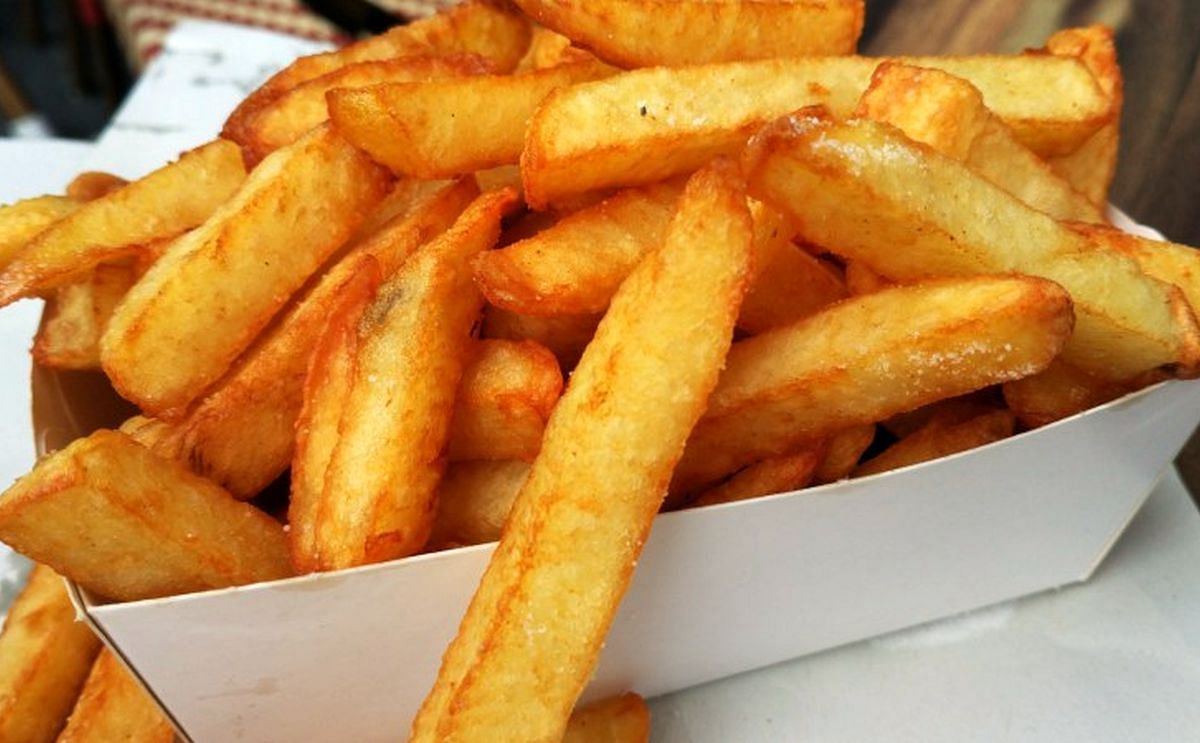
Video from the Washington State Potato Commission explaining how french fries are made.
A World of Fries: Varieties, Styles and Cultural Twists
French fries are a global canvas for culinary creativity, with diverse cuts, textures and flavor profiles reflecting cultural preferences and dining trends. From thin shoestrings to hearty steak fries, each style has unique preparation methods and pairings, driving a USD 15 billion market. Here’s an expanded exploration of fry varieties, their preparation, cultural significance and global adaptations:
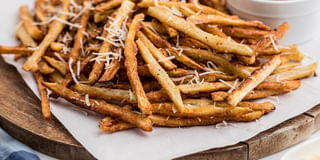
Shoestring Fries: Thin (2–3mm), high surface area ensures maximum crunch when fried (191°C, 2–3 minutes, 8% oil absorption). Made from Russet Burbank for high starch (20–22%), they are favored in gourmet settings like Shake Shack, paired with truffle aioli or herb dust. Popular in North America and Europe, they are also street food in Southeast Asia, dusted with chili powder. Low yield (30% waste from small cuts) makes them premium.
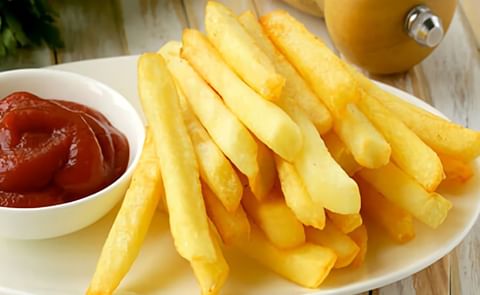
Standard Cut Fries: 1/4-inch (6mm), fried (191°C, 3–5 minutes), offer balanced texture (crisp outside, fluffy inside). McDonald’s uses Russet Burbank, par fried with a dextrose coating for golden color. Served with ketchup in the U.S., mayo in Belgium or curry sauce in Germany. These dominate QSRs globally (50% market share) due to versatility and low waste (10%).
Crinkle-Cut Fries: Wavy ridges increase surface area, fried (191°C, 4–6 minutes), ideal for holding spices like Cajun or garlic. Ore-Ida’s 25% U.S. retail share reflects their popularity in home freezers. Common in U.S. diners and Southern BBQ joints, paired with ranch or gravy. The ridges trap 20% more sauce, enhancing flavor.
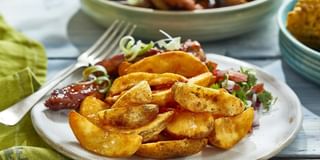
Steak Fries: Thick (12–25mm), fried (177°C, 5–7 minutes) for a hearty bite, often skin-on for rustic appeal. Made from Kennebec or Yukon Gold, they are staples in UK pubs and U.S. steakhouses, served with ranch or aioli. High yield (5–8% waste) makes them cost-effective for foodservice.
Waffle Fries: Lattice cut (5–7mm), fried (177°C, 4–5 minutes), maximize sauce retention due to crisscross pattern. Chick-fil-as signature fry, made from Russets is dipped in polynesian sauce. Popular in the U.S. and Australia, they are also served with cheese sauce in Canada. Complex cutting raises costs by 10%.
Curly Fries: Spiraled using Urschel spiral cutters, seasoned with paprika or onion powder, fried (180°C, 3–4 minutes). Arby’s U.S. staple, they are also popular in Middle Eastern fast food with tahini. High consumer appeal (30% preference in U.S. surveys) due to fun shape and flavor.
Sweet Potato Fries: Thin (4–6mm) to combat moisture (75–80%), air-fried (200°C, 8–10 minutes) for health appeal (50% less fat). Made from Beauregard, rich in beta-carotene (8,000–10,000 µg/100g), they are a hit in North America and Australia, paired with honey mustard or cinnamon sugar. Growing 15% annually due to health trends.
Potato Tornado Fries: Whole potatoes spiraled on skewers, fried (190°C, 5–6 minutes), dusted with chili or cheese powder. A Korean street food staple, sold at night markets with gochujang dip they are also popular in Taiwan and Thailand.
Poutine Fries: Standard 6–10mm fries topped with cheese curds and hot gravy (2 tbsp flour/cup stock), prepared in 10 minutes. A Quebec icon, poutine is a USD 1 billion market in Canada, with variations like smoked meat or foie gras in upscale bistros. Frozen versions simplify home preparation.
Masala Fries: Standard fries tossed with cumin, chili or chaat masala, fried (182°C, 3–5 minutes), served with tamarind chutney. Popular in India, the UK and Canada’s South Asian communities, they reflect fusion cuisine’s 20% growth. Street vendors in Mumbai add mango powder for tang.
Preparation Techniques:
Double-Frying: Initial fry at 162°C (5–7 minutes) cooks the interior, followed by 190°C (2–3 minutes) for a crisp crust, reducing oil absorption by 10% vs single frying. Used in Belgian friteries and high end QSRs.
Air-Frying: Reduces fat by 50–70% (200°C, 8–12 minutes), popular in 60% of U.S. households with air fryers. Thin cuts (4–6mm) optimize crispiness.
Seasoning: Global flavors like rosemary (Europe), truffle oil (gourmet), zaatar (Middle East) or togarashi (Japan) are applied post-frying or pre-freezing. Spray systems ensure even coating, reducing waste by 5%. Microencapsulated spices (used in 10% of premium fries) release flavor during cooking.
Frozen Potato Specialties: A World of Flavors and Convenience
Frozen potato specialties, encompassing products like hash browns, tots, wedges and croquettes, account for 30–40% of the $20 billion frozen potato market, offering versatile options for breakfast, appetizers, snacks, and sides. These products cater to diverse consumer needs—quick meals for households, bulk options for foodservice and innovative flavors for global markets. Produced with similar high-tech processes as fries, they emphasize convenience (ready in 5–15 minutes), flavor customization and nutritional appeal. For more detailed insights on frozen potato specialties, you can explore PotatoPro Potato Specialties.
Global Potato Specialties: A Culinary Mosaic
Potatoes are a universal ingredient, adapted into diverse specialties that reflect local cuisines, traditions and innovation. From creamy European mashes to spicy Asian fritters, these dishes showcase the tuber’s versatility across cultures, with preparation times ranging from 15 minutes to 2 hours. Here’s an expanded look at global potato specialties, their cultural roots, preparation methods, and modern adaptations:
Europe
France:
Aligot: A stretchy, ribbon like mash from Auvergne, made with 2 lbs Russet or Bintje potatoes, mashed with 4 tbsp butter, 2 cloves garlic and whipped with 1 lb Tomme d’ Auvergne cheese (20–25% fat) for 10–15 minutes until elastic. Served at festivals or with sausage, it takes approximately 30 minutes. Modern versions use immersion blenders for smoother texture.
Gratin Dauphinois: Thinly sliced waxy potatoes (e.g., Charlotte, 1–2mm), layered with cream (1 cup/lb) and garlic, baked (177°C, 60–90 minutes) until golden. A Rhone-Alpes classic, served in bistros. Vegan versions use cashew cream, growing 10% in popularity.
Pommes Anna: Thinly sliced potatoes (1mm, Yukon Gold), layered with 1/2 cup butter/lb, baked (191°C, 45–60 minutes) in a skillet for a crispy, golden cake. A Parisian fine dining staple, modern versions add truffle or rosemary.
Belgium
Frites: double-fried (163°C for 5–7 minutes, then 191°C for 2–3 minutes) Russet or Bintje fries, served with 100+ sauces (mayo, andalouse). Friteries (3,500+ nationwide) are cultural hubs, with UNESCO heritage bids.
Ireland
Colcannon: Mashed Russets (2 lbs) with kale or cabbage (1 cup), 3 tbsp butter and cream, ready in approximately 20 minutes. A Halloween tradition, often hiding a coin for luck. Vegan versions use olive oil.
Boxty: Grated and mashed potatoes (1:1 ratio), mixed with flour and buttermilk, fried (177°C, 5 minutes/side) into pancakes, Approximately 30 minutes. Served with bacon or smoked salmon, it is a Donegal specialty. Gluten-free versions use rice flour.
Spain
Patatas Bravas: 2 cm potato cubes (Maris Piper), fried (191°C, 5–6 minutes), served with spicy tomato sauce and aioli, Approximately 20 minutes. A tapas bar staple, variations include smoked paprika or chorizo bits.
Germany
Kartoffelsalat: waxy potatoes (e.g., Nicola), boiled, tossed with vinegar, mustard or mayo, Approximately 25 minutes. Southern versions use broth and bacon, northern ones are creamy. Vegan options grow 15% in demand.
Switzerland
Rosti grated waxy potatoes (Charlotte): fried in butter (177°C, 8–10 minutes/side) into a crispy pancake, approximately 30 minutes. A breakfast or side dish, often topped with eggs or cheese. Modern twists include sweet potato rosti.
Poland
Pierogi z Ziemniakami: dumplings filled with mashed potatoes and cheese, boiled (5–7 minutes) or fried, approximately 1 hour. A Christmas Eve staple, served with sour cream or onions. Frozen versions reduce prep time by 50%.
Americas Peru
Papa a la Huancaina: Boiled yellow potatoes (e.g., Papa Amarilla), topped with spicy cheese sauce (huancaina, made with aji amarillo and queso fresco), Approximately 30 minutes. A street food and restaurant staple, vegan versions use nutritional yeast.
Causa: Mashed yellow potatoes (2 lbs) with lime (2 tbsp) and aji amarillo (1 tbsp), layered with avocado, tuna or chicken, chilled for 1–2 hours, approximately 45 minutes. A Lima classic, modern versions add quinoa or crab.
Colombia
Ajiaco, a hearty soup with three potato varieties (criolla, sabanera, pastusa), chicken, corn and guascas herb, simmered for 2 hours. A Bogota comfort food, served with capers and cream.
United States
Hash Browns: Shredded Russets, fried (177°C, 5–7 minutes) into crispy patties, approximately 15 minutes. A diner breakfast staple, variations include waffle iron hash browns or taco seasoned.
Potato Skins: Baked Russet halves, scooped, filled with cheddar and bacon, par fried, approximately 30 minutes. Sports bar favorite, with vegan cheese options growing 20%.
Brazil
Batata Rodela: thin potato rounds (1–2mm), fried (191°C, 4–5 minutes), approximately 15 minutes. Served with garlic mayo at churrascarias, street versions add oregano.
Canada
Poutine: 6–10mm fries topped with cheese curds and beef gravy, approximately 10 minutes. A Quebec icon, upscale versions add lobster or truffle. Frozen kits simplify preparation.
Asia and Middle East
India
Aloo Gobi: Potato and cauliflower curry with turmeric and cumin, Approximately 20 minutes. A North Indian staple, served with naan. Instant pot versions cut prep by 50%.
Tikki: Mashed potatoes (2 lbs) with ginger, chili and coriander, fried (177°C, 5–7 minutes/side), Approximately 20 minutes. Mumbai street food, paired with chutney. Frozen tikki grows 15% in retail.
Dum Aloo: Baby potatoes in spiced yogurt-tomato gravy, simmered 30–40 minutes. A Kashmiri delicacy, vegan versions use coconut yogurt.
Japan
Korokke: mashed potatoes with beef or vegetables, panko coated, fried (177°C, 3–4 minutes), ~25 minutes. A street food and bento staple, frozen versions dominate convenience stores.
Lebanon
Batata Harra: cubed potatoes fried (375°F, 5 minutes), tossed with garlic, chili and cilantro, Approximately 15 minutes. A mezze dish, spicy variations use harissa.
China
Di San Xian: stir-fried potatoes, eggplant and peppers, approximately 15 minutes. A Northeastern dish, modern versions add oyster sauce.
South Korea
Gamja Jeon: grated potato pancakes, fried (177°C, 5 minutes), Approximately 20 minutes. Served with soy dipping sauce, popular at festivals.
Indonesia:
Perkedel Kentang: mashed potato fritters with shallots, fried (182°C, 4 minutes), Approximately 25 minutes. A Dutch influenced side, served with soto soup.
Africa and Oceania
South Africa
Slap Chips: thick fries soaked in vinegar, fried (182°C, 5–6 minutes), Approximately 15 minutes. A takeaway favorite, paired with fish or boerewors. Taste Atlas Slap Chips Ethiopia: Duba Wat, spicy potato pumpkin stew with berbere, simmered 30 minutes. Served with injera, vegan by default.
Australia
Potato Gems: small tots seasoned with chicken salt, baked (218°C, 12 minutes), Approximately 15 minutes. A pub and home staple, paired with aioli.
New Zealand
Kumara Fries: sweet potato fries (kumara), air-fried (200°C, 10 minutes). Maori-inspired, served with kiwi dip.
“Potatoes are the canvas of comfort food, where innovation turns humble tubers into global delights, from crispy tots to savory croquettes, uniting cultures in every bite.”