
California voters have decided they can live without labels on genetically modified food. This means the state will not be at odds with the U.S. Food and Drug Administration (FDA)’s policy of not labelling GM foods, which goes back more than two decades.
By a vote of 53 to 47 percent, the Golden State voted “No” on Proposition 37.
The vote was a stunning reversal for an initiative that easily started out with better than two-to-one support in California. One national pollster last March found that nine out of ten Americans supported labeling GE foods.
But after what rates as a fully engaged campaign for California, Prop. 37 saw that support evaporate under the pressure of a paid campaign by opponents and the “Yes” campaign’s failure to write and explain the law they wanted voters to pass.
Prop. 37 was a big bucks California initiative with funding that totaled $54.5 million. The “No” campaign had the most to spend, with $45.6 million, but the “Yes” side was not without financial resources, coming in with $8.9 million.
Map Light, a nonprofit that tracks California campaign spending, reports that Monsanto Company spent the most on Prop. 37, with $8.112 million going to the “No” campaign. DuPont was second, giving the “No” side” $5.4 million.
Others in the top ten contributing to the “No” campaign included PepsiCo, Grocery Manufactures Association, BASF Plant Science, Bayer Cropscience, Dow Agrosciences LLC, Syngenta Corp., Kraft Foods and Coca-Cola.
No GM Food labeling in California: Proposition 37 voted down
¿Te gustaría recibir noticias como esta por correo electrónico? ¡Únete y suscríbete!
Get the latest potato industry news straight to your WhatsApp. Join the PotatoPro WhatsApp Community!
Empresa Destacada

Noticias relacionadas

Agosto 07, 2026
El índice de precios de los alimentos de la FAO sube ligeramente en julio como resultado del fortalecimiento de los precios de los cultivos
El índice de precios de los alimentos de la FAO* se situó en julio de 2026 en un promedio de 131,1 puntos, es decir, 0,7 puntos (un 0,6 %) por encima del nivel de junio. Los aumentos en los índices de los precios de los cereales
Agosto 07, 2026
El índice de precios de los alimentos de la FAO sube en agosto en un contexto de aumentos generalizados, en particular del azúcar
El índice de precios de los alimentos de la FAO* se situó en agosto de 2026 en un promedio de 133,3 puntos, es decir, 2,5 puntos (un 1,9 %) por encima del nivel revisado de julio.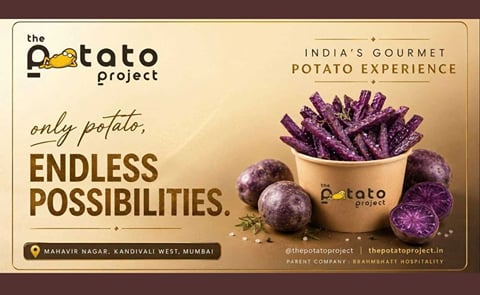
Julio 30, 2026
The Potato Project opens first flagship gourmet potato restaurant in Mumbai
The Potato Project will open its first flagship outlet in Mumbai on 31 July, introducing a gourmet potato-focused QSR concept. Built around white potato, purple potato and yam, the brand plans to expand across India and into international markets.