
La Universidad de Wageningen (WUR) realiza ensayos de campo con variedades de patata editadas mediante CRISPR para mejorar la resistencia frente a Phytophthora infestans y reducir el uso de pesticidas.
Holanda: ensayos con variedades GMO
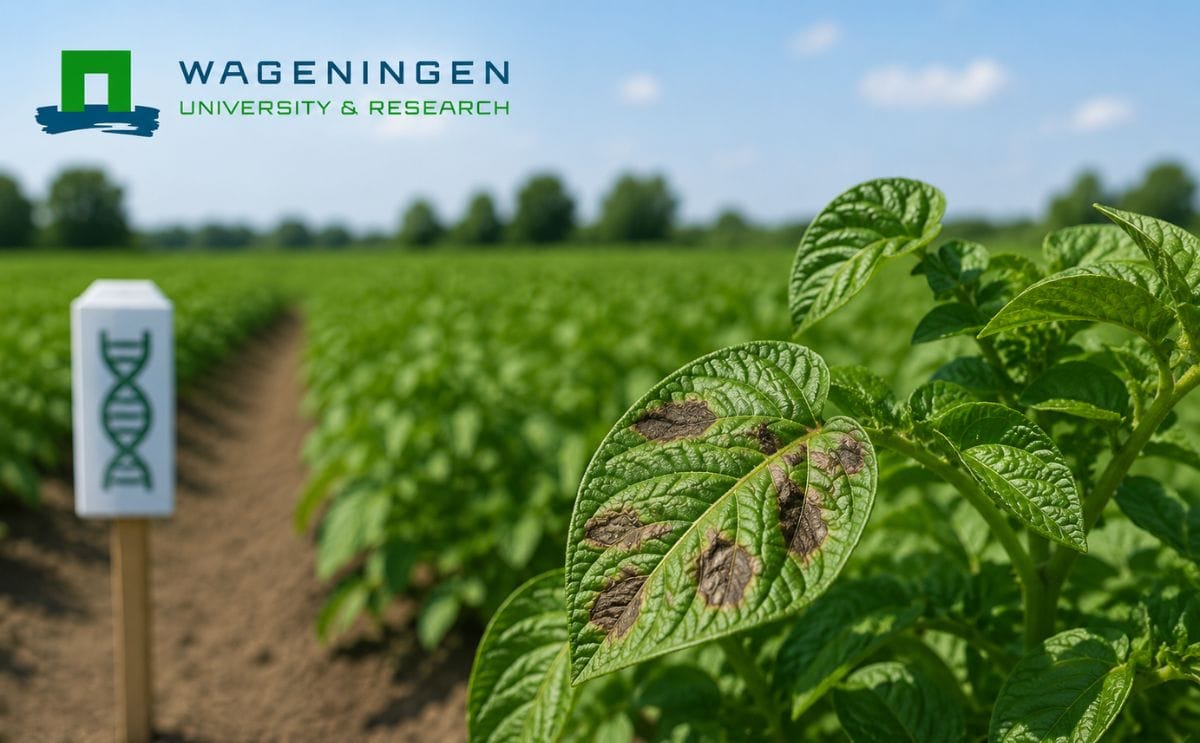
La Universidad de Wageningen (WUR), en colaboración con el Gobierno de los Países Bajos, ha iniciado un innovador estudio para evaluar nuevas variedades de cultivos desarrolladas mediante Nuevas Técnicas Genómicas (NTG). El principal objetivo es aumentar la resistencia acumulada frente al patógeno devastador Phytophthora infestans y, al mismo tiempo, reducir significativamente el uso de pesticidas químicos.
Este ensayo representa un avance tecnológico importante para la institución, que no realizaba un estudio de campo de este calibre desde hace once años, cuando ejecutó el proyecto DuRPh (Resistencia Duradera contra Phytophthora). Sin embargo, a diferencia de aquel proyecto que empleó métodos tradicionales de transformación genética y enfrentó importantes retos regulatorios, elevados costos y resistencia del mercado, las investigaciones actuales se basan en técnicas de edición genética de precisión como CRISPR-Cas.&
Un cambio en el panorama regulatorio europeo
El entorno normativo en la Unión Europea está en pleno proceso de transformación. Después de más de veinte años de estrictas regulaciones sobre cultivos transgénicos, la UE avanza hacia una flexibilización en el marco legislativo para las NTG. Esta nueva postura se centra en regular únicamente aquellas modificaciones que no podrían ocurrir de forma natural a través del cruzamiento o mutaciones espontáneas. Las mutaciones controladas mediante herramientas como CRISPR-Cas y la cisgénesis (adición de genes propios de la misma especie) están contempladas bajo esta flexibilidad, mientras que seguirá prohibiéndose estrictamente la introducción de genes exógenos.
Ensayos con la variedad Innovator
En los cultivos experimentales, las patatas sembradas pertenecen a la variedad comercial Innovator, que no presentan diferencias visuales notables. Sin embargo, sus genomas han sido modificados de forma precisa: a un grupo se le han incorporado uno o dos genes resistentes al hongo Phytophthora infestans, y a otro se le desactivó un gen específico mediante CRISPR-Cas para mejorar su respuesta inmunológica.
Para comprobar la eficacia real de las modificaciones genéticas, los científicos han diseñado un ensayo basado en tres enfoques de manejo agrícola: una parcela sin ningún tipo de aplicación química, otra con fumigaciones regulares, y una tercera donde los tratamientos químicos se aplican únicamente tras detectar una infección activa.
Objetivo de reducción de pesticidas
Según la investigadora Ania Lukasiewicz, el propósito central del estudio es disminuir al máximo el uso de pesticidas químicos. Sin embargo, señala que el carácter altamente variable del patógeno en el suelo implica una vigilancia constante, ya que existe el riesgo de que Phytophthora pueda adaptarse y superar las nuevas resistencias. Estas herramientas genómicas permiten desarrollar variedades resistentes con mayor rapidez, lo cual es clave para anticiparse al comportamiento del hongo.
Se estima que los primeros indicios de la enfermedad comenzarán a manifestarse en el campo a partir del mes de julio. Será entonces cuando se aprecien las diferencias entre los tres tratamientos estudiados. La cosecha experimental está programada para finales de septiembre o principios de octubre, momento en el que los datos obtenidos proporcionarán un valioso análisis sobre la viabilidad y efectividad de estas técnicas.
Like to receive news like this by email? Join and Subscribe!
Get the latest potato industry news straight to your WhatsApp. Join the PotatoPro WhatsApp Community!
Uitgelichte Bedrijven

Gerelateerd nieuws

september 07, 2026
Calbee Potato Harvest Ceremony 2026 Highlights Stronger Hokkaido Potato Quality and Yield
Calbee Potato expects Hokkaido’s 2026 processing potato crop to reach 240,000–250,000 tons, with better quality and yields than 2025. Favorable temperatures and rainfall have boosted growth, although heavy rain remains a major harvest risk now.
september 07, 2026
Aardappeldemodag 2026 Draws Over 4,500 Visitors as Dutch Potato Sector Faces Year of Extremes
Aardappeldemodag 2026 brought over 4,500 visitors to Westmaas amid a challenging year for the Dutch potato sector. The event focused on market pressures, extreme growing conditions, knowledge sharing, machinery and innovation.

september 07, 2026
EUROPLANT en Finpom onderstrepen het voordeel van Finse pootaardappelteelt bij toenemende viruisdruk in Europa
Finpom wijst op de voordelen van Noord-Finland voor de productie van hoogwaardige pootaardappelen terwijl klimaatverandering de virusrisico's in Europa doet toenemen, en breidt zijn EUROPLANT-assortiment verder uit met LARISSA, JUVENTA, Filipa, FAVOLA en INA.