

United Kingdom
The United Kingdom has a long-established and highly developed potato industry spanning England, Scotland, Wales and Northern Ireland. Potatoes are grown for several markets, including fresh consumption, pre-packing, foodservice, crisps, chips and frozen processing, alongside a substantial seed-potato sector. In 2025, UK potato production was provisionally estimated at 5.55 million tonnes from 127,000 hectares, with potatoes valued at approximately £1.46 billion.
Production is geographically diverse because of differences in soil, climate and market requirements. England accounts for the largest share of production, with important growing areas in the East of England, Yorkshire and the Midlands, while Scotland is particularly important for seed potatoes and also has significant ware production. Scotland's share of the UK's potato area increased from about 15% in 1991 to around 22% in 2022. Northern Ireland also maintains an established commercial potato industry, while Wales contributes smaller volumes.
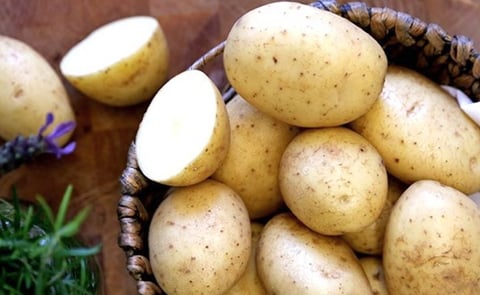
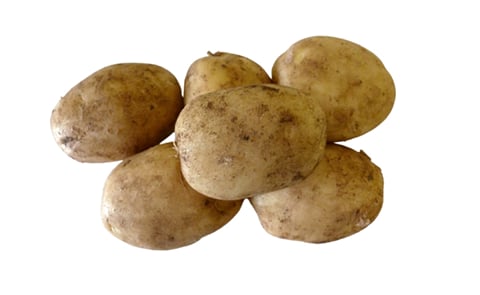
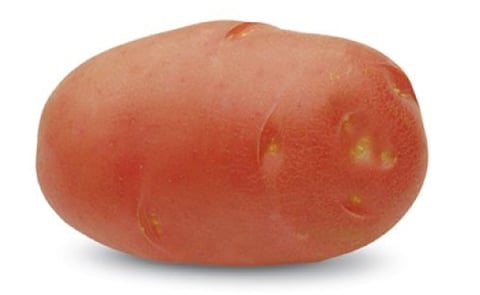
The UK industry has a broad range of varieties selected for specific culinary and processing uses. Maris Piper remains one of the country's defining varieties and is widely used for fresh markets, chips and processing. Other important varieties include King Edward, Estima, Markies, Maris Peer, Desiree and Rooster. The industry has increasingly moved toward varieties with particular characteristics such as processing quality, disease resistance, storage performance and suitability for specific markets rather than relying on a small number of traditional cultivars.
The potato was introduced to the British Isles from South America through Europe during the late 16th century. The first recorded mention of the potato in England dates to 1596, associated with the herbalist John Gerard. From England, the crop spread to other parts of the British Isles, including Scotland and Wales. Although initially treated with some uncertainty and grown on a limited scale, the potato became increasingly important as a food crop during the 18th century.
During the 19th and 20th centuries, potatoes became firmly established in British agriculture and food culture. Commercial production expanded alongside improvements in breeding, seed production, storage, mechanization and crop protection. The development of organized industry support also shaped the sector; the Potato Marketing Board was established in 1934 in response to unstable market conditions. Later, breeding and variety testing programmes contributed to the development and adoption of cultivars suited to British growing conditions and different end uses. Maris Piper, introduced commercially in the 1960s, became particularly important because of its combination of versatility and resistance to potato cyst nematode.
Today, the UK remains an important European potato producing country, with a sophisticated supply chain covering seed, cultivation, storage, packing, processing and retail. Scotland has developed a particularly strong international reputation for high health seed potatoes, while England remains the largest production base. Modern production increasingly focuses on variety-specific markets, efficient water and nutrient management, soil health, storage quality and resilience to weather and disease pressures.




Make This Page Even Better!
This content was last updated on September 28, 2026
Have a helpful detail to contribute? Catch something that should be corrected?