
Slovenia
Slovenia has a long tradition of potato cultivation and potatoes remain an important crop in the country’s field agriculture and food culture. Production takes place across different agricultural environments, from the lowlands to hilly and mountainous areas, with the crop grown mainly for the fresh market and household consumption. Slovenia’s relatively small production base is characterized by a mixture of commercial farms and smaller holdings. Government agricultural data describe potatoes as a traditional staple of Slovenian fields; recent statistics also show that production can vary substantially between seasons because of weather conditions.
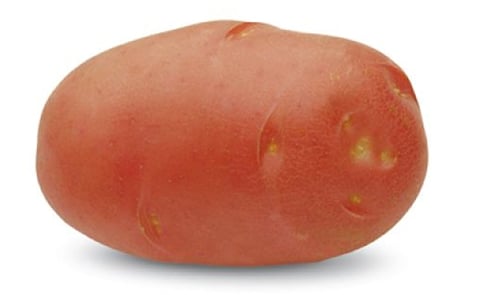
Slovenian potato production has a diverse varietal structure. The variety Desiree has historically been one of the most widely used varieties, although its share has declined as the number of varieties available to growers has increased. The Slovenian variety structure was strongly affected by the spread of potato virus Y (PVYNTN) after 1990, which contributed to the disappearance of many older domestically bred varieties from commercial production. Since the 2000s, locally bred varieties with improved resistance to important diseases have gradually regained a place in production.
Potato breeding and variety evaluation are important components of Slovenia’s present-day potato sector. The Agricultural Institute of Slovenia (KIS) has operated a dedicated potato breeding programme since 1993 and has developed 15 new varieties. Breeding objectives include yield, eating quality, resistance to potato virus Y and late blight and adaptation to drought and heat. KIS also prepares annual recommended variety lists; the 2026 list contains 24 varieties evaluated for yield stability, culinary quality, disease and pest resistance, physiological defects and drought tolerance.
Potatoes became established in the wider Balkan region during the 18th century and subsequently developed into an important food crop. In the Slovenian agricultural landscape, potatoes became particularly valuable because they could be cultivated across a range of soils and growing environments and provided a dependable source of food. Over time, potato cultivation became integrated into traditional crop rotations and smallholder farming systems, making the crop an established part of Slovenian agriculture.
During the 20th century, Slovenia developed its own potato breeding capacity and produced several locally bred varieties. Before 1989, domestically bred varieties represented an important part of the country's potato production. The spread of PVYNTN after 1990 caused a major change in the varietal structure, with many domestic varieties disappearing from production. Slovenian breeding subsequently entered a new phase: the Agricultural Institute of Slovenia launched a new breeding programme in 1993, while the introduction of virus resistant domestic varieties after 2004 helped restore locally bred potatoes to the national variety portfolio. This work has continued with newer varieties such as KIS Slavnik, KIS Blegoš, Kresnik, KIS Savinja, KIS Sora, KIS Kokra, KIS Krka, KIS Vipava and KIS Razor.