
CFIA statement:
The Government of Canada is pleased to announce that it has taken all actions necessary to comply fully with the United States import requirements for Alberta seed potatoes. As a direct result, Alberta will be able to resume the export of seed potatoes to the United States as of January 28, 2009.
Following the detection of potato cyst nematode (PCN) in 2007, the Government of Canada took a number of actions to ensure compliance with the United States import requirements, including completing a delimiting survey (soil sampling) of the two farm units in Alberta associated with the Potato Cyst Nematode detections, in collaboration with Alberta potato producers. All soil samples were negative for the plant pest.
The US market is now open to all Canadian seed potatoes that meet PCN Phytosanitary Guidelines. This does not include potatoes produced in regulated areas.
CFIA: Export of seed potatoes from Alberta to US to resume January 28, 2009
Like to receive news like this by email? Join and Subscribe!
Get the latest potato industry news straight to your WhatsApp. Join the PotatoPro WhatsApp Community!
Related News
七月 17, 2026
Dutch Growers and NAO Back Crop Protection Covenant to Advance Sustainable Potato and Plant Sectors
Dutch growers and the Dutch Potato Organisation (NAO) support the Outline Crop Protection Covenant to reduce environmental impacts, improve water quality and boost innovation while promoting legal certainty and sustainable potato production.
七月 17, 2026
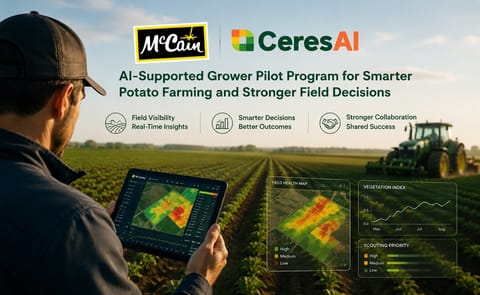
McCain Foods Launches Ceres AI-Supported Grower Pilot Program to Improve Potato Field Visibility and Decision-Making
McCain Foods launches a Ceres AI-supported grower pilot program to improve field visibility and decision-making. The AI solution helps potato growers optimize scouting, coordination, and in-season crop management.
七月 14, 2026
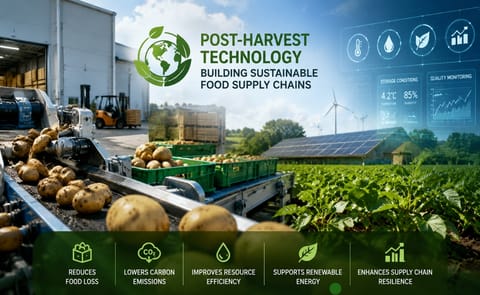
Post-Harvest Technology Emerges as a Key Driver of Sustainable Food Systems and Climate Goals
Advanced post-harvest technologies are helping cut food waste, reduce carbon emissions, improve storage efficiency, and strengthen sustainable food supply chains through AI, IoT, precision sorting, renewable energy, and smart cold storage solutions.