Retail-ready snack packaging on store shelves reflects BPA’s 2026 secondary packaging trends, including recyclable cartons, shelf-ready formats, and increased automation.
The Top Secondary Packaging Trends for 2026: Sustainability, Retail-Ready Formats and Robotics

The secondary packaging industry is gearing up for a dynamic year in 2026, with sustainability, automation, and innovative designs at the forefront. Driven by consumer demand and regulatory pressures, food processors and co-packers are increasingly exploring robotics and advanced machinery to address labor shortages, reduce maintenance challenges, and optimize operational efficiency.
BPA is supporting customers with innovative machines and solutions designed to meet these evolving industry needs. To understand what’s shaping decisions on the factory floor, industry experts have highlighted key trends driving investment and automation in 2026.
Retail-Ready Packaging Expands Across Verticals
Retail-ready packaging is increasingly helping brands compete for shelf space and consumer attention. While shredded cheese has been a notable success story, the format is now being applied to multiple food and snack categories requiring easy handling and maximum visibility.
Retailers expect packaging that offers clear branding, ease of opening, and strong shelf appeal, while providing protection during transport. Responding to this demand, BPA developed the Easy-D retail-ready case, which features a pre-cut front panel that wraps around corners for a premium look. Its higher back wall supports flexible pouches or light containers, while the wraparound design enables easy loading and reduced material use, keeping costs down.
Variety Pack Production Moves to Recyclable Cartons
Manufacturers are increasingly replacing traditional “bag-in-bag” formats with recyclable variety pack cartons. Automated systems now enable multi-feeder lines to collate specific flavor ratios into single cases, reducing manual labor while ensuring perfect counts.
Various automation methods—including drop chute systems, robotics, and traditional case packers—provide the flexibility and speed required for variety pack production. By integrating these solutions, food producers and co-packers can meet customer demand efficiently, reduce costs, and stay competitive in a crowded market.
Regulatory Focus on Sustainable Materials
Extended Producer Responsibility (EPR) legislation in California, Oregon, Colorado, and Maine is prompting manufacturers to rethink packaging strategies. These regulations require consumer packaged goods (CPG) companies to track and report the precise weight of all plastic and corrugated packaging shipped into the state.
In response, manufacturers are adopting new secondary packaging initiatives:
- Standardized pack formats and recipes: BPA’s Spider, Gantry, Wraparound, and 100/200/300 platforms allow defined case styles, counts, and configurations for reliable EPR reporting.
- Lightweight packaging: Reducing material weight helps lower reported tonnage and associated fees. BPA’s wraparound cases and retail-ready solutions enable tighter fits with less material.
Growing Confidence in Robotics and Automation
Advances in vision systems, end-of-arm tooling, and controls have made robotics more approachable for secondary packaging. While not every operation requires full robotics, there is growing interest among manufacturers seeking flexibility and efficiency.
Secondary packaging preferences typically fall into three tiers:
- Traditional RSC Case Packing: High-speed, single-product lines using proven gravity or gantry systems.
- Wraparound Case Packing: Reduces EPR-related fees while improving shelf-ready presentation and material efficiency.
- Robotic Case Packing with Vision: Offers rapid changeovers and flexibility for complex SKU mixes and irregular products.
BPA provides solutions across all three tiers, helping customers select the best system for their production goals.
Focus on Total Cost of Ownership (TCO) and ROI
While capital expenditures are often evaluated on a 24-month payback window, companies are increasingly considering Total Cost of Ownership (TCO) to include long-term maintenance, energy efficiency, and labor factors. Automation decisions based on TCO can reduce lifetime operational costs by up to 30%.
Key considerations include:
- Reliability gaps: Systems addressing labor scarcity and reducing work-in-process delays.
- Worker buy-in: Ensuring operators embrace automation to avoid idle machinery.
- Machine cost metrics: Considering purchase price, lifetime, maintenance, and residual value after five years.
- Preventive maintenance programs: Service contracts help facilities with limited technical expertise maintain consistent operations.
Looking Ahead
With robotics, retail-ready packaging, and sustainability trends gaining traction, food producers and co-packers need reliable partners for automation solutions. BPA combines advanced machinery with industry expertise to help customers identify the best solutions aligned with operational goals and budgets.
Stay tuned for upcoming trade show demonstrations, and contact BPA for secondary packaging solutions or a line audit. With innovation and automation, the possibilities for 2026 are limitless.
Like to receive news like this by email? Join and Subscribe!
Get the latest potato industry news straight to your WhatsApp. Join the PotatoPro WhatsApp Community!
精选企业
相关新闻
八月 12, 2026
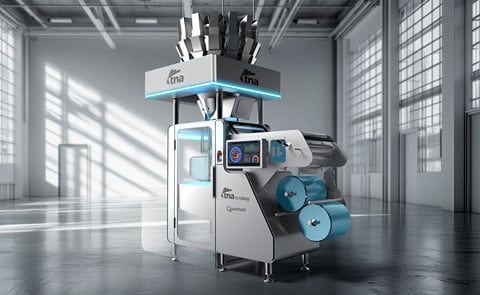
TNA Solutions to Debut tna robag Quantum in North America at PACK EXPO International 2026
TNA Solutions will debut the tna robag® Quantum in North America at PACK EXPO International 2026. The VFFS packaging platform delivers speeds of up to 300 bags per minute while reducing waste, labor dependency and operating complexity.

六月 24, 2026
Ishida Europe Appoints Takayo Motegi as Managing Director, Dave Tiso Becomes Chairman
Ishida Europe has named Takayo Motegi as Managing Director, succeeding Dave Tiso, who becomes Chairman. With 30+ years in the Ishida Group, Motegi will lead growth across EMEA, advancing automation, packaging and quality control solutions.

五月 25, 2026
Allround Vegetable Processing appoints Manter Nordic as Scandinavian dealer
Allround Vegetable Processing, a Netherlands-based manufacturer of potato and vegetable processing machinery has appointed Denmark-based Manter Nordic ApS, a supplier of processing and packaging technology for the agro-food industry in Scandinavia