

Dutch Potato Variety Days: A Global Hub for Potato Innovation and Variety Excellence
The Dutch Potato Variety Days is one of the most influential international platforms in the global potato sector, where innovation, breeding science and commercial potato production come together. Hosted in the Netherlands, a country recognized for its advanced seed potato industry and world leading breeding programs, this event plays a crucial role in shaping the future of potato cultivation worldwide. It provides a structured environment where new potato varieties are showcased under real field conditions allowing stakeholders to evaluate performance in a practical and transparent way.
This event is not just an exhibition but a decision making platform for the entire potato value chain. Breeders present their latest genetic advancements, seed companies evaluate market potential and growers assess field performance under realistic agronomic conditions. The Dutch Potato Variety Days helps bridge the gap between research and commercial adoption by enabling direct comparison of varieties across multiple traits such as yield, quality and resilience.
The Netherlands holds a strategic position in global potato seed production, exporting high-quality seed potatoes to many countries across Europe, Asia, Africa and the Americas. The event reflects this global leadership by bringing together international participants who depend on Dutch genetics for improving productivity in their own regions. It also strengthens the Netherlands’ role as a central hub in global potato innovation networks.
In recent years, the event has gained even more importance due to increasing global challenges such as climate change, rising input costs and growing demand for processed potato products. As a result, the Dutch Potato Variety Days has evolved into a key platform for identifying climate-resilient, high yielding and processing suitable potato varieties that meet the needs of modern agriculture.
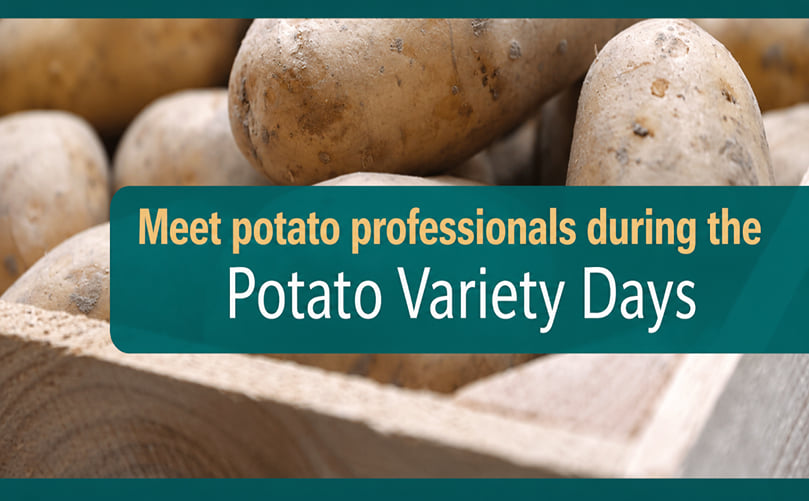
Dutch Potato Variety Days Showcasing the Future of Global Potato Innovation
A Strategic Platform for Potato Variety Evaluation
The Dutch Potato Variety Days serves as a structured platform where potato varieties are evaluated directly in the field. Unlike laboratory or greenhouse trials, this event emphasizes real world growing conditions allowing stakeholders to observe how different varieties perform under practical agricultural environments. This makes the evaluation process highly reliable and relevant for commercial decision making.
Each variety is assessed based on critical agronomic traits such as emergence rate, plant vigor, canopy development and maturity duration. These parameters provide a clear understanding of how a variety behaves throughout its growth cycle. Visitors can compare multiple varieties side by side making it easier to identify superior genetics for specific growing conditions.
Another important aspect of the evaluation process is uniformity and yield potential. Stakeholders closely observe tuber size distribution, shape consistency and overall productivity. These characteristics are essential for both fresh market and processing industries, where uniformity directly impacts market value and processing efficiency.
The platform also supports knowledge exchange between breeders and growers. Discussions around varietal performance, adaptation potential and management practices help improve future breeding programs. This interaction ensures that feedback from the field is directly incorporated into the next generation of potato varieties.
The Netherlands: A Global Leader in Potato Breeding
The Netherlands has built a strong global reputation in potato breeding due to its advanced research infrastructure and long history of seed innovation. Dutch breeding companies continuously invest in developing high performing potato varieties that meet both agronomic and market requirements. This strong breeding ecosystem is one of the key reasons the Dutch Potato Variety Days has gained international recognition.
Dutch breeders focus on traits such as disease resistance, yield stability and adaptability across diverse climates. These efforts are supported by modern breeding technologies, including marker assisted selection and rapid generation advancement. As a result, the Netherlands consistently produces varieties that are widely adopted in global markets.
The country’s seed potato industry is also highly export oriented, supplying high-quality planting material to more than 80 countries. This global reach ensures that Dutch varieties are tested and adapted in a wide range of environmental conditions from temperate Europe to tropical Asia and Africa. The Dutch Potato Variety Days acts as a central showcase for these globally relevant innovations.
Furthermore, the strong collaboration between research institutes, universities and private companies enhances the breeding efficiency of the Dutch system. This integrated approach allows faster development of improved varieties, ensuring that the Netherlands remains at the forefront of global potato innovation.
Field Trials: Real Time Performance Under Observation
Field trials are the core attraction of the Dutch Potato Variety Days, where each variety is grown under carefully managed conditions for fair comparison. These trials allow participants to observe how different genetic materials perform in real agricultural environments. This hands-on approach provides valuable insights that cannot be achieved through lab-based testing alone.
Key agronomic traits such as plant emergence, canopy growth and flowering behavior are closely monitored. These observations help determine the vigor and adaptability of each variety. Strong early growth and stable canopy development are often indicators of high yield potential and better stress tolerance.
Disease resistance is another major focus area in the field trials. Varieties are evaluated for their response to major potato diseases such as late blight, nematodes and viral infections. This helps identify varieties that require lower chemical inputs contributing to more sustainable farming systems.
Finally, tuber characteristics such as size uniformity, skin quality and yield distribution are assessed at harvest stage. These parameters are crucial for determining market suitability, especially for export and processing industries. The field trial system ensures that only the most promising varieties move forward in the adoption pipeline.
Focus on Processing Quality and Market Requirements
Processing quality is one of the most important evaluation criteria at the Dutch Potato Variety Days. Potato varieties are tested for their suitability in industries such as French fries, chips, starch production and dehydrated products. This ensures alignment between breeding outcomes and industrial requirements.
Dry matter content is a key parameter in processing evaluation as it directly affects texture, oil absorption and final product quality. Varieties with optimal dry matter levels are preferred by processors because they deliver consistent and high-quality end products.
Frying color and sugar levels are also carefully analyzed during evaluation. Low sugar accumulation is essential for achieving desirable frying color and taste. These traits are especially important for varieties targeted at the fast-growing global snack food industry.
Storage performance is another critical factor as potatoes need to maintain quality over extended periods before processing. Varieties that show stable storage behavior without significant quality degradation are highly valued. The Dutch Potato Variety Days ensures that all these processing traits are evaluated under real world conditions.
Climate Resilience and Disease Resistance in Modern Varieties
Climate resilience has become a major focus in modern potato breeding and the Dutch Potato Variety Days highlights this shift clearly. Varieties are increasingly developed to withstand drought, heat stress and irregular rainfall patterns, which are becoming more common due to climate change.
Disease resistance remains a top priority, especially against late blight, which is one of the most destructive potato diseases globally. Breeding programs showcased at the event emphasize genetic resistance to reduce dependency on chemical sprays and improve sustainability.
In addition to disease resistance, modern varieties are also evaluated for their performance under low input farming systems. This includes reduced fertilizer requirements and improved nutrient use efficiency, which are important for cost effective and environmentally friendly production.
These advancements support global efforts toward sustainable agriculture by reducing environmental impact while maintaining high productivity. The Dutch Potato Variety Days serves as a key platform for demonstrating how breeding innovation can address future agricultural challenges.
International Collaboration and Global Market Expansion
The Dutch Potato Variety Days attracts a diverse international audience including seed companies, researchers, agronomists and traders from around the world. This global participation creates a unique environment for collaboration and knowledge exchange in the potato sector.
Many participants attend the event to identify suitable varieties for their local growing conditions. Countries from Asia, Africa and South America often rely on Dutch genetics to improve yield, disease resistance and market quality in their domestic production systems.
The event also plays an important role in forming commercial partnerships between breeders and seed distributors. Licensing agreements and variety commercialization strategies are often discussed during the event leading to long-term business relationships.
By connecting global stakeholders, the Dutch Potato Variety Days strengthens international potato trade and accelerates the adoption of improved varieties worldwide. This makes it not only a technical event but also a major driver of global seed industry growth.
Driving the Future of Potato Production
The Dutch Potato Variety Days plays a significant role in shaping the future direction of global potato production systems. It highlights emerging trends such as precision breeding, digital agriculture and sustainable crop management practices.
Modern varieties showcased at the event reflect the shift toward higher productivity with lower input requirements. This includes improved nutrient efficiency, better water use and enhanced resistance to environmental stress.
Mechanization compatibility is another important trend as modern agriculture increasingly relies on automated planting, harvesting and sorting systems. Varieties are being developed to ensure uniformity and suitability for mechanized systems.
Overall, the event represents a future-focused approach to agriculture where innovation, sustainability and market demand are fully integrated into breeding and production strategies.