

TOMRA Food diseña y fabrica máquinas de clasificación basadas en sensores y soluciones integradas post-cosecha que transforman la producción alimentaria mundial para maximizar la seguridad alimentaria y minimizar las pérdidas de alimentos, asegurándose de que Cada Recurso Cuente.
La empresa tiene más de 12,800 unidades instaladas en productores de alimentos, empacadores y procesadores de todo el mundo para confitería, frutas, frutas secas, granos y semillas, papas, proteínas, nueces y verduras.
Estas soluciones incluyen tecnología avanzada de clasificación, selección, pelado y análisis para ayudar a las empresas a mejorar los retornos, obtener eficiencias operativas y garantizar un suministro de alimentos seguro.
TOMRA Food opera centros de excelencia, oficinas regionales y ubicaciones de fabricación en Estados Unidos, Europa, América del Sur, Asia, África y Oceanía.
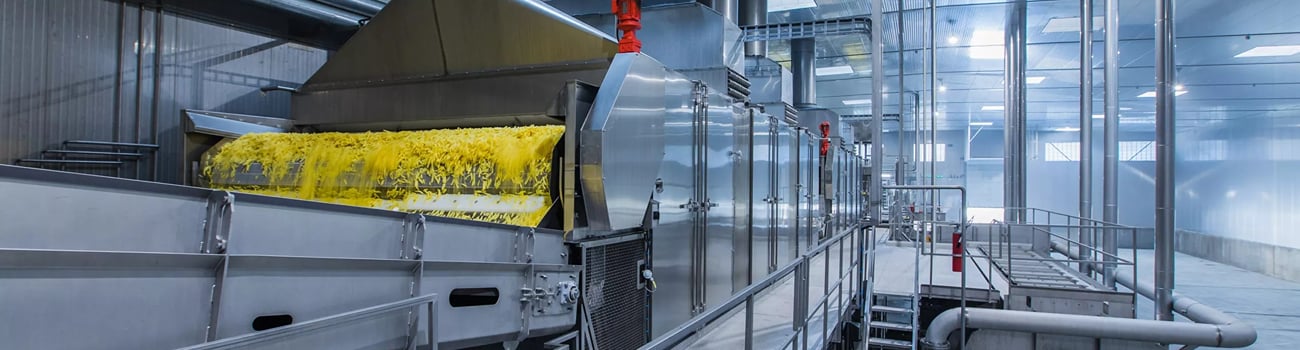
Descripción de la compañía

Productos Ofrecidos
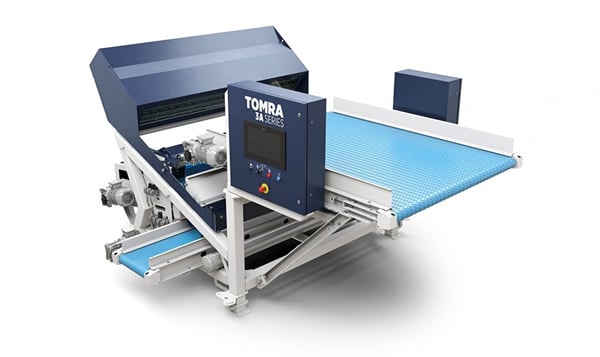

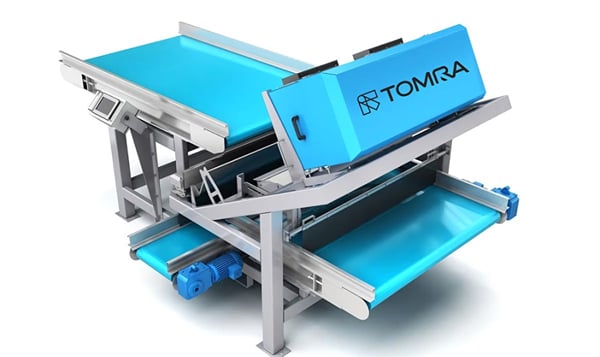

Tipos de productos que ofrece esta empresa
Marcas
Noticias de esta Compañia


Agentes de esta empresa

Frequently Asked Questions
No. The XCD user interface is clear, simple, easy to learn and adjust. It's the same as on other TOMRA sorters, so your operators get up to speed fast.
Yes. Going into storage, it runs at up to 100 tons per hour and takes out foreign material, clods, stones and rot. Coming out, it also sorts quality defects, at the lower throughput that job needs.
It looks, thinks, then acts. Pulsed LED+ optics check both sides of every potato, with infrared to see what the eye can't. The AI decides what has to go. Then fast ejection fingers knock it out. That's 92% accuracy on foreign material, even at 20% incoming defect loads.*
Two sets of ejection fingers do two different jobs. One takes out stones, clods and other foreign material. The other puts out-of-spec potatoes in a stream of their own. So they don't end up with the stones, and you can still sell them, for example for cattle feed or biogas.
No. LUCAi™ comes with pre-trained deep learning models, so the 4A knows good from bad from day one. If you want, you can also train on the machine for your farm's specific defects or foreign material.
Good potatoes get a soft landing. For even gentler handling, you can add cushioned ejection fingers.
Things that aren't potatoes: dirt, stones, rocks, clods and other heavy foreign material. And potatoes with quality defects, like rotten and green ones.
Just one person on the line, instead of a full picking crew. And you can still sort up to 100 tons an hour.
By enabling precision grading, TOMRA allows producers to segment products into multiple value tiers. This leads to more dynamic pricing strategies where premium quality is monetized better, while lower grades are efficiently diverted to processing or alternative uses, maximizing overall revenue.
In potato processing, sorting precision directly affects peeling loss, frying quality and final product consistency. TOMRA’s systems help reduce raw material waste, improve cut quality and ensure uniformity critical for products like chips and fries.
Factories may be designed around integrated, automated and data-connected systems rather than linear processes. TOMRA’s ecosystem approach could drive the shift toward smart factories in agriculture.
While technology pushes toward standardization, consumer preferences and local varieties will maintain diversity. The future likely involves standardized processing with localized customization.
Make This Page Even Better!
This content was last updated on Mayo 27, 2026
Have a helpful detail to contribute? Catch something that should be corrected?