

TOMRA Food

Processing Equipment
Company Description

TOMRA Food is a global supplier of sensor-based sorting, grading, and peeling equipment to the food processing sector. The business creates technologies that combine cameras, lasers, and artificial intelligence (AI) to detect flaws, eliminate extraneous elements, and organize food products by color, size, shape, and quality. Its products are frequently utilized to improve food safety, product uniformity, and processing efficiency in industrial processes.

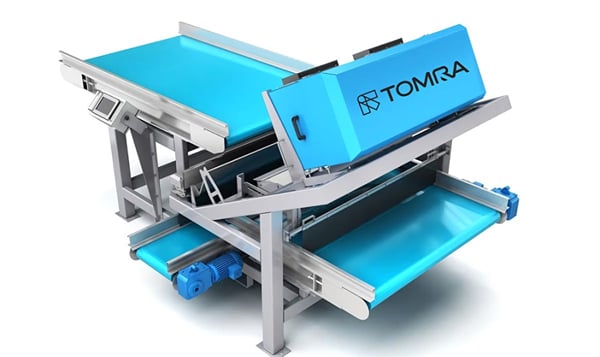
The firm provides a diverse range of equipment, including optical sorting machines (belt, chute, and free-fall sorters), grading and inspection systems, and steam peeling solutions including the Eco, Orbit, and Odyssey peelers. These systems may be used as standalone devices or incorporated into whole processing lines, enabling automated and high-capacity food production facilities.

The company has more than 12,800 units installed at food growers, packers and processors around the world for confectionery, fruit, dried fruit, grains and seeds, potatoes, proteins, nuts, and vegetables.

TOMRA Food operates centers of excellence, regional offices and manufacturing locations within the United States, Europe, South America, Asia, Africa and Australasia.


(Click picture to watch video)InVision2 in Action: High-Precision Fruit Sorting Demo
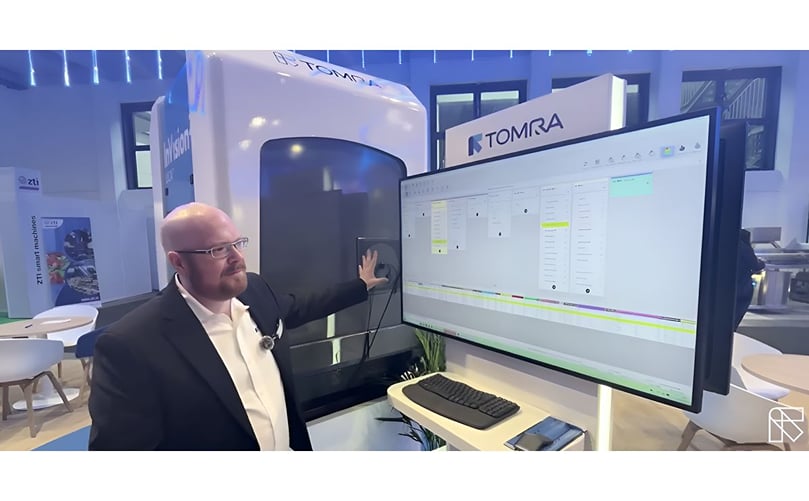
InVision2 in Action: High-Precision Fruit Sorting Demo
A subsidiary of:
Subsidiaries and Factory Locations
Products Offered
Product Types offered by this company
Brands
Trade Show Participation
News for this Company
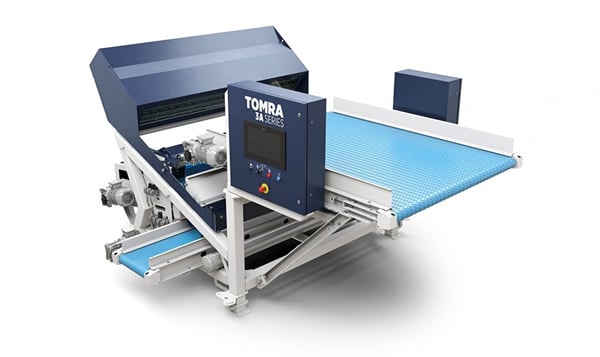
TOMRA 4A Series
November 05, 2026
TOMRA Food Launches AI-Powered TOMRA 4A Potato Sorter with Capacity of 100 Tonnes per Hour
TOMRA Food has launched the AI-powered TOMRA 4A optical potato sorter, capable of processing up to 100 tonnes per hour. Featuring three-way sorting and LUCAi technology, the machine improves sorting accuracy, reduces waste and maximises crop value.
TOMRA Dry Peel Separator (DPS-16) featuring a perforated drum for efficient, water-free peel removal in high-capacity potato and vegetable processing lines.
January 26, 2026
TOMRA Unveils DPS-16 Dry Peel Separator, Boosting Potato Processing Capacity to 70 Tons Per Hour
TOMRA Food launches the DPS-16, a high-capacity dry peel separator processing up to 70 tons of potatoes/hr. Brushless, water-free, and easy to clean, it boosts efficiency and yield for potato and vegetable processors worldwide.
Industrial potato processing and packaging machinery from bankrupt Dutch producer CêlaVíta, now being auctioned online by Troostwijk Auctions as part of six structured industrial asset sales running from December to January.
December 18, 2025
CêlaVíta Potato Processing Equipment now on Auction by Troostwijk
Troostwijk Auctions launches six online auctions (18 Dec–15 Jan) to sell the full industrial assets of bankrupt Dutch potato processor CêlaVíta, offering high-quality potato processing, packaging and labelling machinery from leading brands.
Preparations in full swing at WUR Field Crops in Lelystad, where PotatoEurope 2025 will host over 300 exhibitors and visitors from 119 countries on 3–4 September.
September 01, 2025
PotatoEurope 2025 in Lelystad: World-Leading Potato Event with 300+ Exhibitors and Global Innovations
PotatoEurope 2025 takes place 3–4 Sept. at WUR Lelystad with 300+ exhibitors & visitors from 119 countries. Highlights: trial harvests, ICM & market conferences, live demos from harvest to sorting, and innovation test fields.
Agents for this company

Frequently Asked Questions

Is the 4A hard to learn?

No. The XCD user interface is clear, simple, easy to learn and adjust. It's the same as on other TOMRA sorters, so your operators get up to speed fast.

Can I use the same machine into and out of storage?

Yes. Going into storage, it runs at up to 100 tons per hour and takes out foreign material, clods, stones and rot. Coming out, it also sorts quality defects, at the lower throughput that job needs.

How does it stay accurate at up to 100 tons an hour?

It looks, thinks, then acts. Pulsed LED+ optics check both sides of every potato, with infrared to see what the eye can't. The AI decides what has to go. Then fast ejection fingers knock it out. That's 92% accuracy on foreign material, even at 20% incoming defect loads.*

How does flexible three-way sorting help me get more frommy crop?

Two sets of ejection fingers do two different jobs. One takes out stones, clods and other foreign material. The other puts out-of-spec potatoes in a stream of their own. So they don't end up with the stones, and you can still sell them, for example for cattle feed or biogas.

Do I have to train the AI before I start?

No. LUCAi™ comes with pre-trained deep learning models, so the 4A knows good from bad from day one. If you want, you can also train on the machine for your farm's specific defects or foreign material.

Will the 4A damage by potatoes?

Good potatoes get a soft landing. For even gentler handling, you can add cushioned ejection fingers.

What can the 4A take out?

Things that aren't potatoes: dirt, stones, rocks, clods and other heavy foreign material. And potatoes with quality defects, like rotten and green ones.

How many people does it take to run the 4A?

Just one person on the line, instead of a full picking crew. And you can still sort up to 100 tons an hour.

How does TOMRA’s technology influence pricing dynamics in agricultural markets?

By enabling precision grading, TOMRA allows producers to segment products into multiple value tiers. This leads to more dynamic pricing strategies where premium quality is monetized better, while lower grades are efficiently diverted to processing or alternative uses, maximizing overall revenue.

How does TOMRA’s technology impact processing efficiency in the potato industry?

In potato processing, sorting precision directly affects peeling loss, frying quality and final product consistency. TOMRA’s systems help reduce raw material waste, improve cut quality and ensure uniformity critical for products like chips and fries.

How might TOMRA influence the future design of food processing factories?

Factories may be designed around integrated, automated and data-connected systems rather than linear processes. TOMRA’s ecosystem approach could drive the shift toward smart factories in agriculture.

Can TOMRA’s solutions standardize food quality globally or will regional diversity resist it?

While technology pushes toward standardization, consumer preferences and local varieties will maintain diversity. The future likely involves standardized processing with localized customization.

Make This Page Even Better!

This content was last updated on August 14, 2026

Have a helpful detail to contribute? Catch something that should be corrected?