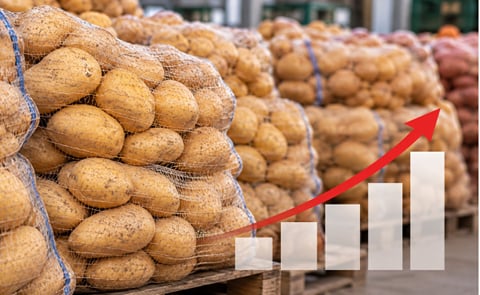
With 80 percent to 85 percent of the estimated 55,000 acres of Aroostook County potatoes out of the ground, officials with the Maine Potato Board said Thursday that growers are seeing average yields of high-quality potatoes this year.
Tim Hobbs, director of development and grower relations for the Maine Potato Board, said that this year’s crop is “looking great.”
“It is looking much better than we thought it would after the dry growing season that we had,” he noted. “The entire state was dry, but the rain we got from Hurricane Earl made all the difference in the world. That really helped get us up where we needed to be.”
Hobbs said that growers saw “zero cases of late blight” this year, a rare occurrence and something that Hobbs said he has not seen for more than a decade.
Last year was a very successful year for potato growers, as the value of Maine’s 2009 crop came in at more than $150 million. Maine farmers harvested more than 1.5 billion pounds of potatoes from 55,500 acres.
Maine potato crop ‘looking great’ thanks to rain in September
¿Te gustaría recibir noticias como esta por correo electrónico? ¡Únete y suscríbete!
Get the latest potato industry news straight to your WhatsApp. Join the PotatoPro WhatsApp Community!
Empresa Destacada
Noticias relacionadas

Septiembre 28, 2026
México: menor oferta de papa podría impulsar los precios durante el invierno
En México, el cierre de cosechas, los menores rendimientos y la reducción de la superficie sembrada podrían restringir la oferta de papa y generar presión al alza sobre los precios entre diciembre de 2026 y febrero de 2027.

Septiembre 28, 2026
España: la sequía reduce la cosecha de patatas en 2026
La producción española de patata caerá entre un 8% y un 10% en 2026, hasta unos 1,8 millones de toneladas, con descensos de hasta 35% en Andalucía debido principalmente a la sequía y los menores rendimientos.

Septiembre 23, 2026
Chile: buscan mejorar el diagnóstico molecular de la sarna polvorienta y la sarna común en papa
En Chile, el proyecto SCAB-ID 2.0 busca validar un sistema de qPCR multiplex capaz de detectar y diferenciar simultáneamente la sarna polvorienta y la sarna común de la papa, con miras a transferirlo a laboratorios de diagnóstico agrícola.