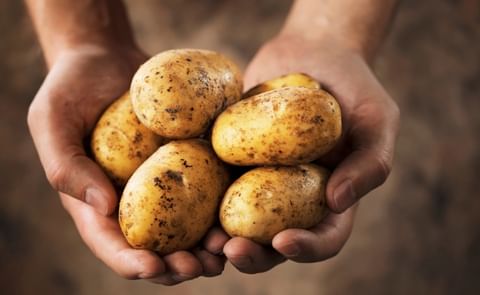

Scientists at the Potato Research Centre hope to crossbreed foreign and domestic potatoes to create a new spud that's resilient to disease and requires fewer pesticides.
David de Koeyer, a scientist with Agriculture and Agrifoods Canada, recently returned from an 11-month research trip to Lima, Peru, where he worked at the International Potato Centre studying strains of South American potatoes that are less susceptible to disease than their Canadian counterparts.
He said if scientists can crossbreed the potatoes, producers, consumers and the environment would reap the benefits.
"A greener potato would involve farmers using reduced amounts of pesticides,"said de Koeyer. "It also gives producers some marketing advantage for potatoes that are grown under less intensive conditions."
Because a Peruvian potato better fights disease such as late blight, there would be less of a need to use chemicals.
Joe Brennan, chairman of Potatoes NB, the provincial growers' organization, said in theory, a potato such as the one described would end up saving producers a lot money because they would have to spray less.
Potato Research Centre hopes to breed resistant potatoes
¿Te gustaría recibir noticias como esta por correo electrónico? ¡Únete y suscríbete!
Get the latest potato industry news straight to your WhatsApp. Join the PotatoPro WhatsApp Community!
Empresa Destacada

Noticias relacionadas
Septiembre 28, 2026
México: menor oferta de papa podría impulsar los precios durante el invierno
En México, el cierre de cosechas, los menores rendimientos y la reducción de la superficie sembrada podrían restringir la oferta de papa y generar presión al alza sobre los precios entre diciembre de 2026 y febrero de 2027.

Septiembre 28, 2026
España: la sequía reduce la cosecha de patatas en 2026
La producción española de patata caerá entre un 8% y un 10% en 2026, hasta unos 1,8 millones de toneladas, con descensos de hasta 35% en Andalucía debido principalmente a la sequía y los menores rendimientos.

Septiembre 23, 2026
Chile: buscan mejorar el diagnóstico molecular de la sarna polvorienta y la sarna común en papa
En Chile, el proyecto SCAB-ID 2.0 busca validar un sistema de qPCR multiplex capaz de detectar y diferenciar simultáneamente la sarna polvorienta y la sarna común de la papa, con miras a transferirlo a laboratorios de diagnóstico agrícola.