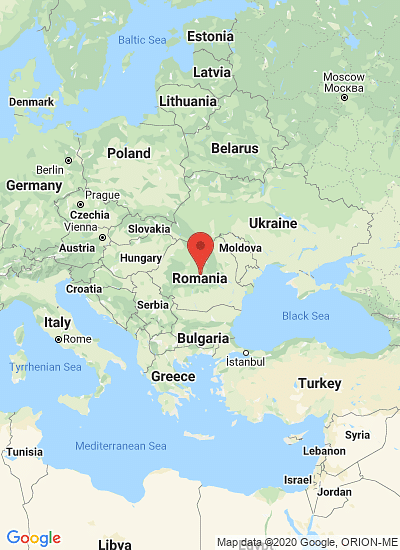

About 20 percent – or roughly 2,000 tons – of the potatoes that will be sold this year in the local Carrefour chain will come from Romanian producer Agrico-M, as the French retailer has signed a supply contract with the local company the Carrefour Quality Lines program. The retailer says it intends to boost the share in the coming years. Through the Quality Lines program the retailer signs direct partnerships with local producers, eliminating intermediaries. The retailer says that this gives it control over the quality of the products and the certainty of constant supplies. The products are later sold in the Carrefour chain under the company and program logo. The contract with Agrico-M is not exclusive and Carrefour representatives are looking into signing agreements with other producers for the scheme. The company also has plans to launch new Carrefour Quality Lines for onion, apples and Romanian carp.
The selection process is however difficult, said Alina Horgea, fresh products acquisition manager at Carrefour Romania, as not many local producers can meet all the contractual specifications that cover the entire production and storage processes. Before signing the contract with Agrico-M, Carrefour had to import potatoes, as it says no local producers could deliver the product it required – washed potatoes in 2.5 kg bags. “The contract with Agrico-M would not have been possible if our partner hadn’t invested in the technology needed to meet the required conditions,” said Horgea. The last such investment that Agrico-M had to make was in a EUR 160,000 washing and packaging machine. Agrico-M is a family-owned and run company in Targu Secuiesc, Covasna, a region with a tradition in the production of potatoes. The firm estimates that this year it will have a potato production of about 4,000 tons, roughly half of which will go to Carrefour. The rest will be sold through intermediaries or as seed material, said Mihail Mucsi, the company’s owner.
Over the past few years the producer has reinvested much of its profit and has even managed to secure EU funds. Agrico-M has invested some EUR 1.3 million in equipment and storage capacity in the past five years. Mucsi says that besides all these investments, growing potatoes is an expensive business. Whereas a hectare of land costs RON 12,000 in Covasna, the seeds have to be imported and end up costing RON 10,000 for the same hectare. Carrefour has developed over 650 Quality Lines with more than 25,000 producers worldwide. In Romania, the first such scheme was signed three years ago with Marex, a Romanian pork producer. Presently about 40 percent of the pork meat sold by Carrefour Romania comes from this producer. Another two programs were launched last year for trout and carrots with Romavet and Big Land Company respectively. Sales under the Quality Lines program amount to 25 percent for carrots and 15 percent for trout out of total product sales.
Romania: Carrefour takes local potato producer as direct supplier
¿Te gustaría recibir noticias como esta por correo electrónico? ¡Únete y suscríbete!
Get the latest potato industry news straight to your WhatsApp. Join the PotatoPro WhatsApp Community!
Noticias relacionadas
Septiembre 28, 2026
México: menor oferta de papa podría impulsar los precios durante el invierno
En México, el cierre de cosechas, los menores rendimientos y la reducción de la superficie sembrada podrían restringir la oferta de papa y generar presión al alza sobre los precios entre diciembre de 2026 y febrero de 2027.

Septiembre 28, 2026
España: la sequía reduce la cosecha de patatas en 2026
La producción española de patata caerá entre un 8% y un 10% en 2026, hasta unos 1,8 millones de toneladas, con descensos de hasta 35% en Andalucía debido principalmente a la sequía y los menores rendimientos.

Septiembre 23, 2026
Chile: buscan mejorar el diagnóstico molecular de la sarna polvorienta y la sarna común en papa
En Chile, el proyecto SCAB-ID 2.0 busca validar un sistema de qPCR multiplex capaz de detectar y diferenciar simultáneamente la sarna polvorienta y la sarna común de la papa, con miras a transferirlo a laboratorios de diagnóstico agrícola.