
Potatoes supply more calories than all other kinds of grain, contain many important vitamins and minerals and are an important source of income for the growers in the rural areas of West Africa. The German development assistance has therefore set itself the task to start the production of potatoes in areas of famine and to increase the yield.
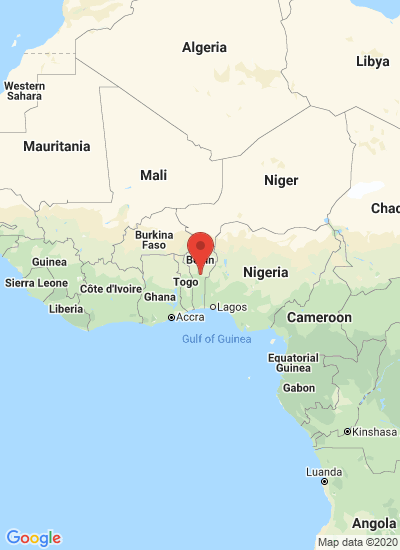
During the last three years Dr.Kerstin Lindner of the Julius Kuhn Institute (JKI) has seen for herself the production circumstances in the Republic of Benin. Together with Dr.Daniel Chougourou of the Université d'Abomey-Calavi, she researched the status of health of Benin produced potato tubers. Only when one knows what diseases the potatoes suffer from can fitting counter measures be implemented.
"We have established that the potatoes very often carry the Ralstonia solanacearum bacteria, which is causing slime disease"as per Dr.Lindner. In Europe it's a requirement to report quarantine source of disease;the transfer and spreading of which must be prevented. Other causes of diseases, in which the potatoes in Benin are involved, are Dickeya solani and Pectobacterium atrosepticum.
The infection with the main potato viruses PVY, PVA, PLRV and PVS is not too bad. In total 20 kg. of potato tubers and a large quantity of green material from potato plants in various growing areas in Benin was researched.
"The Republic of Benin has already declared that, it is planning to extend the potato area in order to become self-sufficient"Lindner says. "Therefore we have with our research established and important basis for the phytosanitary status of the potatoes."Still some things have to happen locally. "In order to control the slime sickness watering will have to be done differently. Also those involved must attach more value to seed potatoes in order to prevent Dickeya solani. Parallel to the increase in the quantity of potatoes produced, storage capacity is to be increased, which not only is required for the storage, but also for the cooling of the potatoes."
Source: Freshplaza
West Africa: More Yield with better seed potatoes
¿Te gustaría recibir noticias como esta por correo electrónico? ¡Únete y suscríbete!
Get the latest potato industry news straight to your WhatsApp. Join the PotatoPro WhatsApp Community!
Noticias relacionadas

Septiembre 28, 2026
México: menor oferta de papa podría impulsar los precios durante el invierno
En México, el cierre de cosechas, los menores rendimientos y la reducción de la superficie sembrada podrían restringir la oferta de papa y generar presión al alza sobre los precios entre diciembre de 2026 y febrero de 2027.

Septiembre 28, 2026
España: la sequía reduce la cosecha de patatas en 2026
La producción española de patata caerá entre un 8% y un 10% en 2026, hasta unos 1,8 millones de toneladas, con descensos de hasta 35% en Andalucía debido principalmente a la sequía y los menores rendimientos.

Septiembre 23, 2026
Chile: buscan mejorar el diagnóstico molecular de la sarna polvorienta y la sarna común en papa
En Chile, el proyecto SCAB-ID 2.0 busca validar un sistema de qPCR multiplex capaz de detectar y diferenciar simultáneamente la sarna polvorienta y la sarna común de la papa, con miras a transferirlo a laboratorios de diagnóstico agrícola.