
Kettle chips fall out of a centrifuge and onto a conveyor belt in the Taste of Maine Potato Chip Company's factory in Limestone. (Courtesy: The Country)
Taste of Maine begins kettle chip production at new USD 75 million potato chip plant in Maine

On the factory floor of the newly operational Taste of Maine Potato Chip plant in Limestone, the kettle chips are humming along the line.
They tumble out of a kettle, into a centrifuge to remove excess oil and along a conveyor belt.
Through a machine that removes those with defects, the chips carry on into a second room, where they fall into a seasoning machine and then into Taste of Maine branded bags that are packed into trucks and sent throughout the state.
After more than two years of planning and construction, the upstart northern Maine brand is now producing kettle chips. The chips, which come in five flavors, hit retail shelves for the first time last week.
Bruce Sargent, Owner of Taste of Maine:
"It was something I always wanted to do. We’re in potato country. I’ve always said, ‘why couldn’t we have a chip plant up here?’"
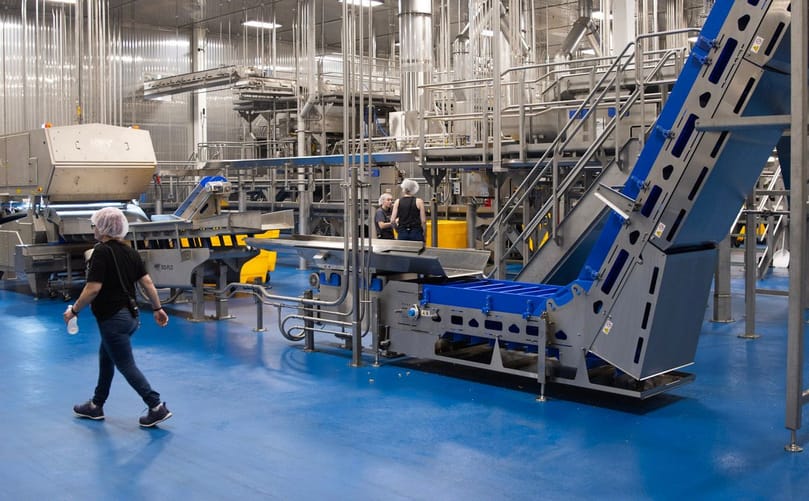
Workers on the factory floor at the Taste of Maine Potato Chip plant. (Courtesy: The Country)
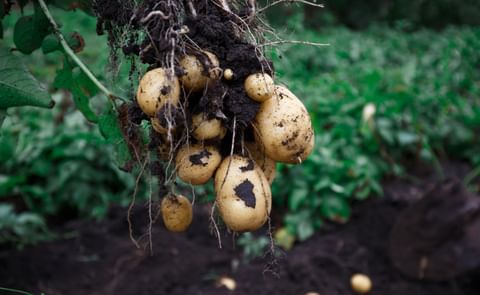
Locally grown Maine potatoes
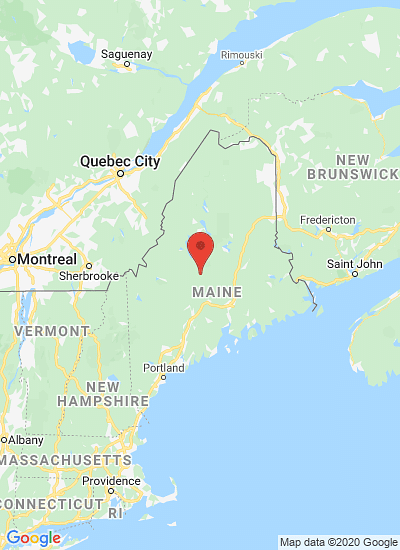
The Taste of Maine product is made from locally grown potatoes, from farms Sargent said are all within 10 miles of the plant. The chips those potatoes turn into travel much farther. The company is working with distributors based in Bangor, Lewiston and Portland to bring them to every corner of the state, and it hopes to expand to other parts of New England in the next month.
Bruce Sargent:
"We’re talking about all your convenience stores, grocery stores, Walmart, Hannaford, Market Basket, Shaws. All of your bars will have ounce and a half bags."
Five kettle chip flavors
The chips come in salt and vinegar, salt and pepper, classic sea salt, sour cream and onion, and ‘Aroostook BBQ’ flavors. Each flavor went through around five to seven iterations of testing, Sargent said.
Bruce Sargent:
"We tried to stay with the basic flavors. I didn’t want to go too exotic."
The company’s desire is to find a middle ground for each taste.
Bruce Sargent:
"Say you’re a real salt and vinegar fan, you want a lot of vinegar. Well, my chip is not going to be good for you. I tried to stay at a five. I don’t want to be a 10, I don’t want to be a one. You’ve got to stay in the middle where you think people will enjoy it."
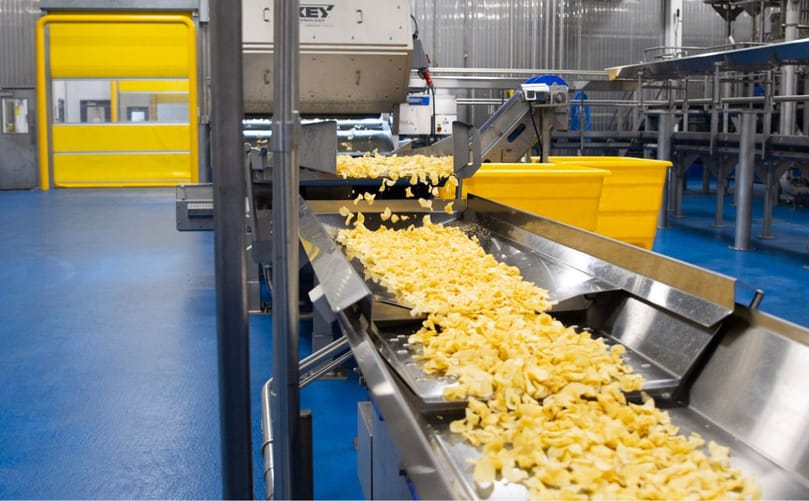
Chips are sorted for defects, like burnt spots, before heading to be seasoned. (Courtesy: The Country)
Production capacity could reach 14 million pounds annually
The facility is still scaling up production for the four kettles it has on site, running for 12-hour shifts three to four days a week. At full capacity, the plant would use about 1,500 acres of potatoes a year. The expansive size of the building, at more than 80,000 square feet, gives the company the option to expand eventually to eight kettles, doubling that capacity.
Taste of Maine has so far created about 20 jobs. Running 24/7 — which is the company’s goal — would increase that total to 60 or more jobs, Sargent said.
At that level, the factory can produce as much as 14 million pounds of chips in a year. Taste of Maine’s brand is anticipated to account for about two million, he said. That leaves 12 million pounds of production capacity available for contract packaging, a long-stated goal of Sargent’s for the plant.
Co-packing operations begin in September
Contract packaging — also referred to as co-packing — is the practice of a factory producing goods for an outside company on a contract basis. Taste of Maine has already secured one co-packing deal for three million pounds of chips that will start in September, Sargent said. He did not name the company.
Investment reaches USD 75 million
In total, the cost of building the plant came in at around USD 75 million, more than USD 20 million over what was predicted two years ago and USD 10 million higher than the figure given as construction began last summer. The overrun is mostly due to increased material costs, Sargent said, including some he attributed to United States tariffs on Canadian steel.
The factory is located on the former Loring Air Force Base, which closed in 1994. New industrial revitalization efforts, including the construction of the Taste of Maine plant, have injected some life into the long-neglected space.
Bruce Sargent:
"We’re the first new property to be built here, and the hope is that will attract more people to come to northern Maine. Hopefully we can do good things, really help the farmers, give them contracts, a chance to move more product and give them some security."
Seven tractor-trailer loads shipped in the first week
In its first week on shelves, Taste of Maine sent out seven tractor-trailer loads of chips. The early public reception has been overwhelmingly positive, Sargent said, a good sign for a fledgling brand aiming to put more Maine potatoes in the carts of consumers.
Bruce Sargent:
"Your goal is that they’re going to buy them every week with their groceries. They’re going to buy somebody’s chips, right? Hopefully it’s ours."
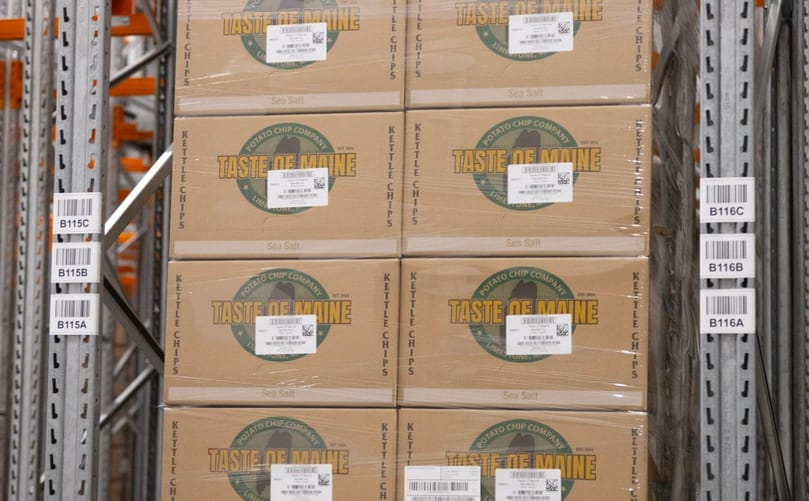
Kettle chips produced by Taste of Maine are distributed across the state from the company’s Limestone plant. (Courtesy: The Country)
¿Te gustaría recibir noticias como esta por correo electrónico? ¡Únete y suscríbete!
Get the latest potato industry news straight to your WhatsApp. Join the PotatoPro WhatsApp Community!
Empresa Destacada
Noticias relacionadas

Septiembre 28, 2026
Colombia: PepsiCo invertirá USD 1.000 millones y podría reforzar su cadena de abastecimiento de papa
PepsiCo invertirá USD 1.000 millones en Colombia durante cinco años para ampliar producción y distribución, una expansión que podría fortalecer su cadena de abastecimiento de papa, donde ya es el mayor comprador industrial del país con unas 84.000 toneladas anuales.

Septiembre 07, 2026
KFC Malaysia and Mister Potato Launch Spicy, Crunchy Limited-Edition Collaboration
KFC Malaysia and Mister Potato launch a limited-time collaboration featuring spicy crispy chicken, a crunchy Zinger burger and Cheezy Wedges-inspired chips for the Merdeka and Malaysia Day season.

Septiembre 03, 2026
Pringles lanza Dippers, unas patatas fritas más gruesas diseñadas para mojar
Pringles lanza Dippers, sus primeras patatas fritas más gruesas, resistentes y onduladas diseñadas para mojar, disponibles en tres sabores este septiembre. La marca también amplía su gama Mingles con un nuevo sabor Dulce y Salado.